“The greatest miracles aren't always the ones that make headlines. Sometimes, they're the quiet transformations within the human heart.”
— Reflecting on the nature of faith and personal change.


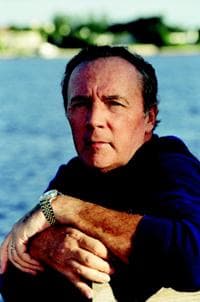
James Patterson (2016)
Genre
Thriller / Spirituality / Mystery
Reading Time
240 min
Key Themes
See below
Sign in to track this book
A compassionate doctor with a difficult past in Sudan becomes the unexpected and controversial frontrunner for Pope, starting a deadly power struggle within the Vatican where old ways clash with a new vision for the Church's future.
The story begins with Brigid Fitzgerald's birth in a poor apartment in the Bronx. Her mother, Eileen, a drug addict, tries to abort her, but Brigid survives. Father Michael, a local priest, finds the baby and ensures her care, placing her in an orphanage after Eileen is institutionalized. Brigid spends her early years in the orphanage, but her kindness and intelligence are clear. She forms a close bond with Father Michael, who guides her, supporting her growing faith and encouraging her studies, even as she deals with being abandoned and uncertain about her origins. These early experiences make Brigid strong.
Brigid does well in her studies, eventually earning a scholarship to medical school. Wanting to help others and feeling a sense of purpose, she dedicates herself to a career in medicine. After graduating, she feels a strong pull towards humanitarian work. She volunteers with Doctors Without Borders and is sent to a remote, war-damaged region of Sudan. There, she sees great suffering, disease, and violence, working hard to save lives amid constant danger. Her experiences in Sudan deepen her faith, as she sees both humanity's worst and acts of resilience and hope, strengthening her commitment to service.
While in Sudan, Brigid's dedication and healing abilities, often linked to her strong faith, get the attention of Cardinal Abasi, a respected and influential figure in the Vatican. He visits her mission, seeing her compassionate care and her impact on the local people. One difficult night, after a hard surgery, Brigid has a powerful, clear vision of Jesus, who speaks to her, giving her a unique and challenging mission within the Church. This divine encounter leaves her both shaken and determined, marking a major change in her life.
After her vision and at Cardinal Abasi's insistence, Brigid reluctantly leaves Sudan and travels to Rome. She is unsure of her purpose there, but Abasi believes she is meant for something special in the Church. He places her in a position where she can observe and learn, working first in a medical role within the Vatican, but also attending meetings and discussions that show her the inner workings and politics of the Holy See. Her presence, a young female doctor, is unusual and immediately draws both curiosity and suspicion from different groups within the traditional male-dominated hierarchy.
When the Pope dies, the Conclave meets to elect his successor. The mood in Rome is tense. Brigid, though in the Vatican, does not expect to be involved in such a process. However, during the first discussions, Cardinal Abasi, with a small but influential group of progressive cardinals, makes a surprising and controversial move: he nominates Brigid Fitzgerald as a candidate for Pope. This unprecedented suggestion shocks the Conclave and the wider Church, starting a fierce debate and showing deep divisions between traditionalists and reformers, all while the world watches in disbelief.
Brigid's nomination immediately causes strong opposition from conservative cardinals, led by Cardinal Bellini, who see her candidacy as wrong and a direct threat to centuries of Church tradition. They start a ruthless campaign to undermine her, looking into her past, spreading rumors about her unconventional life, and questioning her faith and suitability for the papacy. Bellini and his allies manipulate information, leak damaging stories to the press, and use their influence to sway undecided cardinals, creating a hostile environment for Brigid and her supporters. They are determined to make sure a woman never becomes Pope.
As the Conclave continues and the world's media focuses on the situation, Brigid is subjected to intense public scrutiny. Her difficult childhood, her mother's drug addiction, and even her time in Sudan are all twisted and used against her by her opponents. She must defend her life choices, her medical career, and her understanding of faith to the cardinals and, through them, to the entire world. Despite the immense pressure and personal attacks, Brigid stays calm, finding strength in her deep spiritual convictions and the steady support of Cardinal Abasi and a few loyal allies, refusing to compromise her integrity.
Despite the constant attacks, Brigid's quiet dignity, her insights into theology, and her vision for a more inclusive and compassionate Church begin to win over some undecided cardinals. Her arguments for reform, social justice, and a modern approach to faith appeal to those who believe the Church needs to change for the 21st century. The votes, at first strongly against her, slowly begin to shift. The white smoke, showing a new Pope has been chosen, is delayed, reflecting the deep split within the Conclave as the debate continues, with Brigid at its center.
As the Conclave nears its end, Cardinal Abasi and Brigid's few trusted friends uncover a plot by Cardinal Bellini and his most extreme followers. They find evidence of a plan not just to discredit Brigid, but to potentially invalidate the election or even harm her, should she get too close to winning. This shows how far traditionalists are willing to go to keep their power and prevent what they see as sacrilege. Brigid realizes the stakes are not just her future, but possibly the Church's integrity itself.
The final rounds of voting are tense. Brigid, aware of the plot against her but choosing faith over fear, gives a powerful, heartfelt speech to the cardinals, appealing to their conscience and their shared commitment to Christ's teachings. Her sincerity and courage sway the last undecided votes. After a long wait, white smoke appears from the Sistine Chapel chimney. The world watches as the announcement is made: Pope Brigid I. The election of a woman Pope shocks the globe, starting a new and uncertain era for the Catholic Church, with Brigid leading it.
The Protagonist
From a survivor of a troubled childhood, Brigid evolves into a reluctant leader, embracing her divine calling to reform and modernize the Catholic Church.
The Supporting
Abasi moves from a respected cardinal to a revolutionary figure, risking his own standing to advocate for a radical change in the Church's leadership.
The Antagonist
Bellini remains steadfast in his opposition, ultimately failing to prevent the change he so feared, but representing the enduring resistance to reform.
The Supporting
He remains a steadfast source of moral support and early guidance, shaping Brigid's spiritual foundation without undergoing significant personal change himself.
The Mentioned
Eileen's arc is largely in the past, her story serving as a catalyst for Brigid's journey rather than an active present development.
The Supporting
Marlo moves from cautious neutrality to a supportive stance, representing the possibility of evolution within the Church's traditional leadership.
The Supporting
Sister Agnes remains a consistent figure of support and faith, her character serving to highlight Brigid's humanitarian work.
The Supporting
Ben's arc is less about personal transformation and more about observing and acknowledging Brigid's extraordinary journey.
The main theme is Brigid's strong faith and her belief in a divine calling. From her unusual birth to her visions and eventual nomination as Pope, Brigid constantly seeks and responds to God's will. Her faith is tested by personal hardship, the horrors of war in Sudan, and the political schemes of the Vatican, yet it remains her guiding force. The theme explores what it means to truly answer a spiritual call, even when it asks for great sacrifices and challenges established ways. Her ability to heal, often linked to divine intervention, also shows this theme.
““God works in mysterious ways, child. But He always works towards light.””
This theme is clear in the conflict between Cardinal Bellini's traditionalist group and Brigid's new vision for the Catholic Church. The novel looks at the strong resistance to change within old institutions, contrasting adherence to centuries-old doctrines with the need for the Church to adapt to modern challenges and be more inclusive. Brigid's candidacy itself is the ultimate challenge to tradition, forcing a confrontation between those who believe in unchanging dogma and those who want more compassionate, open, and relevant spiritual leadership.
““The Church is not a museum, Your Eminence. It is a living body, and it must grow or it will die.””
Brigid's life shows human resilience. Her journey starts with a difficult birth to a drug-addicted mother, followed by life in an orphanage. She overcomes these early disadvantages through determination and a strong moral sense. Her time as a doctor in war-torn Sudan further sharpens her ability to cope with extreme suffering and danger. This theme highlights her inner strength, her ability to endure hardship, and her refusal to be defined by her past or intimidated by powerful opponents, always finding strength in her faith to face difficult challenges.
““Every wound, every scar, tells a story of survival. And every story is a testament to God’s grace.””
The novel explores different kinds of leadership, from the traditional, hierarchical power structures of the Vatican to Brigid's compassionate, service-focused approach. Brigid's leadership style, shaped by humanitarian work, prioritizes empathy, direct action, and a deep commitment to the suffering. The theme questions what qualities truly define a spiritual leader in the modern world, suggesting that true authority comes not from power or tradition, but from humility, selflessness, and a genuine desire to serve humanity, even if it means challenging the institution one leads.
““Leadership is not about wielding power, but about bearing the burdens of those you serve.””
A spiritual encounter that explicitly guides Brigid's path towards the papacy.
Brigid's direct vision of Jesus in Sudan serves as a crucial plot device. It provides explicit divine sanction for her extraordinary path, solidifying her conviction and giving her purpose amidst the political turmoil of the Vatican. This vision functions as both a catalyst for her journey to Rome and a source of unwavering strength when her faith is tested. It elevates her story beyond mere political ambition, suggesting a predetermined, sacred destiny that her supporters leverage and her opponents struggle to refute.
Brigid's journey from humble origins to a position of immense power against overwhelming odds.
The novel employs a classic underdog narrative, positioning Brigid as an unlikely candidate from a disadvantaged background, facing a powerful, entrenched establishment. This device creates inherent tension and allows readers to root for her against the formidable forces of tradition and political maneuvering. Her improbable rise from a Bronx orphanage to a global spiritual leader highlights themes of destiny, resilience, and the triumph of spirit over adversity, making her story compelling and inspiring.
The Vatican's internal power struggles and secret plots against Brigid's candidacy.
The intricate political maneuvering within the Vatican, including Cardinal Bellini's covert campaign to discredit Brigid and the discovery of a plot against her, serves as a major plot device. This element adds suspense, mystery, and a thriller aspect to the narrative, shifting the focus from purely spiritual contemplation to a high-stakes battle for control. It exposes the darker, human side of institutional power, creating external conflict that Brigid must navigate in addition to her internal struggles of faith.
Brigid's unexplained ability to alleviate suffering through touch and prayer, reinforcing her divine connection.
Throughout her time as a doctor, Brigid is shown to possess an extraordinary ability to bring comfort and sometimes inexplicable healing to the sick and suffering, often attributed to her touch and prayer. These 'miraculous healings' act as a plot device to underscore her unique spiritual connection and her divine favor. They provide tangible evidence of her special calling, convincing both characters within the story (like Cardinal Abasi) and the reader that she is indeed 'a woman of God,' further legitimizing her unprecedented path to the papacy.
“The greatest miracles aren't always the ones that make headlines. Sometimes, they're the quiet transformations within the human heart.”
— Reflecting on the nature of faith and personal change.
“Fear can be a powerful motivator, but it's a terrible master.”
— A character contemplating the choices driven by their anxieties.
“Faith isn't about having all the answers. It's about trusting even when you have none.”
— A moment of doubt and reassurance regarding spiritual belief.
“Sometimes, the most dangerous lies are the ones we tell ourselves.”
— A character confronting their own self-deception.
“Hope is not a strategy, but without it, no strategy can succeed.”
— Discussing the importance of maintaining hope in dire situations.
“The past is a stubborn ghost, always lingering, always whispering.”
— A character haunted by past events and decisions.
“Even in the darkest night, a single candle can defy the shadows.”
— A metaphorical reflection on finding light amidst despair.
“True strength isn't about never falling, but about rising every time you fall.”
— Encouragement during a moment of weakness and defeat.
“The path to understanding often begins with admitting how little you truly know.”
— A character's journey towards enlightenment and humility.
“Miracles don't always look like parting seas. Sometimes they look like a second chance.”
— Considering the various forms that divine intervention or fortune can take.
“There are some wounds that time can never truly heal, only scar over.”
— A character reflecting on deep-seated emotional pain.
“The biggest battles are often fought not with swords, but within the confines of our own minds.”
— Introspection about internal struggles and mental fortitude.
“Sometimes, the greatest act of faith is simply showing up, day after day, even when you feel like giving up.”
— A quiet testament to perseverance in the face of adversity.
“Secrets are heavy burdens, and they have a way of crushing those who carry them.”
— A character grappling with the weight of hidden truths.
Ready to see how well you understood this book? Take our interactive quiz with 10 questions.
Biography coming soon.







