“The wolf is the soul of the steppe.”
— Chen Zhen's early reflections on the Mongolian steppe and its most iconic predator.

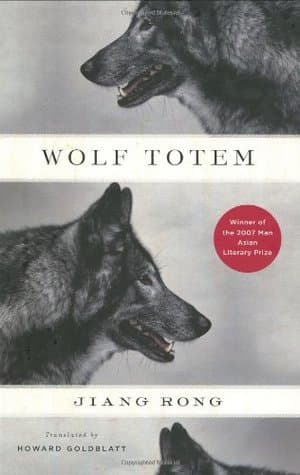
Jiang Rong (2004)
Genre
Historical Fiction
Reading Time
12-15 hours (approx. 527 pages)
Key Themes
See below
Sign in to track this book
In 1960s Inner Mongolia, a Beijing intellectual's spiritual search among nomadic Mongols and their sacred wolves violently clashes with modern Han Chinese expansion, threatening both ancient culture and the wild spirit of the steppes.
In 1967, during the Cultural Revolution, Beijing student Chen Zhen is sent to the remote Olonbulag steppe in Inner Mongolia to live and work with a nomadic Mongol community. He is assigned to Bilgee's yurt, where he learns the harsh realities of steppe life and Mongol culture. Initially new to their ways, Chen Zhen sees their deep connection to nature, especially their respect for and fear of the wolves. He is curious about their traditional hunting, their resourcefulness, and their philosophy of living with the wild. He begins to question his Han Chinese upbringing and urban worldview, feeling more and more drawn to the raw, untamed spirit of the grasslands and its main predator, the wolf.
Chen Zhen joins the daily life of the herders, learning about their livestock, the brutal winters, and the constant threat of wolves. He is especially fascinated by the wolves' intelligence, watching their hunting, their pack behavior, and their ability to survive in the harsh environment. Bilgee, the wise elder, becomes Chen Zhen's teacher, explaining the Mongols' old belief system where the wolf is both a strong opponent and a sacred guide. Bilgee teaches Chen Zhen that wolves thin the herds, preventing overgrazing, and keep the steppe healthy. This understanding challenges Chen Zhen's old ideas, building a deep respect for the wolf and its ecological role.
As winter nears, the Mongols organize a large gazelle hunt, a traditional practice important for their survival and for balancing the steppe's ecosystem. Chen Zhen takes part in this difficult hunt, seeing the strategic skill of the Mongol herders as they drive thousands of gazelles into a narrow area. He is surprised by their coordination and the scale of the operation. This event shows the Mongols' close knowledge of the land and animal behavior, and their ability to work together. It also shows the cycle of life and death on the steppe, where humans, wolves, and prey are all connected in a delicate balance.
After a particularly brutal wolf hunt organized by Han Chinese officials, where many adult wolves are killed, Chen Zhen finds a lone wolf pup. Driven by a growing interest and a desire to understand the wolf better, he secretly takes the pup and decides to raise it. This act is controversial among the Mongols, as raising a wolf is traditionally forbidden and considered dangerous. Bilgee warns him of the difficulties and the wolf's wild nature, but Chen Zhen is determined. He dedicates himself to the pup, trying to tame it and learn its true nature firsthand, hoping to bridge the gap between human and wolf.
Chen Zhen focuses on raising the wolf pup, whom he names Little Wolf. He feeds it, cares for it, and watches its every move, hoping to understand the wolf's essence. Despite his efforts, Little Wolf keeps its wild instincts, showing strong independence and an innate predatory nature. Chen Zhen learns that a wolf cannot truly be tamed; its spirit is wild. He faces challenges controlling its destructive tendencies and protecting it from other herders and the harsh environment. This experience deepens his understanding of the wolf's untamed spirit and the limits of human control over nature.
The arrival of Han Chinese officials and settlers changes the steppe. They bring new policies to increase livestock production and eliminate 'pests,' mainly wolves. These officials, without understanding the steppe's delicate ecosystem, use aggressive methods that conflict with the Mongols' traditional practices and their respect for nature. They see wolves only as a threat to livestock, ignoring their important role in maintaining ecological balance. Chen Zhen sees the clash between two different worldviews: the Mongols' sustainable coexistence and the Han's resource-exploitation mentality.
The Han Chinese authorities begin a systematic campaign to kill all wolves on the steppe. Using modern hunting, poison, and large organized hunts, they reduce the wolf population. Chen Zhen is horrified by the brutality and efficiency of this action, which he sees as a serious mistake. The Mongols, though they resist, cannot stop the state-approved slaughter. This mass killing of wolves has immediate and devastating effects on the steppe's ecosystem, disrupting the ancient balance. The once-thriving wolf packs are reduced to a few, threatening their survival.
As the wolf population shrinks to almost nothing, the ecological balance of the steppe quickly collapses. Without their natural predators, rodent populations, especially marmots, explode, causing widespread burrowing and destruction of the grasslands. Livestock numbers also grow unchecked, leading to severe overgrazing. The once-green meadows begin to degrade, turning into barren, dusty land. Chen Zhen sees the lasting damage caused by human actions and the shortsightedness of Han policies. The beautiful, lively steppe becomes a desert, with dust storms becoming more frequent and severe, even reaching distant Beijing.
Despite Chen Zhen's deep attachment and efforts, Little Wolf eventually gives in to its wild nature or the pressures of its environment. Its fate, whether escaping back to the wild or dying, shows that truly taming a wolf is impossible and represents the tragic loss of wild spirit on the steppe. Chen Zhen's personal journey with Little Wolf reflects the larger tragedy around him: the destruction of an ancient ecosystem and a way of life. The pup's untamed spirit, even in captivity, constantly reminds him of what is being lost through human arrogance and interference.
With the destruction of the wolves and the degradation of the steppe, the traditional Mongol way of life begins to fall apart. Their nomadic herding practices, tied to the land and its creatures, become unsustainable. The elders, like Bilgee, mourn the loss of their heritage and the wisdom passed down for generations. The younger Mongols, influenced by Han culture and modern policies, struggle to keep their identity. Chen Zhen watches with despair the erosion of a proud and ancient culture, realizing that the fate of the wolves is linked to the fate of the Mongols themselves.
Through his years on the steppe, Chen Zhen changes greatly. He sheds his initial urban biases and fully adopts the philosophy of the wolf and the Mongols. He understands how all life on the steppe is connected and the terrible results of disrupting natural balance. His interest in wolves turns into deep respect and a sense of shared destiny. He becomes a vocal, though often powerless, supporter for preserving the wolves and Mongol culture, carrying the spirit of the steppe within him as he deals with the lasting changes he has witnessed.
The Protagonist
He transforms from an urban intellectual into an ardent defender of the steppe's ecology and Mongol culture, embodying the 'wolf spirit' in his fight against environmental destruction.
The Supporting
He remains a steadfast guardian of Mongol traditions, witnessing the tragic decline of his culture and the steppe, and imparting his wisdom until the end.
The Supporting
Born into captivity, Little Wolf embodies the enduring wild spirit, ultimately proving that true nature cannot be entirely subdued by human intervention.
The Supporting
He upholds the traditional Mongol ways, adapting to the changing environment while mourning the loss of the old ways.
The Antagonist
He remains steadfast in his belief in human dominance over nature, overseeing the destruction of the steppe's ecosystem.
The Supporting
He navigates the changing world, trying to balance traditional Mongol life with new influences.
The Mentioned
As a legendary figure, its 'arc' is primarily symbolic, representing the gradual disappearance of the wild, powerful wolf spirit from the steppe.
The novel clearly shows the destructive clash between the traditional, nature-respecting life of the Mongols and the modern, exploitative approach of the Han Chinese. The Mongols live in balance with the steppe, understanding its delicate ecology, as Bilgee's teachings about the wolves' role demonstrate. In contrast, Han officials, like Director Bao, see nature as something to conquer and use, leading to the systematic killing of wolves and the desertification of the grasslands. This theme highlights the dangers of human arrogance and the lasting damage caused when civilization ignores natural laws, turning rich steppes into dust bowls.
“Only when the wolves were gone did the marmots multiply wildly, and then the rats, until the land was riddled with holes, and the grass turned yellow and died, and the steppe began to turn to desert.”
The wolf is shown not just as an animal but as a teacher and a symbol of resilience, intelligence, and strategic skill. Chen Zhen's journey is largely shaped by his interest in and imitation of wolf traits. He learns from their hunting, their pack behavior, and their ability to survive in harsh conditions. Bilgee often refers to the wolf's wisdom, emphasizing its role in keeping the steppe healthy by culling the weak and preventing overgrazing. The novel suggests that humanity, especially the Han Chinese, could learn valuable lessons from the wolf's balanced approach to life and death, and its respect for the ecosystem.
“The wolf is the soul of the steppe. Without the wolf, the steppe would die.”
The novel mourns the disappearing culture of the Mongolian nomads. Their unique way of life, deeply connected to the steppe and its animals, especially the wolf, is systematically dismantled by Han Chinese policies. The destruction of the wolves directly causes the collapse of the ecological system that supports Mongol herding. Bilgee and other elders grieve the loss of their traditions, their spiritual connection to the land, and their identity. Chen Zhen, initially an outsider, becomes a witness and supporter for this dying culture, recognizing that the destruction of the wolves is linked to the destruction of the Mongols' heritage.
“The wolves were gone, and with them, the spirit of the steppe. And when the spirit was gone, the people began to lose their way.”
A main theme is the delicate and important balance within the steppe ecosystem, where every species has a crucial role. Wolves, far from being just pests, are shown as vital predators that maintain healthy herds, prevent overgrazing, and control rodent populations. The novel details the negative effects when this balance is broken by human interference: killing wolves leads to an explosion of rodents, overgrazing by livestock, and eventually, desertification. Chen Zhen's observations clearly show how the interconnectedness of species creates a self-regulating system that, once broken, leads to widespread environmental disaster.
“The wolf kills, but it also protects. It keeps the steppe alive.”
This theme explores the tension between the desire for freedom and the human need to control. Wolves represent pure freedom and wildness, which Chen Zhen finds both frightening and exciting. His attempt to raise Little Wolf shows how futile it is to fully control a truly wild creature; the pup constantly longs for its natural home. Conversely, the Han Chinese government's policies represent an attempt to completely control nature and its resources, leading to disastrous results. The novel suggests that true freedom, for both humans and nature, means respecting inherent wildness rather than trying to dominate it.
“A wolf, even a pup, is a wolf. It is not a dog. It will never truly belong to you.”
The wolf symbolizes wildness, wisdom, and the spirit of the steppe.
The wolf is the central and most powerful symbol in the novel. It represents not only the untamed spirit of nature but also intelligence, resilience, strategic cunning, and the delicate balance of the ecosystem. For the Mongols, it is a sacred totem, a teacher, and a worthy adversary. For Chen Zhen, it embodies a primal freedom and wisdom lacking in his own culture. The wolf's decline symbolizes the destruction of the steppe's ecology and the erosion of Mongol culture, making its fate inextricably linked to the novel's core themes.
The protagonist's perspective as an urban intellectual observing a foreign culture.
Chen Zhen, a Han Chinese intellectual from Beijing, initially serves as an outsider observing the Mongol culture and the steppe environment. This narrative choice allows the author to introduce and explain complex ecological concepts, cultural practices, and philosophical differences from a fresh perspective. His transformation from an urban 'civilized' man to someone deeply connected to the 'wild' wolf spirit provides a relatable journey for the reader, highlighting the profound impact of the steppe and its lessons. His outsider status also allows for critical commentary on both Han and Mongol societies.
Early signs of environmental degradation hint at future catastrophe.
The novel uses ecological decline as a form of foreshadowing, hinting at the larger catastrophe to come. Early discussions about the importance of wolves for maintaining herd health and preventing overgrazing, coupled with observations of the steppe's delicate balance, subtly prepare the reader for the disastrous consequences of the wolf eradication campaign. The increasing frequency of dust storms, even before the full impact of desertification, serves as an ominous warning of nature's retribution, linking local environmental damage to broader regional and national impacts, such as dust reaching Beijing.
Contrasting the Mongol and Han Chinese philosophies towards nature.
The novel frequently juxtaposes the traditional Mongol worldview, which emphasizes coexistence and respect for nature, with the Han Chinese perspective, which often prioritizes human dominance and resource exploitation. This contrast is evident in their respective attitudes towards wolves, land use, and development. The Mongols see the wolf as a sacred part of the ecosystem, while the Han officials view it as a pest. This device highlights the cultural and philosophical clash that drives the narrative's central conflict and the resulting environmental tragedy, providing a strong critical commentary on modern development practices.
“The wolf is the soul of the steppe.”
— Chen Zhen's early reflections on the Mongolian steppe and its most iconic predator.
“The Han people are like sheep, good at farming, but bad at fighting. The Mongols are like wolves, good at fighting, but bad at farming.”
— Bilgee, an old Mongolian herder, explains the fundamental differences between the two cultures.
“Without wolves, there would be no grass. Without grass, there would be no livestock. Without livestock, there would be no Mongols.”
— Bilgee's profound explanation of the ecological balance maintained by wolves.
“The wolf totem is a symbol of courage, wisdom, and freedom.”
— Chen Zhen's growing understanding of the spiritual significance of the wolf to the Mongols.
“To conquer a wolf, you must first understand the wolf.”
— Chen Zhen's realization that traditional Han methods are ineffective against steppe wolves.
“The grassland is a battlefield where life and death are constantly intertwined.”
— Describing the harsh realities of survival on the Mongolian steppe.
“Man is the only animal that kills for reasons other than hunger or self-defense.”
— A critical observation on human nature and destruction.
“The wolf is the only animal that can make the sheep live in fear, and fear makes them stronger.”
— Bilgee explaining the role of predators in strengthening prey populations.
“Sometimes, the greatest wisdom comes from the most primitive sources.”
— Chen Zhen's reflection on the profound knowledge held by the illiterate Mongolian herders.
“The wolf's eyes are the eyes of the steppe, watching everything, understanding everything.”
— A poetic description of the wolf's keen perception and dominance over its environment.
“To truly live, one must be willing to die.”
— A reflection on the fierce survival instinct and courage of the wolves and Mongols.
“The destruction of the wolves is the destruction of the steppe itself.”
— Chen Zhen's lament over the ecological consequences of eradicating the wolf population.
“Culture is not just about books and art; it's about how people live, how they survive, how they interact with their environment.”
— Chen Zhen's evolving understanding of culture through his immersion in Mongolian life.
“The spirit of freedom is like the wind on the steppe; you can feel it, but you cannot grasp it.”
— A metaphorical reflection on the elusive and untamable nature of freedom.
Ready to see how well you understood this book? Take our interactive quiz with 10 questions.

Biography coming soon.







