“The wolves are coming.”
— A recurring ominous phrase that foreshadows the escalating danger.

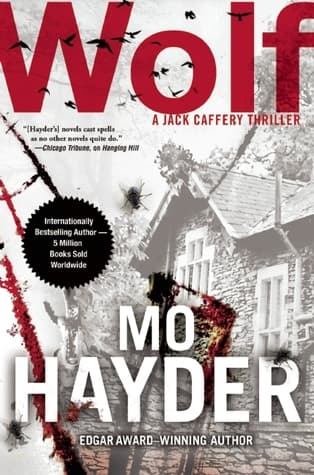
Sign in to track this book
A detective, still affected by his brother's abduction, is blackmailed into investigating a dog with a plea for help. This leads him to a wealthy family terrorized by captors whose strange demands hint at a personal vendetta.
The story begins with the Walking Man, a homeless person, finding a stray dog near a motorway. The German Shepherd has "HELP US" written on its collar. Believing it is a real cry for help, the Walking Man contacts Detective Inspector Jack Caffery. Caffery is at first dismissive, thinking it is likely a prank or a minor animal welfare issue. But the Walking Man, known for his odd but sometimes insightful observations, offers Caffery a deal. If Caffery investigates the dog's origin, the Walking Man will give him new information about the abduction of Caffery's younger brother, Ewan, decades earlier. This personal link immediately changes Caffery's view, making him take the unusual case seriously.
At the same time, the Anchor-Ferrers family—Oliver and Matilda, their teenage daughter Lucia, and younger son Rhodri—are in their isolated, rural home, Lower Farm. Their peaceful life ends when two men, known only as 'Bones' and 'Tramp,' trick their way into the house. Bones pretends to be a police officer investigating a nearby incident. He gains entry before showing their real intentions. The family is quickly captured and held hostage. It becomes clear this is not a random home invasion for money. The captors' actions suggest a deeper, darker reason, as their demands quickly go beyond money to include strange and humiliating acts meant to terrorize and degrade the family.
Driven by the Walking Man's promise, Jack Caffery starts his investigation into the German Shepherd. He takes the dog to a local vet. There, it is found to have been recently groomed and cared for, suggesting it belongs to someone. The vet also finds a microchip. Caffery uses this to trace the dog's owner to the Anchor-Ferrers' address, Lower Farm. This discovery immediately raises the stakes, confirming the Walking Man's belief that the message was real. Meanwhile, the Walking Man gives Caffery scattered, unsettling details about Ewan's abduction, hinting at a link to a specific type of crime or perpetrator. This fuels Caffery's personal search for answers.
Inside Lower Farm, the Anchor-Ferrers' ordeal gets worse. Bones and Tramp make increasingly cruel and strange demands. They force the family to wear animal masks, do demeaning acts, and play odd 'games.' It becomes clear that the captors know private details about the family. This suggests a planned attack rather than a random crime. The psychological torture is as strong as the physical threats. The captors often mention a past event or injustice. Matilda, Oliver, and Lucia try to understand why they are being tormented. Their captors seem to enjoy their terror and humiliation, pushing them to their breaking points.
Mixed with the present story are unsettling flashbacks to the 1980s, showing the history of Lower Farm. It was once the site of a terrible crime involving a family, the Ansells, and their teenage children. The flashbacks show a troubled household, a father with dark desires, and a community that failed to see or stop the suffering. These historical parts slowly reveal a deep injustice and a link to an event known as the 'Wolf' case. The reader begins to understand that the current hostage situation is directly connected to these past events, giving a chilling reason for the captors' actions and their seemingly personal vendetta against the Anchor-Ferrers.
Using the microchip information, Caffery tries to contact the Anchor-Ferrers. When his calls go unanswered and his attempts to get a welfare check from local police are at first met with bureaucracy, he grows more worried. He drives to Lower Farm himself. But the remote location and the look of a normal, undisturbed house at first mislead him. However, his instincts, sharpened by the Walking Man's warnings and the unsettling message on the dog's collar, tell him something is very wrong. He begins to put together clues, realizing that the Anchor-Ferrers are in serious danger and that he is racing against time to find them.
As the siege at Lower Farm continues, the captors, Bones and Tramp, slowly reveal who they are and the real reason for their vendetta. They are survivors of the Ansell family, the victims of the original 'Wolf' case decades earlier, or people closely connected to them. They believe Oliver Anchor-Ferrers, or his family, helped cover up the crimes or gained from the injustice that happened to their family. The 'Wolf' name refers to the predator from their past. Their actions are a carefully planned act of revenge. They want to make the Anchor-Ferrers feel a fraction of the terror and degradation they suffered, showing the deep, unhealed wounds of a past trauma.
Caffery's persistence eventually leads him to a more thorough investigation of Lower Farm. He goes around official channels, his personal involvement in the case overriding protocol. He finds signs of forced entry and, eventually, the horrific scene inside. He confronts Bones and Tramp, who are deep in their revenge fantasy. A tense standoff follows, with the Anchor-Ferrers still held captive and their lives in immediate danger. Caffery, outnumbered and facing people driven by decades of anger, must use all his cleverness and experience to save the family and bring the captors to justice. All the while, the fragmented clues about Ewan's disappearance echo in his mind.
A violent fight breaks out at Lower Farm. Caffery fights Bones and Tramp, trying to overpower them and free the Anchor-Ferrers. The fight is desperate and violent, with both sides getting hurt. During the chaos, the full truth of the captors' identities and their deep connection to the Ansell family and the 'Wolf' case is revealed. Caffery manages to subdue the captors, but the Anchor-Ferrers suffer greatly. The family is rescued, physically hurt but deeply scarred by their ordeal. The immediate threat is gone, but the psychological impact on everyone involved is huge, especially for Caffery, who sees the depths of human cruelty and the long shadow of past crimes.
Afterward, the Anchor-Ferrers begin the slow, hard process of healing from their psychological and physical wounds. The 'Wolf' case, long hidden, is brought to public attention, revealing the historical injustices. For Caffery, solving the Anchor-Ferrers' case is linked to his personal search. The Walking Man keeps his word, giving Caffery the promised information about Ewan's abduction. The clues are cryptic but important, giving Caffery a new lead and a renewed, though painful, sense of purpose in his search for answers about his brother's disappearance. The experience confirms the Walking Man's unusual yet vital role in Caffery's life and investigations.
The Protagonist
Caffery confronts the lingering shadows of his brother's disappearance, finding new, painful clues that propel him towards a deeper understanding of his past and the nature of evil.
The Supporting
The Walking Man's role as a silent observer and cryptic guide is solidified, proving his value and integrity to Caffery.
The Supporting
Oliver is forced to face the dark legacy of his family's past, enduring horrific torment that shatters his comfortable life.
The Supporting
Matilda endures extreme trauma, revealing her strength and the deep cracks in her understanding of her husband's past.
The Supporting
Lucia's innocence is shattered as she endures profound psychological and physical trauma, forcing her to mature rapidly under duress.
The Antagonist
Bones executes his meticulously planned revenge, revealing the depth of his past suffering and the destructive nature of his quest for retribution.
The Antagonist
Tramp acts as the enforcer of the revenge plot, showcasing the raw, unbridled anger fueled by past trauma.
The Mentioned
Ewan's story, though in the past, begins to unravel through new clues, offering Jack Caffery a path towards understanding and potential closure.
The novel shows how past traumas, especially childhood abuse and unsolved injustices, deeply affect individuals and communities. The 'Wolf' case, a horrific event from decades ago, directly causes the current hostage crisis. This shows how unaddressed pain can turn into a desire for violent revenge. Jack Caffery's life is shaped by the trauma of his brother Ewan's abduction, showing how personal history guides present actions and motives. The Anchor-Ferrers family, seemingly innocent, are caught in the wake of a historical injustice they may have unknowingly benefited from or ignored. This highlights shared responsibility for past wrongs. The captors, Bones and Tramp, are examples of this theme, their lives consumed by the desire to avenge a trauma that defined them.
““The past wasn't dead. It was never dead. It was a wolf, waiting in the shadows, and sometimes it came to bite.””
This theme looks at the unclear line between seeking justice for past wrongs and giving in to the overwhelming desire for revenge. The captors, Bones and Tramp, believe they are bringing justice for the 'Wolf' case. But their methods are brutal, sadistic, and cause more trauma, making their quest an act of vengeance. Their actions raise questions about whether true justice can ever be found through such means, or if it just continues a cycle of violence. Caffery, too, is driven by a deep personal need for justice for Ewan. But his professional ethics constantly challenge his personal desire for retribution, forcing him to navigate the complex moral aspects of his work.
““Justice was a word people used to justify their own particular brand of revenge.””
The Anchor-Ferrers family, at first shown as a normal, wealthy unit, quickly falls apart in terror during the siege. The children, Lucia and Rhodri, are especially vulnerable. Their innocence is shattered by the psychological and physical torment. This shows how easily the protective image of family life can be broken by outside threats and inside secrets. The novel explores how far parents will go to protect their children, and the deep, lasting harm when that protection fails. The family unit, once a source of comfort, becomes a place of fear and betrayal. This forces them to face the real nature of their relationships and the secrets they hold.
““The house, once a sanctuary, had become a cage. And the family, once a unit, was now just a collection of terrified individuals.””
Secrets, both personal and public, are important to the story. The 'Wolf' case itself was a hidden trauma, possibly covered up or ignored by the community, allowing those responsible to avoid full accountability. Oliver Anchor-Ferrers keeps secrets about his family's link to this past, which directly leads to his family's current torment. Jack Caffery's life is dominated by the unspoken truths around Ewan's disappearance. The novel shows how secrets, kept too long, can fester and eventually explode with terrible results, revealing uncomfortable truths about individuals and society. The slow revealing of these secrets is central to the mystery and character development.
““Some secrets were like wolves themselves. They waited, patiently, until the moment was right to tear your life apart.””
A literal cry for help that initiates the main investigation.
The message "HELP US” written on the dog's collar serves as the primary inciting incident, directly linking the Walking Man's discovery to the Anchor-Ferrers' plight. It's a classic MacGuffin, a seemingly innocuous object that holds immense narrative weight, propelling Caffery into the case. The unusual nature of the plea immediately signals that this is no ordinary missing dog, raising the stakes and creating a sense of urgency. It also highlights the Walking Man's unique observational skills and his ability to see significance where others might not, setting up his crucial role as Caffery's informant.
A personal incentive for Caffery to take on an unusual case.
The Walking Man's promise of information regarding Ewan Caffery's abduction in exchange for Jack's help with the dog is a powerful plot device. It directly links Caffery's deeply personal, unresolved trauma to the new, seemingly unrelated case, providing him with a compelling, non-professional motive to investigate. This bargain elevates the stakes for Caffery, making the Anchor-Ferrers' rescue not just a duty but a personal quest. It ensures his unwavering dedication to the case, even when official channels are slow or dismissive, and allows for the gradual reveal of details about Ewan's past throughout the narrative.
Interspersed historical narratives that reveal the root of the present-day conflict.
The use of fragmented flashbacks to the 1980s, detailing the Ansell family's tragic history and the original 'Wolf' case at Lower Farm, is a crucial plot device. These non-linear narrative elements gradually reveal the historical context and the deep-seated grievances that fuel the captors' present-day revenge. They create suspense by slowly unveiling the connections between past and present, allowing the reader to piece together the motive behind the Anchor-Ferrers' torment. The flashbacks serve to deepen the thematic exploration of past trauma and its lingering effects, explaining the intensity and specificity of the captors' actions.
Symbolic props used by the captors to degrade and terrorize their victims.
The animal masks forced upon the Anchor-Ferrers family by their captors are a potent symbolic plot device. They serve to dehumanize the victims, stripping them of their identity and agency, making them feel like mere animals in a twisted game. This psychological torture is as effective as any physical threat, highlighting the captors' desire not just to harm, but to degrade and exert absolute control. The masks also reference the 'Wolf' motif, deepening the thematic resonance of predation and vulnerability within the narrative, and contributing to the chilling, ritualistic atmosphere of the siege.
“The wolves are coming.”
— A recurring ominous phrase that foreshadows the escalating danger.
“They were just children, caught in a nightmare that wasn't theirs.”
— Reflecting on the innocence and vulnerability of the victims.
“Sometimes the biggest monsters wear the most ordinary faces.”
— A realization about the deceptive nature of evil.
“The past isn't dead. It's not even past.”
— Highlighting how historical events and trauma continue to impact the present.
“Fear has a smell, and it was thick in the air.”
— A sensory description of the pervasive terror.
“Hope is a dangerous thing, especially when you have nothing else.”
— A character's cynical view on the fragile nature of hope in dire circumstances.
“The truth, when it finally comes out, rarely sets anyone free.”
— A grim observation about the often destructive consequences of revealing truth.
“Silence can be the loudest scream.”
— Describing the profound impact of unspoken horror and trauma.
“Every secret has its price.”
— A reflection on the cost of hidden truths and their eventual exposure.
“The forest watches. It remembers.”
— Implying the enduring presence of the past within the natural world.
“There are some wounds that never heal, only scar over.”
— Speaking to the lasting impact of deep emotional and psychological scars.
“The line between predator and prey is thinner than you think.”
— A commentary on the shifting dynamics of power and vulnerability.
“Sometimes, the only way to fight a monster is to become one.”
— A desperate justification for extreme measures in the face of evil.
“The world doesn't care if you're good or bad, only if you're strong enough to survive.”
— A cynical view on the harsh realities of existence and survival.
Ready to see how well you understood this book? Take our interactive quiz with 10 questions.

Biography coming soon.

Dan Gemeinhart
4.5
Kate O'Hearn
4.4

Jeanne Birdsall
4.4

Jen Wang
4.4
Wendelin Van Draanen
4.3

John Marsden
4.3

Chris Van Allsburg
4.3
Jennifer A. Nielsen
4.2