“When a cat gets hold of a mouse, it plays with it before it devours it. That's what power does to us. It makes us play with others' lives.”
— Reflecting on the nature of power and its corrupting influence.

Ngugi wa Thiongo, Ngũgĩ wa Thiong'o (2008)
Genre
Literary Fiction / Fantasy
Reading Time
1500-1800 min
Key Themes
See below
Sign in to track this book
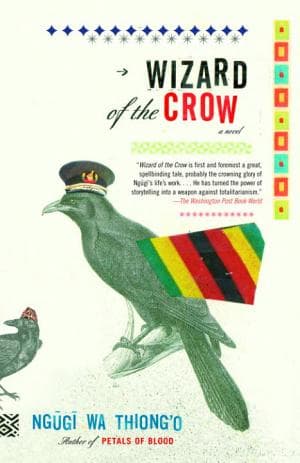
In the fantastical Free Republic of Aburiria, a tyrannical ruler's quest for ultimate power clashes with an unemployed man who unexpectedly wields the magic of the 'Wizard of the Crow,' igniting a battle for the very soul of a nation.
The story opens in the fictional Free Republic of Aburiria, ruled by the tyrannical and increasingly delusional Ruler. Kamiti, a bright but unemployed university graduate, flees from the police after participating in a protest against the Ruler's regime. He seeks refuge in the house of a kind woman, Nyawira, who is secretly a leader of the underground Movement for the Restoration of Voice (MRV). During his escape, Kamiti encounters a group of villagers who believe he possesses magical powers after he seemingly makes a crow appear and disappear. This misunderstanding, fueled by the villagers' desperation and traditional beliefs, quickly spreads, leading to Kamiti being hailed as the 'Wizard of the Crow,' a figure prophesied to bring change.
Meanwhile, the Ruler of Aburiria, obsessed with his own grandeur, develops a bizarre ailment: he believes his body parts are shrinking or growing disproportionately. He summons his council of ministers, including the sycophantic Secretary of State, Sikiokuu, and the pragmatic Minister of Finance, Machokali. The Ruler demands that they find a medical or magical solution to make him physically grow to a size that would allow him to oversee the entire world, specifically the United States and Europe, from Aburiria. This increasingly absurd demand highlights his megalomania and the ministers' desperate attempts to appease him, leading to ridiculous proposals and a climate of fear and competition among them.
Kamiti, now fully embraced as the Wizard of the Crow, establishes a practice in the village of Gatundu. Nyawira, recognizing the potential of this popular belief, orchestrates events to enhance Kamiti's mystique and influence. She uses the 'Wizard' as a mouthpiece for the MRV, subtly directing him to expose the corruption and injustices of the Ruler's regime through his 'prophecies' and 'cures.' People from all walks of life, including government officials and ordinary citizens, flock to him seeking solutions to their problems, which often stem directly from the Ruler's oppressive policies and the ministers' greed. Kamiti, initially hesitant, begins to understand the power of his adopted persona.
The Ruler's ministers, particularly Sikiokuu and Machokali, engage in a constant power struggle, each trying to outdo the other in their sycophancy and their ability to fulfill the Ruler's increasingly outlandish demands. Sikiokuu, known for his cruelty and cunning, tries to undermine Machokali, while Machokali, though corrupt, occasionally shows pragmatism. Their rivalry escalates, leading to accusations, sabotage, and public humiliation. Some ministers are imprisoned or disappear, while others resort to desperate measures, including seeking the help of the Wizard of the Crow, to secure their positions and wealth.
Nyawira, under the alias 'Warrior Woman,' is the intellectual and strategic force behind the MRV. She meticulously plans operations to destabilize the regime and awaken the populace. Her activities range from organizing clandestine meetings to orchestrating public demonstrations and using the Wizard's platform to spread messages of defiance. She is a master of disguise and deception, moving through various social strata to gather intelligence and mobilize resistance. Her ultimate goal is to restore the 'Voice' of the people and dismantle the Ruler's authoritarian rule, using both overt and covert tactics.
Minister Sikiokuu, a vicious and corrupt official, develops a peculiar ailment he calls 'Whiteache' and 'Blackache.' This manifests as an unbearable pain that can only be relieved by accumulating more wealth and power, or by inflicting suffering on others. The 'Whiteache' represents his insatiable greed, while the 'Blackache' symbolizes the moral decay and guilt he experiences, albeit subconsciously. He seeks out the Wizard of the Crow for a cure, hoping for a magical solution to his self-inflicted torment. This condition is a metaphor for the pervasive corruption and moral bankruptcy within the Ruler's administration.
As the Ruler's delusions about his shrinking and growing body parts intensify, his ministers, desperate to maintain his favor, bring in a team of renowned Western doctors. These doctors, initially baffled by the Ruler's bizarre symptoms, eventually play along with his fantasies, prescribing elaborate and equally absurd treatments. They attribute his 'condition' to the 'Aburirian' climate or unique physiology, further isolating the Ruler in his own constructed reality. This episode satirizes the postcolonial reliance on Western expertise and the willingness of international actors to accommodate despotic regimes for their own gain.
Driven by his desire to oversee the entire world, the Ruler launches the 'Marching to Heaven' project, an impossibly ambitious and costly endeavor to build a tower that would reach the sky. This project drains the national treasury and forces the populace into forced labor, causing widespread suffering and resentment. The absurdity of the project is evident to everyone except the Ruler and his most obsequious ministers. The construction becomes a symbol of the regime's wastefulness, its disregard for human life, and its detachment from reality, further fueling the people's desire for change.
Throughout their collaboration as the Wizard and the Warrior Woman, Kamiti and Nyawira develop a deep connection. Their shared commitment to the resistance movement and their mutual understanding of the regime's injustices forge a strong bond. Kamiti, initially a reluctant participant, grows into his role, drawing strength and purpose from Nyawira's guidance and conviction. Their relationship evolves from a strategic alliance to a romantic one, providing a personal anchor amidst the political turmoil and dangers of their underground work. Their love story becomes a symbol of hope and resilience against oppression.
The Ruler's 'Marching to Heaven' project and his increasingly erratic behavior push Aburiria to the brink. His delusions become so severe that he loses all touch with reality, even believing he can literally shrink or grow at will. The people's patience wears thin, and the MRV, with Nyawira and Kamiti at its forefront, intensifies its efforts. The Ruler's regime collapses not through a violent coup, but through the sheer weight of its own absurdity and the Ruler's complete mental incapacitation. His final act is one of ultimate self-delusion, disappearing into his own imagined grandiosity, leaving a power vacuum.
With the Ruler gone, Aburiria enters a period of transition. The ministers, stripped of their power, face the consequences of their actions. The people, having found their 'Voice' through the MRV's efforts and the symbolic power of the Wizard of the Crow, begin the arduous task of rebuilding their nation. The novel concludes with cautious optimism. While the immediate threat of the Ruler is gone, the underlying issues of corruption, power, and the struggle for true freedom remain. Kamiti and Nyawira, having played crucial roles, look towards a future where the people themselves hold the power.
The Protagonist
From a fearful, unemployed graduate, Kamiti evolves into a confident and influential figure, embracing his role as a symbol of resistance.
The Protagonist
Nyawira consistently demonstrates her leadership and unwavering commitment to liberation, evolving her strategies as the political landscape shifts.
The Antagonist
The Ruler's arc is one of escalating delusion and self-destruction, culminating in his complete mental incapacitation and the downfall of his tyrannical rule.
The Supporting
Sikiokuu's arc shows his relentless pursuit of power and wealth, ultimately leading to his exposure and downfall as the regime crumbles.
The Supporting
Machokali's arc highlights his struggle to balance his ambition with a fleeting sense of practicality, ultimately caught in the regime's collapse.
The Supporting
Their arc demonstrates their gradual shift from professional skepticism to accommodating the Ruler's delusions, highlighting external complicity.
The Collective Protagonist
The people's arc moves from passive suffering to active resistance, culminating in the restoration of their collective 'Voice' and agency.
The Mentioned
Gatundu serves as the initial locus of hope and resistance, its significance growing as the Wizard's influence spreads.
Ngugi uses humor and satire to expose the absurdity of absolute power. The Ruler's delusions, his belief that his body parts are shrinking or growing, and his 'Marching to Heaven' project are examples. These scenarios, though comical, show the devastating impact of a leader completely detached from reality. The ministers' sycophancy and their desperate attempts to fulfill these ludicrous demands further highlight how tyranny fosters a culture of irrationality and fear, where truth is sacrificed for survival, as seen in the 'Whiteache' and 'Blackache' of Minister Sikiokuu.
“What is the true nature of power if not the ability to impose one's delusions on others?”
The novel explores how narratives, whether traditional prophecies or carefully constructed personas, can shape reality and inspire change. Kamiti's transformation into the Wizard of the Crow is based on a misunderstanding and the people's belief in a prophesied figure. Nyawira skillfully harnesses this popular belief, using the Wizard's 'magic' to articulate political truths and mobilize resistance. This theme suggests that in oppressive regimes, where direct dissent is dangerous, symbolic storytelling can be a powerful weapon for challenging authority and uniting a populace yearning for hope.
“A people without a voice is a people without a story, and a people without a story is a people without a future.”
The book explores the complexities of postcolonial African identity, critiquing the lingering effects of colonialism and the emergence of neocolonial structures. The Ruler's obsession with Western approval, his reliance on Western doctors to validate his delusions, and the 'Marching to Heaven' project (which, in its absurdity, mimics grand colonial projects) all satirize the continued mental and economic subjugation. The novel questions what true independence means when leaders mimic the oppressors and external forces continue to exert influence, highlighting the struggle for genuine self-determination and the restoration of an authentic African 'Voice.'
“We have thrown off the chains of the white man, only to shackle ourselves with the chains of our own making.”
Corruption is a pervasive and destructive force throughout the novel, depicted not just as financial malfeasance but as a moral and spiritual illness. The ministers, particularly Sikiokuu with his 'Whiteache' and 'Blackache,' embody this decay, where greed becomes a physical ailment. The Ruler's extravagant projects, funded by exploiting the populace, demonstrate how corruption trickles down, eroding trust and justice. The novel illustrates how unchecked power enables widespread corruption, ultimately leading to the suffering of ordinary citizens and the breakdown of society, making the fight against tyranny also a fight for moral integrity.
“The disease of the nation is not in the body, but in the soul, twisted by greed and fear.”
The novel is a narrative of resistance against oppression. Nyawira and the MRV represent the organized, strategic fight for freedom, using intellect, courage, and cunning. Kamiti, as the Wizard, becomes a symbol of popular resistance, inspiring hope and subtly exposing the regime's flaws. The collective suffering of the people fuels this resistance, showing that even in the face of tyranny, the human spirit's desire for freedom cannot be extinguished. The book celebrates the resilience of the human spirit and the power of a united people to reclaim their 'Voice' and destiny.
“Even the mightiest tree can be brought down by a thousand small axes, if wielded by a thousand determined hands.”
Blends realistic settings with fantastical elements to comment on reality.
Magical realism is central to 'Wizard of the Crow.' The most prominent example is the Ruler's belief that his body parts are shrinking or growing, and the subsequent 'medical' treatments. The existence of the 'Wizard of the Crow' himself, and the widespread belief in his powers, also falls into this category. These fantastical elements are presented matter-of-factly within the realistic context of Aburirian politics, serving to satirize the absurdity of the tyrannical regime and the collective delusions or hopes of its people, making the unbelievable believable within the story's world.
Uses humor, exaggeration, and ridicule to expose and criticize folly and vice.
The novel employs extensive satire and irony to critique postcolonial African politics. The Ruler's grandiose projects like 'Marching to Heaven' and his physical delusions are exaggerated to highlight the absurdity of his power. The ministers' sycophancy and their bizarre ailments (like Sikiokuu's 'Whiteache' and 'Blackache') are targets of satire, exposing their corruption and moral bankruptcy. This comedic approach allows Ngugi to deliver sharp social commentary on tyranny, corruption, and neocolonialism without resorting to didacticism, making the critiques more impactful and memorable.
A pre-existing folk belief that shapes plot and character actions.
The prophecy of the Wizard of the Crow acts as a crucial plot device. It is a traditional belief among the Aburirian people that a powerful wizard will emerge to challenge tyranny. Kamiti's accidental circumstances align with this prophecy, leading the villagers to believe he is the foretold figure. This prophecy provides a framework for Kamiti's character development and Nyawira's strategic manipulation of public perception. It empowers the people with hope and provides a rallying point for resistance, demonstrating how cultural narratives can be repurposed for political ends.
Abstract ideas represented by concrete objects or concepts.
The 'Voice' of the people is a powerful symbol throughout the novel. The Movement for the Restoration of Voice (MRV) explicitly names its goal: to give the silenced people of Aburiria a means to express themselves and challenge the regime. The Ruler's tyranny is characterized by his suppression of this 'Voice,' while the Wizard of the Crow indirectly becomes a conduit for it. The restoration of this 'Voice' signifies not just free speech, but the regaining of agency, dignity, and self-determination for the nation, moving from passive suffering to active participation in their own destiny.
“When a cat gets hold of a mouse, it plays with it before it devours it. That's what power does to us. It makes us play with others' lives.”
— Reflecting on the nature of power and its corrupting influence.
“The greatest prison is the fear of what other people think.”
— A character's realization about societal pressures and personal freedom.
“Every nation has its own way of eating a frog. Some boil it, some fry it, some roast it whole. But the frog is still eaten.”
— A cynical observation about the different forms of oppression and suffering across cultures.
“Truth, like a river, will always find its way to the sea, no matter how many dams are built against it.”
— An optimistic view on the eventual triumph of truth over deception.
“A people that abandons its language is like a tree that has cut its own roots.”
— A strong statement on the importance of language for cultural identity.
“The past is a stubborn ghost; it refuses to be buried and forgotten.”
— Discussing the lingering effects of historical injustices and colonial legacies.
“To be truly free, one must first be free in the mind.”
— Emphasizing the psychological aspect of liberation.
“When you have nothing left to lose, you have everything to gain.”
— A reflection on the courage born from desperation and the pursuit of change.
“The greatest magic is not in turning water into wine, but in turning fear into hope.”
— Comparing the power of human resilience and belief to mythical magic.
“Silence is not always consent; sometimes it is a scream unheard.”
— Highlighting the plight of the voiceless and the misinterpretation of their inaction.
“The road to hell is paved with good intentions, but also with bad ones disguised as good.”
— A cynical take on the motivations behind political actions and their consequences.
“A lie told often enough becomes the truth for those who want to believe it.”
— Exploring the manipulation of public perception through propaganda.
“The future is not a gift; it is an achievement.”
— Encouraging agency and active participation in shaping one's destiny and society's future.
“Even a small stone can cause ripples in a mighty lake.”
— Illustrating the potential for minor actions to have significant, far-reaching effects.
Ready to see how well you understood this book? Take our interactive quiz with 10 questions.
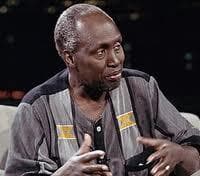
Ngũgĩ wa Thiong'o is a Kenyan author and academic who writes primarily in Gikuyu and who formerly wrote in English. He has been described as having been "considered East Africa's leading novelist". His work includes novels, plays, short stories, and essays, ranging from literary and social criticism to children's literature. He is the founder and editor of the Gikuyu-language journal Mũtĩiri. His short story The Upright Revolution: Or Why Humans Walk Upright, is translated into 100 languages from around the world.
Biography coming soon.







