“Go then, there are other worlds than these.”
— Roland's mantra, often said in moments of despair or resignation.

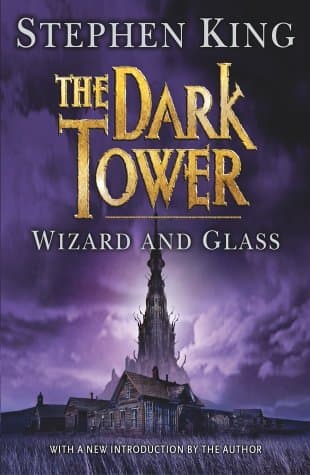
Stephen King (1997)
Genre
Fantasy / Science Fiction
Reading Time
17-20 hours
Key Themes
See below
Sign in to track this book
Stranded in an alternate, plague-ridden Kansas, Roland takes his ka-tet to a past of young love, betrayal, and a mystical seeing sphere, showing the tragic start of his quest for the Dark Tower in a world near collapse.
After beating Blaine the Mono in a riddle contest, Roland Deschain, Eddie Dean, Susannah Dean, Jake Chambers, and Oy the bumbler arrive in an alternate Topeka, Kansas. This Topeka is empty, a wasteland destroyed by the superflu virus, which killed most people. They find that the world has 'moved on' greatly, with remains of an advanced but decaying civilization. The ka-tet is confused and unsure what to do next, realizing they are not in their Mid-World. They search for supplies in the ruins of a post-apocalyptic city. This is a stark contrast to Blaine, but also alien to them.
Following a deserted I-70, the ka-tet sees a distant, shimmering green palace made of glass. It seems to draw them in. As they get closer, they hear the unsettling, off-key sound of a thinny — a place where reality is thin, threatening to pull anything nearby into nothing. Roland recognizes the danger, having met such things before. The thinny reminds them that existence is fragile and their many worlds are unpredictable. They camp near its edge, the eerie wail a constant, unsettling sound, and a reason for Roland's memories.
While camped by the thinny, Roland tells his ka-tet a long story from his youth, a tale of his first love and early days as a gunslinger. This story takes place over several nights and is the book's core. Roland recounts how, after Marten Broadcloak tricked him into taking his manhood trial early and passing it, his father, Steven Deschain, sent him and his original ka-tet — Cuthbert Allgood and Alain Johns — to the distant Barony of Mejis. Their stated mission was to take a census, but their real purpose was to investigate reports of an alliance between rancher Rhea of the Coos and John Farson, a rising rebel leader known as 'the Good Man,' who threatened to destabilize the Affiliation and start a war.
When they arrive in the Barony of Mejis, specifically the town of Hambry, Roland, Cuthbert, and Alain pretend to be 'ranch hands' or 'cowboys' to hide their identities as gunslingers. The town's strange customs and isolated nature strike them immediately. During a local festival, Roland first meets Susan Delgado, a beautiful young woman who is to be the 'Sacrifice' — a concubine for the corrupt Mayor Thorin, a ritual to ensure good harvests. Roland is instantly smitten by Susan, and she by him. Their strong mutual attraction quickly becomes a passionate, forbidden romance, setting up tragic events.
As the young gunslingers investigate, they find a plot by Rhea of the Coos, a local witch-like figure, with Coral Thorin and Olive Thorin, the Mayor's wife and sister, and Sheriff Avery. This group works with John Farson's men, smuggling oil and other resources to him. They find that Rhea has one of the thirteen Bends of the Rainbow — powerful seeing spheres made by Maerlyn, known as 'Maerlyn's Grapefruit.' This Grapefruit is a malevolent object that affects those who look into it, showing them future visions and driving them mad. Roland is dangerously drawn to the Grapefruit, using it despite his ka-mates' warnings.
Roland's romance with Susan Delgado grows, becoming the main emotional part of his time in Hambry. Their secret meetings and declarations of love are passionate, but also dangerous because of Susan's arranged marriage to Mayor Thorin and the boys' secret mission. At the same time, Roland becomes more obsessed with Maerlyn's Grapefruit. Despite its seductive and often terrifying visions, he repeatedly looks into it, seeking information about Farson and his own destiny. The Grapefruit's dark influence begins to change Roland's judgment, making him more withdrawn and focused, straining his relationships with Cuthbert and Alain.
The gunslingers' cover is eventually revealed, leading to a direct fight with Farson's forces and local corrupt officials. They fight a battle at the Drop, the oil-drilling station, where they destroy much of Farson's oil supply. However, this victory comes at a cost, and their identities as gunslingers are fully known. In the chaos, Susan Delgado becomes a pawn and a target. Her relationship with Roland is exposed, making her a traitor to Hambry and an accomplice to the 'outlaws.' She is imprisoned and condemned to be burned as a witch, a brutal result of her forbidden love and the town's superstition.
Despite Roland's efforts to save her, he cannot save Susan Delgado from the townspeople's anger, fueled by Rhea of the Coos and the Mayor's family. Susan is brought to the Reap, a harvest festival, and burned at the stake as a 'witch' and 'traitor.' Her death is a deeply traumatic event for Roland. It is his first great personal loss and leaves a lasting mark on him. The image of her burning, especially her last cries, haunts him throughout his life, shaping his calm manner and strengthening his often ruthless dedication to the Path of the Beam. This event is a key moment in Roland's past, solidifying his commitment to his quest.
Angry and sad about Susan's death, Roland, Cuthbert, and Alain, helped by Susan's friend Sheemie Ruiz, take revenge on those responsible. They confront and kill Rhea of the Coos, Sheriff Avery, and other corrupt officials. After their acts of vengeance, they must flee Hambry, pursued by Farson's men, led by Roy Depape and Latigo. The young gunslingers, though winning their immediate fights, are now outlaws. Their mission is compromised, and their innocence is gone. They start a long, difficult journey through the Outer Dark, strengthening their bond as a ka-tet and Roland's grim determination.
Roland's story, though focused on Hambry, hints at the larger conflict with Farson. He briefly mentions the future, hinting at the Battle of Jericho Hill. This battle was a moment where the gunslingers, including his father Steven Deschain, made their last stand against Farson's forces. This battle nearly destroyed the gunslingling order and gave John Farson victory, leading to Mid-World's decay and fall. Roland's tale shows these events' tragic inevitability, driven by fate and the Crimson King's evil influence. It sets the stage for his lifelong quest for the Dark Tower.
As Roland finishes his long and painful story, the ka-tet in Topeka is deeply affected by his past. The shared experience strengthens their bond, and they recognize Roland's sacrifices. With the thinny still wailing nearby, they decide to continue their journey toward the shimmering green glass palace. Roland now calls this the Emerald City, a place tied to Maerlyn's Rainbow and possibly the Crimson King. They prepare to face whatever dangers lie ahead, their understanding of Roland and their quest deepened by the harrowing tale of his youth and lost love.
The Protagonist
From a passionate, duty-bound young gunslinger experiencing his first love and loss, he transforms into the stoic, driven man of the present, his path to the Tower cemented by the tragedies of his youth.
The Supporting
From a seemingly resigned 'Sacrifice' to a woman who finds true love and hope, only to be tragically consumed by the very system she tried to escape.
The Supporting
From a jovial, loyal friend to a hardened gunslinger facing the grim realities of Mid-World's fall, maintaining his wit and loyalty despite growing despair.
The Supporting
From a sensitive, empathetic young gunslinger, his 'touch' becomes both a gift and a burden as he witnesses the encroaching darkness of Mid-World.
The Antagonist
Maintains her malevolent, corrupt nature throughout, ultimately meeting a violent end at the hands of the gunslingers.
The Antagonist
His influence grows throughout the narrative, foreshadowing his eventual triumph and the fall of Mid-World.
The Supporting
Further solidifies his bond with Roland and the ka-tet, maturing in his understanding of their quest and Roland's burdens.
The Supporting
Her connection to Roland and the ka-tet strengthens, deepening her understanding of their quest and the sacrifices involved.
The Supporting
Continues his growth as a nascent gunslinger, deepening his bond with Roland and understanding the heavy cost of the quest.
The Supporting
Remains a steadfast and loyal companion, his bond with Jake and the ka-tet strengthening through shared experiences.
Loss is a main theme in 'Wizard and Glass,' mostly through Roland's story of Susan Delgado's tragic death. Her burning shapes Roland's character, explaining his calm nature and his dedication to the Tower. The Hambry story has a sense of unavoidable loss, showing Mid-World's decay. The present-day setting of plague-ridden Topeka also shows this theme, showing a world that has lost its life and most of its people, mirroring Roland's losses.
“'Go then, there are other worlds than these.'”
Roland's passionate, forbidden love for Susan Delgado shows this theme. Their romance grows amid danger and political trouble, showing how people can connect even in a dying world. Susan's sacrifice, being burned as a witch because of her love for Roland and others' plans, shows the tragic cost of love in a world that has 'moved on.' Her willingness to stand by Roland, despite deadly results, shows the sacrificial nature of their bond, leaving a lasting impact on Roland and his idea of devotion.
“'Love is a game, they say. One plays, then one loses. And what is left is a cold, cold fire.'”
This theme is clear in Maerlyn's Grapefruit, one of the Bends of the Rainbow. The Grapefruit is not just a powerful object but an evil thing that corrupts those who look into it, showing them visions that drive them mad and obsessed. Roland's dangerous interest in the Grapefruit shows how even a gunslinger can be swayed by dark forces, leading him to ignore his friends and lose sight of his immediate mission. Rhea of the Coos and John Farson also show how evil can appear through manipulation, cruelty, and the desire for power, slowly eroding society's moral structure.
“'The Grapefruit showed him things... things that were and things that would be, and things that might be if he looked too long.'”
The idea of 'ka' — destiny or fate — is central in 'Wizard and Glass.' Roland's entire journey, from his early trial to his arrival in Hambry and his meetings with Susan and the Grapefruit, happens as ka unfolds. The gunslingers' understanding that 'ka is a wheel' means that events, even sad ones, are part of a larger, set cycle. Roland's attempts to defy or understand his ka, especially through the Grapefruit, show humanity's struggle against what must happen. The present-day ka-tet's survival of Blaine and their arrival in Topeka are also seen as their collective ka, guiding them to the Dark Tower.
“'Ka is a wheel, and it always turns. Ka has its way.'”
'Wizard and Glass' has the sadness of a world that has 'moved on.' Roland's story of Hambry shows the last days of the Affiliation, with corruption and rebellion on its edges, hinting at Mid-World's eventual fall. The present-day setting of a post-apocalyptic Topeka, destroyed by the superflu, is a clear parallel, showing that decay and destruction are not just in Mid-World but are universal across dimensions. This theme reinforces the idea of entropy, the slow breakdown of order, and the desperate need for the Dark Tower to stop total collapse.
“'The world had moved on, and it had left them behind, like so many broken toys.'”
Roland's past story nested within the present journey of the ka-tet.
The novel primarily utilizes a frame narrative, where the present-day journey of Roland's ka-tet through the Topeka wasteland after Blaine's crash serves as the outer frame. Within this frame, Roland recounts his lengthy, detailed story of his youth in Hambry, his first love Susan Delgado, and his early gunslinger trials. This structure allows King to provide crucial backstory for Roland, explaining his motivations and emotional scars, while still advancing the main quest for the Dark Tower. The frame narrative also creates tension, as the present dangers (like the thinny) occasionally interrupt the flashback.
A malevolent crystal ball that influences and corrupts its users.
Maerlyn's Grapefruit is one of the thirteen Bends of the Rainbow, a powerful and malevolent seeing sphere. It acts as a significant plot device by revealing visions of the past, present, and future, but at a terrible cost: it corrupts and drives its users to madness. For young Roland, it serves as a temptation and a source of dangerous information, leading him to make rash decisions and alienate his friends. The Grapefruit is a symbol of forbidden knowledge and the corrupting influence of power, directly contributing to the tragic events in Hambry and foreshadowing the larger conflict with the Crimson King.
A dangerous tear in the fabric of reality, linking worlds.
A thinny is a place where the fabric of existence has worn thin, creating a dangerous, atonal wail and threatening to draw anything nearby into oblivion. In 'Wizard and Glass,' the thinny encountered in Topeka serves as a direct catalyst for Roland to begin his story, as he recalls another thinny from his youth. It functions as a symbol of the fragility of reality and the encroaching chaos in the multiverse. The thinny also emphasizes the peril of the ka-tet's journey, highlighting the unpredictable and dangerous nature of the worlds they traverse on their way to the Dark Tower.
Allusions to 'The Wizard of Oz' to signify their journey and destination.
The novel heavily employs allusions to 'The Wizard of Oz,' particularly through the ka-tet's journey along I-70 (the 'Yellow Brick Road') towards the distant glass palace (the 'Emerald City') in Topeka. This motif serves several purposes: it provides a familiar, albeit twisted, framework for their surreal journey through an alternate America; it hints at the deceptive nature of their destination, much like Oz itself; and it subtly connects the disparate worlds of the Dark Tower saga through shared cultural touchstones. Roland even refers to himself as 'the Wizard,' and the Crimson King's influence is hinted at through this imagery.
A group of individuals bound by fate and purpose.
The concept of 'ka-tet' is a fundamental plot device and theme in the Dark Tower series, signifying a group of people bound together by fate for a common purpose. In 'Wizard and Glass,' we see two distinct ka-tets: Roland's original group with Cuthbert and Alain, and his current group with Eddie, Susannah, and Jake. The narrative explores the dynamics, loyalties, and tensions within these groups. The tragic dissolution of Roland's first ka-tet and the strengthening of his current one through shared storytelling and peril are central to the plot, emphasizing the power and necessity of their bond for the quest to the Dark Tower.
“Go then, there are other worlds than these.”
— Roland's mantra, often said in moments of despair or resignation.
“The world had moved on.”
— A recurring phrase signifying the decay and change of the world.
“Love is a force, not a sentiment.”
— Roland reflecting on his love for Susan.
“The greatest danger in the world is to lose your story.”
— Roland realizing the importance of his quest and identity.
“The door to the past is always open, but the door to the future is always closed.”
— Roland's reflection on memory and destiny.
“Ka is a wheel. Its turnings are many and strange.”
— A statement about the unpredictable nature of fate.
“Some things were true, others were not. Some things were real, others were not. But it was all beautiful.”
— Roland's thoughts on the nature of reality and perception.
“There are no easy answers, only hard choices.”
— Roland grappling with difficult decisions.
“The world was full of magic, but it was a dying magic.”
— Describing the faded enchantment of Mid-World.
“The past is a foreign country; they do things differently there.”
— Roland's perspective on his memories of Gilead.
“Don't you understand, sai? We are the last true gunslingers.”
— Roland emphasizing the unique role of his ka-tet.
“The future, like the past, is a road laid out by ka. But the present, that's where we make our choices.”
— Roland's understanding of agency within fate.
“A man who forgets his past is condemned to repeat it.”
— Roland's reflection on the cyclical nature of events.
“The world was a place of ghosts, and Roland was one of them.”
— Roland's feeling of being an anachronism in a changing world.
Ready to see how well you understood this book? Take our interactive quiz with 10 questions.
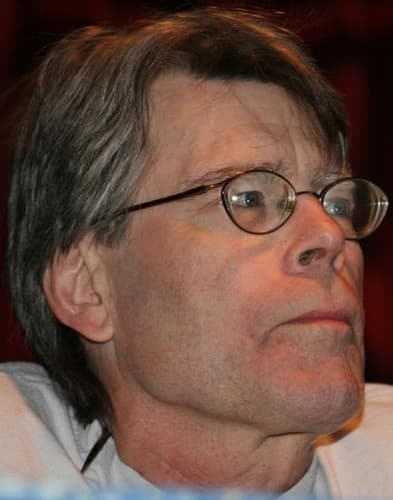
Stephen Edwin King is an American author of horror, supernatural fiction, suspense, crime, science-fiction, and fantasy novels. Described as the "King of Horror", his books have sold more than 350 million copies as of 2006, and many have been adapted into films, television series, miniseries, and comic books. King has published over 65 novels/novellas, including seven under the pen name Richard Bachman, and five non-fiction books. He has also written approximately 200 short stories, most of which have been published in book collections.







