“He'd seen enough death to know it was never pretty, never poetic. It was just... death.”
— Eve Dallas reflecting on a crime scene.

Genre
Thriller / Mystery / Science Fiction / Romance
Reading Time
6-7 hours
Key Themes
See below
Sign in to track this book
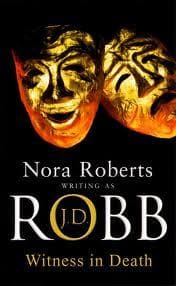
When a star actor's on-stage death blurs the line between performance and murder, Lieutenant Eve Dallas investigates a high-profile case under intense media scrutiny, complicated by her role as a witness and her husband's ownership of the theater.
Lieutenant Eve Dallas and her husband, Roarke, attend opening night of 'Blood Will Tell' at the New Globe Theatre, which Roarke owns. During the third act, actor Charles Butler, playing the villain, is stabbed to death on stage with a real knife instead of a prop. The audience first thinks it's part of the show, but other actors soon realize what happened. Eve, in the audience, immediately secures the crime scene and starts her investigation. The incident creates chaos in the theater world and puts pressure on Eve, as she is the main detective, a witness, and the wife of the theater's owner.
Eve's first interviews reveal complex relationships and rivalries among the cast and crew. The victim, Charles Butler, was known for his talent but also for his arrogance and womanizing. Many disliked him, including his co-star and ex-lover, Nadine Furst, and the play's director, Julian Cross. The media quickly arrives at the New Globe, sensationalizing the murder and highlighting Roarke's ownership, which adds more scrutiny to Eve's investigation. Eve and her partner, Detective Delia Peabody, carefully examine the stage, props, and dressing rooms for clues, trying to tell the difference between theatrical elements and actual evidence.
Eve's investigation quickly shows that the prop knife, designed to retract, was replaced with a real, sharp blade. This detail confirms the murder was planned, not an accident. The focus shifts to who had access to the props and the chance to make the switch. Eve interviews the prop master, stage manager, and other crew members, finding inconsistencies and alibis that are hard to check during the chaos of opening night. The technical aspects of the stage production become key to understanding how the killer managed to commit the murder so smoothly during a live performance, with dozens of witnesses present.
As Eve and Peabody investigate further, they uncover a history of affairs, professional jealousies, and old grudges within the theater company. Charles Butler had a reputation for sleeping with co-stars and manipulating people. Nadine Furst, his ex-lover, admitted hating him. Julian Cross, the director, resented Butler's past actions. Even minor characters like the understudy, Darcia, and the stage manager, Arthur, seem to have secrets. Eve carefully puts together timelines and alibis, finding that many people had both a reason and a chance, making the suspect pool large and interconnected.
Eve focuses on Julian Cross, the acclaimed but private director. She discovers Cross has a hidden past, including a wife and child he abandoned years ago for his career. This paints a picture of a man capable of ruthless ambition and emotional detachment. Further investigation shows that Butler had found out Cross's secret and was using it to blackmail him, threatening to expose his past and ruin his reputation. This gives Cross a strong reason for murder, adding him to the list of main suspects, though he maintains his innocence, claiming he was only trying to protect his family from scandal.
Peabody's thorough work uncovers another secret: Darcia, the seemingly shy understudy, was having a secret affair with Charles Butler and was pregnant with his child. Butler had promised to leave his current girlfriend and marry Darcia, but had recently broken that promise, leaving her devastated. This discovery gives Darcia a strong reason for murder—a scorned lover seeking revenge and protection for her unborn child. Eve considers whether Darcia, driven by despair and betrayal, could have swapped the knives, using her access as an understudy to the stage and props.
Roarke, despite media pressure, actively helps Eve by providing technical expertise and access to the New Globe's advanced systems. He helps her analyze the intricate stage mechanics, lighting cues, and prop storage, looking for anomalies or blind spots the killer might have used. His knowledge of the theater's layout and security systems is invaluable in understanding how someone could have manipulated the props undetected. Together, they review surveillance footage and schematics, trying to find the exact moment the knife swap happened and who had the chance to do it without being noticed by the busy stage crew.
Eve brings Nadine Furst in for a more intense interrogation, pressing her on her volatile relationship with Butler and her alibi. Nadine, while clearly holding deep resentment, maintains her innocence. Her anger seems genuine, but not murderous. Eve also re-interviews other crew members, including the stage manager and prop master, trying to find flaws in their stories. The investigation becomes a psychological battle, as Eve tries to tell true emotion from practiced acting, always aware that everyone involved is a performer, capable of deception. She finds herself sifting through layers of performance to reach the truth.
The breakthrough comes when Eve re-examines the victim's pre-show routine and the specific placement of props on stage. She realizes that the killer must have known Charles Butler's exact movements and habits, and had close knowledge of the stage setup. A subtle detail about a prop's weight or feel, something only an actor closely involved with the scene would notice, starts to make sense. Eve begins to suspect that the killer was not just someone with access, but someone who was part of the performance itself, someone who could blend into the theatrical illusion.
Eve finally confronts Julian Cross, showing him the evidence. She deduces that Cross, meticulous and controlling, had been blackmailed by Butler over his abandoned family. Unable to tolerate the threat to his carefully built life and reputation, Cross planned the murder. He swapped the knives during a complex stage transition, knowing the exact timing and the actors' movements. He used his authority as director to subtly manipulate the stage crew and ensure his plan went unnoticed. Cornered, Cross breaks down, confessing to the murder, revealing his desperation and his cold, calculating nature.
Julian Cross, facing undeniable evidence, confesses to planning and carrying out Charles Butler's murder. He explains how Butler's blackmail about his abandoned wife and child had pushed him to his limit, threatening to destroy his career and public image. Cross details how he used his close knowledge of the play's staging, prop management, and the actors' movements to swap the knives during the chaotic third act. His confession brings grim satisfaction to Eve, who has navigated the complex world of theater and celebrity to uncover the truth. The case, which had captivated the city, is now closed.
The Protagonist
Eve navigates the complexities of a celebrity murder where her personal life is intertwined, reaffirming her dedication to truth despite external pressures.
The Supporting
Roarke uses his resources and influence to support Eve, demonstrating his loyalty and adaptability while facing public scrutiny.
The Supporting
Peabody continues to grow in her detective skills and confidence, proving herself an indispensable partner to Eve.
The Victim
As the victim, his past actions and character are slowly revealed, providing motives for his murder.
The Antagonist
Initially a suspect, he is ultimately revealed as the calculating murderer, driven by his need to protect his reputation and control his life.
The Supporting
Initially a strong suspect due to her public animosity, her character helps to explore the emotional fallout of Butler's actions.
The Supporting
Her secret pregnancy and betrayal by Butler provide a strong red herring and highlight the victim's manipulative nature.
The Supporting
Whitney provides consistent support and oversight for Eve, maintaining departmental order amidst chaos.
This theme is central to the novel, set in a theater where illusion is key. Eve constantly works to distinguish between performance and reality, between what appears true and what actually happened. The murder itself occurs during a play, blurring the lines between staged violence and actual death. Characters, being actors, are good at deception, making it hard for Eve to tell genuine emotion from practiced lies. This theme appears in every interrogation, forcing Eve to look past the surface and the 'performance' of each suspect to find the truth of human motivation.
“"Everyone here is a performer. They live to project. To make you believe. It's my job to see through the show."”
The novel explores the pressure around public image and reputation, especially in the celebrity world of theater. Charles Butler's murder immediately becomes a media circus, with reporters scrutinizing every detail and person involved, including Roarke and Eve. Julian Cross's reason for murder comes directly from his fear that his carefully built reputation would be destroyed by Charles Butler's blackmail. The characters are very aware of how they are seen, and many act to protect their public image, even if it means lying or hiding the truth. This theme highlights the superficiality and fragility of fame.
“"Fame. It's a gilded cage, Eve. And when the bars rattle, everyone looks."”
Almost every character in 'Witness in Death' has significant secrets or leads a double life. Charles Butler's manipulative nature is fueled by his ability to uncover and exploit others' hidden truths. Julian Cross hides an abandoned family, while Darcia hides her secret pregnancy and affair with Butler. These hidden lives create a complex web of motives and resentments that Eve must untangle. The theater, with its backstage areas and dressing rooms, is a metaphor for the hidden parts of human nature, where the 'real' lives of the performers are kept separate from their public personas.
“"Everyone has a backstage, Peabody. A place where the costumes come off and the real face shows. Sometimes, that face is ugly."”
Eve Dallas constantly deals with the intersection of her professional duty and her personal life. Being a witness to the murder and her husband Roarke owning the theater puts personal pressure on her investigation. The media's intense focus on her marriage and Roarke's involvement threatens to compromise her impartiality in the public eye. This theme explores the challenges of remaining objective when personal stakes are high, and how Eve's dedication to justice allows her to navigate these complex ethical and emotional waters without compromising her integrity.
“"This isn't about Roarke. It's about a man who was murdered. And my job is to find who did it, no matter who owns the damn building."”
Misleading clues or suspects designed to divert the reader's attention.
The novel employs several red herrings to complicate the investigation and keep the reader guessing. Nadine Furst's very public and intense animosity towards Charles Butler, and Darcia's secret pregnancy and betrayal, both provide strong motives, making them appear to be viable suspects. These characters and their compelling backstories serve to draw attention away from the true killer, Julian Cross, until Eve meticulously pieces together the more subtle and technical clues. The theatrical setting itself, where deception is inherent, amplifies the effectiveness of these red herrings.
A murder committed within a limited group of suspects, often in an isolated location.
The murder of Charles Butler occurs on stage during a live performance within the New Globe Theatre, effectively creating a closed circle of suspects comprising the cast, crew, and a limited audience. While the audience is large, the actual crime scene and the people with access to the prop knife are severely restricted. This device heightens the tension and allows Eve to meticulously investigate each individual within this contained environment, knowing the killer must be one of them. The theatre acts as a micro-society where everyone is connected, and secrets are hard to keep.
The audience (and Eve) is aware of a character's true nature or motive before others.
Dramatic irony is subtly woven into the narrative, particularly concerning Julian Cross. As the director, he is in control of the play's illusions, and the irony lies in him orchestrating a real murder within a staged one. The audience and Eve, through the investigation, slowly become aware of his manipulative and controlling nature, and his hidden past, long before others in the story fully grasp his capacity for such a crime. This device adds a layer of suspense as Eve closes in on the perpetrator, while the characters around him remain largely oblivious to his true intentions.
Characters' accounts of events are biased or incomplete, requiring Eve to discern the truth.
While Eve Dallas is the primary point-of-view, the 'unreliable narrator' device manifests in the accounts of the various suspects and witnesses. Being actors, many characters are inherently skilled at presenting a curated version of reality. Their testimonies are often colored by personal biases, self-preservation, or genuine confusion about what happened during the chaotic opening night. Eve must constantly sift through these subjective and often contradictory narratives, using forensic evidence and psychological profiling to construct an objective timeline of events and uncover the true story hidden beneath the performances.
“He'd seen enough death to know it was never pretty, never poetic. It was just... death.”
— Eve Dallas reflecting on a crime scene.
“The one thing you could count on with humans was their ability to surprise you, for better or worse.”
— Eve contemplating human nature after an unexpected turn.
“Love wasn't a fairy tale. It was a choice, a commitment, and a hell of a lot of work.”
— Eve's internal thoughts about her relationship with Roarke.
“Sometimes the monster was the one you least suspected, wearing the most charming smile.”
— A realization about the killer's deceptive nature.
“Justice wasn't about revenge. It was about balance, about making things right.”
— Eve's core belief about her mission as a cop.
“Fear was a powerful motivator, but it could also blind you to the truth.”
— Observing how fear impacts a witness's testimony.
“Every secret had a shelf life. Eventually, it rotted and stank.”
— Discussing the inevitable reveal of hidden information.
“There were a lot of ways to kill someone. Not all of them involved a weapon.”
— Considering psychological and emotional forms of destruction.
“He was her anchor, her safe harbor in a world that was constantly trying to drag her under.”
— Eve's feelings about Roarke's presence in her life.
“The past had a way of reaching out and grabbing you, even when you thought you'd outrun it.”
— A character's past catching up to them.
“You couldn't save everyone, but you had to try. That was the job.”
— Eve's internal struggle with the limitations of her role.
“Sometimes the loudest screams were the ones you couldn't hear.”
— Reflecting on unspoken pain and suffering.
“It wasn't about being perfect. It was about being honest, even when it hurt.”
— A moment of vulnerability and truth-telling between characters.
“The city never slept, and neither did its demons.”
— Setting the scene for the constant battle against crime in New York.
Ready to see how well you understood this book? Take our interactive quiz with 10 questions.

Biography coming soon.







