“The truth, the whole truth, and nothing but the truth.”
— A recurring phrase in the courtroom setting, emphasizing the oath taken by witnesses.

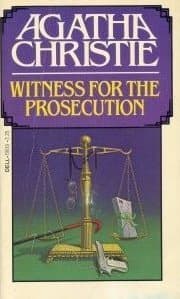
Agatha Christie (1948)
Genre
Thriller / Mystery
Reading Time
180 min
Key Themes
See below
Sign in to track this book
In a courtroom thick with anticipation, Romaine Heilger takes the stand, her testimony poised to either condemn her charming lover, Leonard Vole, to the gallows or unravel a deceitful game that will shock all who bear witness.
Leonard Vole, a charming but somewhat feckless young man, is arrested for the murder of Emily French, a wealthy, elderly widow with whom he had struck up an unlikely friendship. Emily French had recently changed her will, leaving a substantial portion of her estate to Leonard. The police have strong circumstantial evidence against him. Leonard seeks the help of the barrister Sir Wilfrid Robarts, known for his sharp mind and success in court. Despite his initial skepticism about Leonard's story, Sir Wilfrid agrees to take on the case, intrigued by the challenge and Leonard's seemingly earnest plea of innocence. Leonard maintains that he was at home with his wife, Romaine Heilger, at the time of the murder, and she can provide an alibi.
Sir Wilfrid Robarts meets with Romaine Heilger, Leonard Vole's German wife, expecting to discuss her alibi testimony. However, Romaine shocks Sir Wilfrid by calmly stating that she will not provide an alibi for Leonard. Instead, she reveals that Leonard returned home late on the night of the murder, covered in blood, and confessed to killing Emily French. She explains that she despises him and wishes to see him condemned. Sir Wilfrid is taken aback by her cold demeanor and the devastating impact her testimony will have on the defense. He realizes the challenge ahead, as his own client's wife is prepared to be the star witness for the prosecution.
The murder trial begins, drawing public attention. The prosecution presents its case, detailing Leonard's financial motive and the circumstantial evidence placing him at Emily French's house. Romaine Heilger is called to the stand and, to the shock of the courtroom, confirms Sir Wilfrid's fears. She testifies that Leonard came home late on the night of the murder, admitting he had killed Emily French. Her calm, collected, and seemingly truthful demeanor under cross-examination makes her testimony damaging to Leonard's defense. The jury is visibly swayed by her words, and Leonard's chances of acquittal appear to dwindle with each statement from his own wife.
Just as the defense seems lost, Sir Wilfrid receives a cryptic message from a mysterious, disfigured woman who claims to have information vital to the case. He meets her in a dark alley, where she presents him with a packet of love letters allegedly written by Romaine Heilger to another man, a former lover named Max. These letters express Romaine's hatred for Leonard and her desire to see him suffer, even indicating a plot to frame him for murder. The woman, who calls herself Max's former maid, demands a large sum of money for these letters, which Sir Wilfrid reluctantly pays. He believes these letters could be the key to discrediting Romaine and saving Leonard.
Armed with the incriminating letters, Sir Wilfrid recalls Romaine Heilger to the stand for cross-examination. He presents the letters, accusing her of perjury and revealing her alleged affair with Max and her motive to frame Leonard. Romaine initially maintains her composure, denying the letters' authenticity and her involvement with Max. However, under Sir Wilfrid's relentless questioning and the weight of the evidence, her composure breaks. She collapses, admitting to the affair and the hatred she harbored for Leonard, making her previous testimony seem like a calculated lie to condemn him. This dramatic turn shifts the tide of the trial, casting doubt on Romaine's credibility and bolstering Leonard's defense.
Following Romaine's breakdown and the revelation of the letters, the jury deliberates. The prosecution's star witness has been discredited, making her previous testimony unreliable. The defense successfully argues that Romaine's hatred for Leonard and her affair with Max provided her with a strong motive to lie and frame her husband. After a period of suspense, the jury returns with a verdict: Not Guilty. Leonard Vole is acquitted of Emily French's murder, much to the relief of Sir Wilfrid and the public, who now view Romaine as a manipulative and vengeful woman. Leonard is free, and the courtroom erupts in a mix of relief and confusion.
After the trial concludes and Leonard is acquitted, Romaine Heilger requests a private meeting with Sir Wilfrid Robarts. To his astonishment, she calmly reveals the shocking truth: she fabricated the entire story about the letters and the mysterious woman. The woman who provided the letters was, in fact, Romaine herself, disguised with makeup and a changed voice. There was no Max; the letters were forged by her. She explains that she knew her testimony as a loving wife would not be believed by the jury, but her testimony as a scorned, vengeful woman, later discredited by 'new evidence,' would create enough doubt to secure Leonard's acquittal. Her love for Leonard was so strong that she was willing to commit perjury and orchestrate this deception to save him, knowing that if she testified for him, she would not be believed.
As Romaine finishes her confession to Sir Wilfrid, Leonard Vole enters the room, oblivious to Romaine's recent revelation. He is jubilant, celebrating his freedom and expressing gratitude to Sir Wilfrid. However, in a chilling turn, Leonard then casually reveals to Romaine, and by extension, Sir Wilfrid, that he did, in fact, murder Emily French. He explains how he cleverly manipulated the situation, knowing Romaine would go to any lengths to save him. He has a new lover, a young woman named Janet MacKenzie, and now that he is free and wealthy, he plans to leave Romaine. Sir Wilfrid is horrified, realizing the depth of Leonard's depravity and the tragic irony of Romaine's selfless, yet misguided, love. He has saved a guilty man.
Romaine Heilger, upon hearing Leonard's cold confession and his plans to abandon her for Janet MacKenzie, is overcome with a mixture of love, betrayal, and rage. The man she risked everything for, committed perjury for, and orchestrated a deception to save, not only committed the murder but is now mocking her sacrifice and planning to leave her. In a sudden, desperate act, Romaine grabs a knife from Sir Wilfrid's desk and stabs Leonard Vole, killing him instantly. Sir Wilfrid, stunned and horrified, witnesses the murder. Romaine is immediately arrested for Leonard's murder, completing the tragic and twisted cycle of justice and vengeance, leaving Sir Wilfrid to grapple with the moral implications of the entire case.
The Protagonist
He begins as a confident legal mind, is initially misled by Romaine's performance, and ends utterly disillusioned by the true nature of his client and the lengths people go for love and hate.
The Antagonist/Accused
Initially appearing as an innocent victim, he is revealed to be a cold, calculating murderer who cleverly manipulated his wife and the legal system.
The Supporting/Key Witness
She appears as a betrayer, then a scorned lover, only to be revealed as a deeply devoted wife who orchestrated a brilliant deception to save her husband, ultimately ending in his murder and her own arrest.
The Mentioned/Victim
Her character serves as the static victim, whose actions (changing her will) directly lead to her demise and the subsequent trial.
The Supporting
He confidently builds a strong case, only to see it crumble under Sir Wilfrid's cross-examination of Romaine, leading to his defeat.
The Supporting
She remains a steadfast and loyal assistant, observing the unfolding drama with concern for Sir Wilfrid's health.
The Mentioned
Her existence is revealed only to highlight Leonard's treachery and incite Romaine's final, violent act.
The entire plot of 'Witness for the Prosecution' is built upon layers of deception and manipulation. Romaine Heilger's elaborate scheme to save Leonard, involving her initial testimony against him, the creation of the 'mysterious woman,' and the forged letters, is the central act of deception. Leonard Vole himself is a master manipulator, using his charm to gain Emily French's trust and his wife's unwavering loyalty, even knowing he is guilty. Sir Wilfrid Robarts, a seasoned lawyer, is manipulated by Romaine, showing how even sharp minds can be fooled when emotions and hidden motives are at play. The play constantly challenges the audience to question what is real and what is fabricated.
““There is no doubt about it. She hates him. She hates him with a most deadly and venomous hatred.””
Romaine Heilger's actions, initially perceived as hatred, are ultimately revealed to be driven by an intense, obsessive love for Leonard Vole. This love is so powerful that she is willing to commit perjury, orchestrate an elaborate charade, and sacrifice her own reputation to save him. Her love transcends conventional morality, leading her to extreme measures. Conversely, Leonard Vole's lack of genuine love and his betrayal of Romaine's devotion underscore the destructive potential of one-sided or unrequited passion. The play explores the dark side of love, where it can lead to both immense sacrifice and ultimate destruction.
““A woman can love a man so much that she can hate herself for loving him.””
The play raises questions about the nature of justice and truth within the legal system. Sir Wilfrid Robarts is dedicated to uncovering the truth, yet he is ultimately instrumental in securing an acquittal for a guilty man due to Romaine's manipulation. The courtroom, meant to be a place where truth prevails, becomes a stage for an elaborate performance. The verdict, though legally sound based on the presented evidence, is morally perverse. Romaine killing Leonard can be seen as a form of 'poetic justice,' administered outside the bounds of the law, suggesting that sometimes the legal system fails to deliver true justice.
““Justice, Sir Wilfrid. Justice. That's what one is after.””
Agatha Christie shows how perception and the presentation of evidence can dramatically alter the course of justice. Romaine's initial testimony against Leonard, delivered with cold conviction, is taken as truth. Later, when the 'incriminating letters' are introduced, her previous testimony is perceived as a lie, and she is seen as a vengeful woman. The audience, like the jury, is led to believe different versions of the truth based on what evidence is presented and how it is interpreted. The play highlights the fragility of 'truth' when it relies solely on eyewitness accounts and circumstantial evidence, and how easily it can be manipulated.
““Circumstantial evidence is a very tricky thing. It may seem to point to one thing, but it may actually mean something quite different.””
Romaine Heilger's testimony and persona are deliberately misleading.
Romaine Heilger serves as the ultimate unreliable witness. Her initial testimony, delivered with chilling conviction, is designed to appear truthful but is later revealed as a calculated lie. Her subsequent 'performance' as the scorned lover, complete with the 'mysterious woman' and forged letters, is also a fabrication. This device keeps both the characters (especially Sir Wilfrid) and the audience guessing about the true state of affairs, constantly shifting their perception of guilt and innocence. It underscores the theme that appearances can be deceiving, especially in a courtroom setting where truth is filtered through testimony and interpretation.
The shocking revelation of Romaine's deception and Leonard's guilt after the verdict.
Agatha Christie is famous for her twist endings, and 'Witness for the Prosecution' delivers one of her most impactful. The initial twist is Romaine's revelation to Sir Wilfrid that she orchestrated the entire charade to save Leonard. This is immediately followed by an even more shocking twist: Leonard's casual confession of his guilt and his plan to abandon Romaine. This double twist completely recontextualizes all preceding events, turning a seemingly just acquittal into a profound miscarriage of justice and leading directly to the play's violent climax. It is a hallmark of the mystery genre, designed to surprise and leave a lasting impression on the audience.
The audience often has a different understanding of events than the characters.
Dramatic irony is prevalent throughout the play. From the moment Romaine tells Sir Wilfrid she will testify against Leonard, the audience is aware of her seemingly hostile intentions, while Leonard remains oblivious to her true plan. Later, after the acquittal, the audience (and Sir Wilfrid) learn the full extent of Romaine's deception and Leonard's true guilt, while the public and the jury remain ignorant. This creates tension and suspense, as the audience watches characters act on incorrect assumptions, knowing the devastating truth that will eventually be revealed. The final moments are particularly ironic, as Sir Wilfrid, a champion of justice, has inadvertently saved a murderer.
The trial itself serves as the primary setting and engine of the plot.
The majority of the play unfolds within the confines of the courtroom, making the legal proceedings themselves a central plot device. The structure of the trial—opening statements, witness testimonies, cross-examinations, and the jury's deliberation—drives the narrative forward. The formal setting and the rules of evidence create a framework within which the characters must operate, highlighting the limitations and vulnerabilities of the legal system when faced with cunning manipulation. The courtroom becomes a stage for performance, where truth is not always what it seems, and the fate of a man hangs in the balance of rhetoric and evidence.
“The truth, the whole truth, and nothing but the truth.”
— A recurring phrase in the courtroom setting, emphasizing the oath taken by witnesses.
“You must not allow your feelings to influence your judgment.”
— Advice given to a character about maintaining objectivity in the case.
“The evidence is circumstantial, but it is strong.”
— A lawyer discussing the nature of the case against the defendant.
“I am not here to tell you what to think, but to present the facts.”
— A statement made during a legal argument to focus on evidence.
“In a court of law, it is not what you know, but what you can prove.”
— Reflecting on the limitations and challenges of the legal system.
“Every man is entitled to a defense, no matter how heinous the crime.”
— A principle upheld by the defense attorney in the story.
“The wheels of justice grind slowly, but they grind exceedingly fine.”
— A philosophical observation about the thoroughness of legal proceedings.
“Do not underestimate the power of a clever lie.”
— A warning about deception and its impact on the case.
“It is a dangerous thing to jump to conclusions.”
— Cautioning against premature judgments in the mystery.
“The past has a way of catching up with us.”
— A reflection on how history and secrets influence the present.
“In the end, the truth will out.”
— An optimistic belief that facts will eventually be revealed.
“A good lawyer knows when to speak and when to listen.”
— Advice on the skills required for effective legal practice.
“Sometimes the most innocent face hides the darkest secrets.”
— A remark on appearances and hidden motives in the story.
Ready to see how well you understood this book? Take our interactive quiz with 10 questions.
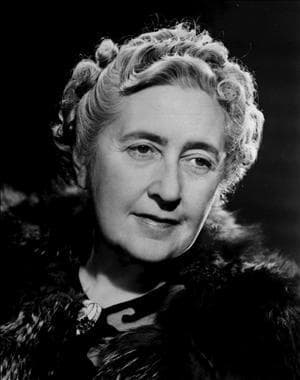
Dame Agatha Mary Clarissa Christie, Lady Mallowan, was an English writer known for her 66 detective novels and 14 short story collections, particularly those revolving around fictional detectives Hercule Poirot and Miss Marple. She also wrote the world's longest-running play, the murder mystery The Mousetrap, which has been performed in the West End since 1952. A writer during the "Golden Age of Detective Fiction", Christie has been called the "Queen of Crime". She also wrote six novels under the pseudonym Mary Westmacott. In 1971, she was made a Dame (DBE) by Queen Elizabeth II for her contributions to literature. Guinness World Records lists Christie as the best-selling fiction writer of all time, her novels having sold more than two billion copies.







