“The house was a living thing, breathing in the cold air, exhaling the memories of those who had lived and died within its walls.”
— The narrator's initial impression of the isolated house.

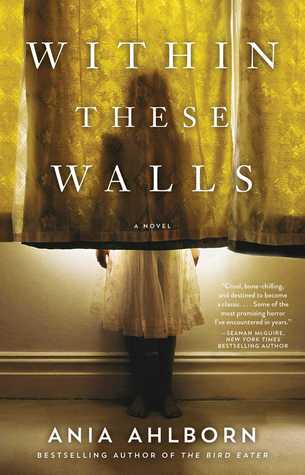
Ania Ahlborn (2015)
Genre
Thriller / Mystery
Reading Time
10-12 hours
Key Themes
See below
Sign in to track this book
A desperate true-crime writer, seeking a comeback, investigates a cult leader's farmhouse, only to find the 'faithful departed' are still present.
Lucas Graham, a once-successful crime writer, faces a failing marriage and stalled career. Desperate for a comeback, he receives an exclusive offer: to interview Jeffrey Halcomb, a charismatic cult leader on death row. Halcomb was responsible for the gruesome deaths of his followers, known as 'diviners,' thirty years prior at a farmhouse in Washington State. Lucas sees this as his last chance to revive his career and potentially save his marriage, despite the unsettling nature of the subject. He leaves New York, driven by the lure of a story that could redefine his professional life.
Lucas travels to the remote, gray-sanded beach of Washington State and moves into the farmhouse where Jeffrey Halcomb's cult, the 'Family,' lived and died. The house is isolated, old, and immediately gives Lucas an eerie feeling. He plans to immerse himself in the environment, hoping to gain insights for his book. The solitude and the house's dark history begin to weigh on him, even before anything supernatural occurs. He starts setting up his writing space, determined to make progress despite the oppressive atmosphere.
Lucas's initial interview with Jeffrey Halcomb fails. Halcomb, despite promising exclusive access, is evasive, manipulative, and offers no real insights into the cult's motives or the deaths. He speaks in riddles and cultic rhetoric, leaving Lucas with more questions than answers. This forces Lucas to abandon his initial plan of relying solely on Halcomb's testimony. He realizes he must uncover the truth about the 'diviners' and the events of thirty years ago on his own, by investigating the farmhouse's history and its secrets.
Soon after moving in, Lucas begins to experience unsettling phenomena. Objects move on their own, whispers echo in empty rooms, and he feels a constant sense of being watched. These are not just subtle disturbances; they become increasingly frequent and intense. He tries to rationalize them as stress, exhaustion, or suggestion, but the occurrences become too pervasive to ignore. The house itself seems alive, and Lucas starts to suspect that the 'diviners' Halcomb promised eternal life to might still be present within its walls.
The unsettling occurrences escalate into full visions and auditory hallucinations. Lucas sees ghostly figures, often young people, and hears their fragmented conversations and cries for help. These are not just fleeting glimpses; they are detailed and immersive, making him question his sanity. He struggles to distinguish between what is real and what is a manifestation of the house's dark past. The spirits of the 'diviners' seem to be actively communicating with him, drawing him deeper into their tragic history.
Driven by the paranormal activity and Halcomb's unhelpfulness, Lucas begins to research the cult's history extensively. He digs through old newspaper archives, police reports, and any available documentation about Jeffrey Halcomb and the 'Family.' He learns about the young runaways and vulnerable individuals Halcomb preyed upon, promising them a utopian family and eternal life. The more he uncovers, the more he realizes the depth of Halcomb's manipulation and the horrific extent of the tragedy that unfolded in the farmhouse.
As Lucas continues his research and endures the escalating paranormal activity, he slowly pieces together the individual stories of the 'diviners.' He learns about their hopes, their vulnerabilities, and how they were drawn into Halcomb's web. The visions become more coherent, revealing snippets of their daily lives, their indoctrination, and ultimately, the horrifying events leading to their deaths. He begins to feel empathy for them, realizing they were victims, not willing participants in their demise.
In a shocking twist, Jeffrey Halcomb, through legal maneuvering, gets a temporary transfer from death row back to the farmhouse where his crimes occurred, supposedly for an appeal-related visit. This development terrifies Lucas, who is already on edge from the supernatural occurrences. Halcomb's physical presence in the house amplifies the malevolent energy, and Lucas realizes Halcomb's true intent: to reclaim his domain and perhaps even finish what he started, or maintain his power over the spirits still trapped there.
With Halcomb back in the house, the paranormal activity becomes intense. Lucas is forced into a direct confrontation with the cult leader. During this terrifying encounter, Halcomb reveals the full extent of his depravity and his belief in the 'eternal life' he promised his followers. He demonstrates chilling control over the spirits, confirming Lucas's fears that the diviners are not at peace. Lucas understands that Halcomb's power extends beyond the grave, and he is a conduit for the lingering malevolence.
Lucas understands that his presence in the house is not just about writing a book; it is about helping the trapped spirits of the diviners. He realizes that Halcomb's return has re-energized their torment, and they are still under his psychic control. Lucas, initially seeking a story, now feels a responsibility to set them free. This means directly challenging Halcomb and the dark energy that binds the spirits to the house, even if it means putting his own life and sanity in peril.
The climax sees Lucas in a desperate, terrifying battle within the farmhouse. He confronts Halcomb, not just physically, but spiritually, fighting against the cult leader's manipulative power over the lingering spirits. The house itself becomes a participant, its walls breathing and the air thick with past anguish. Lucas uses his understanding of the diviners' stories and his own will to break Halcomb's hold, attempting to provide the spirits with the peace they were denied in life and death.
Lucas survives the terrifying ordeal, but he is irrevocably changed. The specific outcome of the confrontation with Halcomb and the spirits is left ambiguous, hinting that some shadows may always remain. He has faced true evil and the supernatural, enduring psychological and physical torment. While he may have achieved a measure of peace for some of the spirits or broken Halcomb's immediate hold, the experience leaves him scarred, forever haunted by the events within those walls. His life and career are redefined by this harrowing journey.
The Protagonist
Lucas transforms from a cynical, career-driven writer into a compassionate individual willing to risk everything to help the trapped spirits find peace.
The Antagonist
Halcomb remains largely static in his malevolence, his character arc defined by the revelation of his enduring power and cruelty.
The Supporting/Victims
Their arc is one of gradual revelation of their suffering and a hopeful, though ambiguous, journey towards potential release or peace through Lucas's intervention.
Lucas Graham's initial motivation for taking on the Halcomb story is selfish: to revive his failing career and marriage. This ambition drives him into a dangerous situation, blinding him to the potential spiritual and psychological costs. The book explores how the pursuit of success can lead individuals to compromise their ethics or put themselves in grave peril, as seen when Lucas pushes deeper into the house's mysteries despite terrifying warnings. It questions the price of fame and professional redemption.
“He needed a win, a story so big it would obliterate the failures of the past decade. This was it.”
The novel shows that evil can persist beyond physical death and incarceration. Jeffrey Halcomb, even on death row, maintains a chilling influence over the farmhouse and the spirits of his victims. His malevolence is not contained by prison bars; it emanates from him and is ingrained in the fabric of the house. This theme explores how trauma and dark intentions can leave a lasting mark, perpetuating suffering and preventing peace for those affected, highlighting the psychological and spiritual dimensions of evil.
“He didn't need to be here to be here. His presence permeated every inch of the house.”
The book explores how vulnerable individuals can be manipulated by a charismatic leader promising belonging and purpose. The 'diviners' were drawn to Halcomb's message of 'family, unity, and unconditional love,' only to be exploited and destroyed. This theme examines the psychological mechanisms of cults, the human need for acceptance, and how easily belief systems can be twisted into instruments of control and destruction. It shows the tragic consequences when trust is betrayed by a malevolent force.
“He promised them forever, and in a way, he delivered. Just not the forever they imagined.”
Lucas Graham's journey changes from self-serving ambition to a genuine desire to help the tormented spirits. As he uncovers the tragic stories of the 'diviners,' his initial detachment gives way to empathy. He realizes that his purpose in the house goes beyond writing a book; it is about providing peace and justice for the victims. This theme highlights how confronting past injustices and extending compassion, even to the long-dead, can be a path to personal redemption and a more meaningful existence, transforming the protagonist's moral compass.
“It wasn't just a story anymore. It was a plea, a silent scream for someone to finally listen.”
The farmhouse as a character and repository of past trauma.
The isolated farmhouse is more than just a setting; it's an active participant in the story. Its dilapidated state, remote location, and history of horrific events create an oppressive, claustrophobic atmosphere. The house physically manifests the lingering trauma, acting as a conduit for the spirits and a prison for their anguish. It amplifies Lucas's fear and isolation, blurring the lines between reality and the supernatural, making him question his sanity. The house itself is a character, bearing witness to and perpetuating the evil within its walls.
Lucas's deteriorating mental state blurs the line between reality and hallucination.
As Lucas spends more time in the haunted farmhouse and endures the escalating supernatural phenomena, his psychological state deteriorates. This introduces an element of unreliable narration, where the reader, along with Lucas, questions whether the visions and voices are truly paranormal or manifestations of his stress, isolation, and potential descent into madness. This device heightens the tension and suspense, keeping the reader guessing about the true nature of the events and deepening the psychological horror.
Jeffrey Halcomb's enduring psychological power over the living and the dead.
Jeffrey Halcomb is not just a physical threat; his primary power lies in his psychological manipulation. Even from death row, he plays mind games with Lucas, and his influence over his former followers persists beyond their deaths. This device highlights how a charismatic individual can exert profound control, not only convincing people to commit horrific acts but also trapping their spirits in a state of torment. Halcomb's manipulation is the driving force behind both the original tragedy and the ongoing horror in the farmhouse.
Supernatural glimpses into the past lives and deaths of the diviners.
Lucas experiences vivid, often terrifying, visions and auditory flashbacks that provide direct insight into the lives and deaths of the 'diviners.' These aren't just narrative exposition; they are visceral, immersive experiences that blur the line between past and present. This device allows the author to reveal crucial plot details and character backstories in a dynamic, horrifying way, making the reader feel as if they are witnessing the events alongside Lucas, deepening the emotional impact of the tragedy.
“The house was a living thing, breathing in the cold air, exhaling the memories of those who had lived and died within its walls.”
— The narrator's initial impression of the isolated house.
“Some secrets are meant to stay buried, no matter how much they claw at the surface.”
— Reflecting on the dark history of the house and its former occupants.
“Fear has a way of tricking your mind, making you see and hear things that aren't there. Or are they?”
— The narrator questioning their sanity as strange events unfold.
“There's a difference between being alone and being lonely. Sometimes, being alone is a luxury.”
— The narrator appreciating the solitude of the house, initially.
“The past isn't just a story; it's a foundation upon which the present is built, and sometimes, that foundation is rotten.”
— Discovering the disturbing history of the previous owner, Andrew.
“Every house has its ghosts, whether they're spectral figures or just the echoes of past lives.”
— A general observation about old houses and their lingering presence.
“The silence in the house wasn't empty; it was heavy, pregnant with untold stories.”
— Describing the oppressive quiet of the isolated house.
“You can try to outrun your demons, but eventually, they catch up. Especially when you invite them in.”
— The narrator realizing they are trapped with the house's dark history.
“Some evil isn't born; it's cultivated, nurtured in the dark corners of the human heart.”
— Reflecting on the nature of Andrew's malevolence.
“The truth is rarely simple, and often, it's far more terrifying than any lie.”
— Unraveling the complex and horrific events that occurred in the house.
“It's amazing how quickly a sanctuary can become a prison.”
— The narrator's realization about the house they initially sought refuge in.
“The line between madness and reality blurs when you're alone with your own thoughts for too long.”
— The narrator's deteriorating mental state due to isolation and fear.
“Some scars aren't visible, but they run deeper than any cut.”
— Reflecting on the lasting impact of trauma and past events.
“The house demanded a sacrifice, and it always got what it wanted.”
— A sense of the house having a malevolent will of its own.
Ready to see how well you understood this book? Take our interactive quiz with 10 questions.







