“I mean, how many times can a girl get her heart broken before she just gives up on the whole thing?”
— Tallulah is feeling particularly down about boys and romance.

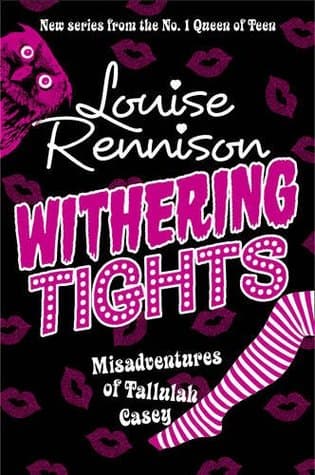
Louise Rennison (2011)
Genre
Young Adult / Romance
Reading Time
300 min
Key Themes
See below
Sign in to track this book
At a remote performing arts college, Tallulah and her friends face hilarious amateur dramatics, unexpected crushes, and the challenges of chasing their theatrical dreams.
Tallulah Casey, a self-proclaimed 'luverly' 14-year-old, arrives at Dother Hall Performing Arts College in the remote Yorkshire Dales for a six-week summer course. Her initial impressions are far from glamorous; the college is an old, slightly dilapidated building surrounded by sheep and eccentric villagers. She immediately feels lonely, missing her family and friends, especially her best mate Jas. Her first interactions with the other early arrivals are awkward, and she worries about fitting in. The promised 'showbiz' experience seems distant, replaced by a dusty room and the unnerving quiet of the countryside.
Tallulah feels relief when her best friends, Jas and Dee, finally arrive, bringing their usual boisterous humor and a much-needed sense of normalcy. Their reunion is full of hugs, gossip, and shared excitement about the summer. Soon after, they meet new roommates and fellow students, including the dramatic and fashion-conscious Flo and the more reserved, academically inclined Viki. The group quickly forms a close clique, navigating Dother Hall together. They bond over shared anxieties about the course, the lack of boys, and the general weirdness of their new environment, changing Tallulah's initial apprehension into a feeling of camaraderie.
The arrival of the male students causes excitement among the girls. Tallulah, Jas, Dee, and Flo immediately begin assessing the new talent. Among them are the charming and slightly mysterious Cain, the sweet and artistic Alex, and the more rugged, local Will. Tallulah feels drawn to Cain, despite his somewhat aloof demeanor. The presence of boys instantly changes the atmosphere at Dother Hall, introducing romance, crushes, and subtle competition among the girls. The focus quickly divides between their performing arts studies and the intricate dance of adolescent flirtation and developing relationships.
The summer course officially begins, and the students start a demanding schedule of acting, singing, and dancing classes. Tallulah, despite her enthusiasm, struggles with some of the more technical aspects, particularly ballet. Auditions are held for the end-of-course production, 'The Withering Heights Musical,' a bizarre adaptation of Emily Brontë's classic. Tallulah, Jas, and Dee all try out, experiencing the nerve-wracking process of performing under pressure. Tallulah's audition is a mix of awkwardness and unexpected charm, leaving her uncertain about her chances. The reality of professional training begins to set in, challenging their initial carefree attitudes.
Tallulah's crush on Cain intensifies, leading to a series of awkward encounters and hopeful interpretations of his actions. She frequently confides in Jas and Dee, dissecting every glance and casual conversation. However, complications arise as other girls, particularly Flo, also express interest in Cain, creating a subtle rivalry. There are moments of connection between Tallulah and Cain, but also frustrating misunderstandings and mixed signals that leave Tallulah feeling confused and insecure. Her attempts at sophisticated flirtation often backfire, leading to comedic mishaps and further self-doubt about her attractiveness and ability to impress him.
Beyond Dother Hall, Tallulah and her friends explore the quirky local village and its surrounding Dales. They encounter eccentric local characters, including the bearded cheesemakers and other peculiar residents. These excursions often lead to humorous situations, from getting lost on walks to navigating unusual village shops. Tallulah finds herself unexpectedly charmed by the rugged landscape and the unpretentious nature of the locals, a stark contrast to her urban life. These experiences provide a backdrop for their developing friendships and romantic entanglements, adding a touch of rustic charm to their showbiz ambitions.
Rehearsals for 'The Withering Heights Musical' begin, and the students quickly discover the challenges of putting on a production. Tallulah is cast in a minor but memorable role, while Jas and Dee secure more prominent parts. The director, a flamboyant and demanding instructor, pushes them to their limits. There are moments of frustration, missed lines, and forgotten choreography, but also breakthroughs and shared laughter. Tallulah struggles with her stage fright and the technical demands of acting, but finds support in her friends. Creating a show together strengthens their bonds and offers insights into the world of theatre.
A much-anticipated school disco provides a focal point for the simmering romantic tensions. Tallulah hopes for a significant moment with Cain, but the evening is filled with typical teenage drama. There are awkward dances, whispered conversations, and moments of both triumph and heartbreak. Tallulah experiences a mix of exhilaration and disappointment, as her interactions with Cain remain ambiguous. Other relationships develop and falter, and new crushes emerge. The disco highlights the complexities and unpredictability of adolescent love in a high-energy, social setting.
The day of the performance of 'The Withering Heights Musical' arrives, filled with nerves and excitement. The show itself is a chaotic, hilarious, and ultimately endearing spectacle, showing the students' amateur enthusiasm and occasional flashes of talent. Tallulah, despite her initial stage fright, delivers her lines with unexpected confidence. There are technical glitches, forgotten props, and ad-libbed moments, but the audience, largely composed of local villagers and parents, responds with warmth and laughter. The performance is the culmination of their six weeks of hard work and camaraderie, a shared experience that solidifies their friendships.
As the six-week course ends, a bittersweet atmosphere settles over Dother Hall. Tallulah and her friends exchange heartfelt goodbyes, promising to keep in touch. Her romantic situation with Cain remains unresolved, but she leaves with a clearer understanding of herself and her aspirations. The summer has been a journey of self-discovery, friendship, and first crushes, far exceeding her initial expectations despite the lack of traditional 'glamour.' Tallulah reflects on her growth, the bonds she's formed, and the lessons learned about acting, friendship, and navigating teenage romance, looking forward to future adventures.
The Protagonist
Tallulah grows from a self-conscious girl worried about fitting in to someone more confident in her friendships and her burgeoning acting skills, even if her romantic life remains a bit chaotic.
The Supporting
Jas remains a steadfast and supportive friend, growing in her own performance abilities and navigating her own romantic interests.
The Supporting
Dee develops her own romantic connection and grows more comfortable expressing herself within the performing arts environment.
The Supporting
Cain remains somewhat enigmatic, serving primarily as the object of Tallulah's affection and a catalyst for her romantic growth.
The Supporting
Flo maintains her dramatic persona, providing a contrasting personality within the group and experiencing her own romantic pursuits.
The Supporting
Alex develops a romantic connection with Dee, establishing himself as a kind and reliable character.
The Supporting
Will forms a romantic connection with Jas, integrating a local perspective into the college dynamics.
The Supporting
Viki maintains her studious and observant nature, serving as a quieter, grounding presence among the more boisterous girls.
The summer course at Dother Hall is a time for Tallulah and her friends to explore who they are, both as performers and as individuals. Tallulah's internal monologues constantly reflect her quest to understand her feelings, her appearance, and her place in the world. Her struggles with acting, her crushes, and her friendships all contribute to her growing self-awareness. For example, her initial self-consciousness about her dancing gives way to a quiet confidence by the end of the show, marking a personal triumph over self-doubt.
“''I was only fourteen, but already I was an expert in the complicated dance of not knowing who you were, but desperately wanting to be someone else, someone 'luverly'.''”
At the story's heart are the strong bonds between Tallulah, Jas, and Dee, and the new friendships formed at Dother Hall. The girls rely on each other for emotional support, advice, and laughter, navigating the challenges of a new environment and the complexities of teenage romance together. Their shared experiences, from awkward classes to late-night gossip sessions, strengthen their connections. Even with minor rivalry, like with Flo, the underlying support network of the core group remains important, highlighting the value of solidarity during formative years.
“''It was good to have Jas and Dee here. They were like my personal reality check, and also my personal cheerleaders, all rolled into one slightly mad package.''”
The novel humorously and realistically portrays the exhilarating, confusing, and often awkward experience of first crushes and developing romance. Tallulah's intense infatuation with Cain, her constant overanalysis of his every move, and the mixed signals she receives are central to the plot. The story explores the hope, vulnerability, and occasional heartbreak that come with adolescent romantic pursuits. It shows how even small interactions can feel monumental when viewed through the lens of a first crush, shaping perceptions and fueling dramatic internal monologues.
“''He looked at me. Not just 'at' me, but 'into' me. My heart did a tiny dance, a quick foxtrot of hope and terror.''”
Tallulah's initial expectation of a glamorous 'Fame!' experience at Dother Hall quickly clashes with the reality of a slightly rundown college, demanding classes, and the hard work of rehearsals. The theme explores the gap between idealized dreams of showbiz and the often unglamorous, challenging process of training. From struggling with ballet to enduring eccentric directors and bizarre musical adaptations, the students learn that performing arts require dedication and resilience, not just natural talent or a desire for fame. This contrast provides much of the novel's humor and grounding.
“''It was not 'FAME! I'm gonna liiiiive foreeeeeever!' It was more like 'Fame! I'm gonna fall over in a heap and probably get a splinter in my bottom!'''”
The story is told through Tallulah's humorous, stream-of-consciousness internal monologue.
The entire novel is presented from Tallulah Casey's perspective, mimicking a diary or journal format. This allows for direct access to her thoughts, anxieties, observations, and humorous interpretations of events. Her distinctive voice, filled with slang, exclamation marks, and parenthetical asides, creates an intimate and immediate connection with the reader. This device is crucial for conveying her self-consciousness, her intense crushes, and the comedic timing of her internal reactions to the world around her, making her a highly relatable and entertaining protagonist.
The narrative relies heavily on Tallulah's self-deprecating humor and physical mishaps.
The novel employs a significant amount of humor, primarily through Tallulah's witty observations, her often-awkward social interactions, and outright slapstick moments. Her attempts at sophisticated flirting that backfire, her physical struggles in dance class, and the general chaos of teenage life contribute to a lighthearted and comedic tone. This device makes the more serious themes of self-discovery and first love feel approachable and entertaining, ensuring the reader is constantly amused by Tallulah's predicaments and her unique way of narrating them.
The remote and quirky performing arts college and its surroundings serve as a unique backdrop.
Dother Hall, nestled in the remote Yorkshire Dales, acts almost as a character itself. Its slightly dilapidated charm, coupled with the eccentric local villagers, provides a distinct and often humorous contrast to the students' showbiz aspirations. The isolation of the setting forces the characters to rely on each other, intensifying their relationships. The 'Up North' location adds to the comedic fish-out-of-water scenario for Tallulah and her friends, highlighting the clash between their urban sensibilities and the rural environment.
Romantic and social interactions are often driven by characters misinterpreting intentions.
A recurring plot device, particularly in Tallulah's romantic pursuits, is the frequent occurrence of misunderstandings and mixed signals. Tallulah often overanalyzes Cain's casual gestures or ambiguous comments, leading her to jump to conclusions, both hopeful and despairing. This fuels much of the romantic tension and comedic drama, as her internal narrative speculates wildly about what others truly mean. This device accurately captures the common teenage experience of navigating social cues and the often-confusing world of crushes.
“I mean, how many times can a girl get her heart broken before she just gives up on the whole thing?”
— Tallulah is feeling particularly down about boys and romance.
“Boys are like buses. You wait for ages for one, and then two come along at once.”
— Tallulah's mum gives her advice about boys.
“It's not that I don't want to be in love. It's just that I don't want to be hurt.”
— Tallulah reflects on her desire for love versus her fear of pain.
“Why do boys have to be so complicated? And why do I have to like complicated boys?”
— Tallulah is frustrated with the confusing signals she's getting from a boy.
“Sometimes you just have to take a leap of faith, even if you're not sure where you're going to land.”
— Tallulah considers taking a risk in her romantic life.
“Being a teenager is basically just one long, embarrassing moment, isn't it?”
— Tallulah muses on the general awkwardness of adolescence.
“I really need a boyfriend who understands that 'going out' means 'eating pizza and watching DVDs' not 'going to a club and dancing'.”
— Tallulah expresses her ideal, low-key date.
“It's amazing how much drama you can cram into one summer.”
— Tallulah reflects on the events of her summer.
“I think I might be allergic to sensible decisions.”
— Tallulah makes a questionable choice, acknowledging her tendency.
“Why is it that the boys you really like are always the ones who are completely unattainable?”
— Tallulah laments the difficulty of liking boys who are out of reach.
“You can't force someone to like you, no matter how much you want them to.”
— Tallulah learns a hard lesson about unrequited feelings.
“Maybe true love isn't about grand gestures, but about someone who just gets you.”
— Tallulah ponders the nature of true love.
“I'm not looking for perfect. I'm looking for real.”
— Tallulah expresses her desire for authenticity in relationships.
“Sometimes the best way to get over someone is to get under someone else. Or, you know, just eat a lot of chocolate.”
— Tallulah contemplates coping mechanisms for a breakup.
Ready to see how well you understood this book? Take our interactive quiz with 10 questions.

Biography coming soon.