BookBrief
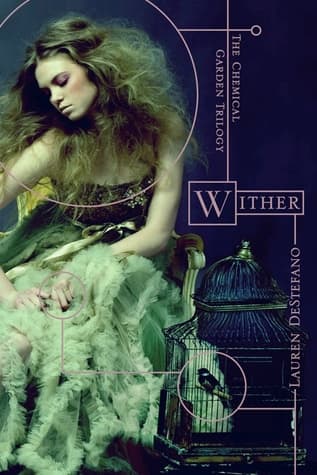
Wither cover
Archivist's Choice

Wither

Lauren DeStefano (2011)

Genre

Fantasy / Science Fiction / Young Adult

Reading Time

450 min

Key Themes

See below

Track Your Reading

Sign in to track this book

In a future where women die at twenty and are forced into polygamous marriages, a kidnapped bride must escape her enigmatic husband and his corpse-hoarding father.

Synopsis

In a future where a genetic plague limits women's lives to 20 years and men's to 25, sixteen-year-old Rhine Ellery is kidnapped and sold into polygamy as a 'bride.' She finds herself in a lavish estate, married to the kind but naive Linden, alongside two other sister wives: the volatile Jenna and the seemingly docile Cecily. Rhine's main goal is to escape and reunite with her twin brother, Rowan, before her own time runs out. Rhine soon discovers that Linden's father, a brilliant but disturbed doctor, is obsessed with finding an antidote to the plague, conducting gruesome experiments in the estate's basement. With the help of Gabriel, a servant she befriends, Rhine plots her escape. She struggles with her growing, complicated feelings for Linden, who genuinely loves her and offers a life of comfort, but she also recognizes the urgency of her situation. As she navigates the dangerous dynamics with her sister wives and the doctor's sinister research, Rhine makes a desperate bid for freedom, only to find the outside world even more dangerous than the gilded cage she left behind.
Reading time
450 min
Difficulty
Medium
Pacing
Moderate
Mood
Dystopian, Suspenseful, Romantic, Melancholy
✓ Read this if...
You enjoy dystopian narratives with a focus on survival, forbidden romance, and the challenges of a patriarchal society.
✗ Skip this if...
You prefer fast-paced action over character-driven introspection and world-building, or are sensitive to themes of forced marriage and human experimentation.

Plot Summary

The Kidnapping

Rhine Ellery, a sixteen-year-old girl living in a future where females die at age 20 and males at 25, is kidnapped from her impoverished home. 'Gatherers' raid communities to find young girls to sell as brides. During the abduction, Rhine is separated from her twin brother, Rowan, and her only thought is to escape and return to him. She is taken with other captured girls to a lavish estate, where she learns she is to become a polygamous bride to a wealthy young man named Linden Ashby. Shocked by her new reality, she immediately begins to plot her escape.

Arrival at the Estate

Upon arriving at the opulent Ashby estate, Rhine meets her husband, Linden, a kind but naive young man who seems to care for her. She also meets her two sister wives: Jenna, an older, cynical woman who is initially hostile, and Cecily, a much younger and more innocent girl who quickly likes Rhine. The estate is a gilded cage, offering luxuries Rhine has never known, but also strict rules and constant surveillance. Rhine receives beautiful clothes and food, but the threat of her forced marriage and the limited lifespan of all women hangs over her, fueling her desire for freedom.

The Doctor's Obsession

Rhine learns that Linden's father, Dr. Vaughn, is a brilliant but eccentric scientist obsessed with finding an antidote to the genetic disease that causes early death. His research takes place in a hidden laboratory within the estate. Rhine grows suspicious of his methods. She discovers that Dr. Vaughn performs unethical experiments, even on living subjects, and that the mansion's basement holds a gruesome secret: a morgue filled with the bodies of young women who have died from the disease. This revelation strengthens Rhine's resolve to escape, fearing she might become another one of Dr. Vaughn's test subjects.

A Budding Alliance

As Rhine navigates her new life, she finds an unexpected ally in Gabriel, one of the estate's servants. Gabriel is a quiet, observant young man who works in the kitchens and often brings Rhine her meals. Through stolen glances and hushed conversations, they begin to connect, based on mutual understanding and a shared desire for freedom. Gabriel also feels trapped by his circumstances and the oppressive atmosphere of the estate. He becomes Rhine's confidant and eventually agrees to help her plan an escape, providing her with valuable information about the estate's layout and routines.

The Sister Wives' Dynamics

Rhine's relationships with her sister wives, Jenna and Cecily, are complex and shifting. Jenna, initially resentful, slowly softens towards Rhine, seeing a reflection of her past self. She offers Rhine cautious advice and warnings about Dr. Vaughn. Cecily, on the other hand, is young and naive, often unaware of the darker realities of their situation. She becomes pregnant, a source of both joy and fear, as the pressure to bear children is immense. The dynamics between the wives reflect the larger societal struggle, showing themes of jealousy, competition, and fragile alliances under duress.

Linden's Affection

Despite her captivity, Rhine finds it hard to hate Linden entirely. He is genuinely kind, caring, and seems deeply in love with her. He showers her with gifts, tries to make her happy, and is often oblivious to the darker aspects of his father's work and the true nature of their world. Rhine is torn between her revulsion for her forced marriage and the unexpected warmth she sometimes feels for Linden. His affection complicates her escape plans, as she struggles with the guilt of potentially hurting him, even as her longing for freedom and her brother remains paramount.

Planning the Escape

With her seventeenth birthday approaching, marking one year closer to her death, Rhine intensifies her escape plans with Gabriel. They meticulously gather supplies, study maps, and learn the routines of the guards and servants. Gabriel provides her with tools and knowledge of hidden passages. The risks are immense; failure would mean severe punishment, possibly becoming one of Dr. Vaughn's experiments. They decide to make their move on the night of a grand ball hosted by Linden, hoping the distraction will give them a chance to slip away unnoticed. The tension builds as the chosen night draws near.

The Attempted Escape

On the night of Linden's elaborate ball, Rhine and Gabriel put their plan into action. Dressed in servant's clothes, they navigate the crowded corridors and hidden passages of the estate, trying to avoid detection by guards and Dr. Vaughn. They face several close calls, their hearts pounding with every creaking floorboard and distant voice. Their goal is to reach the outer walls of the estate and then make their way into the unknown world beyond, a world supposedly ravaged by disease and chaos. The escape is dangerous, and their success is uncertain.

A Glimpse of the Outside

Rhine and Gabriel escape the Ashby estate, only to find themselves in a world far more desolate and dangerous than Rhine had imagined. The landscape is ravaged, poverty is rampant, and the threat of disease and violence is ever-present. They encounter desperate survivors, abandoned buildings, and the stark reality of life outside the gilded cage. This journey reinforces the severity of the genetic plague and the societal breakdown it has caused, making their quest for true freedom and safety even more perilous. They must now rely solely on each other to survive.

Reunion and New Perils

As Rhine and Gabriel continue their journey, Rhine holds onto the hope of finding her twin brother, Rowan. Following faint clues, they eventually reach a settlement where she believes Rowan might be. To her astonishment, she finds him, but he is not the boy she remembers. Rowan has been working with a group that helps people escape and fight against the system, and he has information that completely changes Rhine's understanding of her past and Dr. Vaughn's true intentions. This reunion is bittersweet, bringing both relief and new dangers.

Principal Figures

Rhine Ellery

The Protagonist

Rhine transforms from a kidnapped, terrified girl into a determined survivor, learning to navigate complex relationships and make difficult decisions for her freedom.

Linden Ashby

The Supporting

Linden remains largely static, unable to escape his father's shadow, but his innocence is gradually chipped away by the realities around him.

Gabriel

The Supporting

Gabriel evolves from a silent observer to an active participant in Rhine's escape, finding his own agency in helping her.

Dr. Vaughn

The Antagonist

Dr. Vaughn remains steadfast in his villainous pursuit, his obsession only deepening throughout the narrative.

Jenna

The Supporting

Jenna's guarded exterior slowly cracks, revealing a more compassionate side and a desire for connection.

Cecily

The Supporting

Cecily remains largely naive, focused on her pregnancy and the domestic sphere, embodying the tragic innocence of her generation.

Rowan Ellery

The Supporting

Rowan's role shifts from a motivating memory to an active character who reveals hidden truths and offers new pathways for Rhine.

Themes & Insights

Freedom vs. Captivity

This is the main theme, shown through Rhine's physical and emotional struggle against her forced marriage. The Ashby estate, though luxurious, is a gilded cage, a sharp contrast to the harsh but potentially free world outside. Rhine's constant plotting and the eventual escape highlight the human desire for self-determination. Even characters like Gabriel, a servant, and Linden, trapped by his father, experience different forms of captivity. The theme questions whether comfort can ever truly make up for the loss of autonomy.

I will get out of here. I will.

Rhine Ellery (internal monologue)

The Price of Scientific Progress

The novel explores the ethical implications of unchecked scientific ambition. The genetic plague itself resulted from a 'botched effort to create a perfect race.' Dr. Vaughn embodies this theme, sacrificing human dignity and lives in his pursuit of an antidote. His experiments on young women and his manipulation of his family show how a desperate search for solutions can lead to moral corruption. The theme questions where the line should be drawn in the name of progress and whether the ends justify such means.

He just wants to cure it. That's all he wants.

Linden Ashby

The Value of Life and Death

With females dying at 20 and males at 25, life is precious and fleeting. This universal death sentence forces characters to confront their mortality and the meaning of their short lives. It fuels Dr. Vaughn's desperate research, the practice of polygamy for procreation, and Rhine's fierce desire to live her remaining years on her own terms. The theme explores how the impending end shapes choices, relationships, and the fight for survival, contrasting those who accept their fate with those who defy it.

Four years. That's all I have left.

Rhine Ellery (internal monologue)

Identity and Self-Determination

Rhine's journey is a quest to reclaim her identity, which is taken from her when she is kidnapped and forced into a new life. She resists being defined solely as 'Linden's wife' or a mere vessel for procreation. Her determination to escape and reunite with Rowan is a fight to remember who she is and to choose her own path, rather than having it dictated by society or circumstance. The theme examines how individuals strive to maintain their sense of self and agency in a world that seeks to control and label them.

I am Rhine. Not 'wife.' Not 'subject.'

Rhine Ellery (internal monologue)

Plot Devices & Literary Techniques

Dystopian Setting

A future society ravaged by a genetic plague and societal breakdown.

The dystopian setting serves as the foundation for the entire narrative. The genetic time bomb (females dying at 20, males at 25) creates the central conflict and drives all societal structures and character motivations. The scarcity of life and the desperation for an antidote lead to practices like forced polygamy and unethical scientific experiments. The contrast between the opulent Ashby estate and the desolate outside world highlights the societal stratification and the widespread impact of the plague, creating a constant sense of urgency and danger for Rhine.

Gilded Cage

The luxurious Ashby estate that functions as a beautiful prison for Rhine.

The Ashby estate is a prime example of a 'gilded cage.' It provides Rhine with unprecedented luxury, safety, and comfort compared to her impoverished past. However, beneath the surface of beautiful clothes, fine food, and attentive servants lies a deeply oppressive environment. Rhine is a prisoner, constantly monitored, and her freedom is entirely restricted. This device highlights the theme of freedom versus captivity, showing that even in comfort, the absence of autonomy is a form of suffering. It also creates a sharp contrast with the harsh realities of the outside world, complicating Rhine's desire to escape.

The Ticking Clock

The fixed lifespan of females, creating inherent urgency and dread.

The genetic time bomb, specifically the fact that Rhine has only four years left to live (until age 20), acts as a constant ticking clock throughout the narrative. This device instills a profound sense of urgency and dread, not just for Rhine but for all characters. It motivates Dr. Vaughn's desperate research, the societal pressure for women to bear children quickly, and Rhine's intense drive to escape and live her remaining life on her own terms. It raises the stakes for every decision and action, as every passing day brings her closer to her inevitable end.

The Mysterious Antidote

Dr. Vaughn's elusive cure, driving his unethical experiments.

The search for an antidote to the genetic plague is the driving force behind Dr. Vaughn's actions and the overarching scientific conflict. It's a mysterious, almost mythical cure that justifies his extreme and unethical experiments. The antidote represents hope for humanity but also the potential for immense moral corruption. Its elusive nature keeps characters (and readers) guessing about its feasibility and the true extent of Dr. Vaughn's depravity. It raises questions about whether a cure, no matter how vital, can ever justify the means used to achieve it.

Critical analysis

Notable Quotes

They say when you are born, you are an empty vessel. I believe that. But when you are born, you are also given a soul. And that soul is not empty. It is full of life and love and all the things that make you human.

Rhine reflects on the nature of birth and the human soul.

I’d rather die in the outside world than live a prisoner in this one.

Rhine expresses her desire for freedom over a gilded cage.

Sometimes the greatest love is not in holding on, but in letting go.

A poignant realization about sacrifice and love.

Hope is a dangerous thing. It can make you believe in things that aren't real, things that can only hurt you.

Rhine's cynical view of hope in a bleak world.

We are all just flowers, wilting in the sun, waiting for the inevitable.

A metaphor for the short lifespans of the characters.

The world is full of beautiful things, even if they are broken.

A moment of finding beauty amidst destruction and despair.

Some secrets are meant to stay buried, no matter how much you want to dig them up.

Warning about the consequences of uncovering hidden truths.

Fear is a powerful weapon. It can make you do things you never thought possible.

Exploring how fear manipulates and drives human actions.

You can't choose your family, but you can choose who you let into your heart.

A reflection on chosen family and emotional connections.

Every day is a gift, even the ones that feel like a curse.

Finding value in every day, despite the challenges.

The greatest prison is not the one with bars, but the one you build for yourself inside your own mind.

Contemplation on mental confinement versus physical confinement.

Love is not a weakness. It is the greatest strength of all.

A character's belief in the empowering nature of love.

Sometimes the only way to find yourself is to get lost.

The idea that getting lost can lead to self-discovery.

Quiz

Test Your Knowledge

Ready to see how well you understood this book? Take our interactive quiz with 10 questions.

10
Questions
~5
Minutes
?
Best Score

Key Questions (FAQ)

The core premise of 'Wither' is set in a future where a genetic engineering experiment to create a perfect race went wrong, resulting in all males having a lifespan of 25 years and females 20 years. This drastically shortened lifespan creates a desperate society where young girls, like Rhine Ellery, are kidnapped and sold as polygamous brides to wealthy men in an effort to repopulate the dwindling human race.

About the author






