“There was a darkness in the human heart that no amount of light could truly dispel, only hide.”
— Reflecting on the nature of evil and human capacity for darkness.

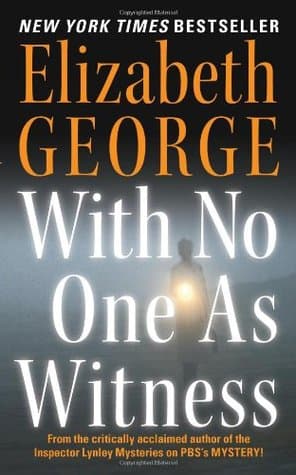
Elizabeth George (2005)
Genre
Thriller / Mystery
Reading Time
15-20 hours
Key Themes
See below
Sign in to track this book
A serial killer targeting young boys escalates to a white victim, forcing Scotland Yard detectives Lynley and Havers to navigate a racially charged media storm while hunting a cunning murderer whose next move threatens to shatter their world.
The novel opens with the discovery of ten-year-old Gideon Sykes' body, a white boy, in a London graveyard. This discovery shocks Scotland Yard, as Gideon is the third young boy murdered, but the first white victim. His death immediately changes how the previous two murders of black boys are viewed, leading to accusations of racial bias in the initial investigations. Detective Superintendent Thomas Lynley is assigned to lead the high-profile case, despite being distracted by his pregnant wife, Deborah, and her difficult pregnancy. Public and media pressure increases, forcing Scotland Yard to act decisively and visibly address the perceived racial imbalance, leading to Detective Constable Winston Nkata's quick promotion to sergeant, mainly to be a public face for the investigation.
Detective Sergeant Barbara Havers, still on probation after her previous insubordination and demotion, is unexpectedly brought back into active duty by Lynley to work on the case. She knows this is her last chance to save her career. Her initial tasks involve canvassing the areas where the previous victims – black boys named Omari and Taimour – lived and went missing. She encounters suspicion and hostility from local black communities, who feel their concerns were ignored until a white child became a victim. Havers, with her unusual approach and sharp observational skills, starts to notice subtle differences and connections others might miss, even as she struggles to navigate the delicate social and racial aspects of the investigation.
Lynley, Havers, and Nkata begin the detailed process of examining the lives of the three victims: Omari, Taimour, and Gideon. Initial investigations show little obvious connection between the boys, who came from different backgrounds and areas of London. The team interviews the grieving families, encountering sorrow, anger, and a deep distrust of the police, especially within the black communities. Nkata's role becomes harder as he tries to bridge the gap between the police and his community, often feeling caught in the middle. Havers, meanwhile, focuses on the small details of the crime scenes and the boys' routines, looking for a pattern or common thread that could lead them to the killer.
As more evidence is gathered, the team starts to build a psychological profile of the killer. The boys' bodies are found in public places, often placed ritually, suggesting a perpetrator who is not only careful but also driven by a specific, possibly symbolic, goal. The boys are all abducted, murdered elsewhere, and then moved. The lack of sexual assault on the bodies, combined with the precise placement, indicates a killer who is not primarily sexually motivated but rather driven by a deeper, perhaps psychological or ideological, urge. Forensic psychologist Dr. Trenarrow is brought in to help, offering insights into the killer's potential background, motivations, and the meaning of the chosen locations and methods.
Havers, through her diligent canvassing and interviews, finds a potential witness who saw a distinct van near one of the abduction sites. This lead, combined with other small clues, eventually points to a suspect named Joel Campbell, a seemingly ordinary man with a history of minor offenses and a troubled past. The police close in on Campbell, believing they have their killer. The media, eager for a solution, reports the story, praising the police's quick action. However, Lynley and Havers have lingering doubts. While Campbell fits some aspects of the profile, certain details do not quite match the careful nature of the crimes, leading them to question if they have truly found the right man or just a convenient scapegoat under immense public pressure.
Throughout the intense investigation, Lynley is constantly distracted by his pregnant wife, Deborah's, worsening health. Her pregnancy is high-risk, and she experiences severe complications, requiring hospitalization. Lynley is torn between his professional duty and his deep concern for Deborah and their unborn child. His emotional distress is clear, affecting his ability to fully concentrate on the complex murder case. The constant worry about Deborah's condition and the potential loss of their baby weighs heavily on him, creating an internal conflict that threatens to compromise his leadership of the investigation. He struggles to appear calm and in control while his personal world falls apart.
Despite Joel Campbell's arrest, Havers continues to investigate, driven by her intuition that something is wrong. Her unconventional methods lead her to explore the victims' lives more deeply, focusing on their families and less obvious connections. She uncovers a dark secret involving child abuse and exploitation, leading her to the true killer: Reverend Jonathan Brooks, a seemingly respectable and influential community figure. Brooks, deeply disturbed, had been using his position to groom and abuse children, and the murders were a twisted attempt to cover his tracks and eliminate those who could expose him, particularly those who had witnessed his crimes or were about to speak out.
As Havers gathers undeniable evidence against Reverend Brooks, the team prepares to confront him. Brooks, realizing the police are closing in, becomes increasingly desperate and dangerous. He tries to manipulate the situation, using his community standing and charisma to deflect suspicion. The police must act carefully to avoid alerting him too soon, as he is clever and capable of further harm. Tension builds as Lynley, Havers, and Nkata work to gather enough evidence for an arrest, knowing that Brooks will not surrender easily. The investigation ends in a dangerous pursuit, as Brooks, cornered, makes a final, desperate move to escape justice, putting others' lives at risk.
In a devastating turn of events, while the investigation into Reverend Brooks reaches its climax, Lynley receives the tragic news that Deborah has lost their baby. The emotional toll on Lynley is immense, pushing him to his limit. This deep personal tragedy overshadows any professional success, leaving him heartbroken and grief-stricken. The loss of his child, combined with the stress of the case, plunges Lynley into deep despair, showing the immense personal sacrifices made for justice. His world is forever changed, and he is left to deal with an unimaginable loss, demonstrating the high cost of his dedication to his work.
Reverend Jonathan Brooks is apprehended and brought to justice, his terrible crimes exposed. The community is shocked by the betrayal of a trusted figure. While the children's killer is caught, the investigation leaves deep scars on everyone involved. Lynley is shattered by Deborah's miscarriage, his personal grief deep. Havers, despite her key role in solving the case, remains on probation, her future still uncertain, but she gains a renewed sense of purpose. Nkata, having faced the challenges of his promotion, feels more confident in his abilities, though acutely aware of the systemic issues he faced. The case closes, but the memory of the victims and the trauma remain, a stark reminder of human cruelty and resilience.
The Protagonist
Lynley begins the novel burdened by personal worry and ends it utterly devastated by the loss of his unborn child, fundamentally altering his perspective and emotional landscape.
The Protagonist
Havers starts the novel on the precipice of professional ruin and, through her perseverance and unconventional methods, ultimately plays a crucial role in solving the case, solidifying her place, albeit precariously, within the force.
The Supporting
Nkata grows in confidence and assertiveness, learning to balance his professional duties with the complex demands of his community and his own identity.
The Supporting
Deborah's character arc is tragic, as she faces increasing health complications during her pregnancy, culminating in a devastating miscarriage that profoundly impacts Lynley.
The Antagonist
Brooks's arc reveals his true monstrous nature, moving from a seemingly benevolent community leader to a desperate and dangerous criminal trying to evade justice.
The Supporting
Trenarrow serves as a consistent source of expert analysis, guiding the investigation with her psychological profiling.
The Mentioned
Campbell's arc is brief, serving as a false lead that temporarily diverts the investigation before the true killer is uncovered.
The novel explores the many sides of justice, especially how it is seen and applied across different social and racial groups. The initial lack of urgency in investigating the murders of black boys, compared to the intense public outcry after a white boy's death, highlights systemic biases within the justice system. Barbara Havers's relentless pursuit of the truth, even when it challenges official stories, shows the struggle for true justice. The exposure of Reverend Brooks, a figure of authority, emphasizes that justice must be served regardless of social standing. Yet, Lynley's personal tragedy reminds us that justice often comes at a deep personal cost, leaving lasting scars.
““Justice, Lynley knew, was a fragile thing, easily swayed by prejudice and public opinion, and sometimes, heartbreakingly, by the fates themselves.””
A central theme is the reality of racial bias in society and its effect on law enforcement. The book directly addresses the different treatment of victims based on their race, with the murders of Omari and Taimour receiving less attention until Gideon Sykes, a white boy, is killed. This difference fuels public anger and pressures Scotland Yard to show impartiality. Winston Nkata's character directly shows this theme, as he is given a prominent role mainly to calm accusations of racism, forcing him to navigate his identity and professional duties amid deep community distrust. The novel examines how perceived racial injustice can erode faith in institutions and create societal divisions.
““The colour of a child's skin, it seemed, still determined the urgency of the investigation, the depth of public outrage.””
The novel shows the personal sacrifices made by those dedicated to justice, particularly through Thomas Lynley. While he is a brilliant detective, his commitment to the case comes at an unbearable personal cost: the loss of his unborn child and his wife Deborah's severe emotional distress. This theme highlights the brutal reality that professional duty can take a devastating toll on one's private life. Lynley's grief is a raw portrayal of how personal tragedy can overshadow even the most significant professional achievements, emphasizing the lasting pain of loss and the struggle to continue. Barbara Havers also sacrifices personal comfort and stability for her career.
““He had hunted a monster, and in doing so, had lost a piece of himself he could never retrieve.””
The story explores the hidden nature of evil, especially how it can hide behind a respectable and kind appearance. Reverend Jonathan Brooks, the antagonist, perfectly embodies this theme. He is a seemingly upright and beloved community leader, yet he hides a monstrous secret life as a child abuser and murderer. This deception is central to the plot, as the police initially struggle to look beyond the killer's public image. The theme explores how trust can be exploited and how appearances can be deeply misleading, making the detection of such evil incredibly challenging. It forces characters and readers to question their assumptions about who is capable of heinous acts.
““Evil, Lynley thought, rarely announced itself with horns and a pitchfork. More often, it wore a smile and offered a helping hand.””
Barbara Havers's journey explores redemption and the importance of professional integrity. Having been demoted for insubordination, this case is her last chance to prove her worth and save her career. Despite immense pressure and the risk of further professional ruin, Havers refuses to compromise her investigative instincts, even when they lead her to challenge accepted theories and superiors. Her unwavering dedication to finding the truth, regardless of personal cost, ultimately leads to the identification of the real killer and re-establishes her value as a detective. This theme emphasizes that true professional integrity lies in pursuing justice, even when it means defying expectations.
““She had been given a last chance, and she would not squander it, not when children’s lives depended on her seeing what others refused to.””
A misleading clue or character designed to divert the reader and detectives.
The character of Joel Campbell serves as a significant red herring in the novel. He is identified as an early suspect, with some evidence seemingly pointing to his involvement, and his arrest provides a temporary, albeit false, sense of resolution. This device is used to highlight the public and institutional pressure on the police to quickly solve high-profile cases, and to test the detectives' commitment to thorough investigation. It ultimately underscores Barbara Havers's keen intuition and willingness to look beyond the obvious, reinforcing the idea that the easiest answer is not always the correct one.
The reader is aware of information or circumstances that characters are not.
Dramatic irony is frequently employed, particularly in the portrayal of Reverend Jonathan Brooks. The reader is often given hints or subtle foreshadowing about Brooks's darker nature and his involvement in the crimes before the police fully piece it together. This creates a sense of dread and tension, as the reader watches the innocent characters interact with him, unaware of the danger he poses. It heightens the suspense and emphasizes the insidious nature of his deception, making his eventual unmasking all the more impactful.
Two or more distinct storylines running concurrently, often intersecting.
The novel effectively uses parallel plotlines to deepen its impact. The primary plot follows the police investigation into the serial murders, led by Lynley and Havers. Running alongside this is Lynley's intensely personal struggle with his wife Deborah's high-risk pregnancy and eventual tragic miscarriage. These two plotlines, though distinct, constantly intersect and influence each other. Lynley's personal turmoil affects his focus on the case, and the intensity of the case mirrors the emotional stakes in his personal life. This device highlights the personal cost of professional dedication and adds significant emotional weight to the narrative.
The use of the narrative to critique societal issues.
Elizabeth George uses 'With No One as Witness' as a vehicle for potent social commentary, primarily focusing on racial bias within the justice system and broader society. The disparity in police response to the murders of black versus white children is a direct critique of systemic racism. The character of Winston Nkata and his experiences highlight the challenges faced by individuals caught between cultural expectations and institutional pressures. The novel also comments on media sensationalism and the public's demand for quick answers, often at the expense of thorough justice. This device gives the mystery a deeper, more resonant layer of meaning beyond just solving a crime.
“There was a darkness in the human heart that no amount of light could truly dispel, only hide.”
— Reflecting on the nature of evil and human capacity for darkness.
“The truth, like murder, will out. Eventually. And often with consequences far more devastating than the lie it replaced.”
— Exploring the inevitable revelation of truth and its painful aftermath.
“Some people are like knots. The harder you pull, the tighter they become. You have to find a different way to unravel them.”
— Lynley's observation on dealing with uncooperative or complex individuals during an investigation.
“Grief was a country no one wanted to visit, but once there, it was impossible to leave without a part of you remaining behind.”
— Reflecting on the enduring impact of loss and grief.
“It was amazing how easily people could convince themselves of the most outlandish things, as long as it suited their purpose.”
— Havers's cynical view on self-deception and rationalization.
“Every secret held was a burden, and burdens, if carried long enough, inevitably bowed the bearer.”
— Considering the psychological toll of keeping secrets.
“Justice wasn't about vengeance. It was about balance. And sometimes, the scales were so far tipped, it took a lifetime to right them.”
— Debating the true meaning and difficulty of achieving justice.
“The past was never truly past. It was a shadow that followed, sometimes close, sometimes distant, but always there.”
— Contemplating the lasting influence of past events on the present.
“Fear was a powerful motivator, capable of making people do things they never thought themselves capable of.”
— Analyzing the role of fear in driving human actions, both good and bad.
“To understand the monster, you had to look into the darkness within yourself first.”
— Lynley's internal reflection on empathy and understanding criminal minds.
“Love, in its purest form, was a willingness to sacrifice. But it could also be a weapon, wielded with devastating effect.”
— Exploring the dual nature of love as both a powerful force and a destructive tool.
“There was a certain kind of loneliness that only came from being surrounded by people who didn't truly see you.”
— Havers's personal experience of feeling isolated despite being around colleagues.
“The most dangerous lies were the ones we told ourselves, because those were the ones we truly believed.”
— Reflecting on self-deception and its profound impact.
“Every family had its own mythology, its own unspoken rules and buried grievances, waiting for the right moment to erupt.”
— Observing the complex dynamics and hidden tensions within families.
Ready to see how well you understood this book? Take our interactive quiz with 10 questions.

Biography coming soon.







