“It is a great gift indeed to love who you are.”
— Red, the oak tree, reflects on self-acceptance and identity.

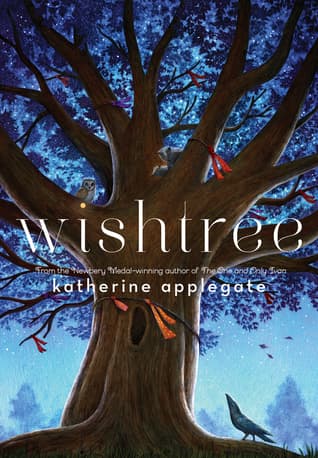
Katherine Applegate (2017)
Genre
Fantasy / Children's / Young Adult
Reading Time
180 min
Key Themes
See below
Sign in to track this book
An ancient oak, a silent confidante to generations of wishes, must now lend its wisdom and provide sanctuary when prejudice threatens the harmony of its beloved neighborhood.
Red, an old oak tree, is the neighborhood's 'wishtree,' where people tie wishes to her branches every May 1st. She is also home to various animals, including her best friend, a crow named Bongo, and a family of opossums, raccoons, and owls. Red narrates the story, showing her connection to the community and her observations of human behavior. She explains the wishtree tradition and the unspoken rules she follows, like never revealing the wishes. The story shows Red's perspective as a silent, ancient observer of the lives around her, setting the stage for new residents and the challenges they will face.
A new family, the Alis, moves into the blue house across the street. Red observes them, noting the young girl, Samar, who seems lonely. Shortly after their arrival, a hateful word, 'LEAVE,' is spray-painted onto Red's trunk, directed at the Muslim family. This act disturbs Red and her animal friends, showing the prejudice and unwelcoming atmosphere in the neighborhood. Francesca, the elderly woman who owns the blue house and Red's land, is also upset. The animals discuss what happened, and Red feels a strong desire to help Samar and her family feel safe and accepted, even though she cannot directly intervene.
Red, though a tree, talks with her animal friends using rustles, creaks, and shared understanding. She often tells Bongo what she observes. Samar, the young girl from the Ali family, visits Red daily, eventually tying a wish to her branches: 'I wish for a friend.' This wish means a lot to Red, who feels responsible for helping Samar. The hateful graffiti on Red's trunk is a painful reminder of the neighborhood's prejudice, and Red feels a growing need to act, despite being a tree. She starts to think about how she might bring people together.
Francesca, concerned about Red's aging branches and messy leaves, starts thinking about having the tree cut down. This idea comes from complaints from neighbors who dislike the leaves and roots affecting their property. Red overhears Francesca's conversations and the discussions among the animal community, who are scared of losing their home. Bongo and the other animals try to find ways to save Red, but their efforts seem useless. The threat of being cut down adds pressure to Red's desire to help Samar and fix the neighborhood's tensions, as she realizes her time might be short.
The animals, led by Bongo, try several times to stop Francesca from cutting down Red. They try to make the tree seem less appealing, like dropping acorns on her head or making loud noises, but their efforts are mostly unsuccessful and even funny. Meanwhile, Red keeps watching Samar, who remains isolated. Francesca eventually paints over the hateful graffiti on Red's trunk, but the underlying tension in the neighborhood continues. Red's focus stays on Samar's wish for a friend, knowing that connecting Samar with someone is important for the girl's happiness and for building acceptance in the community.
One day, a boy named Stephen, who lives nearby, shows a small act of kindness towards Samar. He offers her a toy, which, though simple, shows a possible start to Samar's isolation ending. Red watches this with hope. This small connection, along with Red's growing desperation to fulfill Samar's wish before she is cut down, gives Red a daring idea. She realizes she might use the wishes tied to her branches in a new way. The animals, though unsure at first, start to see Red's determination.
Red comes up with a bold plan: she will gather all the wishes tied to her branches and, with her animal friends' help, present them in a way that will grant Samar's wish for a friend. She tells Bongo her plan, and he agrees to help, despite his initial doubts about interfering with human wishes. The other animals are also recruited to collect the wishes, carefully taking them from Red's branches. This is a big change from the traditional role of a wishtree, showing Red's active involvement in human affairs, driven by her empathy for Samar and the desire to mend her fractured community.
Under the cover of darkness, Red's animal community, led by Bongo, carefully collects hundreds of wishes from her branches. The opossums, raccoons, owls, and other creatures work together, bringing the fabric strips and paper notes to a central spot. Red guides them with subtle movements of her branches and rustles of her leaves. The air is full of purpose and urgency. This communal effort shows the strong bond between Red and her animal family, all united to help Samar and save their home. The collected wishes represent the hopes and dreams of the entire neighborhood.
The next morning, the neighborhood sees a remarkable sight. The animals have arranged the collected wishes on Red's branches and trunk to spell out the word 'FRIENDS' in large, visible letters. This powerful, silent message is for Samar, but also for the entire community. Francesca is the first to see it, followed by Samar and her family, and then other neighbors. The sight of the word 'FRIENDS' made from many wishes, some old and faded, some new, creates a moment of wonder and thought for everyone. It is a clear plea for unity and acceptance, orchestrated by Red and her animal companions.
The 'FRIENDS' message causes a strong response. Neighbors gather around Red, discussing the mysterious display and its meaning. The previously hostile atmosphere starts to go away, replaced by curiosity and a shared sense of wonder. Stephen, the boy who showed initial kindness, approaches Samar, and the two children connect over the message. Other children, inspired by the display and perhaps by their parents' softer attitudes, also start interacting with Samar. Francesca, deeply moved, says she will not cut Red down. The wishtree has granted Samar's wish for a friend and has started to heal the divisions in the neighborhood, building a spirit of community and acceptance.
The Protagonist
Red evolves from a passive observer to an active agent of change, using her unique position to mend a fractured community and ensure her own survival.
The Supporting
Bongo grows from a cautious observer to an active participant in Red's plan, demonstrating courage and loyalty.
The Supporting
Samar transitions from isolation and longing to finding acceptance and friendship within the neighborhood.
The Supporting
Francesca moves from contemplating Red's removal to reaffirming her commitment to the tree and the community it represents.
The Supporting
Stephen's character arc is brief but impactful, showing his initial kindness blossom into a genuine friendship with Samar.
The Supporting
Maeve's arc reinforces her role as a protective mother and a loyal member of Red's community.
The Supporting
Harold remains true to his grumpy nature but ultimately contributes to the community's goal.
The Supporting
The Alis move from being outsiders facing hostility to being accepted and integrated into the community.
The book explores community, both among the animals in Red and among the human residents of the neighborhood. The arrival of Samar's family challenges the human community, showing issues of exclusion and prejudice. Red's goal is to help Samar belong and to unite the neighborhood. The wishtree tradition is a community ritual, and Red's act of spelling 'FRIENDS' is a call for collective acceptance and unity, showing that true community includes diversity.
“I was a wishtree, but I was also a home. And homes, I had learned, were all about belonging.”
A central theme is the prejudice Samar's Muslim family faces and their struggle for acceptance. The hateful graffiti on Red's trunk, 'LEAVE,' is a symbol of this intolerance. The story contrasts the open-heartedness of characters like Red and Stephen with the closed-mindedness of some anonymous neighbors. It shows that acceptance and kindness can overcome fear and prejudice, using Red's wisdom and the children's innocence to bridge cultural divides and encourage empathy.
“Human beings. They were a puzzle. You loved them. You hated them. You worried about them. You wished them well. And sometimes you wished they’d simply disappear.”
Wishes are a basic part of the story, not just as plot points but as symbols of human hope and longing. The wishtree tradition represents the human desire for a better future and the belief that dreams can come true. Samar's wish for a friend is especially touching, showing a universal need for connection. Red's decision to actively grant a wish means that hope, combined with kindness and action, can bring about positive change and create a more compassionate world, even when things are difficult.
“Wishes, I’d discovered, were like seeds. Some took root. Others didn’t. Some grew into something beautiful. Others withered away.”
The book shows the connection between nature and human life. Red, as an ancient tree, sees generations of human experience and is home to an animal community. Her survival is linked to the well-being of the neighborhood, and her actions directly affect the human characters. The story shows how respecting nature and its inhabitants can lead to a more harmonious existence for everyone, suggesting that humans can learn much from the wisdom and interconnectedness of the natural world.
“Trees can’t tell jokes. But we can certainly tell stories.”
The story is told from the perspective of an ancient oak tree.
Red, the wishtree, serves as the first-person narrator. This device allows for a unique, detached yet deeply empathetic perspective on human behavior and community dynamics. Red's long lifespan provides historical context and a sense of timeless wisdom, while her inability to directly speak to humans creates a poignant tension between her understanding and her limitations. It also allows the author to explore themes of nature's wisdom and humanity's often-flawed interactions from a non-human viewpoint.
A cultural ritual where people tie wishes to a tree.
The wishtree tradition is central to the plot, serving as both a cultural anchor and a catalyst for Red's actions. It highlights the human desire for hope and connection. The wishes tied to Red's branches represent the collective dreams and anxieties of the community, ultimately becoming the physical medium through which Red communicates her message of 'FRIENDS.' This tradition provides a tangible link between the human and natural worlds, and Red's decision to manipulate the wishes is a profound act of intervention.
A diverse group of animals living in Red, acting as her confidantes and helpers.
Red's animal residents (Bongo, Maeve, Harold, etc.) function as a close-knit, loyal community that mirrors and comments on the human world. They provide Red with companionship, information, and, crucially, the physical means to execute her plan. Their discussions and actions highlight themes of loyalty, cooperation, and the interconnectedness of living beings. They also add moments of humor and a sense of urgency to the narrative, particularly when Red's existence is threatened.
Contrasting messages spray-painted on Red's trunk.
The words 'LEAVE' and 'FRIENDS' are powerful symbolic elements. 'LEAVE,' spray-painted on Red's trunk, represents the initial prejudice and hostility directed at Samar's family, embodying the theme of exclusion. Its eventual replacement, orchestrated by Red, with the word 'FRIENDS' created from the wishes, symbolizes the triumph of acceptance, community, and hope over hatred. This visual transformation on Red's body serves as a clear, impactful representation of the story's central conflict and its resolution.
“It is a great gift indeed to love who you are.”
— Red, the oak tree, reflects on self-acceptance and identity.
“Wishes are roots. They dig down and hold us fast.”
— Red explains the enduring nature of hopes and dreams.
“Sometimes the universe has a way of answering when we least expect it.”
— Red observes the unexpected fulfillment of a wish.
“Everyone needs hope. Even trees.”
— Red emphasizes the universal need for optimism.
“A tree is a friend to many, but a friend to all is a rare thing.”
— Red muses on friendship and inclusivity.
“Change is a part of life. Even for trees.”
— Red acknowledges the inevitability of transformation.
“Words are powerful things. They can build bridges or burn them.”
— Red reflects on the impact of language and communication.
“Home isn't always a place. Sometimes it's a person.”
— Red describes the deeper meaning of belonging.
“Fear makes people do strange things. But so does love.”
— Red contrasts the motivations behind human actions.
“We all have scars. They tell our stories.”
— Red finds beauty and history in imperfections.
“A wish is a seed. Plant it with care.”
— Red advises on nurturing hopes and intentions.
“The world is full of surprises. Some good, some not so good. But surprises all the same.”
— Red comments on life's unpredictability.
“Being different isn't a bad thing. It's what makes you, you.”
— Red encourages embracing uniqueness.
“Sometimes the bravest thing you can do is listen.”
— Red highlights the courage in understanding others.
Ready to see how well you understood this book? Take our interactive quiz with 10 questions.

Biography coming soon.







