“The Goblin King wasn't a monster, not to me. He was a temptation, a challenge, a riddle I was desperate to solve.”
— Liesl reflecting on her initial fascination with the Goblin King.

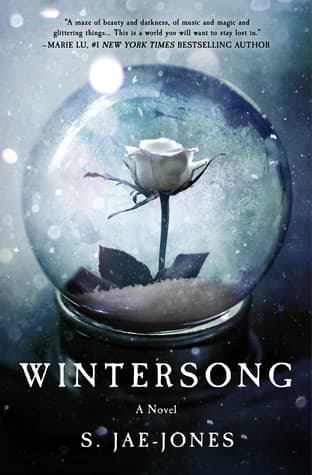
S. Jae-Jones (2017)
Genre
Fantasy / Young Adult / Romance
Reading Time
9-12 hours
Key Themes
See below
Sign in to track this book
A young musician must brave the enchanting and perilous Underground, confronting the seductive Goblin King and her own desires, to rescue her sister before she's forever bound to his shadowy realm.
Elisabeth, known as Liesl, is eighteen and feels trapped by her responsibilities at her family's inn in a small Bavarian village. She has musical talent, composing pieces inspired by old tales of the Goblin King, but her family, especially her stern grandmother, dismisses her music. Her younger sister, Käthe, is beautiful and charming, the family favorite, and is engaged to their neighbor, Sepp. Liesl often feels overshadowed and unappreciated, longing for a life where her music can flourish, even as she secretly yearns for the fantastical world of the Goblin King, a figure from her childhood stories and compositions.
On the eve of Käthe's wedding, a strange storm descends upon the village. During the festivities, a mysterious melody draws Käthe away from the inn. Liesl, sensing something wrong, follows, only to see Käthe taken by an unseen force. Realizing the Goblin King has taken her sister, Liesl is consumed by guilt and determination. Despite her family's initial disbelief and despair, Liesl resolves to follow Käthe into the treacherous Underground, driven by love and a deep connection to the old stories.
Liesl, guided by instinct and the faint echo of her sister's presence, finds a hidden entrance to the Underground. The world beneath is a place of perpetual twilight, ancient trees, and shifting paths, governed by strange, old laws. She encounters the enigmatic Goblin King, a figure both alluring and terrifying, who recognizes her. Liesl pleads for Käthe's return, offering herself in her sister's place. The King, intrigued by Liesl's spirit and her connection to music, agrees to her terms: she must stay in the Underground for a year and a day. If she can master the magic of his realm and earn her freedom, both she and Käthe can return.
Liesl is taken to the Goblin King's castle, a vast, ever-changing labyrinth. She discovers Käthe is alive but in a magical slumber, kept safe but unreachable. Liesl struggles to adapt to the strange customs and the whimsical, often cruel, denizens of the Underground – the goblins, sprites, and other fey creatures. She learns that the King is a being of ancient power, bound by his role and the land itself. Liesl feels a growing, unsettling attraction to the King, a creature of both darkness and artistry, which both frightens and excites her. She begins to learn the 'rules' of the Underground, often through trial and error, and the King observes her with unsettling intensity.
The Goblin King begins to 'teach' Liesl, not through formal lessons, but by challenging her perceptions and pushing her to embrace the raw, untamed magic of the Underground. He reveals that her music is a powerful form of magic, capable of shaping reality in his realm. He often appears to her in different guises, testing her resolve and understanding. Liesl finds herself drawn deeper into his world, discovering a freedom and power she never knew she possessed. She learns to manipulate the environment with her compositions, to see the hidden truths of the fey, and to understand the ancient, melancholic burden of the King's existence.
As the year progresses, a complex and undeniable bond forms between Liesl and the Goblin King. Their interactions are filled with simmering tension, a blend of intellectual sparring, shared musical passion, and unspoken desire. Liesl finds herself increasingly enchanted by his ancient wisdom and loneliness, seeing beyond the monstrous facade to the burdened soul within. However, she grapples with her fading memories of the surface world and her family, particularly Käthe. She fears losing herself entirely to the allure of the Underground and forgetting her original purpose: to save her sister.
The winter solstice approaches, the day when the Goblin King traditionally takes a bride. Liesl learns more about the King's history and the curse that binds him to his role, preventing him from truly loving or being loved without devastating consequences. She realizes that his coldness is a shield, a means to protect himself and his realm from the destructive power of his own heart. She also understands that the 'game' he plays with his prospective brides is not merely cruel, but a desperate attempt to find someone strong enough to share his burden, or perhaps, to free him from it. Liesl begins to see him not just as a king, but as a deeply wounded, ancient being.
As the year and a day draw to a close, the terms of Liesl's bargain loom large. She has grown powerful and wise in the ways of the Underground, her music now a formidable force. The Goblin King, too, has changed, showing a vulnerability and affection he rarely displays. Liesl must choose: return to her mundane life with Käthe, leaving the King to his eternal solitude, or remain in the Underground as his Queen, embracing the power and the burden that comes with it. The decision is agonizing, tearing at her heart, as she has come to love the King and his strange, beautiful world.
In a climactic confrontation, Liesl is faced with a final test, one that requires her to fully embrace her power and make a profound sacrifice. She realizes that to truly save Käthe and, in a way, the King, she must break the ancient cycle. Liesl uses her music and newfound understanding of the Underground's magic to challenge the very foundations of the King's reign and the curse that binds him. Her act of selflessness and love, born of her deep connection to the King and her desire for a better future, has unforeseen consequences, altering the balance of power and changing the nature of the Underground itself.
Liesl's actions shatter the old laws and the King's centuries-long isolation. Käthe is safely returned to the surface, her memories of the Underground hazy, allowing her to resume her life. Liesl, however, chooses to remain. She and the King, now freed from some of the ancient constraints, begin to reshape the Underground, infusing it with new life and hope. Liesl, as the new Queen, embraces her destiny, wielding her music and her love to bring a different kind of magic to the realm. Their relationship, forged in darkness and sacrifice, transforms into a partnership of equals, bound by a profound and enduring love, promising a new era for both the surface and the world below.
The Protagonist
Liesl transforms from a repressed, insecure girl into a powerful, self-assured queen, embracing her magical abilities and finding her voice.
The Antagonist/Love Interest
The King, initially a stoic and isolated ruler, opens his heart to Liesl, ultimately finding freedom from his ancient curse and a true partner.
The Supporting
Käthe's arc is largely static; she is abducted, kept safe, and eventually returned to her life, serving primarily as a plot device for Liesl's journey.
The Supporting
Sepp remains a steadfast, if somewhat helpless, figure in the background, representing the life Liesl leaves behind.
The Supporting
The Grandmother remains a static figure, representing the societal and familial pressures Liesl must overcome.
The Supporting/Mentioned
The goblins remain largely a collective, serving to illustrate the unique nature of the Underground.
Music in Wintersong is not merely an art form; it is a fundamental force of magic and creation. Liesl's compositions are linked to the Goblin King and the Underground, allowing her to perceive and manipulate its reality. Her music becomes her voice, her weapon, and her means of connection. Through her compositions, she understands the King, expresses her deepest emotions, and ultimately reshapes ancient laws. The King himself is a patron of music, recognizing its power to both reflect and create worlds, highlighting art's ability to transcend mundane reality and embody true magic, as seen when Liesl's melodies can conjure physical manifestations or alter the landscape of the Underground.
“Your music is a bridge. It crosses the boundary between worlds, and makes the impossible real.”
Liesl's journey to the Underground is a quest for self-discovery. Trapped by familial expectations and her own insecurities on the surface, she finds freedom and her true identity in the magical realm. The challenges posed by the Goblin King and the strange environment force her to confront her fears, embrace her unique talents, and define herself beyond the roles imposed upon her. She sheds the 'good girl' persona to become a powerful, self-possessed woman who understands her worth, not just as a sister or daughter, but as an individual capable of wielding immense power and making choices. This is evident in her transformation from a shy composer to a confident Queen, capable of challenging ancient laws.
“I was not a girl who had lost herself. I was a girl who had found herself, in a world where I had always belonged.”
The novel explores the complex, often dark, nature of love that demands sacrifice and leads to transformation. Liesl initially sacrifices her freedom for Käthe, but her love for the Goblin King later compels her to make an even greater sacrifice, one that redefines her destiny and his. Their love is not a simple romance but a deep, fated connection forged through shared passion, understanding, and mutual vulnerability. It is a love that breaks curses, reshapes ancient laws, and transforms both individuals, allowing the King to find release from his burden and Liesl to embrace her true power and purpose, as seen in their final choice to rule together.
“Love was not a gentle thing. It was a wild, consuming fire, and it changed everything it touched.”
The Underground is a realm of both immense beauty and terrifying danger, a place where the fantastical is real but often unsettling. It is a world that calls to Liesl's artistic soul, offering freedom and power, but also threatens to consume her, erase her memories, and bind her forever. The Goblin King embodies this duality—he is both the object of her childhood fantasies and a dangerous, ancient being. The theme explores human fascination with the unknown and the magical, and the risks of stepping beyond the familiar into a world where different rules and powers apply, as evidenced by Liesl's struggle to maintain her identity amidst the seductive chaos of the fey realm.
“The Underground was a place of impossible beauty and terrifying truths.”
Liesl's agreement to stay in the Underground for a year and a day in exchange for Käthe's safety.
The bargain is the central plot device that propels Liesl into the Goblin King's realm and drives the narrative forward. It establishes the stakes, the timeline, and the initial conflict. It also serves as a framework for Liesl's growth and her developing relationship with the King. The 'year and a day' deadline creates a sense of urgency and forces Liesl to make profound choices, while also allowing sufficient time for her transformation and the deepening of her bond with the King. It sets the rules of their engagement and the terms of her magical education.
Liesl's compositions possessing the power to influence and shape the Underground.
Music is not merely a hobby or talent for Liesl; it is a tangible form of magic. Her ability to compose intricate pieces directly impacts the reality of the Underground, allowing her to conjure illusions, manipulate the environment, and even understand the King's true nature. This device elevates Liesl's artistic passion to a powerful, active force within the narrative, making her a formidable figure in the magical realm. It also provides a unique, non-combative means for her to interact with and ultimately challenge the ancient powers of the Underground.
The Goblin King's ever-changing castle, reflecting his mood and the chaotic nature of the Underground.
The King's castle is a constantly shifting, confusing labyrinth, serving as both a physical setting and a metaphorical representation of the King's complex mind and the unpredictable nature of the Underground. It tests Liesl's adaptability and resourcefulness, forcing her to learn to navigate chaos and find her own path. This device reinforces the theme of self-discovery, as Liesl must learn to trust her instincts and inner compass to find her way, symbolizing her journey through her own internal maze of emotions and choices. It also highlights the King's power and his connection to his realm.
The annual event when the Goblin King takes a new bride, tied to an ancient curse.
The winter solstice is a crucial temporal plot device, marking the traditional time for the Goblin King to choose a bride and serving as a deadline for Liesl's bargain. It is linked to an ancient curse that binds the King to his role, adding a layer of tragic inevitability to his character and the events. This annual tradition creates tension and urgency, reminding Liesl of the stakes and the cyclical nature of the King's existence, which she ultimately seeks to break. It represents both an ending and a potential new beginning, depending on Liesl's choices.
“The Goblin King wasn't a monster, not to me. He was a temptation, a challenge, a riddle I was desperate to solve.”
— Liesl reflecting on her initial fascination with the Goblin King.
“My darling girl, there is a world beyond the one you know. A world of shadows and moonlight, of music and magic. A world that calls to you.”
— Liesl's grandmother speaking to her about the magical world.
“There are two kinds of music, my love: the kind that makes you want to dance, and the kind that makes you want to die.”
— The Goblin King explaining the nature of music to Liesl.
“I was a girl of the earth, and he was a creature of the underworld. We were not meant to be.”
— Liesl's internal struggle with her feelings for the Goblin King.
“Sometimes, the only way to find yourself is to get lost.”
— Liesl's journey into the Underground and self-discovery.
“He didn't want my obedience; he wanted my soul. And I, fool that I was, was tempted to give it to him.”
— Liesl recognizing the depth of the Goblin King's desire for her.
“All stories begin in the dark. And all stories end in the dark. What matters is the light we find in between.”
— A philosophical reflection on storytelling and life within the narrative.
“My music was my shield, my sword, my only weapon against the darkness.”
— Liesl relying on her musical talent to navigate the dangers of the Underground.
“You cannot cage the wild thing, not without breaking its spirit.”
— The Goblin King's understanding of Liesl's independent nature.
“He offered me a crown of shadows, and I, who had always longed for sunlight, found myself reaching for it.”
— Liesl's growing attraction to the dark allure of the Goblin King's world.
“Love is not a cage, it is a key.”
— A profound statement about the liberating nature of true love.
“Every note was a whisper, a plea, a defiance against the inevitable.”
— Liesl's emotionally charged musical performances.
“The Underground was a mirror, reflecting my deepest fears and my most secret desires.”
— Liesl's perception of the magical realm as a place of self-confrontation.
“He was the winter to my spring, the darkness to my light, and yet, we fit together.”
— Liesl acknowledging the complementary nature of her relationship with the Goblin King.
Ready to see how well you understood this book? Take our interactive quiz with 10 questions.







