“Never ask for what ought to be offered.”
— Ree Dolly's internal thought about the unwritten rules of her community.

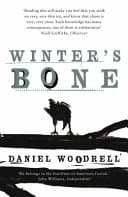
Daniel Woodrell (2012)
Genre
Literary Fiction / Mystery
Reading Time
240 min
Key Themes
See below
Sign in to track this book
In the desolate Ozarks, a determined teen named Ree races against time and a code of silence to find her missing, drug-dealing father, whose disappearance threatens to cost her family their home.
Sixteen-year-old Ree Dolly lives in the poverty-stricken, meth-riddled Ozark Mountains, caring for her mentally ill mother, Connie, and two younger brothers, Sonny and Wes. Her father, Jessup Dolly, a known meth cook, has been gone for weeks. A sheriff arrives at their dilapidated home, telling Ree that Jessup used their house and land as collateral for his bail bond. If he doesn't appear for his court date, they will lose everything. The sheriff warns her that Jessup has until the following week to show up, or the bond will be forfeit, leaving Ree desperate to find him and save her family from homelessness in the harsh winter.
Determined to find Jessup, Ree first asks her neighbor, Victoria, who offers little help but warns of the dangers of asking too many questions. Ree then visits her uncle, Teardrop Dolly, a feared and intimidating meth addict, hoping he can provide information. Teardrop, Jessup's brother, is at first hostile and dismissive, warning Ree to stay out of family business and advising her to let Jessup disappear. Despite his threats, Ree continues, knowing her family's survival depends on her courage and strength in navigating the closed and violent world of her extended family.
Ree continues her search, visiting other Dolly relatives, including her grandfather, Thump Milton, and her cousin, Merab. Each encounter is met with silence, evasions, or outright threats. The Dolly family operates under a strict code of secrecy, protecting their own and their illegal activities. Merab, in particular, is confrontational, warning Ree to stop asking questions and to accept that Jessup is gone. Ree's persistence only seems to deepen the family's suspicion and hostility, making her search more dangerous as she pushes against their unwritten rules.
Despite his earlier threats, Teardrop, seeing Ree's resolve and desperation, slowly begins to help. He takes her to see various Dolly family members, introducing her as Jessup's daughter, which gives her a degree of access she wouldn't have alone. While still secretive and menacing, Teardrop's presence offers Ree a fragile shield against the immediate dangers of the clan. He starts to give cryptic advice and subtle guidance, hinting at the true nature of Jessup's disappearance and the unspoken rules of their world, though he never reveals everything directly.
Through fragmented conversations and veiled threats, Ree learns that Jessup was likely killed because he was suspected of being a police informant. This changes her search: she is no longer just looking for a living person but for proof of death, specifically Jessup's body, which she needs to present to the sheriff to avoid losing her home. This knowledge raises the stakes, as uncovering the truth about a snitch within the Dolly clan is a serious offense that puts her own life in danger from those who committed the act.
As Ree gets closer to the truth, she is ambushed and beaten by Merab and two other Dolly women. They drag her into a barn, punch her repeatedly, and warn her to stop asking about Jessup. This attack is a clear and violent message from the clan, meant to intimidate her into abandoning her search. Despite the physical pain and terror, the beating only strengthens Ree's resolve. She understands that the family's violence is a desperate attempt to protect their secrets, confirming her suspicions that Jessup is dead and his disappearance is tied to their criminal activities.
Following the beating, two Dolly women, Little Arthur and Sonya, approach Ree with a chilling offer. They tell her they know where Jessup's body is and offer to provide her with his severed hands as proof of death, which she can then present to the sheriff. They explain that the rest of his body is at the bottom of a pond and cannot be retrieved, implying that he was killed for snitching. This gruesome offer is their way of allowing Ree to save her home without exposing the full extent of the family's crimes or the location of the body, which would implicate more people.
Ree, accompanied by Little Arthur and Sonya, is taken to a remote, frozen pond. The women cut a hole in the ice, and Ree is forced to reach into the frigid water to retrieve Jessup's hands, still attached at the wrist. This traumatic act confirms her father's death and the brutal reality of her family's world. The women are cold and detached, ensuring Ree understands the gravity of the situation and the unspoken agreement she is entering into by accepting this macabre evidence.
Ree takes the severed hands to the sheriff, who, despite his shock, accepts them as sufficient proof of Jessup's death. This grim evidence allows Ree to clear the bail bond, securing her family's home and preventing their eviction. The sheriff, implicitly understanding the circumstances, does not press for further details, allowing the Dolly family's secrets to remain buried. Ree returns home, having succeeded in her mission, but now carries the heavy burden of her father's violent end and the chilling knowledge of her family's dark world, forever changed by her ordeal.
With the immediate threat averted, Ree resumes her daily life, caring for her mother and brothers. The winter continues, and the harsh realities of their existence remain. While she has saved her family's home, the experience has left its mark on her. She has confronted the brutal side of her community, faced violence, and endured trauma. Ree is no longer an innocent teenager but a hardened survivor, bound by the secrets and loyalties of the Ozark Hills, her future uncertain but her determination unbroken as she continues to protect her family.
The Protagonist
Ree transforms from a hopeful but burdened teenager into a hardened survivor, fully understanding the brutal realities of her family and community.
The Supporting
Teardrop evolves from a hostile, dismissive figure to a grudging, protective ally, recognizing Ree's strength and the purity of her intentions.
The Mentioned
His arc is completed off-screen, as his death is confirmed and his body provides the solution to Ree's immediate problem.
The Supporting
Connie remains static, her condition serving as a backdrop to Ree's struggle.
The Supporting
They remain largely static, serving as the innocent recipients of Ree's protection.
The Antagonist
Merab remains a consistent antagonist, representing the unyielding resistance to Ree's quest.
The Supporting
Sheriff Baskin remains a static figure, representing the external legal authority that Ree must navigate.
The Supporting
Her role is to facilitate the final, grim resolution for Ree.
The novel explores the complex and often dangerous nature of family loyalty in a closed community. The Dolly clan operates under an unwritten code where protecting one's own, even criminals, is paramount. Ree's initial quest is driven by loyalty to her immediate family, but she quickly encounters the fierce, sometimes violent, loyalty of the extended Dolly clan, which seeks to protect its secrets at all costs. Teardrop's gradual assistance to Ree, despite his initial hostility, shows how these bonds, even when strained by violence and crime, ultimately hold sway, albeit in a twisted form. The family's code dictates both the protection of its members and the punishment of those who betray it, as Jessup's fate illustrates.
“Never ask for what ought to be offered.”
Poverty is a constant force in the lives of the characters, shaping their choices and limiting their opportunities. The Dolly family lives in dilapidated homes, always on the brink of destitution. Ree's desperate search for her father is driven by the very real threat of losing her home, which is their last shred of security. The widespread meth trade is presented not just as a criminal enterprise, but as a direct result of this poverty, offering a dangerous path to economic survival. The harsh winter landscape itself reflects the characters' struggle for basic necessities, showing the constant battle against a world that offers little comfort or hope.
“She had to get her dad. If Jessup didn't show for court, they'd lose the house and land, and then where would they be?”
Despite living in a patriarchal and violent world, the women in Winter's Bone show great strength and resilience. Ree is the most prominent example, taking on responsibility for her family and bravely confronting the dangers of her community. Even the antagonistic Dolly women, like Merab and Little Arthur, possess a formidable, if brutal, strength. They are not passive victims but active participants in maintaining the family's code and power structure. Their ability to endure hardship, protect their own, and navigate the harsh realities of their lives highlights a powerful, often overlooked, female resilience in a world that often undervalues them.
“Ree's face was a mask of pain, but her eyes were dry, clear, and hard.”
Methamphetamine production and addiction are deeply embedded in the Ozark community, acting as a destructive force. Jessup's involvement in meth cooking is the direct cause of the plot's central conflict. Teardrop's own addiction is clear in his erratic behavior and physical decline, showing the drug's destructive personal toll. Beyond individual characters, meth is presented as an economic engine for the community's criminal underworld, linking poverty to illegal activity. It fuels the violence, secrecy, and paranoia that define the Dolly clan, showing its pervasive and corrupting influence on every aspect of life in the hills.
“Every Dolly and Thump and Milton and Youngblood and all the rest of them kin, they were all in it.”
Jessup's body/hands as the object driving the plot.
Jessup Dolly's body, or rather, proof of his death in the form of his hands, functions as a MacGuffin. While Ree's initial goal is to find Jessup alive to save her house, the revelation that he is dead shifts the objective to finding physical proof of his demise. The specific details of his death or the full context of his snitching are less important than the hands themselves, which serve as the tangible object Ree must acquire to resolve the central conflict and achieve her goal of saving her family's home. It drives her perilous journey through the Ozarks' criminal underworld.
Ree's quest follows a classic journey structure but with bleak, realistic outcomes.
Ree's story loosely follows elements of the Hero's Journey, particularly the 'Call to Adventure' (the sheriff's warning), 'Crossing the Threshold' (entering the dangerous Dolly world), 'Tests, Allies, and Enemies' (her encounters with various family members), and a 'Resurrection' (surviving the beating and retrieving the hands). However, it's a deconstructed version, lacking a clear 'mentor' in the traditional sense (Teardrop is a morally ambiguous guide) and culminating in a grim 'Return with the Elixir' (the hands) that brings not triumph but a heavy burden. The 'elixir' is not magical but brutally real, reflecting the harsh world she inhabits.
Subtle hints and warnings about Jessup's fate and the dangers Ree faces.
The novel employs subtle foreshadowing throughout, building tension and hinting at the grim realities Ree will uncover. Early warnings from neighbors and Teardrop about Jessup being 'gone' or 'no longer among the living' suggest his death before it is explicitly confirmed. The repeated threats and the family's fierce code of silence strongly foreshadow the violence Ree will encounter if she persists in her search. These narrative breadcrumbs prepare the reader for the brutal truths and violent confrontations that define Ree's journey, heightening the sense of dread and inevitability.
The Ozark community as an insular, self-governing entity.
The Ozark community depicted in the novel functions as a closed-world system, largely isolated from external law and societal norms. Its inhabitants operate under their own strict, unwritten codes of conduct, loyalty, and justice. This insularity is crucial to the plot, as it explains why Ree cannot simply go to the police for help and why her search must navigate the treacherous internal politics of the Dolly clan. The legal system, represented by Sheriff Baskin, acknowledges this closed system, often deferring to its rules rather than trying to impose external authority, especially concerning family secrets and crimes.
“Never ask for what ought to be offered.”
— Ree Dolly's internal thought about the unwritten rules of her community.
“Some things, once you've put them out into the world, you can't get them back.”
— Ree reflecting on the consequences of speaking certain truths.
“She was old enough to know that an adult's promise was often a thing that got broken, or never made at all.”
— Ree's cynical view of adult reliability, born from experience.
“The trees were mostly bare, their branches reaching like skeletal hands toward the pale sky.”
— A description of the Ozark landscape, mirroring the bleakness of the story.
“Nobody's gonna help you if you don't help yourself.”
— A hard-won lesson Ree has learned about self-reliance.
“She had to think about how to live, not how to die.”
— Ree's determination to focus on survival despite overwhelming odds.
“The law was a thing that happened to other people, mostly, people who didn't know how to keep their mouths shut.”
— Ree's understanding of the local justice system and its relation to silence.
“It was a dangerous thing to be seen as too smart, or too curious, in these parts.”
— Ree's awareness of the perils of standing out or asking too many questions.
“Blood was blood, and it bound you tight, even when you wished it didn't.”
— Ree's internal struggle with the obligations and burdens of family ties.
“She had a fierce, unyielding will, a stubbornness that was both her greatest strength and her greatest burden.”
— A description of Ree Dolly's core character traits.
“The world was a cold, hard place, and you had to be colder and harder to survive it.”
— Ree's grim philosophy for enduring her harsh environment.
“Some folks just ain't meant for the light.”
— A local observation about the inherent darkness or criminality of certain individuals.
“She would not cry. Not yet. Crying was a luxury she couldn't afford.”
— Ree suppressing her emotions to maintain her resolve in a difficult moment.
“The only way out was through.”
— Ree's acceptance that she must confront her challenges directly.
Ready to see how well you understood this book? Take our interactive quiz with 10 questions.

Daniel Woodrell is an American novelist and short story writer, who has written nine novels, most of them set in the Missouri Ozarks, and one collection of short stories. Woodrell coined the phrase "country noir" to describe his 1996 novel Give Us a Kiss. Reviewers have frequently since used the term to categorize his writing.







