“People say nothing is impossible, but I do nothing every day.”
— Pooh reflecting on his leisurely lifestyle in the Hundred Acre Wood.

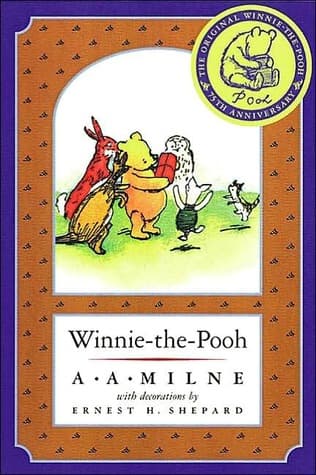
A.A. Milne (1926)
Genre
Fantasy / Children's / Young Adult
Reading Time
90 min
Key Themes
See below
Sign in to track this book
Explore the Hundred Acre Wood, where a honey-loving bear, a shy piglet, and a gloomy donkey find joy and friendship with an imaginative young boy.
The story starts with Winnie-the-Pooh, a bear with a small brain, finding a tall oak tree with buzzing bees, which means honey. Pooh loves honey but cannot reach the hive. He visits Christopher Robin, explains his problem, and asks for a balloon. Christopher Robin gives him a blue balloon, and Pooh rolls in mud to look like a 'small black cloud.' He floats up to the hive, hoping to trick the bees, but they are suspicious. Christopher Robin, watching, suggests Pooh hum a 'buzzing' sound. The bees are not fooled, and one stings Pooh's nose, making him come down, balloon in hand, with no honey.
One windy day, Pooh and Piglet talk about scary Heffalumps, large, elephant-like creatures that steal honey. They decide to set a trap: a deep pit covered with branches, with a pot of honey at the bottom. That night, Pooh, feeling hungry, checks the trap and eats all the honey. In the dark, he accidentally falls into his own pit. Piglet, waking up the next morning, sees Pooh's footprints leading to the pit and, hearing a noise, thinks he has caught a Heffalump. He tells Christopher Robin, who finds Pooh stuck, covered in honey, and helps him out.
Eeyore, the gloomy donkey, is especially sad one morning because he lost his tail. Pooh, feeling bad for his friend, offers to help find it. Pooh asks Owl, who, in a long-winded way, suggests putting up an advertisement. As Pooh leaves Owl's house, he sees a bell-pull on Owl's door. Pooh realizes it is Eeyore's missing tail. Owl had found it and mistakenly thought it was a useful bell-pull. Pooh gets it back, and Christopher Robin reattaches it to Eeyore with a drawing pin, making Eeyore quietly happy.
One windy day, Piglet is alone in his house when a strong gust of wind blows down a tree branch, making a loud noise. He thinks it's a Heffalump trying to get him, so Piglet hides under his bed, shaking. Meanwhile, Pooh, also in the strong wind, tries to find a sheltered spot. He stumbles into Piglet's house, making thumps and bumps. Piglet, hearing these sounds, becomes even more sure that the Heffalump is inside. When Pooh finally calls out, Piglet realizes it's his friend and comes out, relieved but a bit embarrassed by his fear.
Eeyore feels especially sad because it's his birthday, and he expects no one to remember. Pooh, hearing this, decides to get him a present: a pot for honey. On his way to Eeyore, Pooh eats all the honey, leaving him with an empty pot. Meanwhile, Piglet decides to get Eeyore a balloon, but he trips and pops it. Despite their mistakes, they give Eeyore the empty pot and the popped balloon. Eeyore is happy with the useful pot for putting things in and the broken balloon, which he can store in the pot. Christopher Robin eventually arrives with a new balloon for Eeyore.
A new family, Kanga and her baby Roo, arrives in the Hundred Acre Wood, causing excitement and some worry among the residents. Rabbit, always planning, decides they must 'educate' Kanga and Roo about forest customs. He plots with Pooh and Piglet to 'kidnap' Roo while Kanga is busy. Their plan involves Piglet pretending to be Roo in Kanga's pouch while Roo is taken away. The plan goes wrong when Kanga, smarter than they thought, realizes the trick. She plays along, giving Piglet a bath and cod-liver oil, much to his dismay, before showing she knew all along.
Christopher Robin announces a big 'Expotition' to find the North Pole, and all the animals of the Hundred Acre Wood eagerly join. They walk through the forest, facing different challenges and making important 'discoveries,' like Rabbit's useful knowledge of the woods. During the trip, Roo falls into a stream. Pooh quickly finds a long stick and uses it to help Roo out. Christopher Robin, seeing Pooh's cleverness and the stick's length, says the stick *is* the North Pole and Pooh found it, making Pooh humbly happy and his friends applaud.
Heavy rains cause a flood in the Hundred Acre Wood. Piglet is trapped in his house, surrounded by water, with only a few chairs and an umbrella. He writes a message in a bottle, 'HELP! PIGLET (ME),' and throws it into the water. Meanwhile, Pooh and Christopher Robin are also in the flood. Pooh sends a message to Christopher Robin, who, with Owl, eventually finds Piglet's bottle. Owl, always talking a lot, misunderstands the message but takes credit for finding it. Christopher Robin and Pooh then set out in an upside-down umbrella boat to rescue Piglet.
After finding Piglet's message in a bottle, Christopher Robin, with the somewhat proud Owl, sets off in a boat (an upturned umbrella) to find Piglet. They eventually find Piglet's house, which is almost completely under water, with Piglet sitting on a branch. Christopher Robin skillfully steers the umbrella boat to rescue Piglet. Soon after, they see Pooh, who is also stuck on a small island. The three friends are reunited, safe from the flood, thanks to Christopher Robin's quick thinking and bravery.
The book ends with a gentle and slightly sad chapter where Christopher Robin and Pooh share a quiet moment on a hill overlooking the Hundred Acre Wood. Christopher Robin hints that he will soon be leaving, meaning school and growing up. He asks Pooh to promise they will always be friends and that Pooh will always remember him. Pooh, loyal and loving, agrees. It is a bittersweet moment, showing the lasting strength of their friendship even as childhood begins to fade.
The Protagonist
Pooh remains consistently kind and loyal, showing growth in his problem-solving skills (like rescuing Roo) while retaining his endearing innocence.
The Major Supporting
Christopher Robin begins as the leader of the group and ends with a hint of growing up, signifying the end of pure childhood innocence.
The Major Supporting
Piglet consistently shows his timid nature but occasionally finds unexpected courage, particularly when supporting Pooh.
The Major Supporting
Eeyore remains consistently pessimistic but occasionally experiences moments of quiet contentment when his friends show him affection.
The Supporting
Rabbit consistently tries to assert control and organize others, often learning (or failing to learn) the limits of his authority.
The Supporting
Owl's character remains largely static, consistently presenting himself as wise and knowledgeable, despite occasional blunders.
The Supporting
Kanga's character is introduced and remains consistently a caring and practical mother figure.
The Supporting
Roo is introduced as a new, playful character and remains a source of youthful energy.
The Mentioned
The Heffalump remains a feared, unseen entity, serving as a catalyst for certain plot points.
The strong bonds between Christopher Robin and his animal friends, especially Pooh and Piglet, are central to the book. Their loyalty appears in many actions, from Pooh trying to find Eeyore's tail to Piglet's constant companionship with Pooh. They support each other through fears, floods, and birthdays, showing that true friendship involves care, understanding, and shared adventures. The last chapter, with Christopher Robin's request to Pooh, confirms the theme of lasting friendship.
“'Pooh, promise you won't forget about me, ever. Not even when I'm a hundred.'”
The entire world of the Hundred Acre Wood comes from childhood imagination, brought to life by Christopher Robin playing with his toys. The animals' adventures, their fears (like Heffalumps), and their simple joys all come from this imaginative world. The book celebrates childhood innocence, where an empty pot can be a perfect gift, and a stick can be the North Pole. The hint of Christopher Robin growing up suggests this pure imaginative world will eventually fade, making the stories more precious.
“'Wherever they go, and whatever happens to them on the way, in that enchanted place on the top of the Forest, a little boy and his Bear will always be playing.'”
Winnie-the-Pooh often shows the beauty and happiness found in simple things. Pooh's love for honey, Eeyore's quiet happiness with an empty pot and a popped balloon, or the joy of a shared 'expotition' are all examples. The characters do not seek great achievements or money; their happiness comes from friendship, food, and the comfort of home. This theme encourages readers to value the small, everyday moments that bring warmth and happiness.
“'When you are a Bear of Very Little Brain, and you Think of Things, you find sometimes that a Thing which seemed very Thingish inside you is quite different when it gets outside, and has other people looking at it.'”
Each character in the Hundred Acre Wood has distinct personality traits, from Pooh's simplicity to Eeyore's sadness to Rabbit's bossiness. Despite their differences and occasional frustrations, they accept each other. Eeyore's pessimism is never truly changed, but his friends still include him. Piglet's shyness is understood. This theme shows the importance of accepting individuality and building a community where everyone, with all their quirks, is valued and belongs.
“'It is more fun to talk with someone who doesn't use long, difficult words but rather short, easy words like "What about lunch?"'”
Animals with human characteristics and emotions.
The primary plot device in 'Winnie-the-Pooh' is the anthropomorphism of the animal characters. Pooh, Piglet, Eeyore, Rabbit, Owl, Kanga, and Roo all exhibit distinct human-like personalities, engage in complex conversations, and partake in adventures that mirror human experiences, albeit in a simplified, childlike manner. This allows readers to relate to the characters and their dilemmas, exploring themes of friendship, fear, and joy through the lens of these charming, relatable animals.
The narrator directly addresses and converses with Pooh and Christopher Robin.
A unique narrative technique is the direct interaction between the omniscient narrator and the characters, particularly Pooh and Christopher Robin. The narrator often pauses the story to explain something to Pooh, or to ask Christopher Robin a question, or even to correct Pooh's understanding of events. This metafictional element blurs the line between storyteller and story, enhancing the whimsical, intimate, and conversational tone, making the reader feel like an active participant in the telling of the tale.
Recurring phrases, character traits, and settings create comfort.
Milne uses repetition of character traits (Pooh's love for honey, Eeyore's gloom, Piglet's timidity) and familiar phrases ('Oh, bother!', 'A Bear of Very Little Brain') to create a comforting and predictable world. The consistent setting of the Hundred Acre Wood and the recurring dynamics between the friends establish a sense of security and warmth. This repetition reinforces the characters' identities and allows for gentle humor, making the stories accessible and reassuring for young readers.
Characters' simple interpretations drive humor and plot points.
Many plot points and comedic moments arise from the characters' childlike logic and frequent misunderstandings. Pooh's belief that rolling in mud makes him a 'small black cloud' or Piglet's conviction that the noise in his house is a Heffalump are prime examples. Owl's misinterpretation of Eeyore's tail as a bell-pull, or his grandiloquent but often incorrect pronouncements, also fall into this category. This device highlights the innocent, often literal, way young minds interpret the world, generating gentle humor and relatable situations.
“People say nothing is impossible, but I do nothing every day.”
— Pooh reflecting on his leisurely lifestyle in the Hundred Acre Wood.
“You can't stay in your corner of the Forest waiting for others to come to you. You have to go to them sometimes.”
— Piglet encouraging Pooh to be more proactive in their adventures.
“A little consideration, a little thought for others, makes all the difference.”
— Eeyore expressing his appreciation when others show him kindness.
“Rivers know this: there is no hurry. We shall get there some day.”
— Pooh philosophizing about patience during a journey.
“I am a Bear of Very Little Brain, and long words Bother me.”
— Pooh explaining his simple approach to life and problems.
“How lucky I am to have something that makes saying goodbye so hard.”
— Pooh expressing his feelings about parting with Christopher Robin.
“It is more fun to talk with someone who doesn't use long, difficult words but rather short, easy words like 'What about lunch?'”
— Pooh discussing conversation preferences with Piglet.
“Some people care too much. I think it's called love.”
— Pooh observing the relationships in the Forest.
“We'll be Friends Forever, won't we, Pooh?' asked Piglet. 'Even longer,' Pooh answered.”
— A conversation between Pooh and Piglet about their enduring friendship.
“If the person you are talking to doesn't appear to be listening, be patient. It may simply be that he has a small piece of fluff in his ear.”
— Pooh giving advice about understanding others' inattentiveness.
“The things that make me different are the things that make me.”
— Piglet reflecting on his own identity and uniqueness.
“When you are a Bear of Very Little Brain, and you Think of Things, you find sometimes that a Thing which seemed very Thingish inside you is quite different when it gets out into the open and has other people looking at it.”
— Pooh musing on the nature of ideas and sharing thoughts.
“I think we dream so we don't have to be apart for so long. If we're in each other's dreams, we can be together all the time.”
— Pooh comforting Piglet about being separated.
“Sometimes the smallest things take up the most room in your heart.”
— Pooh reflecting on the importance of little joys and friends.
Ready to see how well you understood this book? Take our interactive quiz with 10 questions.
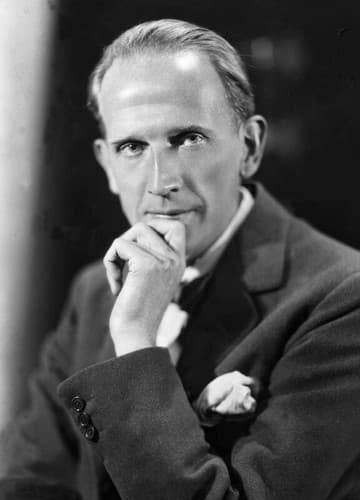
A.A. Milne was an English playwright, novelist, and poet, best known for his children's books featuring the character Winnie-the-Pooh. His collections of poems, When We Were Very Young and Now We Are Six, along with the stories Winnie-the-Pooh and The House at Pooh Corner, have become beloved classics of children's literature worldwide. Milne's work is celebrated for its gentle humor, whimsical characters, and exploration of childhood innocence.







