“There are some things in this life that you can’t get your mind around, and for those things you need a metaphor.”
— Winkie's thoughts on difficult concepts.

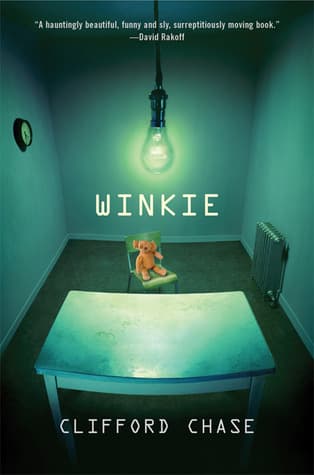
Clifford Chase (2006)
Genre
Literary Fiction / Fantasy / Science Fiction
Reading Time
240 min
Key Themes
See below
Sign in to track this book
A forgotten teddy bear's quest for freedom in the woods thrusts him into a Kafkaesque nightmare, as he's mistaken for a terrorist mastermind and put on trial by a society consumed by post-9/11 paranoia.
Winkie, a small, one-foot-tall teddy bear, has endured decades of neglect, relegated to a dusty shelf in a child's bedroom. He observes the world through the window, dreaming of freedom and purpose. His existence is marked by the fleeting attention of various children, none of whom truly connect with him. One day, a girl named Susie briefly shows him affection, even giving him a new eye after his original is lost. This momentary connection, however, is short-lived, and Winkie is soon forgotten again. The turning point comes when Winkie decides he can no longer passively accept his fate. Driven by a desire for agency, he resolves to leave the house and explore the world outside, believing there's more to life than being a forgotten toy.
Summoning courage, Winkie executes his escape plan. He hops off the shelf, navigates the house, and eventually jumps out an open window, landing safely in the bushes below. The outside world is a revelation; the sensations of grass, wind, and the vastness of nature overwhelm him with a sense of wonder and exhilaration. He makes his way into the dense forest, a place he's only ever observed from afar. Here, he discovers a new mobility and independence, reveling in the simple joys of movement and exploration. He encounters various small creatures, none of whom seem to notice his unusual presence. The forest becomes his sanctuary, a place where he can finally be truly free and unburdened by his past.
As Winkie explores deeper into the forest, he stumbles upon a secluded cabin. Drawn by curiosity, he investigates and discovers it belongs to a reclusive, eccentric professor. Inside, Winkie is horrified to find his beloved, a small, pink, stitched heart he had cherished for years, which had been stolen from him by one of his previous child owners. The professor, it turns out, is obsessed with collecting and dissecting objects, and Winkie's heart has become one of his morbid curiosities. This discovery ignites a fierce determination in Winkie; he is no longer just seeking freedom but also the retrieval of his lost love, making the professor his unwitting adversary.
While Winkie is inside the professor's cabin, attempting to retrieve his heart, the forest erupts with activity. Unbeknownst to him, the FBI has been tracking a series of mysterious 'terrorist attacks' in the area, attributing them to a shadowy figure operating from within the woods. The cabin, it turns out, is a suspected hub for these activities. When the FBI storms the cabin, they find Winkie amidst the professor's bizarre contraptions and the stolen heart. In their paranoia and zeal, the agents instantly conclude that the small, unassuming teddy bear is the evil mastermind they've been searching for, interpreting his presence and the professor's oddities as irrefutable proof of his guilt.
Winkie is apprehended and subjected to intense interrogation. The agents, unable to comprehend a talking teddy bear, project their fears and assumptions onto him, twisting his simple utterances into confessions of grand conspiracy. News of the 'terrorist teddy bear' quickly spreads, igniting a media frenzy and public hysteria. Winkie becomes a symbol of the nation's anxieties, with headlines screaming about his supposed plots and dangerous intentions. The public, fueled by fear and misinformation, demands justice, further solidifying the government's conviction that they have captured a significant threat. Winkie, confused and terrified, can do little but watch as his new freedom crumbles around him.
Winkie's trial begins, an unprecedented spectacle that quickly devolves into a surreal and absurd display. The prosecution, determined to secure a conviction, presents a series of 'witnesses' from history, brought to life through unexplained means. These include figures like Galileo Galilei, Socrates, John Scopes, and Oscar Wilde. Each witness, in their own way, testifies about the dangers of challenging established norms, the fallibility of perception, and the consequences of being different. Their testimonies, though seemingly unrelated to Winkie's case, are manipulated by the prosecution to paint him as a threat to societal order, a subversive force challenging the very fabric of their reality.
Winkie is assigned a public defender, a well-meaning but overwhelmed lawyer who struggles to present a coherent defense against the prosecution's outlandish claims and the pervasive public prejudice. The defense attempts to argue Winkie's innocence, highlighting the absurdity of the charges and the lack of concrete evidence. Meanwhile, Winkie himself is in a state of internal turmoil. He grapples with his identity, questioning what it means to be a bear, a toy, and now, a perceived terrorist. The trial forces him to confront the nature of humanity, its fears, and its capacity for both cruelty and misguided justice, further isolating him in his unique predicament.
Despite the defense's efforts, the overwhelming weight of public opinion and the prosecution's bizarre, yet effective, narrative lead to Winkie's conviction. He is found guilty of terrorism, a verdict that shocks and saddens those few who had seen the absurdity of the trial. The aftermath sees Winkie imprisoned, though the exact nature of his confinement is ambiguous, reflecting the fantastical elements of his existence. His story, however, does not end with his imprisonment. It is a potent symbol, a cautionary tale about societal paranoia, the dangers of prejudice, and the ease with which fear can override reason, leaving a lasting impact on those who follow his plight.
Even in confinement, Winkie continues to reflect on his experiences. His journey from a forgotten toy to a falsely accused terrorist has offered him a unique, albeit painful, perspective on humanity. He observes the irrationality, the fear, and the capacity for both cruelty and occasional kindness in the human world. He grapples with his own identity – is he just a stuffed animal, or has his conscious experience elevated him to something more? His story probes the very definition of personhood, challenging readers to consider the arbitrary lines drawn between animate and inanimate, and the societal constructs that define who is worthy of empathy and justice.
Winkie's story, though concluding with his conviction, leaves an indelible mark. He becomes an enduring symbol of the absurdities of the age, a poignant representation of how easily fear can consume reason and how readily society can demonize the 'other.' His trial, with its historical witnesses and nonsensical accusations, is a stark reminder of past injustices and the cyclical nature of human prejudice. Winkie's quiet dignity in the face of such overwhelming injustice resonates, prompting readers to question their own assumptions and the narratives spun by power, ensuring that the little bear's struggle for freedom and identity continues to provoke thought long after the final page.
The Protagonist
Winkie transforms from a forgotten, passive object into an active, self-aware individual seeking freedom, only to become a victim of societal paranoia and a symbol of injustice.
The Supporting/Antagonist
Remains largely static, his role primarily to provide the setting and circumstances for Winkie's capture and the discovery of his lost heart.
The Antagonists
They remain static in their conviction, embodying the unyielding nature of societal fear and the justice system's capacity for error.
The Supporting
Struggles valiantly but ultimately fails to overcome the overwhelming forces of prejudice and absurdity, highlighting the limitations of the legal system in such a climate.
The Mentioned/Supporting
Serves as a static historical figure whose past persecution is recontextualized to serve the prosecution's agenda.
The Mentioned/Supporting
A static historical figure whose fate is manipulated to serve the prosecution's narrative of Winkie's supposed threat.
The Mentioned/Supporting
A static historical figure whose personal persecution is used to build a case against Winkie's 'deviance'.
The Mentioned/Supporting
A static historical figure whose legal battle is reinterpreted to frame Winkie as an ideological threat.
The novel directly critiques the atmosphere of fear and paranoia that grips society, particularly in the context of the 'war on terror.' The FBI's immediate and unquestioning assumption of Winkie's guilt, despite his obvious harmlessness, highlights how easily fear can lead to irrationality and the demonization of the 'other.' The public's rapid acceptance of the 'terrorist teddy bear' narrative further underscores the theme, showing how easily misinformation and fear can sway public opinion. This theme is central to Winkie's capture and trial, where logical evidence is completely disregarded in favor of a narrative fueled by collective anxiety.
“In their paranoia and zeal, the agents instantly conclude that the small, unassuming teddy bear is the evil mastermind they've been searching for, interpreting his presence and the professor's oddities as irrefutable proof of his guilt.”
Winkie's trial is a masterclass in the absurd, exposing the farcical nature of a justice system corrupted by fear and power. The use of historical figures like Galileo and Socrates as 'witnesses' to condemn a teddy bear for terrorism is ridiculous, yet it functions within the novel's satirical framework to show how easily legal processes can be manipulated. This theme highlights how power structures can bend reality to fit their agenda, turning truth into a malleable concept and making a mockery of genuine justice. The trial scenes are a direct commentary on how irrationality can prevail when those in power are driven by ulterior motives or widespread panic.
“The prosecution, determined to secure a conviction, presents a series of 'witnesses' from history, brought to life through unexplained means.”
A core theme explores what it means to be 'human' or a 'person,' especially through Winkie's unique perspective. As a sentient teddy bear, Winkie challenges conventional definitions of life and consciousness. His journey from an inanimate object to an individual with desires, fears, and a sense of self forces readers to question anthropocentric biases. The novel implicitly asks if sentience, self-awareness, and the capacity for suffering should define personhood, rather than biological form. Winkie's struggle for recognition and his internal reflections on his own existence are central to this theme, as he grapples with being perceived as a mere object while experiencing a rich inner life.
“He grapples with his identity, questioning what it means to be a bear, a toy, and now, a perceived terrorist.”
The contrast between freedom and confinement is a recurring motif. Winkie begins the story confined to a shelf, longing for the freedom of the outside world. His brief period of liberation in the forest is exhilarating, but it is quickly replaced by the ultimate confinement of imprisonment due to false accusations. This theme explores not only physical freedom but also intellectual and societal freedom. The historical witnesses, many of whom were confined or executed for their ideas, further reinforce this theme, demonstrating that freedom of thought and expression can be as perilous as physical liberty when challenged by oppressive forces. Winkie's journey is a constant pendulum swing between these two states.
“He discovers a newfound mobility and independence, reveling in the simple joys of movement and exploration. The forest becomes his sanctuary, a place where he can finally be truly free.”
The novel powerfully illustrates the dangers of 'othering' – the process of perceiving or treating a person or group as intrinsically different from and alien to oneself. Winkie, as a talking teddy bear, is the ultimate 'other,' and this difference is immediately seized upon by society to project its fears and anxieties onto him. He is not seen for who he is, but as a blank canvas for societal prejudice and paranoia. This theme is evident in the FBI's inability to comprehend his nature, the public's quick demonization, and the prosecution's efforts to paint him as a threat to human society. The historical witnesses also faced similar 'othering' in their respective eras.
“The public, fueled by fear and misinformation, demands justice, further solidifying the government's conviction that they have captured a significant threat.”
Giving human characteristics, emotions, and sentience to an inanimate object.
The central plot device is the anthropomorphism of Winkie, the teddy bear. By granting him human-like consciousness, emotions, and the ability to speak and reason, the novel creates a unique lens through which to critique human society. This device allows for the exploration of themes like identity, prejudice, and the absurdity of justice, as Winkie's inherent 'otherness' makes him a perfect target for societal paranoia. His sentience also makes his suffering and aspirations relatable, despite his non-human form, heightening the emotional impact of his plight.
Using humor, irony, and exaggeration to expose and criticize societal flaws.
The novel employs satire and absurdist humor to highlight the irrationality and flaws of contemporary society, particularly in its response to perceived threats. The very premise of a teddy bear being tried for terrorism is inherently absurd, and this is amplified by elements like the historical witnesses. This device allows the author to make serious political and social commentary without being overly didactic, instead drawing the reader in through the sheer ridiculousness of the situations. The humor serves to underscore the profound tragedy and injustice of Winkie's situation.
Referencing or incorporating historical figures and events out of their original time.
The inclusion of historical figures like Galileo, Socrates, John Scopes, and Oscar Wilde as witnesses in Winkie's trial is a powerful anachronistic device. These allusions serve to draw parallels between past historical injustices and the present-day absurdity of Winkie's situation. By bringing these figures into the contemporary courtroom, the novel suggests that societal fear, prejudice, and the persecution of 'outsiders' are cyclical phenomena, highlighting humanity's enduring capacity for irrationality and injustice. It grounds the fantastical elements in a commentary on real-world historical patterns.
An object representing a deeper, abstract idea.
Winkie's lost, and later stolen, pink stitched heart is a potent symbol. Initially, it represents his capacity for affection and the fleeting connections he experiences with children. Once stolen by the Professor, it transforms into a symbol of his lost innocence, his desire for love, and his personal quest for wholeness and belonging. Its recovery becomes a driving force for Winkie, representing not just a physical object but the emotional core of his being and his right to reclaim what is intrinsically his, even in the face of overwhelming adversity.
“There are some things in this life that you can’t get your mind around, and for those things you need a metaphor.”
— Winkie's thoughts on difficult concepts.
“The world was full of people who were not bears, and Winkie was one of them.”
— Winkie reflecting on his unique identity.
“He knew, with the certainty of someone who has been thoroughly washed, that he was alive.”
— Winkie's realization after his 'cleaning'.
“Every object has a story, and the story of this object is that it was once a bear.”
— A reflection on Winkie's past and transformation.
“Being a toy was a kind of freedom, a freedom from having to be real.”
— Winkie considering the advantages of his toy state.
“The greatest trick the devil ever pulled was convincing the world he didn't exist. The second greatest was convincing people that a bear was just a bear.”
— Winkie's internal musings on perception.
“He missed the days when his biggest worry was whether he would be hugged too tightly.”
— Winkie reminiscing about his simpler past.
“To be seen, truly seen, was a terrifying and exhilarating thing.”
— Winkie's experience of being observed and judged.
“Sometimes the most profound truths are found in the most ridiculous situations.”
— A general observation on the nature of Winkie's experiences.
“The world was a vast and confusing place, especially when you were only twelve inches tall.”
— Winkie's perspective on the world around him.
“He had been a gift once, and now he was a problem.”
— Winkie reflecting on his change in status.
“Dreams were just memories that hadn't happened yet, or memories that had been rearranged.”
— Winkie's thoughts on the nature of dreams.
“There was a certain dignity in being a survivor, even if you were only surviving yourself.”
— Winkie's internal struggle and resilience.
“The line between what was real and what was imagined was not a line at all, but a tangled knot.”
— Winkie's struggle with reality and perception.
Ready to see how well you understood this book? Take our interactive quiz with 10 questions.

Clifford Chase is a contemporary fiction author. His debut novel, "Winkie," garnered critical acclaim for its surreal narrative and exploration of identity. Chase's work often delves into the absurd and the uncanny, marked by a distinctive, often unsettling, prose style.







