“The wood was her home, her mother, her protector. It was also her prison.”
— Describing Willa's relationship with the Great Smoky Mountains.

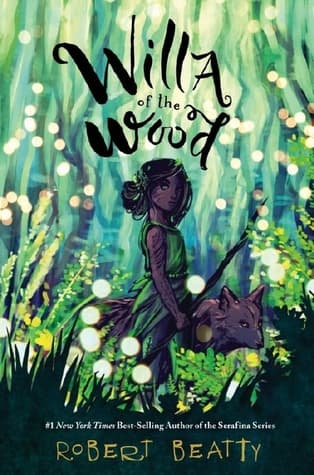
Robert Beatty (2018)
Genre
Fantasy / Children's / Historical Fiction / Young Adult
Reading Time
360 min
Key Themes
See below
Sign in to track this book
A young night-spirit thief, raised to fear the 'day-folk,' uncovers a shattering truth about her own people's corruption and must choose between loyalty to her crumbling society and the unknown path of compassion and alliance to save her ancient forest home.
Willa, a young Faeran night-spirit from the Great Smoky Mountains, is an expert thief, trained to steal from the 'day-folk' (humans) without being seen or heard. Her clan, led by the Padaran, believes the day-folk are destructive and greedy, deserving of what the Faeran take. During a solo mission, Willa enters the cabin of a day-folk woman named Maybelle. While attempting to steal a doll, she accidentally knocks over a lantern, causing a fire. Panicked, Willa escapes but is injured by a bear trap on her way back to the Faeran territory. Stranded and in pain, she is far from the safety of her clan and vulnerable to the day-folk.
Injured and unable to return to her clan, Willa is found by a young day-folk boy named Nathaniel, Maybelle's grandson. Instead of harming her, Nathaniel, who can see and communicate with the spirits of the forest, takes her back to his grandmother's cabin. Maybelle, a kind healer, tends to Willa's wounds. During her recovery, Willa observes Maybelle and Nathaniel, realizing they are not the monstrous, destructive beings the Padaran has always described. She sees their respect for the forest, their gentle nature, and their simple, hardworking lives, which challenges everything she has been taught about the day-folk.
While recovering with Maybelle and Nathaniel, Willa learns about the logging operations threatening the forest, a threat the Padaran had downplayed. She also overhears conversations and sees evidence that reveals the Padaran's true nature: he is not a benevolent leader but a manipulative tyrant who has been hoarding resources, exploiting his people, and deliberately stoking fear towards the day-folk to maintain control. Willa discovers that the Padaran is forcing Faeran to steal specific items for him, not just for survival, and that he has been involved in destructive schemes, including orchestrating fires and violence to blame on humans.
With her wounds healed and her mind opened to the truth, Willa feels she must warn her people. She returns to the Faeran territory, navigating the dangers of the forest. Upon her return, she tries to share her discoveries about the logging threat and the Padaran's deceit. However, her words are met with skepticism and fear, as the Padaran's influence over the clan is absolute. The other Faeran, especially the older ones, are too deeply indoctrinated to believe her, viewing her as tainted by her time with the day-folk. The Padaran dismisses her claims, further isolating her within her own community.
Realizing her own people won't listen, Willa seeks help from other forest spirits and from Nathaniel. She forms an alliance with Nathaniel, his grandmother Maybelle, and various forest creatures and spirits who also sense the impending doom. Together, they devise a plan to stop the logging operations. This involves using their combined knowledge of the forest, Willa's stealth abilities, Nathaniel's connection to nature, and the collective power of the spirits to sabotage the loggers' machinery and disrupt their operations, hoping to buy enough time to expose the Padaran and rally more support.
Willa directly confronts the Padaran, exposing his lies and manipulations to the Faeran. The Padaran, enraged, attempts to discredit Willa and solidify his control, revealing his tyrannical nature. During the confrontation, it becomes clear that he has been misleading the Faeran about the day-folk and about the true threats to their home. He uses his power and influence to turn the clan against Willa, making her an outcast. The confrontation escalates into a dangerous struggle, forcing Willa to rely on her connection to the forest and her newfound allies.
The climax sees Willa and her allies engaged in a desperate battle. They must simultaneously contend with the logging operations, which are rapidly destroying their ancient forest home, and the Padaran's attempts to maintain his power and punish those who defy him. Willa, using her abilities and the support of the forest spirits, works to disrupt the loggers, while Nathaniel and Maybelle provide human assistance. The conflict forces many Faeran to finally choose sides, witnessing the Padaran's cruelty firsthand and recognizing the truth in Willa's warnings.
Through courage and sacrifice, the logging operations are halted, and the Padaran is defeated, his reign ending. Willa, having proven her wisdom and compassion, emerges as a natural leader for the Faeran. She works to bridge the divide between the Faeran and the benevolent day-folk, like Maybelle and Nathaniel, creating understanding and cooperation. The forest, though scarred, begins its slow recovery, and the Faeran people look towards a future where they can coexist with humans who respect nature, guided by Willa's vision of harmony and truth, rather than fear and deception.
The Protagonist
Willa transforms from a loyal, fearful follower into a courageous, independent leader who challenges societal norms and bridges divides.
The Supporting
Nathaniel's role shifts from a solitary boy to a key bridge between the human and spirit worlds, actively fighting for the forest.
The Supporting
Maybelle remains a steadfast figure of kindness and wisdom, acting as a moral compass and a safe haven.
The Antagonist
The Padaran's arc reveals his true nature as a self-serving, destructive tyrant, culminating in his downfall.
The Supporting
The clan shifts from blind obedience to a divided, then ultimately unified, community seeking a new path.
The Mentioned
Her legacy provides a moral and spiritual compass for Willa, guiding her towards her true destiny.
The Antagonist
Their relentless advance represents the escalating threat to the forest, eventually halted by Willa's efforts.
The Supporting
They serve as collective allies, demonstrating the power of nature's interconnectedness when unified.
Willa's journey is about discovering who she truly is, separate from the expectations and lies of her society. Her time among the day-folk, particularly with Maybelle and Nathaniel, forces her to question everything she's been taught about both her own people and humans. She learns that her true strength is not in blind obedience or thieving, but in compassion, truth, and her connection to the forest, leading her to embrace her role as a leader who bridges divides.
“She had always been a thief, but now she felt like a guardian, a protector of the very ground beneath her feet.”
The book explores the destructive nature of prejudice through the Faeran's ingrained hatred and fear of the 'day-folk.' The Padaran exploits this prejudice to maintain power, painting all humans as evil. Willa's experiences with Maybelle and Nathaniel directly challenge these assumptions, showing her that kindness and respect for nature can exist among humans. This theme highlights the importance of looking beyond stereotypes and seeking individual truths, advocating for empathy and understanding between different groups.
“The world was not as simple as night and day, Faeran and human. It was a tapestry woven with countless threads, good and bad in every color.”
The threat of logging operations is the central conflict, emphasizing the fragility of ancient forests and the impact of human industrialization on nature. The Faeran's existence is linked to the health of the forest, making its destruction a direct threat to their survival. The story advocates for conservation and respectful coexistence with nature, portraying the forest as a living entity that deserves protection. Willa's fight is not just for her people, but for the soul of the woods itself.
“Every tree had a spirit, a memory, a story. To cut them down was to erase a library, to silence a song.”
The Padaran embodies the theme of power's corrupting influence. He uses his charisma and the Faeran's fear to manipulate and control his clan, twisting their traditions and fostering hatred for personal gain. His actions demonstrate how absolute power can lead to tyranny, exploitation, and the suppression of truth. Willa's struggle against him highlights the courage required to challenge oppressive authority and expose the darkness that can lurk beneath a veneer of leadership, leading to his downfall.
“He fed them fear, and they ate it like hungry pups, never questioning the hand that held the bowl.”
The book explores various forms of family and community. Willa's initial loyalty is to her Faeran clan, but she finds a new, chosen family in Nathaniel and Maybelle. The spiritual connection to her grandmother provides a guiding ancestral bond. The story ultimately redefines 'community' not just as blood relatives, but as those who share values of compassion, truth, and protection of their shared home, transcending species and traditional divides. The Faeran clan itself must rediscover its true communal purpose after the Padaran's reign.
“Family was not just who you were born to, but who you chose to stand with when the forest whispered danger.”
Willa's inherent stealth, speed, and connection to the forest.
Willa's abilities as a night-spirit are central to the plot. Her natural stealth allows her to move unseen among the day-folk, facilitating her initial thieving missions and later her espionage. Her deep connection to the forest enables her to understand its whispers, navigate its complexities, and eventually rally its spirits for help. These abilities are not just magical; they define her identity and are crucial for both her survival and her role in saving the forest, acting as a metaphor for indigenous knowledge and harmony with nature.
The day-folk boy's unique ability to see and communicate with spirits.
Nathaniel's ability to see and communicate with forest spirits, including Willa, serves as a vital plot device. It immediately establishes him as different from other day-folk and allows for direct interaction and trust between him and Willa. This sight bridges the seemingly insurmountable gap between the Faeran and human worlds, making their alliance possible. It also symbolizes the potential for humans to reconnect with nature and its unseen wonders, challenging the Faeran's belief that all day-folk are blind to the forest's magic.
The mystical and endangered backdrop for the story.
The Great Smoky Mountains function as more than just a setting; they are a character in themselves. The ancient forest is the Faeran's home, their source of life, and a repository of ancient magic and wisdom. Its impending destruction by loggers drives the central conflict. The forest's sentience and its various spirits actively participate in the story, aiding Willa. This device underscores the theme of environmentalism and highlights the deep, spiritual connection between the Faeran and their natural habitat, making the fight for its survival deeply personal and urgent.
The antagonist's use of propaganda and fear to control his people.
The Padaran's manipulative tactics are a key plot device, driving the initial conflict and Willa's internal struggle. By fabricating stories about the day-folk and hoarding resources, he controls the Faeran's perceptions and actions. This deception creates the societal structure Willa must break free from and exposes the dangers of unquestioning obedience to authority. His manipulation serves as a barrier to truth and understanding, making Willa's journey of discovery and her efforts to expose him all the more challenging and heroic.
“The wood was her home, her mother, her protector. It was also her prison.”
— Describing Willa's relationship with the Great Smoky Mountains.
“Everything changed when the day-folk came. They cut the trees, built their noisy houses, and left their trash behind.”
— Willa's observation of human encroachment on the forest.
“She was a fae, a spirit of the wood, but even spirits could bleed.”
— Willa's vulnerability despite her magical nature.
“Fear was a cold, gripping hand, but curiosity was a flickering flame, always pushing her forward.”
— Willa's internal conflict when venturing outside her known territory.
“The past was a story, and sometimes, the best way to understand it was to live it again.”
— Reflecting on the interconnectedness of history and present actions.
“Every tree had a voice, if you only knew how to listen.”
— Willa's deep connection to and understanding of the natural world.
“Sometimes the greatest strength came not from fighting, but from understanding.”
— Willa learning empathy and perspective towards humans.
“The world was bigger than her glen, bigger than her people, bigger than her wildest dreams.”
— Willa's expanding worldview as she explores beyond her home.
“Light and shadow, good and evil, they were not always separate. Sometimes they danced together.”
— Willa's evolving understanding of morality and complex characters.
“She was a ghost to them, a whisper in the leaves, a shadow in the night. And that was how she had to stay.”
— Willa's need to remain hidden from the day-folk.
“Even the smallest creature could hold the biggest secrets.”
— Willa uncovering hidden truths through her observations.
“Home wasn't just a place. It was the feeling of belonging, of being truly seen.”
— Willa's search for a place where she is accepted.
“The mountains remembered. They remembered every step, every whisper, every drop of blood.”
— Emphasizing the ancient memory and enduring presence of the natural world.
“To truly know something, you had to walk in its tracks, see through its eyes.”
— Willa's method of learning and understanding by experiencing.
Ready to see how well you understood this book? Take our interactive quiz with 10 questions.

Biography coming soon.







