“The thing about evil, true evil, is that it doesn’t always announce itself with a flourish. Sometimes it just…is. Quietly.”
— Reflecting on the nature of the killer's presence.

Sign in to track this book
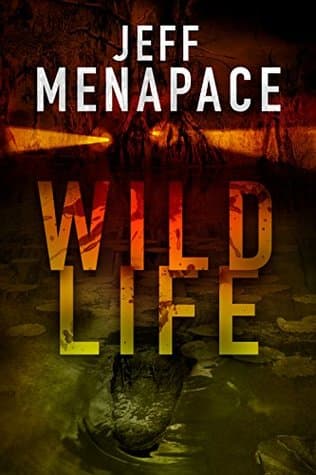
Deep in the treacherous Florida Everglades, a writer's research trip devolves into a desperate fight for survival as his group witnesses a brutal crime and becomes prey to both the deadly wildlife and vengeful human hunters.
The story begins with a boating accident deep in the Florida Everglades. Billy, a young boy from the Gator-Eye family, drives an airboat and accidentally hits another boat, killing a young girl named Jenny from the rival Sawyer family. The Sawyers, a violent and vengeful group, immediately swear revenge. Even though the accident was unintentional, the old hatred between the two families, who had a tense peace over their territories, restarts into a full blood feud. Billy's father, Earl Gator-Eye, knows the Sawyers will do anything to get their revenge, creating danger for anyone caught in the middle.
Meanwhile, writer Mark and his girlfriend Amy, along with Amy's parents, Fred and Carol, start a seemingly harmless boat trip into the remote Everglades. Mark is researching his next thriller novel, and the isolated wilderness provides inspiration. The family is at first charmed by the unique ecosystem and its wildlife, enjoying what they think is a peaceful trip. However, their journey unknowingly takes them into the disputed territory of the feuding families, putting them on a path toward the brewing violence.
As Jed guides the family deeper into the Everglades, they hear gunshots and find a terrible scene. They witness a group of Sawyer family members brutally killing members of the Gator-Eye family in revenge for Jenny's death. Among the victims is Billy's father, Earl Gator-Eye. The Sawyers, led by Silas Sawyer, discover Mark's group watching the massacre. Realizing they have witnesses, the Sawyers immediately turn their attention to Mark, Amy, Fred, and Carol, marking them for death to remove any evidence of their crime. The research trip instantly changes into a desperate fight for survival.
The Sawyers chase Mark's boat, disabling it with gunfire. Jed, the guide, dies in the first attack, leaving the family stranded and alone. Forced to leave their disabled boat, Mark, Amy, Fred, and Carol go into the dense, mosquito-infested Everglades on foot. Night falls quickly, making the terror worse as they realize they are not only being hunted by human predators but also face the dangers of the swamp itself: venomous snakes, alligators, and the oppressive heat and humidity. Their only hope is to outrun and outsmart the relentless Sawyers in the unforgiving wilderness.
As the Sawyers get closer, the group is forced to split up in the chaos. Fred, Amy's father, bravely creates a distraction to draw the Sawyers away, giving Mark, Amy, and Carol a chance to escape. Fred's heroic act buys them time but leads to his capture and brutal torture by the Sawyers. This separation and Fred's sacrifice highlight the increasing desperation and the horrific stakes involved. Mark and Amy feel guilt and fear, but they know they must keep moving to honor Fred's sacrifice and find a way out of the deadly swamp.
While navigating the swamp, Mark and Amy find an isolated shack belonging to an old, reclusive hermit named Caleb. Caleb, who has lived in the Everglades for decades, is cautious but not hostile. He offers them minimal supplies and warnings about the Sawyers, who he knows well, and the dangers of the 'glades. He emphasizes that the wilderness often claims those not native to it. Caleb's presence offers a brief rest and a glimmer of hope, but his reluctance to get involved shows the deep fear and respect locals have for the violent Sawyer family and the lawlessness of the remote region.
The Sawyers continue their relentless pursuit, showing their extreme ruthlessness. They torture Fred for information, eventually killing him gruesomely, leaving his body as a warning. They also capture Carol, Amy's mother, subjecting her to terror. These actions confirm the Sawyers' reputation as merciless killers who will do anything to eliminate witnesses and keep control over their territory. Mark and Amy, seeing or learning of these atrocities, are fueled by grief, terror, and a burning desire for survival and revenge against their tormentors.
As the ordeal gets worse, Mark, initially a writer who observes life from a distance, changes profoundly. He loses his intellectual detachment and uses primal survival instincts. He begins to use his knowledge of thrillers and his surroundings to plan and fight back, not just flee. His main goal becomes protecting Amy at all costs. This shift from passive victim to active participant marks a turning point, as he realizes that to survive the Sawyers and the Everglades, he must become as dangerous as his pursuers, leaving his former self to become more savage.
Mark and Amy, now hardened by their experiences, decide to stop running and confront the Sawyers. They use their knowledge of the treacherous Everglades environment, setting traps and ambushes. Mark, using his newfound cunning, carefully plans their counterattacks. They manage to kill several Sawyer family members, turning the hunters into the hunted. The swamp itself becomes an ally, its dangers now tools in their hands. This phase is marked by intense, brutal fights, where Mark and Amy prove they are no longer helpless victims but strong adversaries.
The climax ends in a brutal confrontation between Mark and Silas Sawyer, the patriarch of the murderous family. The battle is a raw, physical struggle for survival, without mercy or rules. Mark, driven by grief for Amy's parents and a desperate need to protect Amy, uses all his strength and cunning to defeat Silas. The fight happens in a particularly dangerous part of the Everglades, adding to the intensity. Mark ultimately manages to defeat Silas, ending the Sawyer family's terror and securing a chance for himself and Amy to escape.
After the final confrontation, Mark and Amy, battered and traumatized, manage to find their way out of the Everglades. Authorities rescue them, but the ordeal has left a lasting mark. The physical wounds will heal, but the psychological scars of witnessing brutality and being forced to commit violence will remain. They are survivors, but their innocence is shattered, and their view of humanity and the natural world is forever changed. The book ends with their escape, but also the heavy burden of their experiences.
The Protagonist
Mark transforms from a detached observer into a fierce protector and survivor, embracing a primal, dangerous side he never knew he possessed.
The Supporting
Amy endures horrific trauma, evolving from a vulnerable victim into a hardened survivor who finds inner strength and resilience.
The Supporting
Fred begins as a protective father and ends as a heroic martyr, inspiring Mark and Amy's fight for survival and revenge.
The Supporting
Carol experiences extreme suffering and is a victim of the Sawyers' brutality, highlighting the immense danger facing the protagonists.
The Antagonist
Silas remains consistently ruthless, serving as the embodiment of untamed violence and vengeance, ultimately meeting his demise at Mark's hands.
The Supporting
Jed serves as an early casualty, highlighting the immediate and deadly threat the Sawyers pose.
The Supporting
Caleb provides a brief, neutral interlude and a source of limited wisdom, reinforcing the isolation and lawlessness of the Everglades.
The Mentioned
Billy's actions, though accidental, initiate the central conflict, making him a catalyst for the plot.
The Mentioned
Earl's death serves as a pivotal moment, forcing Mark's group into direct danger as witnesses to the Sawyers' brutality.
The Mentioned
Jenny's death is the inciting incident, fueling the Sawyers' relentless revenge and setting the plot in motion.
The novel clearly shows humanity's capacity for violence and vengeance, especially away from civilization. The Sawyer family embodies this theme, driven by a primal need for retribution that goes beyond any moral or legal limits. Their actions—torture, murder, relentless pursuit—are savage and merciless, showing how quickly humans can become barbaric. Mark's own change from an intellectual observer to a brutal survivor, capable of violence, further supports this theme. It shows that even 'civilized' people can be forced to embrace their darker instincts to survive, as seen when he carefully plans traps and ambushes against the Sawyers.
“"The line between man and beast blurred in the swamp, and some men had already crossed it long ago."”
This theme explores not only the physical dangers of the untamed wilderness but also how it removes societal restraints, forcing individuals to face their rawest selves. The Florida Everglades is a character itself—a vast, indifferent, and deadly environment filled with alligators, snakes, and oppressive conditions. Mark and Amy's struggle against the elements—heat, insects, lack of food and water—is as dangerous as their fight against the Sawyers. The swamp acts as both an obstacle and, ironically, a tool for survival, as Mark learns to use its terrain and hidden dangers against his pursuers. The wilderness highlights human fragility and resilience.
“"The Everglades didn't care who you were, only if you could survive."”
The entire plot is started and driven by the cycle of revenge. The accidental death of Jenny Sawyer triggers the Sawyers' brutal quest for retribution against the Gator-Eye family. This first act of vengeance then includes Mark and his family when they witness the Sawyers' crimes. The theme explores the destructive nature of an eye-for-an-eye mentality, where violence leads to more violence, escalating to a point of no return. Mark, initially a victim, is eventually driven by his own desire for retribution for the deaths of Fred and Carol, completing the cycle and showing how easily one can be consumed by the need for vengeance.
“"They took one of ours. We take theirs. That's the way it is out here."”
Mark and Amy begin their journey as relatively innocent outsiders, seeing the Everglades as a fascinating backdrop for a book. By the end, they are changed forever, having witnessed horrors and been forced to commit violent acts themselves. Their initial naivety about the world's darker corners is shattered. The idyllic image of nature is replaced by a harsh reality where danger hides everywhere. This theme highlights how extreme trauma can take away one's innocence, leaving behind a scarred but hardened individual, forever altered by the experiences of survival.
“"The world they had known, the safe, predictable world, had been swallowed whole by the swamp."”
The initial reason for the protagonists' journey into the dangerous territory.
Mark's research for his thriller novel serves as the initial, seemingly innocuous reason for the group to venture into the remote Everglades. This 'MacGuffin' quickly loses its narrative importance once the conflict begins, but it effectively draws the protagonists into the perilous setting where the main plot unfolds. It provides a credible, everyday reason for ordinary people to find themselves in extraordinary danger, making their predicament more relatable and the subsequent terror more impactful.
The Everglades itself acts as a major antagonist and a tool for survival.
The Florida Everglades is more than just a setting; it functions as a primary plot device. Its vastness, treacherous terrain (swamps, dense vegetation), dangerous wildlife (alligators, snakes, insects), and extreme conditions (heat, humidity) constantly challenge the protagonists, amplifying their struggle. It not only increases the difficulty of escape but also provides Mark with opportunities to use its hidden dangers to his advantage against the Sawyers, turning the environment into a crucial element in their fight for survival.
The act of witnessing a crime as the catalyst for relentless pursuit.
The moment Mark's group inadvertently witnesses the Sawyer family's brutal execution of the Gator-Eyes is the pivotal plot device that transforms their research trip into a desperate fight for survival. This act of 'witnessing' immediately makes them targets, providing the Sawyers with a clear, ruthless motivation for their relentless pursuit: to eliminate all evidence and maintain their dominance. It creates an immediate, high-stakes conflict that drives the entire narrative forward.
The protagonist's profound change from ordinary to extraordinary survivor.
Mark's character arc, from an intellectual writer to a primal survivor, is a significant plot device. His transformation allows the narrative to explore themes of human nature and survival. As he sheds his former self and embraces a more ruthless, cunning persona to fight the Sawyers, it justifies his eventual capacity for violence and his ability to outwit his tormentors. This arc provides a dynamic psychological journey for the protagonist, making his eventual triumph more earned and impactful.
“The thing about evil, true evil, is that it doesn’t always announce itself with a flourish. Sometimes it just…is. Quietly.”
— Reflecting on the nature of the killer's presence.
“You can run, but you can’t hide, not when the wilderness itself is on the side of the hunter.”
— Describing the protagonist's sense of being pursued in the forest.
“Fear is a funny thing. It can paralyze you, or it can give you a strength you never knew you possessed.”
— A character grappling with their intense fear during a dangerous encounter.
“Some monsters wear human skin. Others wear none at all, and they’re the ones you truly need to fear.”
— A thought about the different forms of danger encountered.
“The silence out here wasn't peaceful; it was a hungry silence, waiting to swallow you whole.”
— Describing the oppressive atmosphere of the deep woods.
“Survival isn't about being the strongest. It's about being the smartest, the most adaptable, and sometimes, the luckiest.”
— A character's internal monologue about the keys to staying alive.
“The forest had eyes. And teeth. And it was closing in.”
— Feeling the overwhelming presence and threat of the natural environment.
“There are no rules in the wild. Only prey and predator.”
— Understanding the brutal reality of their situation in the wilderness.
“Hope was a dangerous luxury. It could keep you going, or it could break you when it finally ran out.”
— Contemplating the role of hope in a desperate situation.
“The line between sanity and madness blurs when you're truly alone, truly hunted.”
— A character experiencing extreme psychological stress.
“Every rustle of leaves, every snapped twig, was a potential harbinger of death.”
— The heightened senses and paranoia of being stalked.
“Sometimes the greatest weapon isn't a gun or a knife, but the will to live.”
— Recognizing the internal strength required to persevere.
“He didn't just want to kill them; he wanted them to know why.”
— Insight into the killer's motive and psychological torment.
“The woods don't judge. They just consume.”
— A stark realization about the indifference of nature to human suffering.
Ready to see how well you understood this book? Take our interactive quiz with 10 questions.







