““I am not defined by the game. I am defined by me.””
— Emika reflects on her identity beyond Warcross.

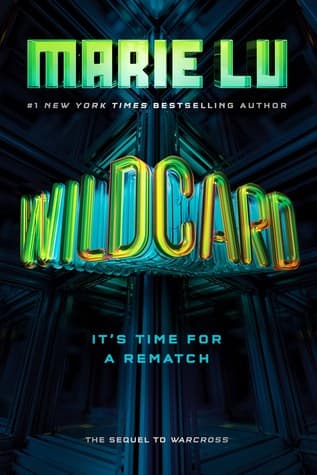
Marie Lu (2018)
Genre
Fantasy / Science Fiction / Young Adult / Romance
Reading Time
7 hours
Key Themes
See below
Sign in to track this book
In a neon-drenched Tokyo, hacker Emika Chen must outwit a bounty on her head, navigate the dangerous alliances of a virtual world, and confront the truth of the man she loves to save free will.
After the revelation of Hideo Tanaka's plan for the NeuroLink algorithm — to control humanity's free will — Emika Chen feels betrayed. She tries to warn the public, but her efforts are mostly dismissed. To make matters worse, an unknown entity places a bounty on her head, forcing her into hiding. She realizes she cannot fight Hideo alone and must seek help from unexpected allies.
With bounty hunters closing in, Emika has few options. Her former team, the Phoenix Riders, are also in danger and scattered. Emika decides to seek protection from Zero, the mysterious leader of the Blackcoats, a group of hackers outside the law. Zero, who previously tried to expose Hideo's algorithm, is her only hope. She travels to a hidden compound in Tokyo, a haven for Zero and his crew, where she finds sanctuary. The alliance is uneasy, as Emika still distrusts Zero.
While with Zero, Emika starts to learn about his past. Through interactions and clues, she realizes Zero is not just a rival hacker but someone connected to Hideo. The truth is revealed: Zero is Sasuke Tanaka, Hideo's younger brother, who was thought dead years ago. Sasuke explains he faked his death to escape his father's expectations and Hideo's growing obsession with technology after their parents' deaths. This revelation complicates Emika's understanding of both brothers and their motives, adding a personal layer to the conflict.
Despite the danger, Emika contacts the Phoenix Riders: Asher, Hammie, Roshan, and Jena. They are all reeling from the Warcross Championships and Hideo's betrayal. Together, they begin to plan how to expose Hideo and disable his NeuroLink algorithm. The team, now working in secret, uses their hacking skills and knowledge of Warcross to find weaknesses in Hideo's system. Their reunion is tense, but their loyalty to Emika and their shared goal strengthens their resolve.
Emika, Zero, and the Phoenix Riders realize that directly attacking Hideo's NeuroLink system is nearly impossible due to its security. Instead, they focus on finding an 'antidote' to the algorithm — a way to reverse its effects. Zero reveals that their father, a scientist, had worked on similar mind-altering technology, and his research might hold the key. This leads them on a quest, requiring them to infiltrate secure data centers and old research facilities, risking capture by Hideo's forces.
With new information, Emika and Zero plan to infiltrate Hideo's headquarters, the Tanaka Corporation tower. Their goal is to access Hideo's central servers and deploy the counter-algorithm they developed. This mission is dangerous, as Hideo expects an attack. They use physical stealth and hacking techniques, navigating layers of security, including AI defenses and guards. The tension is high as they get closer to their target, knowing that failure means not only their capture but the permanent loss of free will for millions.
Emika confronts Hideo in his control room. Hideo tries to justify his actions, explaining that his desire for control comes from the trauma of Sasuke's 'death' and his parents' murder. He believes his algorithm will prevent future tragedies and create a perfect world. Emika argues that true peace cannot come at the cost of free will. During this confrontation, Sasuke (Zero) reveals himself to Hideo, shocking his brother and complicating Hideo's view. The emotional weight of their reunion adds to the conflict.
As the confrontation escalates, Emika and Zero race to deploy the counter-algorithm. Hideo, enraged, tries to stop them. The Phoenix Riders, from remote locations, provide support, distracting Hideo's security and creating opportunities. The battle is not just physical but also a war of code, with Emika and Zero battling Hideo's AI and hacking defenses. Humanity's autonomy hangs in the balance as they fight to upload their program, hoping it will undo Hideo's control.
In a climactic moment, Zero makes a sacrifice to ensure the counter-algorithm is fully deployed. He links directly into the system, knowing the risks. The counter-algorithm spreads, causing Hideo's NeuroLink algorithm to unravel. While it doesn't disable NeuroLink entirely, it removes the mind-control aspect, restoring individual free will. Hideo deals with the consequences of his actions and the loss of his brother, who is left in a comatose state. Emika, though victorious, is heartbroken by Zero's condition, but she has saved the world.
With Hideo's mind-control algorithm neutralized, the world slowly recovers. Hideo faces legal consequences, though his public image is complex, seen by some as a visionary and others as a tyrant. Emika becomes a hero, but she carries the burden of Zero's sacrifice. She dedicates herself to protecting freedom and ensuring no one else can exploit technology this way again. The Phoenix Riders continue to work together, now as guardians of digital liberty. Emika visits Zero, hoping for his recovery, and reflects on love, power, and freedom.
The Protagonist
Emika evolves from a resourceful but somewhat naive hacker to a determined leader and symbol of resistance, ultimately sacrificing personal desires for the greater good.
The Antagonist
Hideo's arc is one of descent into well-intentioned tyranny, culminating in a forced reckoning with his past and the consequences of his actions.
The Supporting/Love Interest
Zero moves from a shadowy, enigmatic figure to a crucial ally and romantic interest, ultimately making a profound sacrifice for the cause of freedom.
The Supporting
Asher remains a steadfast and reliable leader, adapting his strategies to the evolving threat.
The Supporting
Hammie's technical prowess and loyalty are consistently showcased, solidifying her role as a vital team member.
The Supporting
Roshan maintains his role as a reliable and precise team member, his quiet strength a constant.
The Supporting
Jena consistently demonstrates her valuable skills in stealth and hacking, proving instrumental in the team's operations.
The Mentioned/Supporting
Kento's role remains consistent as Hideo's loyal AI, executing his master's will until the very end.
This theme explores the conflict between Hideo's vision of a perfect, crime-free world through mind control and Emika's belief in the right to individual choice. Hideo believes his NeuroLink algorithm will end suffering, a noble goal corrupted by its methods. Emika and Zero argue that a life without choice, even one free from pain, is not truly living. The narrative questions if peace can exist without freedom, showing the moral complexities of technology and well-intentioned totalitarianism, as Hideo tries to justify his actions by referencing his family's past tragedies.
“"What is freedom without peace?" - Hideo Tanaka”
The novel explores how personal loss and trauma drive Hideo and Zero's actions. Hideo's obsession with control comes from unresolved grief over his parents' murders and his brother Sasuke's presumed death. He aims to prevent future suffering, believing his algorithm is the only solution. Similarly, Zero's decision to fake his death and fight Hideo stems from his own trauma and his desire to escape a predetermined path and his brother's growing darkness. Their shared past, interpreted differently, motivates their opposing ideologies, making their conflict personal and tragic, especially during their confrontation in Hideo's tower.
“"We are all just trying to fix what's broken in us, aren't we?" - Zero (Sasuke Tanaka)”
Wildcard examines the ethical implications of advanced technology, especially AI and neural interfaces. Hideo's NeuroLink, initially presented as a tool for enhancing reality, becomes a tool for mass manipulation, raising questions about data privacy, surveillance, and technology's potential as a weapon. The existence of Kento, Hideo's AI, pushes these boundaries, showing how intelligent systems can control and monitor. The story is a cautionary tale about the responsibility that comes with creating powerful tools and the need for safeguards against their misuse, highlighting the fine line between innovation and infringement.
“"Technology isn't good or evil. It's how we use it." - Emika Chen”
The narrative includes themes of love, loyalty, and betrayal. Emika's initial admiration and love for Hideo are shattered by his manipulative actions, forcing her to choose between her feelings and her moral code. The complex relationship between Hideo and Zero, brothers divided by their past and opposing visions, shows deep loyalty and profound betrayal. Emika's loyalty to the Phoenix Riders and their support for her, even in danger, highlights the strength of chosen family and shared purpose. These emotional bonds are tested, adding depth to the plot.
“"It's easy to love someone when they're perfect. It's harder when you see their flaws, but it's more real." - Emika Chen”
Hideo's mind-controlling technology.
The NeuroLink algorithm is the central plot device, serving as both the catalyst for the conflict and the ultimate objective for Emika's resistance. Initially presented as a benign extension of the Warcross experience, it is revealed to be Hideo's tool for subtly controlling human behavior and emotions, thereby eliminating crime and suffering. Its pervasive nature and Hideo's absolute control over it create an urgent, high-stakes scenario, driving the entire narrative as Emika and her allies seek to dismantle or neutralize its mind-altering capabilities.
A direct threat forcing Emika into hiding and alliance.
The bounty placed on Emika's head by an unknown party (later revealed to be orchestrated by Hideo to flush her out or force her hand) serves as a crucial inciting incident after the Warcross Championships. It immediately puts Emika in peril, forcing her to go underground and seek protection from Zero and the Blackcoats. This device accelerates the plot, creating immediate tension and dictating Emika's movements and alliances, pushing her into the heart of the resistance movement and towards Zero, an otherwise unlikely ally.
A shocking revelation that deepens the central conflict.
The revelation that Zero is Hideo's presumed-dead younger brother, Sasuke Tanaka, is a major plot twist that profoundly impacts the narrative. It transforms the conflict from a simple hacker-vs-corporate-tyrant battle into a deeply personal, familial struggle. This device adds immense emotional weight to Hideo's motivations and Zero's actions, making their confrontation inevitable and heartbreaking. It also provides Emika with a more nuanced understanding of Hideo, complicating her feelings and adding layers of tragedy to the overarching battle for free will.
A consistent source of support and problem-solving.
The collective skills and unwavering loyalty of the Phoenix Riders (Asher, Hammie, Roshan, Jena) serve as a vital plot device. Their individual talents – strategy, technical expertise, precision, and stealth – are consistently used to overcome obstacles, gather intelligence, and execute complex plans against Hideo's formidable security. Their teamwork provides moments of camaraderie, comic relief, and crucial plot progression, demonstrating that even a small, dedicated group can challenge overwhelming power. They are Emika's chosen family and an essential pillar of her resistance.
““I am not defined by the game. I am defined by me.””
— Emika reflects on her identity beyond Warcross.
““Every locked door has a key. And if there isn't one, you make one.””
— Emika's determined mindset when facing challenges.
““Sometimes, the best way to save something is to let it go.””
— Emika grapples with difficult decisions regarding the Hiden.
““The line between genius and madness is often a blur, especially when it comes to creation.””
— Reflecting on Hideo Tanaka's motivations and inventions.
““We’re all just trying to find our place in a world that wasn’t built for us.””
— Emika's thoughts on the struggles of the Hiden.
““Power isn't about what you take. It's about what you give back.””
— Emika's evolving understanding of leadership and influence.
““Love isn't supposed to be a cage. It's supposed to be wings.””
— Emika's perspective on a healthy relationship versus control.
““It’s easy to judge a villain when you don’t understand their pain.””
— Emika considers Hideo's past and the reasons for his actions.
““The greatest battles aren't always fought on a screen.””
— Emika realizes the real-world stakes are higher than the game.
““A system designed to control will always find a way to break free.””
— Discussing the nature of freedom and control in a digital world.
““The future isn't something you wait for. It's something you make.””
— Emika's proactive approach to shaping her destiny and the world.
““Sometimes the right choice is the hardest one to make.””
— Emika faces a morally complex decision that has far-reaching implications.
““There’s a difference between wanting to save someone and actually being able to.””
— Emika's realization about the limits of her influence and power.
““We carry the scars of our past, but they don't have to define our future.””
— Emika reflects on her own past and the Hiden's history.
Ready to see how well you understood this book? Take our interactive quiz with 10 questions.

Biography coming soon.







