“I am not a thing. I am not a person. I am a force.”
— Anya's self-declaration of her true nature and power.

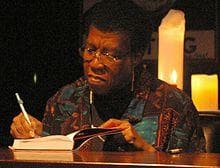
Octavia E. Butler (1980)
Genre
Fantasy / Historical Fiction / Science Fiction
Reading Time
360 min
Key Themes
See below
Sign in to track this book
An immortal African shapeshifter who heals with a kiss and fears no one meets a body-jumping entity of immense power and casual cruelty. Their journey from ancient Africa to the New World changes humanity forever.
The story begins in 17th-century Africa. Doro, an immortal being who has lived for millennia by possessing human bodies until they die, meets Anyanwu, a woman with extraordinary power. Anyanwu is a shapeshifter who can heal herself and others, change her form, and live for centuries without changing bodies. Doro, intrigued and alarmed by her abilities, approaches her village. He tests her, discovering her strength and resilience, including her ability to absorb bullets. Doro has never met anyone like her. He decides she is too valuable to kill or leave behind. He manipulates her, convincing her to come with him to the New World, promising a life free from the cycle of birth and death she has observed.
Under Doro's influence, Anyanwu leaves her home and family to travel with him. Doro constantly seeks and cultivates other latent psychics, or 'seed,' among humanity. He sees Anyanwu as the ultimate prize for his breeding experiments. During their journey across the Atlantic, Doro repeatedly asserts his dominance, at times forcing Anyanwu into sexual acts, though she resists and challenges him. They arrive in the New World, where Doro establishes a secluded community for his psychic 'children' in a place called Wheatley. Anyanwu learns about this new world and the various individuals Doro has gathered; many have abilities but are subservient to Doro.
In Wheatley, Anyanwu feels trapped in Doro's world. She observes his methods, which include forced breeding, manipulation, and the killing of those who displease him or whose powers become dangerous. Anyanwu, despite her own power, feels constrained and disgusted by Doro's cruelty and disregard for human life. She forms a bond with some of Doro's 'children,' particularly Isaac, who is blind but has strong psychic abilities. Doro, wanting to propagate his line, eventually forces Anyanwu to bear children with him. Their first son, Isaac, is born with immense, uncontrollable powers that manifest as destructive energy bursts, leading to a tragic existence for the child.
Isaac's life is one of constant pain and destruction. His uncontrolled energy bursts accidentally harm those around him and himself. Doro cannot cure Isaac, only contain him. Anyanwu is heartbroken by her son's suffering and tries to help him, often at great personal cost. Isaac's condition causes constant tension and grief between Anyanwu and Doro. Isaac's powers eventually overwhelm him, leading to his death. This loss deeply affects Anyanwu, strengthening her hatred for Doro's callousness and his willingness to sacrifice individuals for his genetic experiments. She blames Doro for Isaac's suffering and death, further solidifying her resolve to resist his control.
As decades turn into centuries, Anyanwu stays with Doro, constantly challenging his methods and morality. She becomes a matriarch and healer within the community, using her shapeshifting and healing abilities to help Doro's 'children.' Many of them suffer from the strange and often dangerous manifestations of their powers. While Doro continues his breeding programs, Anyanwu offers compassion and care, often mediating between Doro and his terrified subjects. She forms deep relationships with many of Doro's descendants, effectively becoming their protector. Her presence changes the dynamic of Doro's community, bringing a measure of humanity that Doro, in his ancient and detached state, often lacks or suppresses.
The story moves through historical periods, including the American Revolution. During this time, the community faces external threats and internal strife. Anyanwu, tired of Doro's control and his genetic agenda, tries to leave him. She travels and experiences life outside his direct influence, but Doro, watchful and possessive, eventually tracks her down. Their reunion is tense; Anyanwu demands more autonomy and respect. Doro, though still dominant, begins to acknowledge her power and unique position, recognizing that he needs her for the stability and continuation of his 'seed' experiments. This period marks a subtle shift in their power dynamic, with Anyanwu gaining a stronger, though still contested, voice.
As time continues, Doro and Anyanwu encounter a new type of psychic 'seed' – a powerful empath. This individual can feel and amplify the emotions of others, which is both a gift and a curse. Doro, always seeking to understand and control new abilities, finds this empath intriguing and potentially dangerous. The empath's abilities, if uncontrolled, could devastate Doro's community or Doro himself, as Doro's constant body-jumping makes him vulnerable to certain psychic attacks. Anyanwu, with her understanding of human nature, recognizes the empath's potential for both good and harm. She tries to guide Doro, advocating for a more compassionate approach than Doro's usual ruthless methods.
The encounter with the empath ends in a critical confrontation where Doro is in a precarious position. The empath's uncontrolled abilities, or a deliberate act, cause Doro significant distress and threaten his current host body. This rare moment of vulnerability shows Doro's dependence on Anyanwu. Despite his power, Doro needs Anyanwu's healing and protective abilities to survive this psychic attack. This event further shifts the balance of power between them. Doro is forced to admit, even if implicitly, that Anyanwu is not just a tool for his experiments but an essential partner, perhaps his only true equal.
Over centuries, the dynamic between Doro and Anyanwu remains a complex dance of power, love, and resentment. Anyanwu constantly pushes back against Doro's absolute authority, especially regarding the fate of their shared descendants. She works to protect them from Doro's brutal instincts and to encourage their individual growth, rather than seeing them as just genetic material. She often acts as a mother figure, healer, and moral compass for the community, contrasting Doro's cold, calculating approach. Her resistance is not always overt rebellion but often a stubborn refusal to conform to his will, subtly shaping the direction of his 'seed' and ensuring humanity within his evolving species.
By the end of the narrative, Doro and Anyanwu have a complex and almost symbiotic relationship. They are bound by their shared immortality, unique powers, and countless descendants. Doro, despite his ancient nature, has changed because of Anyanwu's presence, learning patience and even affection, though his ruthlessness remains. Anyanwu, while still resenting Doro's control and cruelty, has accepted their intertwined destiny, recognizing that she is the only one who can truly challenge and temper him. Their partnership, born of force and sustained by a strange blend of necessity and connection, continues as they navigate the evolving world and the future of their unique species.
The Antagonist/Protagonist
Doro, initially unyielding in his ruthlessness, is subtly changed by Anyanwu's enduring presence, learning a degree of patience and interdependence.
The Protagonist
Anyanwu evolves from a captive to an essential, albeit reluctant, partner, retaining her compassion while adapting to Doro's brutal world.
The Supporting
Isaac's arc is tragic and brief, serving as a catalyst for deeper conflict and grief between Doro and Anyanwu.
The Supporting
Thomas grows to be a stable and intelligent psychic, embodying a more successful outcome of Doro's breeding.
The Supporting
Mary struggles with her powerful abilities and difficult temperament, highlighting the challenges of Doro's experiments.
The Mentioned
Nweke's arc is static, serving as a symbol of Anyanwu's lost past.
The Supporting
The Empath's arc is brief but impactful, serving as a catalyst for Doro's vulnerability and a shift in his dynamic with Anyanwu.
The Supporting
Joseph remains a consistent, loyal, and fearful member of Doro's community, illustrating the long-term effects of Doro's control.
The central theme is power and control, seen in Doro's dominance over his psychic 'seed' and Anyanwu's struggle for autonomy. Doro uses his ancient knowledge, immortality, and willingness to kill to control individuals and shape their evolution. Anyanwu, despite her great personal power, is initially subjugated, but she consistently resists, asserting her will and protecting those Doro exploits. The theme explores the moral implications of unchecked power and the desire for freedom and self-determination.
“He always killed them when he tired of them or when they became dangerous to his current plans. He was a god, a monster, a murderer. And she was his property.”
Both Doro and Anyanwu deal with their identities as ancient, powerful beings interacting with transient humanity. Anyanwu, forced from her African culture, must create a new identity within Doro's community. She questions her role as a mother, healer, and captive. She tries to maintain her sense of self against Doro's attempts to mold her. Doro seeks to define himself through his 'seed,' trying to create a legacy and purpose that goes beyond his predatory existence. The novel explores how identity is shaped by relationships, power dynamics, and the passage of long amounts of time.
“She was not human, not truly, but she was more human than Doro would ever be.”
Doro's millennia-long project is the survival and evolution of a new species of psychically gifted humans. He is a geneticist, driven to create a stronger, more resilient 'seed' that can endure. This theme examines the ethics of forced evolution, the sacrifices made for species survival, and the definition of 'fitness.' Anyanwu is also a survivor, adapting to new environments and enduring Doro's cruelty, ensuring the survival of her children and, indirectly, tempering Doro's species.
“He was a gardener, cultivating humanity for his harvest. And he would prune away the weak, the useless, the dangerous.”
Despite the harsh, often violent setting, love, family, and loss are explored. Anyanwu's love for her children, especially Isaac, is a powerful force, contrasting sharply with Doro's detached, utilitarian view of his offspring. The novel shows Anyanwu's grief from losing her original family and the tragic death of Isaac. It looks at the complex, often painful, bonds formed within Doro's unusual 'family,' where affection and loyalty exist alongside fear and resentment. These human emotions persist even across vast spans of time and power differences.
“She loved them, these strange children of hers, even the ones who feared her, even the ones who feared Doro more.”
The novel explores the implications of immortality for Doro and Anyanwu. Their long lifespans let them witness centuries of human history, from 17th-century Africa to later periods in the New World. This perspective shapes their understanding of humanity, power, and morality. Doro's ancient existence has made him detached and ruthless, while Anyanwu, though ancient, keeps a connection to human empathy. The theme shows how time can both harden and refine, and how an extended lifespan makes one re-evaluate what truly matters.
“Centuries had passed, but in Doro's mind, they were merely moments, steps in his endless journey.”
Doro's method of achieving immortality and exerting control.
Doro's unique form of immortality, where his consciousness inhabits and eventually burns out human bodies, is a central plot device. It allows him to exist across millennia, experience different eras, and maintain his detached, predatory nature. This ability is the source of his power and fear, as it makes him virtually unkillable in a conventional sense, but also exposes his vulnerability to certain psychic attacks, as his true form is a disembodied spirit. It directly drives his need for a 'seed' to house his consciousness and his fascination with Anyanwu's ability to maintain a single body for centuries.
Anyanwu's primary ability, symbolizing her adaptability and connection to nature.
Anyanwu's ability to shapeshift is a crucial plot device, defining her character and her interactions. It allows her to heal, defend herself, and adapt to various situations. Her ability to change form reflects her deep connection to the natural world and her resilience. It also makes her uniquely valuable to Doro, as her ability to maintain a single body for centuries and heal herself contrasts sharply with his body-jumping. Her shapeshifting is a symbol of her freedom and defiance, even when she is physically constrained by Doro.
Doro's centuries-long project to create a new psychic species.
Doro's systematic and often brutal forced breeding program is the driving force behind much of the narrative. It is the reason he gathers psychics, the source of conflict between him and Anyanwu, and the means by which he attempts to achieve his evolutionary goals. This device explores themes of control, eugenics, and the ethics of manipulating life for a grander purpose. It creates a constant stream of new characters with unique powers, populating Doro's world and providing Anyanwu with individuals to protect and nurture.
The term for Doro's psychically gifted descendants, representing his legacy.
The 'seed' refers to Doro's psychically gifted offspring and descendants, who form the core of his evolving species. This device illustrates the results of Doro's experiments, showcasing a wide range of psychic abilities, from telepathy and precognition to more destructive powers. The 'seed' are both Doro's creations and Anyanwu's adopted family, creating a complex dynamic where Anyanwu often acts as a protector against their own creator. Their diverse abilities and struggles highlight the unpredictability and ethical dilemmas inherent in Doro's project.
The use of historical periods to ground the fantastical elements and show the passage of time.
The novel uses various historical periods, starting in 17th-century Africa and moving through significant periods in the New World, including the American Revolution. This device grounds the fantastical elements of Doro and Anyanwu's immortality in a tangible timeline, allowing the reader to perceive the vast passage of time and its impact on the characters. The changing social and political landscapes provide context for the evolution of Doro's community and the challenges faced by his 'seed,' highlighting how their powers and existence interact with human history.
“I am not a thing. I am not a person. I am a force.”
— Anya's self-declaration of her true nature and power.
“You are a child of my blood, a child of my will, a child of my spirit. You are mine.”
— Doro's possessive claim over Anya, highlighting his desire for control.
“Survival is a kind of power. And it is a power you have.”
— Anya reflecting on the strength she gains simply by enduring Doro's manipulations.
“He chose not to kill me. He chose to make me his. There is a difference.”
— Anya's grim understanding of Doro's motives and her place in his plans.
“To be able to create, to be able to give life, that is the greatest power.”
— Anya's perspective on her own unique abilities, contrasting with Doro's destructive power.
“He was a god, of sorts, a god of his own making, and he had made her, too.”
— Narration describing Doro's god-like status and his influence on Anya.
“Sometimes, the only way to survive is to pretend you are not yourself.”
— Anya's strategy for coping with her existence under Doro's constant scrutiny.
“He wanted to see what she could do, what she would become, what she would make.”
— Doro's fascination with Anya's potential, viewing her as an experiment.
“She was a seed, wild and strong, planted in alien soil.”
— A metaphor for Anya's resilience and her struggle to thrive in Doro's world.
“Love was a luxury she could not afford, a weakness she could not permit herself.”
— Anya's internal struggle with emotions, given her dangerous circumstances.
“He thought he owned her, but he did not own her spirit.”
— Anya's internal defiance against Doro's perceived ownership.
“The price of immortality was loneliness, a terrible, endless loneliness.”
— Doro's own curse, despite his immense power and long life.
“She was learning to be a predator, because Doro had taught her that nothing else would do.”
— Anya's adaptation to Doro's violent world, embracing a darker side for survival.
“He harvested souls. She harvested life.”
— A succinct comparison of Doro's and Anya's fundamental natures and powers.
Ready to see how well you understood this book? Take our interactive quiz with 10 questions.
Biography coming soon.







