“I am Wideacre, and Wideacre is mine.”
— Beatrice Lacey's fierce declaration of ownership over her ancestral estate.

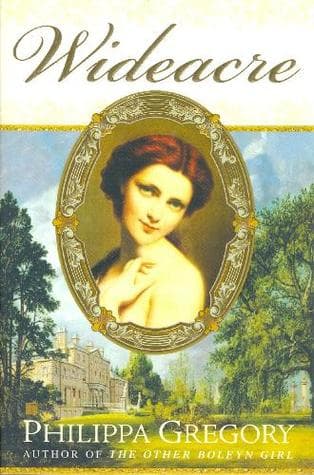
Philippa Gregory (1987)
Genre
Historical Fiction / Romance
Reading Time
12-15 hours
Key Themes
See below
Sign in to track this book
In Georgian England, the beautiful and ruthless Beatrice Lacey will seduce, betray, and even murder to keep her beloved Wideacre estate and defy the societal constraints threatening her birthright.
Beatrice Lacey grows up on Wideacre, her family's ancient estate in rural England, developing a strong, almost mystical bond with the land. She is a wild, untamed child, preferring to ride bareback and explore the woods with her stable boy friend, Ralph, rather than learn the domestic arts expected of a young lady. Her father, Sir Harry Lacey, often despairs of her unconventional behavior, favoring her younger, more compliant brother, Richard. Beatrice's mother, Lady Lacey, is a cold, distant figure. A local wise woman, Dolly Truelove, predicts that Beatrice will one day rule Wideacre, a prediction that fuels Beatrice's already strong desire to inherit the estate, despite the patriarchal laws of primogeniture.
Beatrice's cousin, Julia Lacey, arrives at Wideacre. Julia is everything Beatrice is not: beautiful, demure, and skilled in domestic arts, quickly becoming Lady Lacey's favored companion. Beatrice resents Julia's presence, seeing her as a rival for attention and affection, particularly from Sir Harry. Soon after, Beatrice's brother, Richard Lacey, returns from school, having matured into a handsome young man. Richard and Beatrice share a complex, intense relationship, marked by both sibling rivalry and a deep, unspoken connection. Richard is the rightful heir to Wideacre, a fact that constantly bothers Beatrice, intensifying her schemes.
Beatrice begins a passionate, secret affair with Ralph, the stable boy, finding in him a physical and emotional release she cannot experience elsewhere. At the same time, she subtly manipulates her father, Sir Harry, playing on his affection for her and his frustrations with Richard's perceived weaknesses. She convinces Sir Harry to teach her about estate management, an unusual pursuit for a woman of her time. Sir Harry, impressed by her intelligence and passion for Wideacre, begins to doubt that Richard is the only suitable heir, much to the dismay of Lady Lacey and Julia.
Sir Harry Lacey dies suddenly and violently, falling from his horse after a suspicious incident during a hunt. While officially ruled an accident, Beatrice is suspected, having been seen near the scene. With Sir Harry's death, Richard becomes the master of Wideacre. To secure his position and, more importantly, to produce an heir, Richard marries Julia Lacey. This marriage devastates Beatrice, as it solidifies Richard's claim to Wideacre and could produce a male heir who would further diminish her chances of inheriting the estate. Beatrice's resentment and determination to possess Wideacre grow.
Beatrice discovers she is pregnant with Ralph's child. Knowing the scandal and dispossession this would cause, she keeps her pregnancy a secret, planning to pass the child off as legitimate. Meanwhile, Richard, burdened by the responsibilities of Wideacre and plagued by his own internal demons, begins to unravel. He becomes increasingly withdrawn, melancholic, and prone to irrational behavior, hinting at a hereditary madness in the Lacey line. Beatrice observes his decline with a mixture of pity and calculated hope, seeing it as an opportunity to further her own ambitions for Wideacre.
Beatrice gives birth to a daughter, Alinor, whom she successfully passes off as Richard's child, despite the true paternity. Richard's mental state worsens, and he eventually dies, possibly by his own hand or through Beatrice's subtle influence, leaving Wideacre without a clear male heir. With Richard gone, Beatrice sees her path to becoming the mistress of Wideacre finally open. She manipulates the legalities, claiming her daughter, Alinor, as the legitimate heir and herself as the regent, effectively taking control of the estate she has coveted for so long. Her triumph is tinged with the secret of Alinor's true parentage.
Beatrice assumes full control of Wideacre, ruling with fierce passion and an iron will. She manages the estate with a shrewdness and dedication that surprises many, proving her earlier claims of competence. She implements changes, improves the land, and dedicates herself entirely to its prosperity, embodying the spirit of Wideacre. However, her past actions and secrets continue to haunt her. Dolly Truelove, the wise woman, knows the truth about Alinor's paternity and Beatrice's other transgressions, and her presence becomes an increasing threat to Beatrice's carefully constructed world. The weight of her deceptions begins to press upon her.
Ralph, now aware of his daughter, Alinor, and emboldened by Beatrice's position, demands recognition and a share in her life, threatening to expose the truth of Alinor's parentage. This places Beatrice in a difficult situation, as such a revelation would shatter her authority and reputation. At the same time, a new figure enters Beatrice's life: John MacAndrew, a wealthy and influential landowner. MacAndrew is drawn to Beatrice's strength and beauty, and he proposes marriage, offering her a chance at a legitimate, powerful alliance. Beatrice, always calculating, weighs the advantages of this union against her desire for absolute control of Wideacre.
As Alinor grows, she begins to show striking physical resemblances to Ralph, her true father, a fact that does not escape the notice of the more observant residents of Wideacre. This resemblance fuels Ralph's belief that Alinor is his and intensifies his demands for recognition and access to his daughter. He becomes more aggressive in his pursuit, threatening to reveal the truth to the entire community if Beatrice does not comply. Beatrice finds herself in an increasingly desperate situation, caught between her desire to protect her daughter and her need to maintain the secrecy that underpins her power.
Facing exposure from Ralph and the growing suspicion surrounding Alinor's parentage, Beatrice takes a drastic and final step. In a harrowing confrontation, she murders Ralph, believing this will silence the truth forever and secure Alinor's inheritance and her own reign over Wideacre. The act, however, does not bring the peace she desires. The murder weighs heavily on her, and the secrets continue to fester. Dolly Truelove, who witnessed the true paternity of Alinor, knows Beatrice's deceit. The consequences of Beatrice's desperate actions begin to close in on her, leading to a tragic and violent end.
The Protagonist
Beatrice transforms from a wild, passionate girl into a cunning, desperate woman, consumed by her desire for Wideacre, ultimately sacrificing everything, including her humanity, to possess it.
The Supporting
Sir Harry struggles with the conflicting desires of his children and the traditions of his family, ultimately failing to prevent the tragedies that befall Wideacre.
The Supporting
Lady Lacey remains a static figure, representing the traditional forces Beatrice rebels against.
The Supporting
Richard's character arc is one of decline, as he succumbs to mental illness under the pressure of his inheritance and Beatrice's manipulations.
The Supporting
Ralph evolves from a youthful lover to a demanding father, ultimately becoming a victim of Beatrice's ruthless ambition.
The Supporting
Julia serves primarily as a foil to Beatrice, representing the traditional path Beatrice rejects, and her marriage to Richard inadvertently accelerates Beatrice's plans.
The Supporting
Dolly remains a constant, knowing presence, serving as the moral compass and a living repository of Beatrice's secrets.
The Supporting
Alinor grows up unknowingly carrying the burden of her mother's deceit, a silent testament to Beatrice's ambition.
The central theme is Beatrice's all-consuming obsession with Wideacre. She views the estate not just as property, but as an extension of her very being, a living entity she is destined to possess. This obsession drives her to commit increasingly immoral acts, including seduction, manipulation, and murder, to secure her claim. Her love for the land is so strong that it overshadows all other affections and moral considerations, as seen in her willingness to sacrifice family and lovers for its sake. The estate itself seems to hold a powerful, almost mystical grip over her, reflecting her belief that she is uniquely suited to rule it.
“"I am Wideacre. And Wideacre is mine."”
Beatrice consistently defies the restrictive societal expectations placed upon women in Georgian England. She rejects the demure, domestic role expected of her, preferring to ride and manage the estate rather than engage in polite society. Her pursuit of power, her sexual independence (especially with Ralph), and her willingness to manipulate and kill are all radical departures from the behavior considered acceptable for a woman of her standing. This defiance directly challenges the patriarchal system of primogeniture that would deny her Wideacre, highlighting the limitations placed on women's ambition during the period. Her struggle shows the injustice of a system that would disinherit a capable woman in favor of a less capable man.
“"They would take Wideacre away from me because I am a girl. But I am a Lacey of Wideacre, and it is mine."”
Beatrice's ambition, initially stemming from a deep love for Wideacre, gradually corrupts her, transforming her into a ruthless and amoral figure. Each step she takes to secure her claim — from seducing Ralph, to manipulating her father, to orchestrating Richard's demise, and finally to murder — chips away at her conscience. The novel shows how unchecked desire for power can lead to complete moral degradation, where the end justifies any means. Her ambition isolates her, leaving her with no true allies or genuine relationships, as everyone becomes a pawn in her grand design. The tragedy of Beatrice is that her dream, once realized, is built on a foundation of lies and blood, leaving her haunted and ultimately destroyed.
“"I would do anything for Wideacre. Anything at all."”
The narrative is heavily driven by a web of secrets and deceptions, most notably the true paternity of Alinor. Beatrice's entire claim to Wideacre and her manufactured legitimacy hinge on keeping this secret hidden. The constant threat of exposure from characters like Ralph and Dolly Truelove creates immense suspense and moves the plot forward. These secrets not only endanger Beatrice's position but also corrupt her relationships, as she must constantly manipulate and lie to those closest to her. The burden of her secrets ultimately proves too great, leading to violence and her own tragic end, showing how deception can unravel even the most carefully constructed plans.
“"A secret is a heavy thing to carry, Beatrice. It will weigh you down."”
The legal principle of inheritance by the firstborn son.
This device is fundamental to the entire conflict. In Georgian England, primogeniture dictates that Wideacre must pass to Sir Harry's eldest son, Richard, effectively disinheriting Beatrice. This legal constraint is the primary catalyst for Beatrice's schemes, driving her to defy societal norms, manipulate her family, and ultimately commit heinous acts to circumvent the law and claim the estate she believes is rightfully hers. It highlights the gender inequality of the era and fuels Beatrice's obsessive ambition.
A hereditary mental instability within the Lacey family line.
The 'family madness' is a recurring motif and a significant plot device. It is hinted at in Sir Harry, becomes evident in Richard's mental deterioration, and is implied to be a potential fate for Beatrice herself or her descendants. This device creates a sense of foreboding and suggests a genetic predisposition to the intense, sometimes irrational passions that drive the Lacey family. It provides a convenient explanation for Richard's decline, allowing Beatrice to exploit his vulnerability, and adds a layer of psychological complexity to the characters' actions, suggesting that their extreme behaviors might be partially inherited.
A village elder with prophetic abilities and knowledge of secrets.
Dolly Truelove serves as a classic literary archetype, a figure who possesses ancient wisdom and an intuitive understanding of events. She prophesies Beatrice's future, provides herbal remedies, and most crucially, acts as the only witness to the true paternity of Alinor. Her knowledge makes her a constant, silent threat to Beatrice's carefully constructed lies. She represents a connection to nature and a moral conscience that Beatrice desperately tries to ignore, adding a mystical and supernatural element to the story while also serving as a tangible source of dramatic tension.
“I am Wideacre, and Wideacre is mine.”
— Beatrice Lacey's fierce declaration of ownership over her ancestral estate.
“A woman's place is where she makes it, not where men tell her it is.”
— Beatrice's defiant stance against societal expectations for women in the 18th century.
“Love is a cage, and I will not be caged.”
— Beatrice's rejection of conventional romantic love in favor of her freedom and ambition.
“The land remembers. It remembers every drop of blood, every tear, every joy.”
— A reflection on the enduring memory and history embedded within Wideacre itself.
“Passion is a dangerous master, but a thrilling one.”
— Beatrice's acknowledgement of the power and peril of her own intense desires.
“To be born a woman is to be born into a battle.”
— A commentary on the inherent struggles and limitations faced by women of the era.
“There are some things a man can never truly understand about a woman's heart.”
— A general observation about the divide in understanding between genders.
“Power is not given, it is taken.”
— Beatrice's philosophy on acquiring and maintaining control.
“The devil has many faces, and sometimes the most beautiful is the most deadly.”
— A cautionary thought on deceptive appearances and hidden dangers.
“Secrets are like seeds; once planted, they grow, whether you tend them or not.”
— A metaphor for the unavoidable consequences and expansion of hidden truths.
“To inherit is one thing, to truly possess is another entirely.”
— Beatrice's distinction between legal ownership and the deeper, spiritual claim she feels over Wideacre.
“The past is never truly gone; it merely waits for the right moment to rise again.”
— A reflection on the persistent influence of history and past events on the present.
“Some desires are too strong to be denied, no matter the cost.”
— A justification for pursuing intense personal wants despite potential negative repercussions.
“A good name is a fragile thing, easily shattered by a whisper.”
— A commentary on the vulnerability of reputation in a gossipy society.
Ready to see how well you understood this book? Take our interactive quiz with 10 questions.

Biography coming soon.







