“And the boy, Brian O'Connal, was afraid of the wind, for the wind was a thing that could not be seen, and it could do terrible things.”
— Early in the book, establishing Brian's relationship with the natural world.

Genre
Historical Fiction / Young Adult
Reading Time
420 min
Key Themes
See below
Sign in to track this book
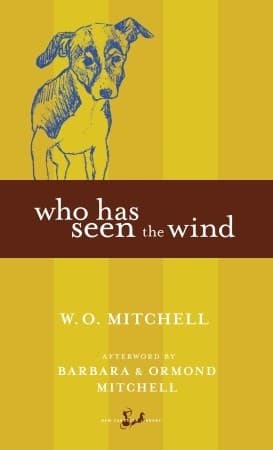
In the Canadian prairie, a young boy named Brian O'Connal explores life, death, and the unseen forces that define his world of small-town characters and nature.
Four-year-old Brian O'Connal lives in the small Saskatchewan town of Horizon. He begins to think about the wind and other unseen forces. He watches the world with a child's strong curiosity, often asking questions of his practical father, the druggist, and his more thoughtful Uncle Sean. Brian's first encounters with death, like a gopher drowning and a stray dog dying, show him life's harshness and existence's unknown nature. His strict, religious Scottish grandmother offers a religious view, often clashing with his own growing understanding. These early events set up Brian's lifelong search to understand life's unseen elements and spirit.
Brian becomes very interested in Saint Sammy, a local oddball and self-proclaimed prophet who lives in a shack outside town. Saint Sammy, often seen with his horse and buggy, talks about the wind and its spiritual meaning, drawing Brian in with his mysterious words. Their talks are a mix of childlike wonder and a deep, unspoken spiritual connection. Saint Sammy becomes a mentor, though an unusual one, leading Brian toward an intuitive grasp of the prairie's mystic qualities. Most townspeople see Saint Sammy as a harmless madman, but Brian finds a deeper truth in his words that matches his own questions about the unseen.
As Brian gets older, he spends more time exploring the coulees and bluffs around Horizon, often with Ben, a wild boy who lives on the edges of society. Ben shows a raw, free connection to nature, teaching Brian about survival, hunting, and the prairie's harsh beauty. Their adventures, which include tracking animals and facing the prairie's weather, further shape Brian's understanding of the natural world. This contrasts sharply with Horizon's more organized, human-focused world. Ben's freedom and strength appeal to Brian's growing independence and his wish to understand life's untamed parts.
Brian's start at school brings him into contact with more townspeople and their social ways. He struggles with the strictness of formal learning and the often-small-mindedness of the schoolyard. He sees adults' biases and judgments, especially toward people like Saint Sammy and Ben. His school experiences highlight the difference between his intuitive, spiritual understanding of the world and the community's more common, often hypocritical, views. He makes friends and rivals, learning about loyalty, betrayal, and the unwritten rules of small-town interaction.
Brian faces several losses in his childhood, which make him confront death's certainty and the grief that comes with it. His beloved dog, Jappy, dies, which affects him deeply, leaving him with much sadness and more questions about life's purpose. Later, he deals with the decline and death of Saint Sammy, who had greatly influenced his spiritual growth. These losses are not just sad events; they push Brian to understand the cycle of life and death and the lasting presence of memory and spirit.
A bad prairie storm, possibly a tornado, hits Horizon, leaving damage. Brian sees nature's raw, wild power firsthand, an experience that both frightens and fascinates him. The storm is a strong symbol for life's unpredictable and often destructive forces. It strengthens his understanding of the prairie's two sides—its beauty and its ability to be violent. The storm's aftermath brings the community together in shared hardship, but it also shows how fragile human life is against such strong natural power.
As Brian grows, his philosophical questions deepen. He keeps asking thoughtful questions about God, the soul, and life's meaning, often challenging the usual religious answers from his grandmother and the church. His observations of nature and his talks with Saint Sammy and Ben have given him a unique view. He tries to connect the physical world with the unseen, the scientific with the spiritual, struggling to put into words the strong sense of wonder and mystery he feels about existence. His journey becomes a search for a personal understanding of the divine, beyond strict rules.
Ben, the wild boy, faces a sad fate. Facing poverty and being left out by society, Ben does something desperate, possibly theft or violence, which leads to his capture and jail. Brian is deeply affected by what happens to Ben, seeing the societal forces that pushed his friend to such extremes. Ben's eventual death, whether accidental or self-inflicted, leaves Brian with a strong sense of injustice and a deeper understanding of the harsh realities faced by those on the edges of society. This event strengthens Brian's empathy and his awareness of the world's cruelties.
Entering his teenage years, Brian deals with the usual challenges of adolescence, including body changes, new romantic feelings, and a growing sense of his place in the world. He continues his thoughtful journey, thinking about his childhood experiences and what he learned from his unique mentors. He starts to form his own opinions and values, often quietly going against Horizon's conservative norms. His search for the 'wind'—for the unseen spirit and meaning of life—remains a main driving force, though now colored by the complexities of young adulthood.
As Brian nears adulthood, he plans to leave Horizon, likely for more schooling or opportunities outside the small town. While the exact details of his leaving are not clearly stated, the book ends with Brian having taken in his childhood lessons. The prairie, its people, and the strong experiences of loss, wonder, and spiritual questioning have shaped him into a thoughtful, empathetic young man. He carries with him a lasting understanding of the 'wind'—the unseen forces that connect all living things and the spiritual core of existence—a result of his unique upbringing.
The Protagonist
Brian evolves from a curious child into a thoughtful and empathetic young man, internalizing the complex lessons of the prairie and its inhabitants.
The Supporting
Sean remains a consistent source of quiet wisdom and poetic reflection for Brian throughout his childhood.
The Supporting
Her character remains largely static, serving as a pillar of traditional religious belief against which Brian defines his own spirituality.
The Supporting
Saint Sammy's presence and eventual passing serve as a significant catalyst for Brian's spiritual development and understanding of death.
The Supporting
Ben's life tragically spirals downwards, culminating in his death, which deeply affects Brian's sense of justice and empathy.
The Supporting
His character remains a steady, grounding presence for Brian, representing the practical realities of life.
The Supporting
Her character remains a symbol of formal authority and conventional thinking, a challenge for Brian's independent spirit.
The Mentioned
Digby serves as a recurring, minor antagonist in Brian's school life.
The main theme is Brian's lifelong search to understand life's unseen forces, shown by the 'wind.' He looks for meaning beyond what he can touch, questioning common religious ideas and scientific explanations. This shows in his interest in Saint Sammy's predictions, his deep connection to the prairie's spiritual nature, and his constant questions about death and existence. He instinctively understands a spiritual side that most adults miss, always trying to link the physical with the spiritual.
“Who has seen the wind? Neither I nor you. But when the leaves hang trembling, the wind is passing through.”
The Saskatchewan prairie is more than just a place; it is a living thing that greatly shapes Brian's understanding of life and spirituality. The landscape's harsh beauty, its storms, animals, and vastness, are his main teachers. Brian learns about life cycles, death, strength, and how everything is connected through his direct experiences with nature, often guided by people like Ben and Saint Sammy. The prairie shows both life's harsh realities and its mystical wonder.
“The prairie itself was a vast, breathing thing, alive with secrets Brian was always trying to uncover.”
The novel explores the shift from childhood innocence to the difficulties of experience. Brian's early, carefree curiosity slowly leads to an understanding of life's harsh truths, including death, social unfairness, and human cruelty, especially through Ben's story. However, he does not completely lose his innocence; instead, it changes into a deep empathy and a constant, hopeful search for meaning, despite the pain he sees. The contrast between his pure questions and the often-hypocritical adult world highlights this theme.
“He knew that the world was not a gentle place, but he still searched for the gentleness within it.”
Brian constantly deals with the tension between small-town expectations and his own unique, questioning self. Horizon's common views, shown by his grandmother and Mrs. Abercrombie, often clash with his intuitive understanding and his friendships with outsiders like Saint Sammy and Ben. The novel supports independent thought and the courage to find one's own truth, even when it differs from what society expects. It suggests that true wisdom often comes from outside the norm.
“He was a boy who saw things differently, and that made him both lonely and profoundly connected.”
Death appears repeatedly from Brian's earliest experiences, from the drowned gopher to the deaths of Jappy and Saint Sammy, and finally Ben. These meetings make Brian face the certainty of loss and the mysteries of what comes after. The novel looks at how people cope with grief and how understanding death shapes one's view of life. It suggests a cyclical view of existence, where death is not an end but a change, part of the larger, unseen 'wind' that flows through all things.
“Death was not a stopping, but a moving on, a part of the great, unseen current.”
The central metaphor for the unseen, spiritual forces of life.
The wind is the most prominent symbol in the novel, representing the invisible, intangible forces of life, spirit, and the divine. Brian's repeated question, 'Who has seen the wind?' encapsulates his quest for understanding these profound mysteries. The wind is both benevolent and destructive (as in the prairie storms), mirroring the dual nature of existence. It links the physical world to the spiritual, suggesting a pervasive, unseen presence that connects all living things and embodies the cyclical nature of life and death.
The natural landscape acts as a powerful, shaping force.
The Saskatchewan prairie is not merely a backdrop but an active 'character' in the novel. Its vastness, untamed beauty, harsh elements, and diverse life forms profoundly influence Brian's development and his philosophical inquiries. It embodies the raw, spiritual essence that Brian seeks to understand, contrasting with the human-made structures and conventions of Horizon. The prairie acts as a teacher, a source of both wonder and danger, and a constant reminder of the unseen forces that govern life.
A story charting a protagonist's moral and psychological growth.
The novel is a classic Bildungsroman, chronicling Brian O'Connal's journey from early childhood into adolescence. It focuses on his psychological and moral development, his education (both formal and informal), and his gradual understanding of himself and the world around him. Through his interactions with diverse characters and his experiences with life and death, Brian gains wisdom, empathy, and a unique spiritual perspective, ultimately shaping him into the person he is destined to become.
Unconventional figures who guide the protagonist's spiritual and natural understanding.
The characters of Saint Sammy and Ben serve as eccentric mentors to Brian. Saint Sammy, the 'mad' prophet, offers cryptic, spiritual insights that resonate with Brian's deepest questions about the unseen. Ben, the wild boy, teaches Brian about the harsh realities and untamed beauty of nature and survival. These figures, marginalized by conventional society, provide Brian with an education far richer and more profound than he receives in school, allowing him to develop an intuitive and empathetic understanding of the world.
“And the boy, Brian O'Connal, was afraid of the wind, for the wind was a thing that could not be seen, and it could do terrible things.”
— Early in the book, establishing Brian's relationship with the natural world.
“For the wind was a thing that was always there, even when you couldn't see it, even when you couldn't feel it, it was there.”
— Brian's ongoing contemplation of the omnipresent, invisible wind.
“You can't see the wind, but you can see what the wind does.”
— A common observation made to Brian by adults, trying to explain the wind.
“There was a loneliness in the prairie, a vast, sweeping loneliness, and it crept into you, and became a part of you.”
— Describing the profound sense of isolation on the Canadian prairie.
“It was the old women who knew about life and death, and the wind, and God.”
— Brian's observation of the wisdom held by the elder women in the community.
“He knew that the world was full of things that couldn't be explained, and that was all right.”
— Brian's growing acceptance of life's mysteries as he matures.
“The wind was God, and the wind was evil, and the wind was everything in between.”
— Brian's complex and evolving theological understanding of the wind.
“And he wondered, as he often did, if the wind ever rested, if it ever stopped blowing, just for a little while.”
— Brian's persistent curiosity about the relentless nature of the wind.
“The prairie was a place of extremes, of searing heat and biting cold, of drought and flood, of life and death.”
— A description of the harsh, contrasting conditions of the prairie environment.
“He learned that sadness was a part of living, just like happiness, and that you couldn't have one without the other.”
— Brian's realization about the balance of emotions in life.
“The wind was a whisper, and then a sigh, and then a moan, and then a scream.”
— Illustrating the varied intensities and sounds of the wind.
“It was a good thing to be alone sometimes, to listen to the wind, and to think.”
— Brian finding solace and introspection in solitude on the prairie.
“And the boy, Brian O'Connal, knew that he would carry the wind with him, always, wherever he went.”
— Brian's understanding that his experiences with the wind have shaped him permanently.
Ready to see how well you understood this book? Take our interactive quiz with 10 questions.

Biography coming soon.