“The world is a great equalizer. It's the only place where every person, every creature, every thing, no matter how powerful, will eventually become dust.”
— A reflection on mortality and the ultimate fate of all beings.

Nnedi Okorafor (2010)
Genre
Fantasy / Science Fiction
Reading Time
8-10 hours
Key Themes
See below
Sign in to track this book
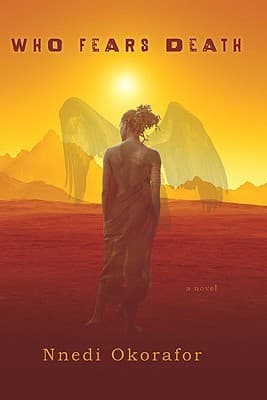
Born from brutal rape in post-apocalyptic Africa, Onyesonwu, a girl with sand-colored skin and magic, must confront ancient traditions, love, and death to fulfill her destiny and end the extermination of her people.
The story begins with the massacre of an Okeke village by the Nuru, a dominant ethnic group following a strict interpretation of the Great Book. Najeeba, the only survivor, is raped by General Nur, the Nuru leader. She escapes the ravaged village and wanders into the desert, giving birth to a baby girl with sand-colored skin and hair, an omen of her unique nature. Najeeba names her daughter Onyesonwu, meaning 'Who Fears Death?', sensing the child's extraordinary destiny. She hides Onyesonwu's true parentage, fearing the repercussions if her Nuru heritage were known among the Okeke survivors.
Onyesonwu grows up in the surviving Okeke community, ostracized for her unusual appearance and fiery temperament. Her mother Najeeba treats her with a mix of love and fear, keeping a distance. Onyesonwu's early life is marked by bullying and loneliness, but also by the emergence of strange, strong abilities. She can transform into animals, heal wounds, and manipulate objects with her mind. Eventually, her mother reveals the truth of Onyesonwu's parentage—that her father is the Nuru General Nur, the man who orchestrated the genocide of their people and raped Najeeba. This revelation deepens Onyesonwu's isolation and fuels her internal conflict.
Recognizing Onyesonwu's immense, untamed power, the community's elders, especially the shaman Aro, decide she must be trained. Aro teaches Onyesonwu about Ewu (magic). Under Aro's strict but loving guidance, Onyesonwu learns to harness her abilities, understanding the spiritual laws and the balance required to wield such power. She undergoes rigorous physical and mental training, learning about the spirit world, shape-shifting, healing, and the importance of respecting the forces she commands. Aro emphasizes that her power is a gift and a great responsibility, hinting at a larger purpose for her existence.
During her training, Onyesonwu meets and falls in love with Mwita, a gentle young man who sees past her unusual appearance and strong magic. Their relationship blossoms, offering Onyesonwu a rare sense of belonging and happiness. However, their love is complicated by traditional societal expectations and the dangers of Onyesonwu's destiny. Aro warns her that her path will be difficult and may require great sacrifices, including personal happiness. Mwita, though supportive, struggles to fully understand Onyesonwu's magical world and the burdens she carries, leading to tensions.
Driven by visions and her understanding of her destiny, Onyesonwu decides she must confront General Nur, her biological father, to end the genocide. This decision is met with fear and skepticism by many, who believe it is a suicidal mission. However, a small group of companions, including Mwita, her friend Binta, and her half-brother Diti, agree to accompany her. Their journey takes them through dangerous landscapes, encountering hostile Nuru soldiers, wild animals, and spiritual challenges. Onyesonwu's leadership and magical prowess are tested as they face the realities of their war-torn land.
As Onyesonwu and her companions travel, they face difficult trials. They navigate treacherous deserts, evade Nuru patrols, and confront magical threats. During one perilous encounter, Onyesonwu uses her most powerful magic, resulting in a transformation. She merges with the spirit of a powerful animal, enhancing her abilities but also making her more volatile and distant from her human companions. This transformation is both a source of strength and a burden, as she struggles to maintain her humanity while embracing her destiny as a magical warrior. Mwita and Binta witness her growing power with awe and fear.
Onyesonwu and her companions finally reach the Nuru stronghold where General Nur resides. The confrontation is tense and emotional. Onyesonwu reveals her identity to Nur, who is initially disbelieving but eventually recognizes her. The encounter becomes psychological and spiritual. Nur reveals the dark source of his power and the Nuru's ultimate goal—to purify the world of all 'impure' magic, including Onyesonwu's. He tries to manipulate her, but Onyesonwu holds firm, her resolve strengthened by her journey and her companions.
During her confrontation with General Nur, Onyesonwu delves deeper into the spiritual realm, uncovering the dark secret behind the Great Book revered by the Nuru. She discovers that the Great Book is not merely a religious text but a vessel for a malevolent spirit—the Ewu of the Great Book—that has been manipulating Nur and his ancestors for generations, fueling their hatred and genocide. This spirit feeds on fear, suffering, and the eradication of other magical traditions. Onyesonwu realizes that defeating Nur alone is not enough; she must sever the connection to this corrupting force to end the cycle of violence.
In a climactic spiritual battle, Onyesonwu confronts the Ewu of the Great Book directly. She understands that to defeat this ancient evil, she must make the ultimate sacrifice. Using all her accumulated power and her connection with the spirit world, she binds herself to the Ewu, dragging it into the realm of death. This act destroys both the malevolent spirit and Onyesonwu's physical body. Her companions witness her sacrifice, heartbroken but understanding her profound actions. The Nuru's power is broken, and the genocide begins to cease, though the scars on the land and people remain.
Though Onyesonwu's body is gone, her spirit endures. She becomes an ancestral spirit, a guide and protector for her people, transcending life and death. Her story is passed down through generations, becoming a legend that inspires hope and resilience. Mwita, Binta, and Diti play important roles in rebuilding their communities and ensuring Onyesonwu's sacrifice is never forgotten. The world begins to heal from centuries of conflict. Onyesonwu's life, marked by pain and power, brings about a new era of peace, proving that even in death, one can conquer fear and bring about change.
The Protagonist
Onyesonwu transforms from an ostracized, angry child into a compassionate and powerful shaman, ultimately sacrificing her physical life to save her people.
The Antagonist
Nur remains steadfast in his genocidal mission, serving as a conduit for the Great Book's malevolent spirit, until his power is broken by Onyesonwu's sacrifice.
The Supporting
Aro's arc is largely static, serving as the wise mentor who provides guidance and knowledge, preparing Onyesonwu for her destiny.
The Supporting
Mwita remains a steadfast source of love and support for Onyesonwu, enduring hardship alongside her, and ultimately helps carry on her legacy.
The Supporting
Binta remains a loyal and supportive friend, witnessing Onyesonwu's transformation and helping to preserve her memory.
The Supporting
Najeeba moves from a place of fear and secrecy regarding Onyesonwu's birth to one of acceptance and love, eventually understanding her daughter's destiny.
The Supporting
Diti evolves from a resentful half-brother to a loyal and supportive companion, finding common ground and purpose with Onyesonwu.
The Mentioned
Their collective arc is one of consistent manipulation and perpetuation of genocide, serving as tools for the Ewu of the Great Book.
Onyesonwu's struggle with her dual heritage (Okeke and Nuru, victim and oppressor) is central. Her sand-colored skin and hair make her an outcast among the Okeke, while her mother's rape by General Nur links her to the enemy. This theme explores how she forges her own identity despite societal rejection and the trauma of her birth. Her journey to embrace her unique powers and heritage, rather than letting it define her negatively, is key. This is evident in her initial isolation as a child and her eventual acceptance of her role as a bridge between worlds, as seen when she finally confronts Nur and embodies both aspects of her lineage.
“I was a child of two peoples, a child of a terrible rape. I was a child of the desert. I was a child of the Great Book and the Great River. I was a child of the living and the dead. I was Onyesonwu.”
The novel goes beyond simple definitions of good and evil, especially through the Nuru's genocidal actions. While the Nuru are the aggressors, the story reveals that their actions are orchestrated by a deeper, ancient evil—the Ewu of the Great Book—rather than inherent wickedness in all Nuru people. This complicates the idea of a purely 'evil' ethnic group. Onyesonwu, herself a product of violence, must navigate her own capacity for destructive power while striving for justice and peace. This is exemplified in her internal struggles with her temper and the power she wields, and her ultimate realization that the true enemy is a corrupting spiritual force, not merely a people.
“Evil was not a thing that was, but a thing that happened, a thing that was done. It was born of fear and ignorance, and it was spread by those who profited from it.”
The theme of power is explored through Onyesonwu's Ewu, its potential for both creation and destruction, and the sacrifices required to wield it responsibly. Aro constantly reminds her of the burden of her gifts. Her journey shows that true power is not just magical ability, but courage, compassion, and the willingness to make personal sacrifices for the greater good. Her ultimate act of binding herself to the Ewu of the Great Book to destroy it is the pinnacle of this theme, illustrating that the greatest power can demand the greatest personal cost, transforming the wielder into something beyond human, yet impactful.
“Power is not a thing you take. It is a thing you are given, and it is a thing you must earn the right to keep.”
Despite the genocide and trauma, the novel explores the potential for healing and forgiveness. Onyesonwu's journey, though violent, aims to break a cycle of hatred. Her relationship with her half-brother Diti, initially full of resentment, evolves into mutual respect, signifying the possibility of reconciliation between divided peoples. The ending, where Onyesonwu's spirit guides her people towards peace, suggests that even after immense suffering, healing can begin, not by forgetting the past, but by transcending its pain and choosing a different future. This is a long-term, generational healing, not instantaneous.
“The past is a wound that never truly heals, but it is a wound that can be tended to, and from which new life can grow.”
Onyesonwu is constantly told of her destiny to end the genocide, but the novel explores her agency within this predetermined path. She makes choices, falls in love, and struggles with the burden of her fate. While prophecies and visions guide her, her personal decisions and emotional growth shape how that destiny unfolds. The story suggests that destiny is not a rigid blueprint but a broad direction, within which an individual's will, character, and sacrifices determine the specific journey and outcome. Her decision to make the ultimate sacrifice is a conscious act of free will, even as it fulfills her larger purpose.
“Your destiny is not a cage, child. It is a path. You choose how you walk it.”
A sacred text that is also a vessel for a malevolent spirit.
The Great Book serves as the religious and ideological foundation for the Nuru's genocidal campaign against the Okeke. Initially presented as a holy scripture, it is later revealed to be a powerful plot device: a vessel for an ancient, malevolent Ewu spirit that manipulates its readers, particularly the Nuru leaders, into perpetuating hatred and violence. This twist transforms the religious conflict into a spiritual battle against a corrupting entity, shifting the focus from mere human fanaticism to a deeper, supernatural evil. It acts as the ultimate source of the conflict Onyesonwu must resolve.
The supernatural abilities and spiritual practices central to the Okeke culture.
Ewu represents the magical system of the novel, encompassing shape-shifting, healing, spiritual communication, and elemental manipulation. It is an inherent part of the Okeke culture and is viewed by the Nuru, under the influence of the Great Book, as an abomination. Ewu is not merely a power but a spiritual connection to the land, ancestors, and the fabric of existence. It serves as Onyesonwu's primary tool and burden, defining her identity and empowering her quest. The varying forms and ethical considerations of Ewu are explored through Aro's tutelage and Onyesonwu's personal struggles.
Her unique physical traits symbolize her dual heritage and outcast status.
Onyesonwu's unusual physical appearance—skin and hair the color of sand—is a constant visual reminder of her mixed heritage (Okeke mother, Nuru father) and her status as an outsider. It immediately sets her apart from her community and foreshadows her unique destiny. This device highlights themes of identity, otherness, and how physical traits can carry deep symbolic meaning. It also serves as a source of her early bullying and isolation, fueling her fiery spirit, but eventually becomes a symbol of her chosen identity as a bridge between worlds.
Precognitive dreams and insights that guide Onyesonwu's path.
Throughout the story, Onyesonwu experiences vivid visions and prophetic dreams that reveal aspects of her past, present, and future destiny. These serve as narrative devices to guide her on her quest, revealing critical information about General Nur, the Great Book, and the nature of the Ewu spirit. They create a sense of predetermined fate, yet also allow for Onyesonwu's interpretation and choices, blurring the lines between destiny and free will. These visions often come with a cost, causing her distress or requiring difficult sacrifices, underscoring the weight of her calling.
“The world is a great equalizer. It's the only place where every person, every creature, every thing, no matter how powerful, will eventually become dust.”
— A reflection on mortality and the ultimate fate of all beings.
“Fear is a powerful thing. It can make you do things you never thought possible. But it can also make you blind to the truth.”
— Onyesonwu contemplating the nature and effects of fear.
“Some stories are not meant to be told. Some truths are too terrible to be known. But that doesn't mean they don't exist.”
— Discussing the hidden and often dark realities of the world.
“Magic is not good or evil. It is simply power. What matters is what you do with it.”
— Onyesonwu's understanding of her burgeoning magical abilities.
“The past is never truly gone. It lives within us, shaping who we are, whether we acknowledge it or not.”
— Reflecting on the enduring impact of history and trauma.
“Love is a dangerous thing. It can make you strong, but it can also make you vulnerable.”
— Onyesonwu's feelings about her relationships and the risks involved.
“To truly live, you must first be willing to die.”
— A philosophical insight into embracing life fully.
“The greatest battles are not fought with swords, but with minds.”
— Emphasizing the importance of intellect and strategy over brute force.
“When you are different, you are a target. But you are also a weapon.”
— Onyesonwu's experience with being an outcast and recognizing her unique strengths.
“Hope is not a luxury. It is a necessity.”
— In a moment of despair, the importance of maintaining hope is highlighted.
“Sometimes, the only way to find your path is to get lost.”
— A reflection on the journey of self-discovery and uncertainty.
“The strongest cage is not made of iron, but of the mind.”
— Discussing the limitations and prisons created by one's own thoughts and beliefs.
“There are some wounds that time cannot heal, only hide.”
— Acknowledging the lasting impact of deep emotional and physical scars.
“The future is not written. It is made, by our choices and our actions.”
— An assertion of agency and the ability to shape one's destiny.
“To truly see, you must look beyond what your eyes tell you.”
— Encouraging a deeper perception and understanding beyond surface appearances.
Ready to see how well you understood this book? Take our interactive quiz with 10 questions.
Biography coming soon.







