“What is the point of a generation anyway? We are all products of the past, but we are not our parents. And we are not our children.”
— A reflection on generational identity and the struggle to define oneself apart from family.

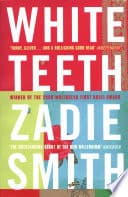
Zadie Smith (2001)
Genre
Literary Fiction / Historical Fiction
Reading Time
960 min
Key Themes
See below
Sign in to track this book
In multicultural London, the intertwined lives of the English Iqbal and Jewish-Jamaican Jones families unravel across three generations, showing how friendship, love, war, and the inescapable past comically and poignantly affect them.
On New Year's Day, 1975, Archie Jones, a middle-aged Englishman, tries to end his life by gassing himself in his car, but a halal butcher stops him. This incident leads him to a New Year's Eve party where he meets Clara Bowden, a much younger Jamaican woman with missing front teeth. Her mother, Hortense, is a devout Jehovah's Witness. In a spontaneous decision, driven by a desire for change and a lack of other options, Archie marries Clara. Their unexpected union starts the intertwined lives of the Jones and Iqbal families in Willesden, London, beginning a new chapter for Archie after his wartime experiences and failed first marriage.
Soon after Archie's marriage, his best friend and fellow World War II veteran, Samad Iqbal, arrives in London from Bangladesh with his wife, Alsana, a woman who often argues with Samad. Both men had served together in the Indian Army during the war, sharing a past. Clara gives birth to their daughter, Irie Jones, a few years later. Not long after, Alsana gives birth to twin boys, Millat and Magid Iqbal. The births of these children strengthen the bond between the two families, creating a new generation that will deal with their mixed heritage and their parents' expectations, setting them on different paths in their search for identity.
As the Iqbal twins grow, Samad worries about their assimilation into Western culture, especially Millat's rebellious nature and interest in pop culture. To preserve Magid's Bangladeshi heritage and religious upbringing, Samad secretly sends him back to Bangladesh to live with relatives, hoping he will become a good Muslim and a doctor. This decision, made without Alsana's full consent, creates a deep division in the family and leaves Millat feeling abandoned. Millat, meanwhile, continues to embrace a more Westernized, even delinquent, lifestyle, further disappointing his father and setting him against traditional expectations.
Irie Jones struggles with her identity, body image, and a lack of direction during her teenage years. She has crushes on both Millat and the absent Magid, feeling caught between her Jamaican heritage and her English upbringing. Her academic struggles lead her to seek help from the Chalfen family, a seemingly perfect, intellectual, white family living nearby. Joshua Chalfen, the son, becomes an object of Irie's affection, while his parents, Marcus and Joyce, take an interest in Irie and, later, Millat, offering them a different kind of mentorship that will affect their futures, often with unintended results.
Years later, Magid returns from Bangladesh, not as the devout Muslim doctor Samad imagined, but as a thoroughly Anglicized young man, obsessed with science and Western intellectualism, having been funded by Marcus Chalfen. This reversal of expectations devastates Samad. Meanwhile, Millat, after a brief time in a boy band and a period of aimlessness, joins a radical Islamic fundamentalist group, 'Keepers of the Eternal and Immutable Truth' (K.E.T.C.H.U.P.), largely due to the Chalfens' 'experiment' in helping their development. Marcus Chalfen, a geneticist, becomes more involved in both twins' lives, seeing them as subjects for his theories on nature versus nurture.
Irie, still dealing with her identity, finds herself in a complicated love triangle involving Joshua Chalfen and both Iqbal twins. After a drunken night, she becomes pregnant but is unsure whether the father is Millat or Joshua. This uncertainty adds another layer to her search for belonging. The Chalfens' influence on Millat and Magid deepens, with Marcus Chalfen particularly focused on his research into 'FutureMouse' – a genetically modified mouse designed to predict human disease. The Chalfens' well-meaning but ultimately patronizing interventions further complicate the lives of the Jones and Iqbal children, pushing them towards different, often extreme, ideological positions.
Marcus Chalfen's 'FutureMouse' project, a controversial scientific endeavor involving genetically modified mice, gets much public attention. It becomes a target for various groups, including animal rights activists led by Dr. Perret, and, ironically, Millat's fundamentalist Islamic group, K.E.T.C.H.U.P., who see it as an offense to nature and God. The upcoming public unveiling of 'FutureMouse' at the Perret Institute creates a central point for the novel's converging narratives, bringing together characters from all three families and their various ideological positions. Magid, however, remains a strong supporter of the project, embodying the scientific rationalism that Millat now strongly opposes.
The novel ends in a chaotic scene at the Perret Institute during the unveiling of 'FutureMouse'. Millat, with his K.E.T.C.H.U.P. brethren, plans to disrupt the event. Irie, Clara, Archie, Samad, and Alsana are all present, as are the Chalfens and Dr. Perret. Magid is also there, working as an assistant on the project. The tension builds as the various groups clash, with protests erupting outside and inside the institute. The long-standing conflicts and unresolved issues between the families and their children come to a head in a moment of public spectacle and personal crisis.
During the chaotic unveiling, Millat, armed with a pistol, tries to shoot Dr. Perret, whom he sees as the embodiment of scientific arrogance and Western decadence. However, Archie Jones, in an unexpected moment of courage, lunges forward and deflects Millat's aim. The shot misses Dr. Perret and instead hits the 'FutureMouse,' destroying the controversial scientific creation. This act, whether accidental or intentional on Archie's part, becomes a symbolic ending, disrupting the Chalfens' experiment and bringing the immediate conflict to a dramatic close, though the underlying tensions remain.
After the 'FutureMouse' incident, Millat is arrested, while Archie is seen as a local hero, though he remains confused by the events. Irie gives birth to her baby, still uncertain of the father's identity, but embracing her role as a mother. Samad and Alsana continue their arguments, but their bond lasts. The Chalfens retreat, their grand experiment having failed. The novel concludes with the characters moving forward, but the fundamental questions of identity, heritage, and belonging remain partly unresolved. The ending suggests that life, with all its messiness and multicultural complexities, continues, leaving the future generations to deal with the legacy of their parents' choices and the constant pull of the past.
The Protagonist
From a man contemplating suicide, Archie finds an unexpected purpose in family and friendship, culminating in an accidental act of heroism.
The Protagonist
Samad struggles to reconcile his traditional values with modern British society, ultimately finding a bittersweet acceptance of his children's divergent paths.
The Supporting
Clara navigates cultural differences and motherhood, growing into a more assertive individual who stands up for her family.
The Supporting
Alsana maintains her strength and practicality despite her husband's misguided decisions, remaining the grounding force for her family.
The Protagonist
Irie grapples with her biracial identity and finds a sense of self and purpose through motherhood.
The Supporting
Millat moves from rebellious assimilation to fundamentalist adherence, seeking identity and belonging in a rigid ideology.
The Supporting
Magid transforms from a child sent to embrace tradition into an ardent Anglophile scientist, challenging his father's expectations.
The Supporting
Marcus attempts to prove his scientific theories through the lives of the Iqbal twins, only to see his 'experiment' spectacularly fail.
The Supporting
Joyce attempts to guide Irie and Millat with her progressive ideals, often failing to connect with their deeper needs.
The Supporting
Joshua rebels against his parents' intellectualism, finding his own path through activism and personal relationships.
The novel explores the complex and often conflicting nature of identity, especially for second-generation immigrants in multicultural Britain. Irie Jones struggles with her biracial heritage, feeling neither fully Jamaican nor fully English. The Iqbal twins, Millat and Magid, show this struggle most clearly: Millat embraces radical Islam after trying Western youth culture, while Magid becomes an Anglophile scientist despite being sent to Bangladesh for a traditional upbringing. Their parents, Samad and Clara, also deal with their identities as immigrants, trying to hold onto their heritage while adapting to a new country. The characters' journeys show how modern identity is fluid and mixed, shaped by ancestry, religion, culture, and personal choice.
“'This is the story of a man who makes a decision and then, for the rest of his life, suffers the consequences of it. Or, rather, the consequences of not-making-it.'”
Zadie Smith shows the chaotic, and often challenging reality of multicultural London. The novel focuses on the interwoven lives of English, Jamaican, and Bangladeshi families, showing the cultural clashes, misunderstandings, and blending that happen when diverse communities live side-by-side. The characters navigate racism, cultural preservation, assimilation, and the search for belonging in a society that is constantly changing. The novel celebrates the richness of this diversity while also acknowledging the tensions and complexities in it, particularly in how different generations adapt to or resist their new surroundings.
“'Because that's London, isn't it? A city that keeps reinventing itself, a city that absorbs and reflects and reinvents. And a city, always, of arrivals.'”
The past has a strong influence on the present throughout the novel, especially through the shared wartime experiences of Archie Jones and Samad Iqbal. Samad's focus on his family's historical legacy and his own perceived failures drives many of his decisions, including sending Magid away. The trauma of World War II subtly affects Archie's quiet resignation. For the younger generation, their parents' histories and cultural heritage are both a burden and a source of identity. The 'Chalfen's Folly' and the 'FutureMouse' project also represent attempts to control or predict the future, often failing because of the unpredictable forces of history and human nature. The novel suggests that the past is never truly left behind, continually shaping individual and collective destinies.
“'The past is like a dead animal. You can kick it, poke it, burn it, but it still smells.'”
This theme is explored through Marcus Chalfen, a geneticist focused on understanding whether human behavior and destiny are determined by genetics (nature) or environment (nurture). He sees the Iqbal twins, Millat and Magid, as a living experiment, trying to manipulate their upbringing to prove his theories. Magid, sent to Bangladesh, returns a scientist, while Millat, raised in London, becomes a fundamentalist. The novel suggests that both nature and nurture play intricate, unpredictable roles, and that human agency, chance, and unforeseen circumstances often go against simple scientific explanations. The 'FutureMouse' project itself is a metaphor for this attempt to control and predict, which ultimately fails.
“'It was Marcus Chalfen's belief that a child was a tabula rasa, a blank slate, and that it was his job, as a parent, to scribble on it as much as possible.'”
The novel examines various forms of belief, from the quiet faith of Clara's mother, Hortense (a Jehovah's Witness), to Samad's nostalgic adherence to Bangladeshi traditions, and Millat's eventual embrace of Islamic fundamentalism. It contrasts these strong beliefs with Archie's secular indifference and the Chalfens' scientific rationalism. Millat's journey into K.E.T.C.H.U.P. shows how the search for identity and meaning can lead to extreme, rigid positions. The novel explores the appeal of absolute truths in a confusing world, but also critiques the dangers of fanaticism and how it can both empower and limit individuals, often leading to conflict and intolerance.
“'For the truth was, neither of them was particularly religious. They just wanted to be right.'”
The story follows multiple families and generations, creating a rich tapestry of lives.
Smith uses interwoven narratives, shifting between the perspectives and timelines of the Jones and Iqbal families, and later the Chalfens. This allows for a panoramic view of multicultural London and enables the exploration of how different lives intersect and influence one another. The technique builds a complex social fabric, highlighting the shared experiences and individual struggles within a diverse community. By jumping between characters and generations, the novel creates a sense of epic scope, tracing the long-term impact of decisions and historical events on subsequent lives.
Frequent shifts to the past, particularly WWII, to illuminate character motivations.
The novel frequently employs flashbacks, particularly to Archie and Samad's experiences in World War II and Samad's family history in Bangladesh. These historical excursions provide crucial context for the characters' present-day motivations, anxieties, and cultural identities. The past is not merely background; it actively shapes the characters' decisions, relationships, and their children's destinies. This device emphasizes the theme of the weight of history and how personal and national pasts continue to resonate in contemporary life.
A genetically modified mouse symbolizing scientific hubris and the nature vs. nurture debate.
The 'FutureMouse' project, a genetically modified mouse designed to predict human disease, functions as a powerful central symbol. It embodies Marcus Chalfen's scientific hubris and his attempts to control and predict life, directly addressing the nature vs. nurture theme. The mouse also becomes a focal point for various ideological clashes: scientific rationalism (Magid, Chalfen), animal rights activism (Joshua), and religious fundamentalism (Millat, K.E.T.C.H.U.P.). Its eventual destruction at the climax symbolizes the unpredictable nature of life and the failure of absolute control, whether scientific or ideological.
The novel is broken into distinct sections, each focusing on a period or character, linked by overarching themes.
While following a chronological progression, the novel's structure is largely episodic, with distinct sections often focusing on specific characters (e.g., 'The Temptation of Samad Iqbal') or periods. These episodes are not entirely self-contained but are intricately linked by recurring characters, themes, and motifs. This allows Smith to delve deeply into individual stories while maintaining a cohesive narrative tapestry, mirroring the fragmented yet interconnected lives of the multicultural community it depicts. The structure enables exploration of different facets of identity, history, and belief without losing sight of the larger narrative arc.
Used to lighten heavy themes and critique societal norms.
Smith employs abundant humor and satire throughout the novel, often in her characterizations and descriptions of societal quirks. This ranges from the slapstick of Archie's suicide attempt to the witty bickering between Samad and Alsana, and the ironic portrayal of the Chalfens' well-meaning but often patronizing liberalism. The humor serves to make complex and serious themes, such as racism, fundamentalism, and identity crises, more accessible and palatable. It also allows Smith to subtly critique various aspects of British society and human nature, highlighting absurdities and contradictions without becoming overly didactic.
“What is the point of a generation anyway? We are all products of the past, but we are not our parents. And we are not our children.”
— A reflection on generational identity and the struggle to define oneself apart from family.
“The past is a foreign country; they do things differently there.”
— A general observation on the disconnect between past and present, often in relation to cultural shifts.
“Everywhere was a place where people had come from somewhere else.”
— Describing the multicultural nature of London and the immigrant experience.
“It is not a question of whether the world will end, but how it will end.”
— A philosophical musing on the inevitability of change and endings.
“Sometimes you have to be a little bit mad to be a good scientist.”
— Reflecting on the eccentricities and passion required for scientific pursuit.
“But the past is an anchor, and the future is a kite.”
— A metaphor for how the past grounds us while the future pulls us forward.
“Children are not a commodity. They are not a future investment. They are children.”
— A critique of parental expectations and the pressure placed on children.
“There are some things in life that you don't choose. They choose you.”
— Referring to destiny or unavoidable circumstances that shape one's life.
“The truth is a very subjective thing, isn't it?”
— Questioning the nature of truth and its interpretation by different individuals.
“History is not a line, but a circle. We keep coming back to the same points.”
— A cyclical view of history, suggesting that patterns repeat themselves.
“People always want to be part of something bigger than themselves.”
— Exploring the human desire for belonging and purpose within a larger community or cause.
“The problem with the future is that it keeps arriving.”
— A humorous yet poignant observation on the relentless march of time.
“You can't choose your family, but you can choose your friends.”
— A common adage about the difference between familial and chosen relationships.
“Hope is a dangerous thing, but it's all we have.”
— A reflection on the double-edged nature of hope in challenging circumstances.
Ready to see how well you understood this book? Take our interactive quiz with 10 questions.
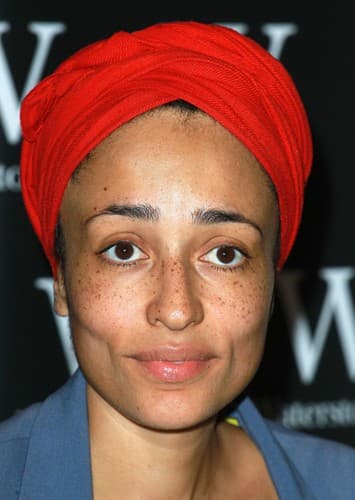
Zadie Smith FRSL is an English novelist, essayist, and short-story writer. Her debut novel, White Teeth (2000), immediately became a best-seller and won a number of awards. She has been a tenured professor in the Creative Writing faculty of New York University since September 2010.







