“All plots tend to move deathward. This is the nature of a narrative. A deathward movement. I have been fighting it all my life.”
— Jack Gladney reflecting on the nature of storytelling and his own mortality.

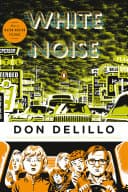
Don DeLillo (1999)
Genre
Literary Fiction / Science Fiction
Reading Time
8 hr 15 min
Key Themes
See below
Sign in to track this book
A professor of Hitler studies and his family face their own mortality when a toxic chemical spill forces them to confront the real, yet often invisible, threats of modern life.
The novel begins with Jack Gladney, a professor and chair of Hitler Studies at the College-on-the-Hill, watching the chaotic student move-in day. He lives in Blacksmith, a college town, with his fourth wife, Babette, and four children from various marriages: Heinrich, Steffie, Denise, and Wilder. Jack thinks about his unusual academic field, which he started, and his general discomfort with the ordinary parts of modern life, despite his comfortable existence. He has a close, yet somewhat competitive, relationship with his colleague Murray Siskind, a professor of advanced American living, who often shares philosophical thoughts on consumerism and media. Their conversations often focus on the constant 'white noise' of contemporary society, a term that becomes increasingly important.
Jack and Babette share an unspoken fear of death. This fear appears in different ways, from Babette's obsessive listening to a radio show about death and disaster to their mutual attempts to protect their children from the idea. Babette starts acting unusually, such as forgetting things and being detached, which Jack thinks is due to her age or some deeper, uncommunicated stress. She takes a mysterious medication and often visits a secluded part of town, making Jack suspicious and uneasy. Their children, especially Denise, notice their mother's odd behavior and try to get Jack to investigate, adding to the family tension.
Life in Blacksmith is suddenly interrupted by a catastrophic train derailment involving a tank car carrying a toxic chemical, Nyodene D. A large, black cloud, called the 'Airborne Toxic Event' (ATE), begins to spread across the region. Initial reports are confusing, but the danger becomes clear. Jack, Babette, and the children are forced to leave their home, joining a panicked group of evacuees. They spend time in a crowded, disorganized camp, where fear and uncertainty are strong. Jack's exposure to the cloud is initially minimal, but he later learns he was exposed for a long time.
After returning home, Jack learns from a medical technician named Winnie Richards that his exposure to the Nyodene D during the ATE was much greater than he first thought. He is told that he received a lethal dose and that his death is statistically likely, though the timing is uncertain. This news deeply affects Jack, making his existing fear of death a tangible, immediate threat. The uncertainty of his prognosis, along with the scientific language and impersonal diagnosis, further disorients him. He struggles to process this information and what it means for his family and his future.
Jack, growing suspicious of Babette's behavior and driven by his own mortality crisis, confronts her. Babette finally admits her secret: she has been participating in a clinical trial for a drug called Dylar, which is supposed to remove the fear of death. To get the drug, she had to have sex with the mysterious man who supplied it, a figure she knows only as Mr. Gray. This confession shocks Jack, not only because of the infidelity but also because it shows the depth of Babette's own terror of dying, mirroring his own. The Dylar, however, seems to have significant side effects, including memory loss and emotional dullness.
Consumed by anger, betrayal, and his own heightened fear of death, Jack becomes obsessed with finding Mr. Gray. He learns that Mr. Gray's real name is Willie Mink and that he is a former researcher involved in the Dylar project. Jack gets a gun from his colleague Murray, who, in a chillingly detached way, offers advice on how to commit murder. Jack plans to confront Willie Mink, to get the Dylar back and perhaps to get revenge for Babette's infidelity and his own existential dread. This quest becomes a desperate attempt to regain control and confront his own mortality through an external act.
Jack tracks Willie Mink to a seedy motel room. He finds Mink in a drug-induced stupor, babbling incoherent phrases and brand names, a living example of the 'white noise.' Jack confronts him, revealing his identity and why he is there. In a moment of rage and desperation, Jack shoots Willie Mink multiple times. However, immediately after, a strange sense of empathy overcomes him. He realizes that Mink, too, is a victim, lost in the same modern anxieties. Jack then tries to save Mink's life, carrying him to a nearby hospital, showing a complex shift from vengeful anger to a surprising act of compassion.
Jack brings the wounded Willie Mink to a small, isolated hospital staffed by German nuns. These nuns reject modern medical technology and diagnostic tools, preferring to rely on their faith and traditional care. They refuse to use advanced equipment like CAT scans or X-rays, believing that technology separates them from their patients' true suffering and from God. This encounter highlights the novel's themes of technology versus nature, and faith versus science, as Jack, a product of a technological society, deals with their anti-modern approach to life and death. The nuns' detachment from the 'white noise' is a strong contrast to Jack's world.
Despite his severe injuries, Willie Mink miraculously survives the shooting, largely because Jack carried him to the hospital. The German nuns' basic care, along with Mink's own resilience, leads to his recovery. Jack returns home, his actions unpunished and mostly unknown to his family. The experience has left him deeply shaken, but also with a new, though fragile, view on life, death, and human connection. The immediate crisis with Mink is over, but the underlying fears of mortality and the constant hum of modern existence remain, unresolved for Jack and Babette. Their fear of death persists, as does the 'white noise' of their lives.
In one of the novel's final scenes, the youngest child, Wilder, takes a spontaneous and dangerous bicycle ride across a busy highway, seemingly unaware of the danger. The family watches in horror as he navigates traffic, miraculously emerging unharmed. This event is a reminder of the randomness of life and death, and the limits of parental control. It also highlights the children's own engagement with the world's 'white noise' and inherent dangers. The novel ends with the family watching a beautiful sunset, a shared experience that briefly goes beyond their individual anxieties and the constant bombardment of media and consumerism, offering a moment of shared, if temporary, peace.
The Protagonist
Jack moves from a state of passive anxiety about death to a desperate, violent act, ultimately finding a fleeting, fragile sense of empathy and a slightly altered perspective on his own mortality.
The Supporting
Babette's secret pursuit of Dylar, driven by her fear of death, leads to a confession that profoundly impacts her relationship with Jack, ultimately bringing their shared anxieties to a head.
The Supporting
Murray remains a static character, consistently providing intellectual frameworks for the novel's themes, serving as a philosophical guide and provocateur for Jack.
The Supporting
Heinrich's character remains consistent, serving as a voice of skeptical, fact-driven logic, challenging Jack's more emotional and intuitive interpretations of events.
The Supporting
Denise consistently serves as an astute observer of her parents' anxieties and secrets, pushing for truth within the family unit.
The Antagonist/Supporting
Willie Mink is introduced as a mysterious figure of fear and betrayal for Jack, culminating in a violent confrontation that ironically leads to Jack's act of compassion.
The Supporting
Wilder remains a character of pure innocence, his actions (like the bike ride) serving as symbolic events that highlight the arbitrary nature of life and death.
The pervasive and paralyzing fear of death is the main theme of 'White Noise.' It drives Jack and Babette's actions, their secrets, and their anxieties. Jack's creation of Hitler Studies is an attempt to master death by studying ultimate evil. Babette's desperate pursuit of Dylar, even risking infidelity, comes directly from her terror of mortality. The Airborne Toxic Event, with its direct threat to Jack's life, makes this internal dread external, forcing him to confront it. The novel suggests that modern society, despite its advancements, has failed to help humanity come to terms with its own end, leading to deep existential angst. This fear is a constant hum beneath the surface of their lives, a form of 'white noise' itself.
“What if death is nothing but a sound? A sound the ancients heard, a sound that we've blocked out with our radio waves, our microwaves, our TV murmurings?”
The novel criticizes the overwhelming presence of media, consumerism, and technology in modern life, using the term 'white noise' to describe the constant, often meaningless, chatter and information overload. Supermarkets appear as places of consumption, where products offer temporary comfort and identity. Television, radio, and advertising blur the lines between reality and simulation, influencing perception and language. The Airborne Toxic Event, a literal cloud of toxic 'noise,' mirrors the metaphorical 'white noise' that numbs and distracts the characters from deeper existential questions. This constant bombardment of information, both trivial and profound, creates detachment and makes it hard for characters to connect authentically or to process real emotions.
“The world is full of stimuli. We are fed by it, we are defined by it. It pours in through our eyes and ears, it is processed by our brains, it is excreted by our mouths. We are living in an age of information, an age of data, an age of noise.”
DeLillo explores how modern life, especially through media and academic specialization, blurs the lines between real experience and simulated reality. Jack's Hitler Studies, where he teaches about a figure he doesn't speak German and whose authenticity he questions, shows this. The Airborne Toxic Event, first experienced through news reports and official statements, feels like a media event before it becomes a real threat. The children's ability to recite brand names and advertising slogans suggests a reality shaped by corporate messages. This theme questions the authenticity of knowledge, experience, and even identity in a world full of mediated images and information, where the copy often comes before the original.
“It was the kind of event that makes you feel like you're watching television. It was the kind of event that makes you feel like you're living in a movie.”
Despite living in a seemingly close-knit blended family, the Gladneys often feel deeply separated from each other. They communicate indirectly, sometimes by quoting media or academic theories, rather than expressing direct emotions. Jack and Babette's shared fear of death remains mostly unspoken until Babette's confession, highlighting their emotional distance. The children often seem more aware of the external 'white noise' than their parents' inner lives. The family unit, while providing a sense of belonging, also becomes a place of misunderstanding, secrets, and individual anxieties, suggesting the difficulty of true connection in a fragmented, media-saturated world.
“We are a family, after all. We are bound by blood, by marriage, by a common fear of death, by a shared appreciation of domestic chaos.”
A literal black cloud of toxic waste that forces the Gladneys to evacuate.
The ATE functions as both a literal and metaphorical plot device. Literally, it is a catastrophic industrial accident that directly threatens Jack's life, transforming his abstract fear of death into a concrete, immediate danger. Metaphorically, it is a physical manifestation of the 'white noise' that permeates the characters' lives—a pervasive, unseen, yet ultimately deadly force. It disrupts the mundane, forces confrontation with mortality, and acts as a catalyst for Babette's confession and Jack's subsequent actions, externalizing the internal anxieties of the characters and the novel's themes of environmental dread and the human response to disaster.
An experimental drug designed to eliminate the fear of death.
Dylar serves as a powerful symbol of humanity's desperate attempts to circumvent its own mortality through technology and pharmaceuticals. Its existence drives Babette's infidelity and confession, revealing the depth of her fear. The drug's side effects, such as memory loss and emotional blunting, highlight the potential dangers of attempting to suppress fundamental human emotions. Dylar embodies the novel's critique of a society that seeks technological solutions to existential problems, suggesting that such attempts often come with unforeseen and damaging consequences, further complicating the relationship between consciousness, memory, and the fear of death.
Jack Gladney's academic specialization in Hitler.
Jack's unusual academic field functions as a satirical commentary on the commodification of history and evil, and the intellectual's attempt to master fear through proximity. By studying Hitler, Jack attempts to confront and perhaps control the ultimate manifestation of death and destruction. It also highlights the absurdity of academic specialization and the way institutions can create meaning, even from the most horrific subjects. The irony of a seemingly mild-mannered man like Jack being an expert on Hitler underscores the novel's themes of simulation and the intellectual's detachment from lived experience, hinting at a fascination with death that permeates his professional and personal life.
A recurring setting that symbolizes consumerism and the 'white noise' of modern life.
The supermarket is a key recurring setting, initially presented as a place of comfort and abundance, but also as a site of overwhelming sensory input and artificiality. It embodies the 'white noise' of consumer culture, with its endless aisles of brand-name products, artificial lighting, and piped-in music. Murray's observations within the supermarket elevate it to a philosophical space, a 'cathedral' of modern life where people seek identity and solace through consumption. It's a place where the mundane becomes profound, reflecting the novel's exploration of how mass culture shapes perception and provides a false sense of order amidst chaos.
“All plots tend to move deathward. This is the nature of a narrative. A deathward movement. I have been fighting it all my life.”
— Jack Gladney reflecting on the nature of storytelling and his own mortality.
“It was the sound of the future. A sound of money and credit and limitless arrays of things.”
— Jack describing the atmosphere of a supermarket.
“The family is the cradle of the world's misinformation.”
— Jack observing the dynamics and shared delusions within his own family.
“What we are experiencing is a technological event. It is not a medical event.”
— Murray Siskind discussing the 'airborne toxic event' with Jack.
“We're not here to be happy. We're here to be part of the general teeming mess.”
— Murray offering his cynical view on human existence.
“The world is full of things. More things every day. We are surrounded by things.”
— Jack contemplating the overwhelming presence of objects in modern life.
“It's a way of saying that we are here, that we are human, that we are alive.”
— Jack's internal thought about the purpose of his lectures on Hitler.
“The greater the scientific advance, the more primitive the fear.”
— Murray discussing the paradox of progress and human anxiety.
“You are the sum total of your data. You are what you buy.”
— A character reflecting on identity in a consumer-driven society.
“He wanted to die. He was desperate to die. He wanted to get it over with.”
— Jack's internal thoughts about a character's desire for death.
“Every object has a aura, a history, a secret life.”
— Jack's observation about the hidden complexities of everyday objects.
“The future belongs to crowds.”
— Murray's pronouncement on the nature of modern society.
“We are still in the age of the individual. But the age of the individual is dying.”
— Jack contemplating the shift from individual identity to collective experience.
“The world is full of noise. White noise. It's everywhere.”
— Jack's overarching reflection on the constant bombardment of information and stimuli.
Ready to see how well you understood this book? Take our interactive quiz with 10 questions.
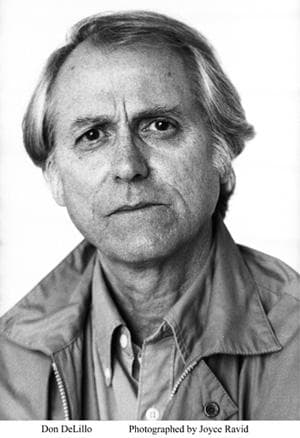
Donald Richard DeLillo is an American novelist, short story writer, playwright, screenwriter and essayist. His works have covered subjects as diverse as television, nuclear war, the complexities of language, art, mathematics, politics, economics, and baseball.







