BookBrief
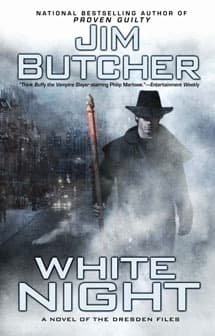
White Night cover
Archivist's Choice

White Night

Jim Butcher (2007)

Genre

Fantasy / Mystery

Reading Time

814 min

Key Themes

See below

Track Your Reading

Sign in to track this book

When a dark conspiracy targeting magic users frames his own brother, Chicago wizard Harry Dresden must navigate the White Council's treacherous politics to clear his name and protect those he loves, even as the body count rises.

Synopsis

In Chicago, a killer targets minor magic users. All evidence points to Harry Dresden's half-brother, Thomas. Harry, a wizard and private investigator, wants to clear Thomas's name. His investigation reveals a conspiracy within the White Council of Wizards, where the murders are part of a larger plan to destabilize the magical community and consolidate power. Harry makes dangerous alliances, confronts supernatural beings like the Whampire and the Red Court, and deals with the Winter Court's politics and Maeve's deception. He uncovers the Black Council's involvement and the return of the sorcerer Cowl. Thomas is imprisoned and faces Council judgment, so Harry races to expose the true mastermind: Ortega, a powerful Red Court vampire. The story ends with a confrontation at a warehouse, with betrayals and sacrifices. Harry defeats Ortega, freeing Thomas, but the Black Council and Cowl remain a threat, suggesting future dangers.
Reading time
814 min
Difficulty
Medium
Pacing
Fast
Mood
Suspenseful, Action-packed, Gritty, Dark
✓ Read this if...
You enjoy urban fantasy mysteries with a snarky wizard detective, intricate magical politics, and high stakes.
✗ Skip this if...
You prefer standalone novels or dislike complex, ongoing series with a large cast of characters.

Plot Summary

The First Victim and a Brother's Plea

The story begins with Harry Dresden, Chicago's only professional wizard, investigating the murder of a minor magic user named Malcolm. The victim was drained of blood, a sign of a White Court vampire. Harry's half-brother, Thomas Raith, a White Court vampire known for his predatory nature, soon visits him. Thomas is upset, claiming he is being framed for similar murders targeting 'little talents' – minor magic users who cannot become full wizards. He asks Harry to clear his name, saying he would never target such weak prey. Despite his distrust of Thomas and his vampiric nature, Harry agrees to investigate, sensing a deeper conspiracy and knowing Thomas's life is in danger from the White Council if found guilty.

A Plea for Help and a Dangerous Alliance

Harry's investigation into the murders is interrupted when his mentor, Ebenezar McCoy, a senior White Council member and the Blackstaff, requests his help. Ebenezar reveals the White Council is secretly investigating a large human trafficking operation, specifically targeting women, and suspects a powerful magical entity is behind it. He believes Harry's skills and contacts make him ideal for the job. Harry reluctantly agrees, seeing a possible link between the trafficking and the murders, or at least a chance to gather information that might help Thomas. This alliance puts Harry in a difficult position, balancing his loyalty to his brother with his duties to the Council.

The Whampire and the Red Court

Following a lead from Thomas, Harry investigates a club where a minor talent, a woman named Ana, was last seen. He meets a 'whampire' – a human with minor vampiric powers – named Cowl, who works for the Red Court of vampires. Harry fights Cowl in a fierce magical battle, barely escaping. He discovers that the Red Court is involved in human trafficking, using victims for blood and to create more whampires. This changes Harry's understanding of the situation, as it seems the Red Court exploits minor talents, which matches the victims of the initial murders. The Red Court's involvement also raises the stakes significantly, as they are a more dangerous enemy than individual White Court vampires.

The Alphas and the Den

Harry asks the Alphas, a group of college students who are also werewolves, to help track down a Red Court trafficking den. Using their senses and knowledge of the city, they find a warehouse filled with captive women. Harry and the Alphas raid the den, fighting Red Court thugs and their whampire enforcers. They rescue many victims and gather evidence, including a ledger detailing the operations. During the raid, Harry encounters a powerful Red Court sorcerer, confirming the Red Court's high-level involvement. The rescue shows Harry's commitment to protecting the innocent, even when it puts him in extreme danger.

Maeve's Treachery and the Winter Court

Harry tries to question Maeve, the Winter Lady, about her possible role in the trafficking, given her unpredictable nature and power over the Winter Fae. Maeve is evasive and manipulative, hinting at a larger game. She reveals she has been subtly influencing events and that the trafficking is part of a larger power play in the supernatural world. Harry realizes Maeve is not just a witness but an active participant, pulling strings from the shadows. Her actions suggest a deeper conspiracy involving the Winter Court, complicating Harry's investigation and forcing him to confront the dangerous politics of the Fae, where nothing is as it seems and allegiances constantly change.

The Black Council's Agenda and Cowl's Return

Through his investigations, Harry finds evidence of the 'Black Council,' a group of powerful wizards and supernatural beings working within the White Council to undermine its authority and start a war between supernatural factions. He learns that the human trafficking and the murders of minor talents are all part of the Black Council's plan to destabilize the magical world. Harry confronts Cowl again, realizing Cowl is a high-ranking Black Council member and a powerful necromancer. Their second confrontation is more intense, with Cowl showing formidable dark magic, pushing Harry to his limits and revealing the true threat of this hidden enemy.

Thomas's Imprisonment and the Council's Judgment

The White Council, with enough evidence, captures Thomas Raith and puts him on trial for the murders. Despite Harry's efforts to present evidence of the Red Court's and Black Council's involvement, the Council's Senior Council members are skeptical, given Thomas's vampiric nature and past actions. Harry must defend his brother, risking his standing within the Council and his life. The trial is tense, with Harry arguing for Thomas's innocence against the wizards' prejudice. He knows that if Thomas is found guilty, he will be executed, and the true culprits will escape justice.

The True Mastermind Revealed: Ortega

Harry's search for the truth leads him to a discovery: the real mastermind behind the human trafficking and the murders is Ortega, a powerful Red Court vampire and former lieutenant of Bianca, whom Harry killed in a previous book. Ortega, seeking revenge against Harry and the White Council, orchestrated the entire scheme, using the trafficking to empower himself and the Red Court, and framing Thomas to cause conflict. Harry realizes Ortega's plan is more elaborate and personal than he first thought, driven by deep hatred and a desire for chaos. This changes the investigation's focus directly onto Ortega, making him the main enemy.

The Confrontation at the Warehouse

Armed with the truth, Harry, along with Thomas (who is temporarily freed), the Alphas, and White Council wardens, attacks Ortega's main human trafficking operation in a large, fortified warehouse. The battle is chaotic and brutal, with Harry facing Ortega and his Red Court forces directly. Thomas, despite his hunger, fights alongside Harry, showing his loyalty. The fight is a desperate struggle to rescue the remaining victims and stop Ortega's plans. Harry uses his full magical power, while the Alphas and Wardens fight hand-to-hand, all against overwhelming odds to dismantle Ortega's network and bring him to justice.

The Betrayal and the Sacrifice

During the battle, Harry is betrayed by a White Council warden, who is a Black Council mole. This betrayal puts Harry in a dangerous position, nearly leading to his defeat. However, Thomas, seeing Harry in danger, makes a selfless sacrifice, using his vampiric abilities to protect Harry and change the battle's course. This act from Thomas, despite his predatory nature, shows his complex character and his deep, if complicated, bond with Harry. The Council member's betrayal strengthens Harry's suspicions about the Black Council's reach and influence within the wizarding community, making him question who he can truly trust.

Ortega's Defeat and the Aftermath

Harry, with Thomas's help and his allies' combined efforts, defeats Ortega in a magical duel. Ortega's human trafficking operation is stopped, and many victims are rescued. However, the victory is not complete. While Ortega is gone, the Black Council remains hidden and powerful, their agents still within the White Council. Harry knows this battle was just one part of a larger, ongoing war. The night's events leave Harry scarred, but also more determined to uncover the Black Council's secrets and protect those he cares about. He understands the threat is far from over and that he has made powerful new enemies.

Thomas's Freedom and a Lingering Threat

With Ortega defeated and the conspiracy revealed, Thomas Raith is cleared of the murders by the White Council. Harry's efforts saved his brother's life, but the experience leaves both of them shaken. The White Council, while acknowledging the Black Council's threat, largely remains in denial or cannot fully grasp its scope. Harry realizes the Black Council is a pervasive and insidious enemy, capable of manipulating events from the shadows and infiltrating even the highest levels of power. The novel ends with Harry knowing he has won a battle, not the war, and that the fight against the Black Council is far from over, hinting at future conflicts and dangers.

Principal Figures

Harry Dresden

The Protagonist

Harry confronts the blurred lines of good and evil within his own family and the supernatural world, reaffirming his dedication to justice despite the personal cost.

Thomas Raith

The Supporting

Thomas proves his loyalty and selflessness to Harry, solidifying their complicated brotherly bond despite his vampiric nature.

Ebenezar McCoy

The Supporting

Ebenezar guides Harry through dangerous Council politics while covertly fighting the Black Council, revealing the depth of his commitment to protecting the wizarding world.

Karrin Murphy

The Supporting

Murphy continues to prove her courage and loyalty, navigating the dangerous supernatural world alongside Harry despite her human limitations.

Ortega

The Antagonist

Ortega executes a complex plan for revenge and power, culminating in his defeat by Harry, but leaving a lasting impact on the supernatural underworld.

Cowl

The Antagonist

Cowl reveals the Black Council's influence, serving as a powerful enforcer and demonstrating the depth of the conspiracy, escaping to continue his machinations.

Maeve

The Supporting

Maeve subtly manipulates events, deepening Harry's entanglement with the Winter Court and hinting at larger, unseen conflicts within the Fae.

The Alphas

The Supporting

The Alphas grow in their roles as Harry's allies, demonstrating their courage and competence in supernatural conflicts.

Themes & Insights

The Nature of Good and Evil

The novel explores the complex and often blurred lines between good and evil, particularly through Thomas Raith. Despite being a White Court vampire, traditionally seen as evil, Thomas shows loyalty and self-sacrifice, challenging Harry's ideas. Conversely, seemingly 'good' entities like White Council members are corrupt or involved in morally ambiguous actions, as seen with the Black Council's infiltration. This theme makes Harry, and the reader, question whether actions define morality more than inherent nature, and if redemption is possible for even the darkest beings.

“The difference between a good plan and a bad plan is about ten minutes of thinking time.”

Harry Dresden

Family and Loyalty

Family, both biological and chosen, is a main theme. Harry's complex relationship with his half-brother, Thomas, drives much of the plot. Despite their differences and Thomas's dangerous nature, Harry's loyalty to him is unwavering, leading him to risk everything to clear Thomas's name. The bond between Harry and his mentor, Ebenezar, also shows familial loyalty, even when they disagree. The Alphas, as a chosen 'pack' family, show their unwavering support for Harry. The story emphasizes that family ties, whether by blood or by bond, can be a source of both strength and vulnerability in a dangerous world.

“I'm a monster, Harry. You know that. I'm a monster, and I have to eat.”

Thomas Raith

Corruption and Conspiracy

The Black Council, a hidden group within the White Council, shows the theme of corruption and conspiracy. This hidden enemy manipulates events, orchestrates human trafficking, and seeks to destabilize the supernatural world for its own ends. The betrayal by a White Council warden further shows how deep this corruption runs, making it difficult for Harry to tell friend from foe. This theme highlights that threats often come from within, and that power, even in good organizations, can be twisted and used. It creates a sense of paranoia and mistrust, as Harry realizes the true scope of the enemy he faces.

“There's always a bigger fish, Harry. Always.”

Ebenezar McCoy

Justice vs. Law

Harry Dresden often struggles with the conflict between upholding the law (the Laws of Magic and the White Council's rules) and pursuing true justice. He often bends or breaks rules, makes morally ambiguous choices, and forms alliances with questionable characters, all for what he believes is right. His defense of Thomas, despite the evidence and prejudice against vampires, shows this struggle. The White Council's rigid laws and bureaucracy often hinder justice, forcing Harry to work outside official channels. This theme highlights Harry's independent spirit and his commitment to protecting the innocent, even if it means becoming an outlaw himself.

“Rules are for people who aren't strong enough to make their own choices.”

Maeve

Plot Devices & Literary Techniques

Framing Device

Thomas Raith is framed for the murders of minor practitioners.

The framing of Thomas Raith serves as the primary catalyst for the plot. It immediately establishes a personal stake for Harry Dresden, forcing him to investigate not just a series of murders but to clear his brother's name. This device creates initial tension and suspicion, as Thomas's vampiric nature makes him a plausible suspect to many, including the White Council. It also allows the narrative to explore themes of prejudice and the difficulty of proving innocence when one is inherently mistrusted. The unraveling of the frame-up ultimately reveals the larger conspiracy of the Red Court and the Black Council.

The Black Council

A shadowy, insidious cabal operating within the White Council.

The introduction of the Black Council as a hidden, powerful antagonist is a significant plot device. It raises the stakes by revealing that the threat is not just external (like the Red Court) but internal and insidious, corrupting the very institutions meant to protect the magical world. This device creates a sense of paranoia and distrust, as Harry must question who among his allies might be an enemy. It allows for a broader, overarching conflict that extends beyond the current book, hinting at a larger war and providing a recurring antagonist for future installments in the series.

The Human Trafficking Ring

A large-scale operation exploiting humans for magical and vampiric purposes.

The human trafficking ring serves multiple functions as a plot device. Firstly, it provides a clear, tangible evil for Harry to fight against, appealing to his strong moral compass. Secondly, it connects the seemingly disparate investigations of the minor talent murders and the White Council's covert mission. It reveals the Red Court's involvement and their methods of gaining power, while also exposing the Black Council's larger agenda. The victims of the trafficking provide a sense of urgency and vulnerability, motivating Harry and his allies to act decisively and showcasing the horrific consequences of unchecked supernatural power.

The Senior Council's Skepticism

The White Council's reluctance to believe Harry and their prejudice against Thomas.

The Senior Council's ingrained skepticism and prejudice, particularly against Thomas Raith and Harry's often unorthodox methods, acts as a significant obstacle. This device highlights the bureaucracy and inherent conservatism within the wizarding world, making Harry's fight for justice more challenging. It forces Harry to work outside official channels, relying on his own intelligence and allies. This skepticism serves to amplify the danger to Thomas and underscores the theme of justice versus law, as the Council is more focused on established protocols than on uncovering the deeper truth, thus playing into the Black Council's hands.

Critical analysis

Notable Quotes

The world is not a safe place, and it is not a just place. It is a place where bad things happen to good people, and where good things happen to bad people. It is a place where the strong prey on the weak, and where the clever exploit the foolish.

Harry's internal monologue reflecting on the harsh realities of his world and the cynicism it fosters.

Power always comes with a price. It's not something you get for free. It's something you earn, and it's something you pay for.

Harry contemplating the nature of magical power and its consequences.

Sometimes, the only way to win is to make sure the other guy loses even more.

Harry considering a ruthless tactical approach in a dangerous situation.

There's a difference between not caring about something and not being able to do anything about it. One is apathy, the other is despair.

Harry distinguishing between different forms of emotional detachment.

The truth is a weapon, and like all weapons, it can be used for good or ill.

Harry reflecting on the impact and potential misuse of information.

Hope is a dangerous thing. It can make you do stupid things. But it's also the only thing that keeps you going when everything else is gone.

Harry's conflicted feelings about the role of hope in his life.

You don't get to choose your family, but you do get to choose who you fight for.

Harry's thoughts on loyalty and the bonds he forms with his chosen allies.

Fear is a tool. It can be used to control people, or it can be used to motivate them.

Harry analyzing the psychological impact of fear on individuals.

Even the best intentions can lead to disaster if you don't think things through.

Harry's realization about the importance of planning and foresight.

Sometimes, the only way to get through a bad day is to remind yourself that it's just one day.

Harry trying to maintain perspective during a particularly challenging time.

There's a fine line between courage and stupidity, and I walk it like a tightrope walker on a unicycle.

Harry's self-deprecating humor about his often reckless approach to danger.

The things that hurt us the most are often the things we care about the most.

Harry's reflection on the vulnerability that comes with deep emotional connection.

You can't save everyone, but you can at least try to save someone.

Harry's internal justification for his continued efforts despite overwhelming odds.

Magic is not about power. It's about control. Control over yourself, control over your environment, control over your destiny.

Harry's deeper understanding of the true essence of magic.

Quiz

Test Your Knowledge

Ready to see how well you understood this book? Take our interactive quiz with 10 questions.

10
Questions
~5
Minutes
?
Best Score

Key Questions (FAQ)

Harry Dresden investigates a series of murders targeting practitioners of magic, individuals with magical ability but not the raw power or control to be full wizards. All the evidence, specifically the victims' drained life force and the signature of a White Court vampire, points to his half-brother, Thomas Raith, as the killer, forcing Harry to clear his name.

About the author