“The wind was a mischievous child, always trying to steal the skirts from the women of the village.”
— Describing the setting and the omnipresent wind in the village.

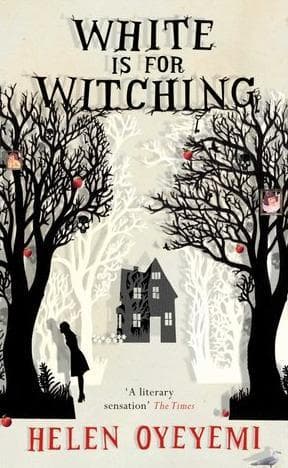
Helen Oyeyemi (2009)
Genre
Fantasy
Reading Time
240 min
Key Themes
See below
Sign in to track this book
A gothic house on the Dover cliffs, steeped in generations of female spirits, slowly consumes a young woman who craves chalk and vanishes into its mazy, time-bending embrace, leaving her family to piece together her spectral story.
The story begins with the Silver family—Luc, Miranda, and Eliot—living in their ancestral home in Dover. The house itself has a strange, living quality that seems to mourn with them. Lily, Luc's wife and the twins' mother, has recently died, leaving a deep emptiness. The house, home to generations of Silver women, shows its own grief and odd nature, growing winter apples out of season and confusing visitors. Miranda, one of the twins, starts to show unusual behaviors, including a strange craving for chalk and a heightened sensitivity to the house's supernatural residents. This hints at a growing connection to the house's old, feminine history.
Miranda's behavior becomes more noticeable after her mother's death. She develops Pica, an eating disorder marked by an overwhelming hunger for non-food items, especially chalk, which she eats secretly. This physical change happens alongside her increasing spiritual connection to the Silver House and its past female residents. She senses and sometimes talks to the spirits of her ancestors, mainly the long-dead Silver women who lived and died within its walls. This connection further separates her from her father, Luc, and her twin brother, Eliot, who struggle to understand her transformation and the house's influence.
Eliot, Miranda's twin, worries deeply about her worsening health and her growing distance from the living world. He notices her thinness, her chalk eating, and her increasing focus on the house's unseen forces. The house itself acts as a character, having a harmful influence. It causes confusion, traps visitors in its winding halls, and seems to feed on the family's grief and Miranda's weakness. Eliot tries to protect Miranda, but feels increasingly helpless against the house's strong hold and his sister's deepening connection to it, which seems to pull her away from him.
To help Miranda, Luc sends her to a boarding school in Switzerland, hoping a change of scenery will ease her Pica and her spiritual attachments. Away from the Silver House, Miranda's condition seems to improve. She starts to eat normally and engages more with the world, even forming a close bond with a girl named Ore. This time offers a glimpse of possible recovery and a more 'normal' life for Miranda, suggesting the house's influence is a key factor in her illness. However, the relief is short-lived.
Despite the good changes in Switzerland, Miranda eventually returns to the Silver House in Dover. Upon her return, the house's influence immediately reasserts itself. Her Pica returns with more intensity, and her connection to the house's spirits becomes even stronger. The brief recovery fades, signaling that the house is not just a setting but an active, hostile entity that claims the Silver women. Her family watches helplessly as she slips further away, becoming more ethereal and less tied to reality.
Ore, Miranda's girlfriend from Switzerland, comes to Dover to be with her. She is a determined and loving presence, trying to understand Miranda's strange illness and the threatening atmosphere of the Silver House. Ore represents an outside force, a hope for Miranda's rescue, and a link to the outside world. She tries to break through Miranda's increasingly isolated state and confront the house's hostile influence, believing her love can bring Miranda back. However, the house seems to actively resist her presence and efforts.
The Silver House shows clear hostility toward outsiders, especially those who try to uncover its secrets or challenge its hold over the Silver women. It creates confusing illusions, causes physical harm, and instills a deep sense of dread in non-Silver visitors. This is clear in its treatment of Ore, who experiences unsettling events and a constant feeling of being unwelcome and threatened. The house's actions suggest a protective, almost predatory, instinct to keep its chosen inhabitants, especially Miranda, within its walls and away from any outside influence that might break its spell.
Eliot, increasingly desperate to save his twin sister, sees the house as the cause of her decline. He tries several times to intervene, including physically attempting to remove Miranda from its grasp. In a final act of desperation and love, Eliot even tries to burn down the Silver House, believing its destruction is the only way to free Miranda from its curse. His efforts meet resistance from the house itself, which seems to defend itself, and ultimately, his attempts fail to break the deep, spiritual bond Miranda shares with the house and its history.
Through fragmented stories and the voices of the house itself and its past residents, the story reveals the sinister history of the Silver House. It becomes clear that the house has a long tradition of consuming the Silver women, especially those with a unique sensitivity or 'otherness,' much like Miranda. These women, including her mother Lily, often develop Pica or other strange illnesses and eventually disappear into the house, becoming part of its spectral lineage. The house holds their memories and spirits, constantly hungry for the next Silver woman to join its ethereal family.
Despite Luc, Eliot, and Ore's efforts, Miranda's connection to the Silver House becomes undeniable and ultimately unbreakable. Her physical form wastes away as she becomes more attuned to the spectral world within the house's walls. One dark night, Miranda vanishes entirely, slipping away from the living world and into the collective consciousness of the Silver women who live in the house. Her disappearance is not a traditional death, but a transformation, an absorption into the house's ancient, ghostly lineage, fulfilling the cycle that has claimed generations of Silver women.
After Miranda vanishes, Luc, Eliot, and Ore are left to mourn her loss and deal with the lasting, hostile presence of the Silver House. Their grief is deep and complex, made harder by the uncertainty of Miranda's fate. They are left with unanswered questions and the chilling realization that the house continues its ancient, hungry existence. The story ends with the survivors trying to process what happened, leaving a lingering sense of sorrow, mystery, and the oppressive, inescapable legacy of the Silver House and its claim on the family's women.
The Protagonist
Miranda transforms from a grieving girl into an ethereal being, gradually consumed by the Silver House and its ancestral spirits, ultimately vanishing into its collective consciousness.
The Supporting
Eliot fights tirelessly to save his twin sister, experiencing profound grief and helplessness as he ultimately fails to prevent her absorption into the house.
The Supporting
Luc grapples with profound loss and helplessness, unable to save his daughter from the same fate that claimed his wife, enduring the house's lingering malevolence.
The Supporting
Ore enters the Silver family's cursed world with hope and love, only to be defeated by the house's power and left to grieve Miranda's loss.
The Mentioned/Supporting
Lily's arc is completed before the story begins, her death serving as a haunting precedent for Miranda's fate and a reminder of the house's power.
The Antagonist
The house continually reasserts its ancient claim over generations of Silver women, perpetuating its cycle of consumption and spectral accumulation.
The Supporting/Collective
This collective continuously grows with each Silver woman absorbed, maintaining the house's spectral population and influence.
The novel shows how trauma, especially for women, passes down through generations and becomes part of physical places. The Silver House acts as a living record of the Silver women's pain, madness, and Pica. Miranda's own struggle with Pica and her spiritual connection to the house directly show this inherited trauma, linking her fate to her mother and countless female ancestors. The house literally consumes these women, making their memories and suffering part of its fabric, as seen when Miranda begins to hear and see past residents.
“The house was a hungry thing, and it fed on the grief of the Silver women, on their strangeness, on their hunger for things that were not food.”
The Silver House is not a place of comfort, but a site of entrapment and hostility. For Miranda, 'home' both nurtures her unique sensitivities and consumes her. The idea of belonging is twisted; while she belongs to the house and its lineage, this belonging means losing herself and her freedom. Outsiders like Ore are actively rejected by the house, highlighting its exclusive and predatory nature. The house shows a twisted sense of belonging, where the women are bound to it by an unbreakable, destructive tie.
“This house has always been a woman, and it has always been hungry.”
The novel is filled with grief, mainly from Lily's death. However, grief in 'White is for Witching' is not a process that ends; it changes into a constant state, mixed with the supernatural. Miranda's Pica and her spectral connections show unresolved grief, blurring the lines between the living and the dead. The Silver women are not truly gone; they are 'undead' within the house, their memories and presences lingering, keeping a cycle of endless mourning and spiritual consumption going. The house thrives on this unending sorrow, making it a permanent fixture.
“Miri, I conjure you. You were here, and then you weren't, and the house began to speak of you.”
Miranda's journey is a deep change, moving from a girl dealing with grief to an ethereal being absorbed by her ancestral home. Her identity becomes increasingly tied to the house and its spectral residents, blurring the lines between self and other, living and dead. The Pica she develops physically shows this change, a hunger for non-food that reflects her growing detachment from the mundane world and her craving for something intangible and ancient. Her transformation is both a curse and a fulfillment of her unique destiny as a Silver woman.
“She was leaving them slowly—slipping away from them—and when one dark night she vanishes entirely, the survivors are left to tell her story.”
The novel explores a complex dynamic of feminine power and subjugation. The Silver House is a powerful, ancient female entity, and mostly the women of the Silver lineage have the sensitivity to connect with it. However, this connection often leads to their subjugation and ultimate consumption. The house's power is both a source of unique connection and a destructive force that claims the women, stripping them of their individual identities and absorbing them into a collective. It suggests a dark, inherited legacy of female 'otherness' and sacrifice.
“All the Silver women were a little bit like that. They had a hunger for things that were not food, and the house fed it.”
The Silver House acts as a living, malevolent character.
The Silver House is more than just a setting; it is a sentient entity with its own consciousness, will, and desires. It actively participates in the plot by influencing characters, particularly Miranda, and repelling outsiders like Ore. It manifests its malevolence through physical phenomena (growing winter apples, confusing visitors) and psychological manipulation. This device transforms the environment into an antagonist, making the struggle against it deeply personal and pervasive, as the house literally embodies the ancestral curse.
Miranda's eating disorder for non-food items, symbolizing her detachment and ancestral connection.
Pica, Miranda's craving and consumption of non-food items like chalk, serves as a powerful symbol and plot device. It physically manifests her growing detachment from the living world and her increasing connection to the spectral realm of the Silver House. It is presented as an inherited ailment among the Silver women, linking Miranda directly to her ancestors and foreshadowing her eventual absorption into the house. The Pica is not merely a medical condition but a mystical symptom of her unique, destructive bond with her ancestral home.
The story is told from various perspectives, including the house itself.
The novel employs multiple narrative voices, including those of Eliot, Luc, Ore, and the Silver House itself (or the collective consciousness of the Silver women). This fragmented perspective allows for a richer, more complex understanding of the events, revealing different characters' interpretations, fears, and connections to Miranda and the house. The inclusion of the house's voice is particularly crucial, as it provides direct insight into its motivations and history, blurring the lines between objective reality and subjective experience, and emphasizing its role as a living entity.
The pervasive mood of dread, decay, and the supernatural.
The novel utilizes a strong Gothic atmosphere, characterized by a decaying ancestral home, a sense of pervasive dread, supernatural occurrences, and characters grappling with inherited curses and psychological torment. The isolated location on the cliffs of Dover, the house's labyrinthine quality, and the presence of spectral ancestors all contribute to this mood. This device creates a constant tension and sense of impending doom, immersing the reader in the story's unsettling and mysterious world, and emphasizing the inescapable nature of the Silver family's fate.
“The wind was a mischievous child, always trying to steal the skirts from the women of the village.”
— Describing the setting and the omnipresent wind in the village.
“My grandmother always said that a house remembers everything, especially the tears.”
— Relating a family belief about the sentience of the house.
“There are some silences that are louder than any scream.”
— Reflecting on unspoken truths and heavy atmospheres.
“Grief is a house with many rooms, and you can get lost in any of them.”
— A metaphor for the complexity and consuming nature of grief.
“The house was a hungry thing, and it fed on loneliness.”
— Attributing a malevolent sentience to the family home.
“Some stories aren't meant to be told, but they tell themselves anyway.”
— Pondering the inevitability of certain narratives emerging.
“Memory is a tricky thing. It can be a comfort or a curse, depending on what it decides to show you.”
— Considering the dual nature of memory.
“The past is not a foreign country; it's the room next door, and sometimes it walks in.”
— A vivid description of how the past intrudes on the present.
“There's a kind of quiet that means something is about to break.”
— Observing an ominous stillness before a significant event.
“Love, like a good meal, should be savored, not rushed.”
— A simple, domestic analogy for the experience of love.
“The house was a living history book, its pages turned by the wind, its stories whispered by the floorboards.”
— Further personifying the house as a repository of family history.
“Sometimes, the hardest thing to face is not what's outside, but what's inside you.”
— Reflecting on internal struggles and self-discovery.
“Hope is a fragile thing, easily shattered, but sometimes, even a shard can cut through the dark.”
— A poignant thought on the enduring, though delicate, power of hope.
“The scent of apples always reminds me of endings and new beginnings, a cycle that never truly breaks.”
— Associating a sensory detail with the cyclical nature of life and death.
Ready to see how well you understood this book? Take our interactive quiz with 10 questions.

Helen Oyeyemi FRSL is a British novelist and writer of short stories.







