“The sea was a flat, grey sheet, reflecting the dull sky.”
— Opening description of the Cornish coast.

Gill Lewis (2012)
Genre
Children's / Young Adult
Reading Time
300 min
Key Themes
See below
Sign in to track this book
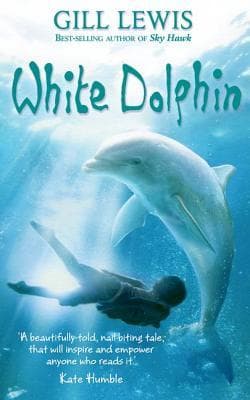
Haunted by her mother's mysterious disappearance and finding solace only on the open sea, a young girl named Kara is thrust into a dangerous fight to save an ancient pod of white dolphins, forcing her to confront an impossible choice that could cost her everything.
Kara lives with her fisherman grandfather, Grandad, in a small Cornish village. She is still affected by the disappearance of her mother, who was lost at sea five years ago. She feels a strong connection to the ocean, often sailing her small boat, the 'Storm Petrel', or swimming in the cove. Her relationship with Grandad is difficult; he struggles with his own grief and drinks a lot. At school, Kara feels like an outsider, especially targeted by Izzie. Her only real friend is Felix, a quiet boy who also loves the sea. Kara hopes her mother, a marine biologist, might still be alive, a hope fed by the discovery of a rare white dolphin.
While sailing, Kara and Felix see a rare albino dolphin calf caught in fishing nets. They free it, and Kara names it 'Angel'. Seeing such a unique creature gives Kara hope, as her mother always wanted to study white dolphins and believed they were spiritual guides. Kara becomes convinced that Angel's appearance is a message from her mother, a sign that she might still be alive and connected to the ocean. This belief strengthens her resolve to protect Angel and deepens her bond with Felix, who shares her secret and her interest in marine life.
News of the white dolphin spreads, bringing tourists, scientists, and media to the quiet fishing village. While some are fascinated, local fishermen, including Grandad, see Angel as a threat to their livelihoods. The dolphin's presence disturbs fishing grounds, and more boat traffic makes fishing harder. Grandad, already struggling financially and emotionally, becomes more upset. Kara feels caught between wanting to protect Angel and her loyalty to her community and family. She hears conversations about the dolphin being a problem and fears for its safety, knowing some might want it gone.
Dr. Miller, a marine biologist from the university, arrives in the village after hearing about Angel. She suggests creating a marine reserve to protect the white dolphin and its habitat. This would limit fishing in certain areas. Fishermen strongly oppose this, fearing it will ruin their way of life and lead to financial hardship. Grandad is especially vocal in his opposition, seeing it as an attack on their traditional rights. Kara, despite her love for Angel, understands the fishermen's worries and the possible effect on her grandfather, which creates a moral problem for her.
Believing Angel is a link to her mother, Kara becomes an outspoken supporter of the dolphin's protection. She starts a petition and tries to raise awareness, often clashing with Grandad and other villagers. To her surprise, Izzie, who often bullies her at school, starts showing interest in Angel. Izzie's father is a local businessman interested in tourism, and she sees the white dolphin as an opportunity for the village. She first appears to support Kara's efforts, helping to get signatures and organize a local campaign, though her reasons are somewhat unclear and influenced by her father.
A strong storm hits the Cornish coast with destructive waves and high winds. Kara worries for Angel's safety and for her grandfather, who is at sea. During the storm, Angel is seen in distress near the shore. The next morning, Angel is gone. Panic sets in, and Kara, with Felix, begins a desperate search. Villagers are also dealing with the storm's damage to their boats and homes. The white dolphin's disappearance increases tensions, with some fishermen secretly hoping it is gone for good, while Kara is heartbroken and fears the worst.
While looking for clues about Angel, Kara finds a hidden compartment in her mother's old chest. Inside, she finds her mother's detailed research journals, drawings, and notes about white dolphins, along with letters. These documents show that her mother was deeply concerned about fishing's effect on marine life and had secretly supported a marine reserve for years, even before she disappeared. The journals also contain personal thoughts and a deep love for Kara and the ocean. This discovery greatly affects Kara, making her understand her mother's true legacy and strengthening her resolve to continue her work.
Confronted by Kara's discoveries, Grandad finally breaks down and tells the truth about her mother's disappearance. He explains that she was not just lost at sea but had been actively trying to stop illegal fishing practices and protect the marine environment. She had gone out in a storm to document evidence of unlawful fishing and was caught in the dangerous conditions. Grandad confesses his guilt and sorrow, admitting he blamed himself and tried to forget her memory because it was too painful. This revelation changes Kara's idealized image of her mother but also brings a deeper understanding and a sense of closure.
Days after the storm, Angel reappears, healthy and unharmed. Its return energizes the village, making them consider the future of their community and the marine environment. Dr. Miller repeats the importance of the marine reserve. This time, Kara, with her mother's research and the truth about her past, speaks passionately in support. The fishermen, including Grandad, begin to see the larger picture, realizing that protecting the sea is essential for their long-term survival, not just for the dolphin. A village meeting is held to vote on the marine reserve proposal.
After much discussion, the villagers, convinced by Kara's heartfelt plea and the strong evidence, vote to establish the marine reserve. This decision marks a turning point for the community, embracing a sustainable future where fishing and conservation can exist together. Grandad, having processed his grief, begins to heal his relationship with Kara. Kara finds peace knowing her mother's legacy lives on through the reserve and her own actions. She, Felix, and even Izzie, who now genuinely supports the conservation efforts, look towards a future where they can protect Angel and the ocean. Kara finds her voice and purpose.
The Protagonist
From a grieving, isolated girl, Kara evolves into a confident and passionate advocate for marine conservation, finding her purpose and healing her family relationships.
The Supporting
Initially closed off and resistant to change, Grandad eventually confronts his grief and guilt, becoming supportive of Kara and the marine reserve.
The Supporting
Felix remains a steadfast friend, providing unwavering support to Kara throughout her journey.
The Supporting
Izzie transforms from a superficial bully to a more empathetic and supportive individual, finding a new perspective on conservation.
The Mentioned/Influential
Though absent, her legacy and true intentions are gradually revealed, inspiring Kara and guiding the community towards change.
The Supporting
Angel's journey from endangered calf to protected symbol drives the narrative and inspires significant change in the human characters.
The Supporting
Dr. Miller steadfastly champions marine conservation, guiding the community towards a sustainable future.
The Mentioned
His actions indirectly influence events, prompting some villagers to consider the economic benefits of conservation.
The novel explores grief, especially through Kara's unresolved sorrow over her mother's disappearance and Grandad's guilt and avoidance. Kara's inability to accept her mother's death fuels her hope that the white dolphin is a sign. Grandad's way of coping involves shutting down emotionally and pushing Kara away. The storm and the truth about her mother's final moments force both characters to face their loss, leading to a painful but necessary healing process and a renewed connection between them.
“"The sea had taken her mother, but it was also the only place Kara felt close to her."”
A main conflict in the book is the struggle between protecting the marine environment and the traditional ways of life for the fishing community. The proposed marine reserve, while important for Angel's survival, threatens the fishermen's way of life and financial stability. Grandad and other villagers first resist, showing the real-world problem many coastal communities face. The novel suggests that a balance can be found where sustainable practices help both nature and people, as seen when the community decides to accept the reserve.
“"How can we live if we can't fish? That dolphin's taking our bread and butter!"”
Kara's journey is one of self-discovery. Affected by her past and feeling like an outsider, she struggles to find her place. Her connection to the ocean and her mother's legacy gradually show her true passion and strength. Through her fight for Angel, she discovers her voice, courage, and purpose as an advocate for the environment. The revelation of her mother's secret work further strengthens Kara's sense of identity, as she realizes she is continuing a legacy of conservation and finding her own path within it.
“"She wasn't just Kara, Grandad's girl. She was Kara, protector of the sea."”
Despite challenges and heartbreaks, the novel has a strong sense of hope and strength. Kara's belief that Angel is a sign from her mother, even when others are doubtful, pushes her forward. The community's ability to recover from the storm and adapt to a new, more sustainable way of life shows collective strength. Angel's return after the storm symbolizes nature's lasting power and the possibility of new beginnings, offering hope for both the environment and the human characters.
“"Sometimes, even in the darkest storms, a glimmer of white light could guide you home."”
The complex relationship between Kara and Grandad is central to the story. Their family is broken by unspoken grief and misunderstanding. Grandad's inability to talk about Kara's mother creates a barrier. However, through Kara's persistence and the shared crisis of Angel, they begin to communicate. The truth about her mother's disappearance, though painful, allows for healing and forgiveness. Their journey shows how shared purpose and open communication can repair broken family bonds and lead to deeper understanding and love.
“"He hadn't just lost his daughter; he'd lost a piece of himself, and he'd tried to drown it in silence."”
A powerful symbol of hope, nature's rarity, and a link to the past.
Angel serves as the central symbolic and plot-driving device. Its rarity makes it a focal point, drawing attention to the village and catalyzing the conflict over the marine reserve. For Kara, Angel is a direct link to her missing mother, embodying her mother's passion for marine life and fueling Kara's hope and determination. The dolphin's vulnerability highlights the fragility of the ecosystem, while its eventual protection symbolizes the community's potential for change and a harmonious future. Its presence unites disparate characters and forces them to confront difficult truths.
A narrative reveal that uncovers the past and inspires the future.
The discovery of Kara's mother's hidden journals acts as a crucial plot device. They provide exposition about her mother's true character, her secret work in marine conservation, and the circumstances surrounding her disappearance. This revelation shifts Kara's understanding of her mother, transforming her from a passively grieved figure into an active inspiration. The journals empower Kara with knowledge and purpose, allowing her to advocate for the marine reserve with authority and continue her mother's legacy, bringing closure and direction to her own life and the community's decision-making.
A dramatic event that creates crisis and forces crucial turning points.
The fierce storm that hits the Cornish coast serves as a powerful plot device, intensifying the conflict and creating a major turning point. It physically endangers Angel, highlighting the harsh realities of nature and the urgency of protection. For the human characters, it represents the chaos and emotional turmoil they are experiencing. The storm's aftermath leads to Angel's disappearance, prompting a desperate search, and the subsequent reappearance of the dolphin acts as a moment of hope and resolve, pushing the community towards a decision about the marine reserve. It also forces Grandad to confront his grief and reveal the truth.
A personal sanctuary and a symbol of independence and connection to the sea.
Kara's small sailboat, the 'Storm Petrel', is more than just a vessel; it's her sanctuary and a symbol of her independence and deep connection to the ocean. It's where she finds solace from her troubled home life and where she feels closest to her missing mother. The boat represents her freedom and her ability to navigate the challenges of her life. It is aboard this boat that she and Felix discover Angel, making it a crucial setting for the story's inciting incident and a constant symbol of Kara's personal journey.
“The sea was a flat, grey sheet, reflecting the dull sky.”
— Opening description of the Cornish coast.
“She missed the wildness of the sea, the smell of salt and the constant, restless movement.”
— Kara reflecting on her new life away from the sea.
“It was like the sea was calling to her, a whisper she couldn't ignore.”
— Kara feeling drawn back to the ocean after her mother's death.
“The dolphin was a streak of silver-white against the dark water, a ghost of the sea.”
— Kara's first sighting of the rare white dolphin.
“Sometimes, the hardest thing to do is to let go of what you think you know.”
— Jake talking to Kara about understanding the sea and its creatures.
“Every creature has its place, and every place has its story.”
— Grandpa's philosophy about the ecosystem and local lore.
“Fear can make you do strange things, but so can hope.”
— Kara contemplating the villagers' reaction to the dolphin and her own actions.
“She felt a kinship with the dolphin, a shared loneliness, a shared wildness.”
— Kara's growing bond with the white dolphin.
“The sea doesn't give up its secrets easily, but it rewards patience.”
— Grandpa advising Kara on observing marine life.
“You can't save something if you don't understand it.”
— Kara realizing the importance of learning about the dolphin's behavior.
“The true magic wasn't in the dolphin's whiteness, but in its wild, free spirit.”
— Kara's deeper appreciation for the dolphin's existence.
“Home wasn't a place, but the feeling of belonging, of being truly seen.”
— Kara finding her place among the community and with the dolphin.
“Sometimes, the most important voices are the ones that whisper, not shout.”
— Kara learning to listen to nature and her own intuition.
“The future of the sea, and all its creatures, depends on us.”
— A central theme of the book regarding environmental responsibility.
Ready to see how well you understood this book? Take our interactive quiz with 10 questions.

Dan Gemeinhart
4.5

Kate O'Hearn
4.4

Jeanne Birdsall
4.4

Jen Wang
4.4

Wendelin Van Draanen
4.3

John Marsden
4.3

Chris Van Allsburg
4.3
Jennifer A. Nielsen
4.2