“When you're a monster, you can't afford to be a coward.”
— Cassel's internal monologue about his family's reputation and his own actions.

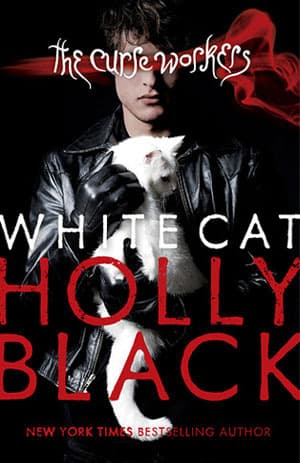
Holly Black (2010)
Genre
Fantasy / Mystery / Young Adult / Romance
Reading Time
240 min
Key Themes
See below
Sign in to track this book
In a world where magic fuels crime families and memories can be manipulated, Cassel must uncover the truth behind a murder he committed and the curse that binds him to a dangerous magical underworld.
Cassel Sharpe, a seventeen-year-old non-magic worker in a family of powerful curse workers, has a recurring nightmare where he pushes a girl off a roof. This dream is tied to the murder of Lila Zacharov, the daughter of a rival crime boss, a crime he believes he committed three years prior. He attends a boarding school for non-magic workers, distancing himself from his family's criminal enterprise. The story opens with Cassel discovering his sleepwalking has returned and that his special gloves, designed to prevent accidental magical touches, are missing. His older brother, Barron, a transformation worker, finds him on the roof and teases him about his lack of magic and his past.
Cassel's grandfather, a powerful emotion worker, forces him to attend the funeral of his uncle, a transformation worker who supposedly died of a heart attack. At the funeral, Cassel sees a beautiful, pale girl with white hair who seems to recognize him, staring intently. He feels an unsettling sense of familiarity with her, despite not recalling ever meeting her. The girl, who he later learns is named Lila, is accompanied by a man who appears to be her father, Luka Zacharov, the head of the rival Zacharov family. This encounter deeply disturbs Cassel, as Lila Zacharov is the girl he supposedly murdered three years ago.
After the funeral, Cassel's suspicions about his past grow. He confronts his brother, Barron, who admits that their family, particularly their grandfather, has a history of manipulating memories with emotion work. Cassel realizes he might have been framed or had his memories altered regarding Lila's murder. He decides to investigate Lila's supposed death, believing she is alive and that he was manipulated. He starts gathering clues, trying to piece together the events of three years ago, distrusting his own memories and his family's story.
Cassel follows Lila, observing her strange behavior and her connection to a white cat that frequently appears near her. He eventually learns the truth: Lila Zacharov was not murdered; instead, she was transformed into a white cat by his family's transformation worker, his brother Barron, under his grandfather's orders. The girl he saw at the funeral is Lila, temporarily returned to human form by another transformation worker, but she periodically reverts to her cat form. This revelation explains her unusual appearance and her intense gaze at him, as she remembers everything.
Cassel confronts his family, demanding answers. He learns that his grandfather, a powerful emotion worker, manipulated his memories to make him believe he murdered Lila, thus binding him to the family. He discovers that the white cat he frequently sees is Lila, and she was transformed as revenge against her father, Luka Zacharov. The 'curse' he believes he has is actually from his family's magic, designed to control him and prevent him from leaving their criminal enterprise. He also learns that his mother, a death worker currently in prison, was involved in the original plot.
Realizing the extent of his family's deception and the injustice done to Lila, Cassel decides to help her. Lila, who can communicate with him in her cat form through a mental link, agrees to work with him to break her transformation. They begin to investigate ways to reverse the powerful transformation curse, knowing it will be dangerous and will pit them against both of their powerful families. Their alliance is tense, as Lila still resents what Cassel's family did to her, and Cassel grapples with his guilt and the desire for redemption.
Cassel and Lila discover that only a very powerful transformation worker can reverse Lila's curse. Their search leads them to various underground magic workers and dangerous situations. They face obstacles from both the Sharpe and Zacharov families, who are both determined to either maintain the transformation or use Lila for their own purposes. During their quest, Cassel begins to develop genuine feelings for Lila, and she, despite her anger, starts to trust him, recognizing his sincerity in wanting to help her.
Their efforts lead them to Luka Zacharov, Lila's father, who is a powerful and ruthless curse worker. Luka, initially believing Cassel to be a threat, is eventually convinced of Cassel's intentions to help Lila. He reveals more details about the feud between the families and his own complex relationship with Lila. The confrontation is tense, as Luka is wary of Cassel, but Lila's presence and her desire to be fully human again sway her father to consider their plan, setting the stage for a dangerous alliance.
As Cassel investigates, he uncovers the full extent of his grandfather's manipulative scheme. His grandfather orchestrated Lila's transformation and Cassel's false memory to solidify his control over Cassel and to gain leverage against the Zacharovs. The ultimate goal was to merge the two crime families through a forced marriage between Cassel and Lila, ensuring the Sharpe family's dominance. This revelation makes Cassel realize he is a pawn in a much larger, more sinister game, and he feels a renewed urgency to free Lila and himself.
The climax occurs as Cassel and Lila, with the reluctant help of Luka Zacharov, confront Cassel's grandfather and Barron. They attempt to force Barron to reverse Lila's transformation. A chaotic magical battle ensues, involving various types of curse work. Cassel, despite being a non-magic worker, uses his wits and knowledge of his family's weaknesses to protect Lila. He makes a crucial decision to expose his grandfather's manipulations, risking everything to free Lila and break the cycle of deception and violence within his family.
In the chaotic struggle, Lila's transformation is finally broken, and she is fully restored to her human form. Amidst the resolution of Lila's curse, a shocking truth about Cassel is revealed: he is not a non-magic worker. He is, in fact, a powerful magic worker, specifically a transformation worker, a fact that his family had suppressed through a powerful emotion curse. This revelation explains his strange dreams, his sleepwalking, and his mysterious affinity for the white cat, as he was unconsciously using his own magic. His family had hidden this to keep him from realizing his true power and to control him.
In the aftermath, the Sharpe and Zacharov families are in disarray. Cassel's grandfather's power is diminished, and the truth of his manipulations is exposed. Cassel, now aware of his own magic, must come to terms with his identity and his family's betrayal. Lila, free from her curse, begins to rebuild her life, and her relationship with Cassel deepens. The book concludes with Cassel and Lila facing an uncertain future, but with a newfound understanding of themselves and their bond, ready to navigate the complex world of magic and crime together, on their own terms.
The Protagonist
Cassel transforms from a guilt-ridden, manipulated pawn into a self-aware, powerful magic worker who takes control of his own destiny and fights for justice.
The Deuteragonist/Love Interest
Lila moves from being a victim trapped by a powerful curse to regaining her humanity and agency, forming a deep bond with Cassel.
The Supporting/Antagonist
Barron remains largely loyal to his family but shows hints of questioning their methods and eventually aids Cassel, albeit reluctantly.
The Antagonist
Grandfather Sharpe's power and influence are challenged and ultimately diminished as his manipulations are exposed.
The Supporting/Antagonist
Luka Zacharov moves from being an antagonist driven by revenge to an uneasy ally with Cassel for Lila's sake.
The Supporting
Philip remains a consistent, albeit somewhat peripheral, presence, embodying the darker, more professional side of the Sharpe family's magic.
The Mentioned/Supporting
Maureen's past actions are revealed, shedding light on the family's manipulative nature and Cassel's own history.
The Supporting
Sam remains a constant source of support for Cassel, grounding him in the non-magical world.
The novel explores Cassel's struggle to define himself outside of his family's criminal legacy and his perceived 'non-magic' status. He grapples with the guilt of a murder he believes he committed and the constant pressure to conform to his family's expectations. The journey to uncover the truth about Lila also becomes a journey of self-discovery, culminating in the shocking revelation of his own magical abilities. This theme is central to Cassel's arc, as he learns to trust his instincts over manipulated memories, as seen when he begins to question his recurring dream and his family's narrative about Lila's death.
“I was a blank slate, a non-magic worker, and that was the only identity I was allowed. But it wasn't true.”
A core theme is the unreliability of memory and the dangers of magical manipulation. The Sharpe family, particularly Grandfather Sharpe, uses emotion work to alter and suppress memories, directly impacting Cassel's perception of reality and his belief that he murdered Lila. This manipulation shows how power can be used to control individuals and narratives. Cassel's struggle to discern truth from falsehood, as he pieces together the events of three years ago, highlights how fragile personal history is when magic is involved. The entire mystery hinges on the fact that Cassel's memories of Lila's death were false.
“What if the memories I had weren't my own? What if they were someone else's, planted in my head like a seed?”
Cassel is constantly torn between his loyalty to his family and his own moral compass. The Sharpes are a powerful, criminal organization, and their actions are often ruthless and self-serving. Cassel struggles with the dissonance of loving his family while disliking their methods, especially after discovering their role in Lila's transformation and his own manipulation. This conflict is evident when he chooses to help Lila, knowing it will put him directly at odds with his powerful grandfather and brothers, showing his growing sense of justice over blind family allegiance.
“I was a Sharpe. It was etched into my bones. But what if being a Sharpe meant being a monster?”
The world of 'White Cat' is structured around a clear power dynamic between magic workers and non-magic workers, with the former holding significant, often criminal, influence. Non-magic workers are treated as second-class citizens, seen as weak or insignificant. Cassel, believing himself to be a non-magic worker, experiences this prejudice firsthand within his own family, which fuels his feelings of inadequacy. The criminal underworld further highlights how magical abilities translate into power and control, often at the expense of others. This theme is underscored by the reveal of Cassel's hidden magic, challenging the established hierarchy.
“In my family, not having magic was like not having a soul. It made you less than human.”
Cassel's manipulated memories make his initial perspective untrustworthy.
Cassel Sharpe serves as an unreliable narrator due to his magically altered memories. He genuinely believes he murdered Lila Zacharov, and his internal monologues reflect this guilt and confusion. This device creates suspense and mystery, as the reader is forced to question every detail Cassel remembers and every piece of information he receives. The gradual reveal of his manipulated past slowly unravels the initial narrative, leading to a shocking twist and a re-evaluation of everything the reader (and Cassel) thought was true. This keeps the reader constantly engaged in deciphering the truth.
A persistent nightmare acts as a clue and a catalyst for Cassel's investigation.
Cassel's recurring nightmare, where he pushes a girl off a roof, is a crucial plot device. It serves as a constant reminder of his supposed crime and fuels his guilt, but it also acts as a subtle clue that something is amiss. The dream is a distorted echo of the real events, hinting at the truth without revealing it directly. It pushes Cassel to question his memories and eventually embark on his investigation into Lila's 'death', driving the entire plot forward as he seeks to understand its true meaning and escape its torment.
Lila's transformed form serves as a constant, mysterious presence and a symbol of her curse.
The white cat is a literal and symbolic plot device. It is Lila Zacharov in her transformed state, a direct consequence of the Sharpe family's magic. Her frequent, mysterious appearances around Cassel, and her ability to mentally communicate with him, serve to deepen the mystery surrounding her 'death' and to forge a unique, intimate connection between her and Cassel. The cat form symbolizes her entrapment and the injustice done to her, while also acting as a means for her to observe and influence events, actively participating in the plot to break her curse.
Special gloves prevent accidental magic, highlighting Cassel's suppressed power.
Cassel wears special gloves to prevent accidental magical touches, despite believing he is a non-magic worker. This detail is a subtle but potent piece of foreshadowing, as it initially seems to be a precaution taken by his family to protect others from his brothers' magic. However, the recurring motif of his gloves being missing, particularly when he sleepwalks, hints at his own suppressed magical abilities. The gloves symbolize his family's control over him and the suppression of his true identity, acting as a constant reminder of his perceived weakness that ultimately masks his strength.
“When you're a monster, you can't afford to be a coward.”
— Cassel's internal monologue about his family's reputation and his own actions.
“The worst part about my family isn't the lying, or the stealing, or the killing. It's the way they make you doubt everything.”
— Cassel reflecting on the manipulative nature of his family.
“Being a monster is a lot like being a magician. You have to make people believe in things that aren't real.”
— Cassel comparing the perception of his family to magic.
“I'm a monster, and I like it. I like the way it feels to be powerful.”
— Cassel embracing his abilities and the darker aspects of himself.
“There are some things you can't take back, no matter how much you wish you could.”
— Cassel thinking about past actions and their irreversible consequences.
“It's hard to be good when you're surrounded by bad.”
— Cassel's struggle with morality while living with his criminal family.
“Love makes you stupid. It makes you weak. It makes you do things you'd never do otherwise.”
— Cassel's cynical view of love, particularly in relation to his own experiences.
“You can't trust anyone who can lie to your face and make you believe them.”
— Cassel's general distrust of people, especially those with magical abilities.
“Sometimes the truth is the most dangerous thing of all.”
— Cassel realizing that uncovering certain truths can lead to more danger.
“I'm not a hero. I'm just a kid who made a mistake.”
— Cassel downplaying his role and his past actions.
“Family isn't about blood. It's about who you choose to keep close.”
— Cassel considering the nature of his relationships beyond his biological family.
“The past isn't just behind you; it's a part of you.”
— Cassel grappling with how his past actions and memories define him.
“Being invisible is a kind of power too. No one expects anything from you.”
— Cassel reflecting on the advantages of being overlooked or underestimated.
“You can't outrun your own head.”
— Cassel's internal struggle with his thoughts and memories.
Ready to see how well you understood this book? Take our interactive quiz with 10 questions.

Biography coming soon.







