“If you ever have a chance to save a life, you must do it.”
— Sara's grandmother, Julian's grandmother, reflecting on her wartime experiences.

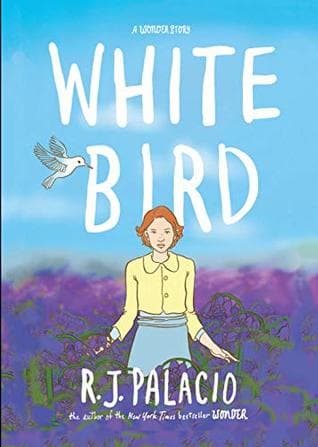
R.J. Palacio (2019)
Genre
Children's / Historical Fiction / Young Adult
Reading Time
90 min
Key Themes
See below
Sign in to track this book
In a world shattered by war, a young Jewish girl finds refuge and courage in unexpected places in Nazi-occupied France, changing the grandson of the boy who once tormented her.
The story begins with Julian Albans, from 'Wonder,' getting a school assignment to interview someone who lived through World War II. He initially resists, finding history boring, but his Grandmère, Sara, offers to share her own story. She starts by talking about her peaceful childhood in a small French village before the war, where she was a bright, artistic Jewish girl named Sara Blum. She describes her loving family — her father, a doctor, and her mother, a teacher — and her love for drawing. This peaceful life ends when the Nazi occupation of France starts to affect them, showing the first signs of the coming Holocaust.
As the war continues, life in Sara's village changes greatly. The Nazis put in place harsher anti-Jewish laws, forcing Sara and her family to wear the yellow star of David, limiting their movement, and eventually removing Sara from school. Her father, Dr. Blum, can no longer practice medicine. The once-friendly faces in the village begin to change, with some turning away in fear or prejudice. Sara's parents, expecting the worst, try to prepare her for possible separation and the need to be strong. The atmosphere fills with fear and uncertainty, as the Jewish community loses its rights.
One day, while Sara is at school, a large round-up of Jewish people begins in her village. German soldiers and French police invade homes and public spaces, taking Jewish residents. Sara's teacher, Madame Pettijean, sensing the danger, helps Sara escape through a window just as soldiers arrive. Sara sees her parents being taken away, a moment that changes her forever. She runs into the woods, scared and alone, leaving behind her entire world. This event starts her solitary fight for survival, as she is now a child on the run, hunted and without family.
Hiding in the thick forest, cold, hungry, and alone, Sara is found by a boy named Julian. He is startled, but instead of reporting her, he offers her a piece of bread and tells her to follow him. Julian, a quiet boy from her school who had often teased her, leads her to a secluded barn on his family's property. He explains that his family, the Beaumiers, are farmers and that his mother, Madame Beaumier, is a kind woman who might help her. This unexpected act of kindness from someone she barely knew becomes Sara's first hope.
Julian brings Sara to his mother, Madame Beaumier, who agrees to hide her without hesitation. The Beaumiers are a Catholic family living on a farm. They give Sara a small, secret space in their barn, hidden under hay, where she must stay during the day. At night, she can come into the house for food and company, but always with the understanding that her presence must be a secret. This brave act puts the entire Beaumier family at risk, as hiding a Jew during the occupation was punishable by death. Sara begins to adjust to her new, hidden life, always aware of the danger.
Sara spends her days in the dark, cramped barn, fighting boredom, fear, and loneliness. She fills her time by drawing, using scraps of paper and pencils from Julian. Her art becomes an important way to express her emotions and remember her past. Julian, despite his shyness and past behavior, visits her, bringing food, books, and sharing stories from outside. Their bond slowly grows as they face the dangers of their secret. He teaches her about the farm, and she shares her drawings, building a quiet friendship that goes beyond their past interactions and the dangers around them.
One day, a Nazi patrol arrives at the Beaumier farm, searching for hidden Jews or resistance members. Sara has to hide deep inside her secret place in the barn, barely breathing. The soldiers are thorough, poking the hay with their bayonets, coming very close to finding her. Julian, pretending to be busy with chores, tries to distract them. The close call leaves Sara and the Beaumiers shaken, showing the constant danger they are in. The incident shows the Beaumier family's bravery and the terror Sara lives with daily, making her even more careful.
As the war continues, the situation in France remains uncertain. During another patrol, Julian, always protecting Sara, tries to draw the German soldiers' attention away from the barn where she is hidden. He runs through the fields, hoping to make them chase him, creating a diversion. Sadly, the soldiers shoot and kill Julian. Sara, hidden in the barn, hears the gunshots and the silence after, knowing instinctively that something terrible has happened. This devastating loss breaks her world again, leaving her heartbroken and guilty, showing the deep impact of the war on her young life.
Despite Julian's death, the Beaumier family continues to hide Sara, honoring Julian's sacrifice. Sara stays in the barn, with her grief and the ongoing danger heavy on her. She continues to draw, now often showing Julian and her lost family. She endures the remaining months of the war, listening to news of the Allied advance through a hidden radio. Finally, liberation day arrives, and the German soldiers retreat. Sara comes out of her hiding place, a survivor, but deeply scarred by the loss of her family and Julian, and the horrors she saw and lived through.
After the war, Sara learns that her parents did not survive the concentration camps. Heartbroken but strong, she eventually goes to America, where she builds a new life. She never forgets the Beaumiers, visiting them often and staying in touch. She makes sure Julian is recognized for his heroism, and the family is honored as Righteous Among the Nations. Sara, now Grandmère, finishes her story to Julian, stressing the importance of kindness, courage, and remembering the past. She shares a message of hope and the lasting power of human goodness, urging him to be a 'white bird' – a symbol of peace and compassion.
The Protagonist
From a carefree child, she transforms into a survivor marked by trauma, but ultimately finds strength to rebuild her life and share her story as a testament to resilience and human kindness.
The Supporting
Transforms from a timid, bullied boy into a selfless hero, demonstrating immense courage and compassion through his protection of Sara, culminating in his ultimate sacrifice.
The Supporting
Remains steadfast in her moral convictions and commitment to protecting Sara, demonstrating unwavering courage and compassion throughout the war.
The Supporting
Begins as a somewhat uninterested teenager and grows to deeply appreciate and understand his grandmother's past and the importance of her message.
The Mentioned
His life is tragically cut short by the Holocaust, serving as a poignant symbol of the innocent lives lost.
The Mentioned
Her life is tragically cut short by the Holocaust, serving as a poignant symbol of the innocent lives lost.
The Supporting
Plays a pivotal role in Sara's initial escape, demonstrating a single, crucial act of bravery that alters the course of Sara's life.
The Supporting
Stands by his family's decision to shelter Sara, embodying quiet resilience and moral conviction.
The book shows courage in different ways: Sara's courage to survive, Julian's heroism in protecting her, and the Beaumier family's bravery in hiding a Jewish child. Madame Beaumier's quick decision to shelter Sara, knowing the deadly risks, is a strong act of resistance. Julian's sacrifice to distract the Nazis shows great selflessness. These acts highlight how ordinary people chose to resist evil through compassion and defiance, even in great danger, standing up for humanity.
““If you want to be a white bird, you have to choose kindness. Every single time. Even when it’s hard.””
Kindness is a life-saving force. Julian, who had been unkind to Sara, becomes her rescuer and closest friend through selfless compassion. The Beaumier family's choice to hide Sara is a great act of kindness, risking everything for a stranger. This theme shows that even small acts of goodness can have big effects, offering hope and survival amid terrible cruelty. Grandmère's message to Julian Albans directly calls for choosing kindness, making it a main moral lesson.
““Kindness can be as simple as a helping hand, a warm meal, or a safe place to hide.””
The story, with Grandmère telling her grandson about her past, highlights the importance of remembering history, especially the Holocaust. Sara's wish to share her past ensures that Julian's and her family's sacrifices are not forgotten, and that future generations understand the dangers of prejudice. The book honors the victims and survivors, urging readers to learn from the past to prevent similar events, and to carry forward lessons of courage and compassion.
““We must always remember, Julian. So it never happens again.””
Sara's Jewish identity is why she is persecuted, making her face what it means to be 'other' and to hide who she is. Losing her family and community takes away her sense of belonging, making her search for a safe place and connection more meaningful. Her journey is about trying to keep her identity while being forced to hide it, and later, finding a new sense of belonging with the Beaumiers and in her new life, always carrying the mark of her past.
““I was just a girl, an artist, a daughter. And then, I was a Jew. And that was enough to make me a target.””
The story strongly contrasts the evil of the Nazi regime and its helpers with the good shown by individuals like Julian and the Beaumiers. The Holocaust's violence and dehumanization are shown alongside acts of compassion and courage. It explores how individuals choose their path in extreme situations – whether to give in to fear and prejudice, or to stand up for what is right, even at great personal cost, showing the constant struggle between these two forces.
““There are two kinds of people in this world: those who are good, and those who are not.””
A story within a story, with Grandmère's past encapsulating Julian Albans' present.
The book utilizes a frame narrative, where the present-day story of Julian Albans' school project forms the outer frame, and his Grandmère's (Sara Blum's) detailed account of her experiences during the Holocaust in Nazi-occupied France forms the inner story. This device allows for a direct transmission of historical knowledge and personal testimony from one generation to the next, emphasizing the theme of remembrance and creating an intimate connection between the reader and the past through Julian Albans' reactions and questions.
Visual storytelling that enhances emotional impact and accessibility.
The story is presented as a graphic novel, using illustrations to convey emotions, setting, and action. This format makes the heavy subject matter of the Holocaust more accessible to a younger audience, allowing visual cues to deepen the emotional impact of Sara's experiences, the terror of the round-up, and the quiet bravery of the Beaumiers. The artwork plays a crucial role in showing, rather than just telling, the horrors and humanity of the wartime period.
A recurring metaphor for peace, hope, kindness, and freedom.
The 'white bird' is a central symbol throughout the narrative. It first appears as a drawing Sara makes, representing her desire for freedom and peace. Later, Grandmère uses it as a metaphor for choosing kindness and courage, urging Julian Albans to 'be a white bird' in his own life. The symbol encapsulates the themes of hope, resilience, and the power of individual goodness to rise above adversity, serving as a guiding principle for moral action.
Sara's personal testimony, recounted years later, providing a survivor's perspective.
The bulk of the story is narrated in the first person by Sara (Grandmère) as she recounts her past. This allows for an intimate, subjective, and deeply personal account of the Holocaust from a child's perspective. The retrospective nature means that her narration is imbued with the wisdom and reflection of age, allowing her to comment on the significance of events and characters, and to explicitly draw lessons from her harrowing experiences for her grandson and, by extension, the reader.
“If you ever have a chance to save a life, you must do it.”
— Sara's grandmother, Julian's grandmother, reflecting on her wartime experiences.
“Sometimes the hardest thing in the world is to do the right thing.”
— Sara discussing the risks of hiding from the Nazis.
“A single act of kindness can change everything.”
— Narrator emphasizing the impact of small gestures during the war.
“We must never forget what happened, so that it never happens again.”
— Sara teaching Julian about the importance of remembering history.
“In the darkest times, hope is something you give yourself.”
— Sara finding strength while in hiding.
“Fear is a prison, but courage is the key.”
— Sara reflecting on overcoming her fears to help others.
“Every life is a story, and every story deserves to be told.”
— Narrator highlighting the value of personal narratives from the Holocaust.
“The world is full of good people, if you know where to look.”
— Sara recalling those who risked their lives to save Jews.
“Silence in the face of injustice is complicity.”
— Sara explaining why speaking out against the Nazis was crucial.
“Love is the strongest force in the universe.”
— Sara describing the bond with her family and rescuers.
“You don't have to be a hero to make a difference.”
— Sara acknowledging the ordinary people who helped during the war.
“The past is not just a story; it's a warning.”
— Sara urging Julian to learn from history.
“Even in war, there is beauty to be found.”
— Sara finding solace in small moments of peace.
“We are all connected by our humanity.”
— Sara reflecting on the shared experiences of people during the Holocaust.
Ready to see how well you understood this book? Take our interactive quiz with 10 questions.

Biography coming soon.
Dan Gemeinhart
4.5
Kate O'Hearn
4.4
Jeanne Birdsall
4.4

Jen Wang
4.4
Wendelin Van Draanen
4.3

John Marsden
4.3

Chris Van Allsburg
4.3
Jennifer A. Nielsen
4.2