“There are some things you can't outrun. And some things you don't even know you're running from.”
— Kat ponders the inescapable nature of certain truths and her own subconscious motivations.

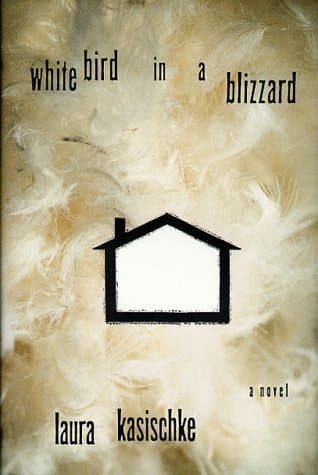
Laura Kasischke (1999)
Genre
Thriller / Mystery / Young Adult
Reading Time
320 min
Key Themes
See below
Sign in to track this book
A teen navigating first love and budding sexuality faces a chilling mystery when her mother vanishes, forcing her to confront the dark secrets of her suburban life.
In 1989, sixteen-year-old Katrina "Kat" Connors comes home from school to find her mother, Eve, gone. There is no note, no sign of a struggle, just an empty house. Kat's father, Brock, seems strangely calm, almost accepting of his wife's disappearance. Kat herself is not entirely surprised, having seen Eve become more distant and sad over the past year. Eve had been a beautiful but restless woman, seemingly unhappy with her suburban life. Kat, however, is focused on her developing sexuality and her relationship with her older boyfriend, next-door neighbor Ted Sciezies. The initial police investigation finds no clues, and Eve's absence quickly becomes a cold case, leaving Kat and Brock to deal with their new, unsettling reality.
After Eve disappears, Kat's life continues with a strange sense of normalcy. This is marked by her father's quiet grief and her own growing independence. She moves into her mother's bedroom, taking her place in the house. Her relationship with Ted Sciezies becomes more intense, her main focus, and a source of comfort and distraction. Ted, a college student, is charming but also a bit possessive. Kat finds herself increasingly drawn to the excitement and closeness of their sexual encounters. Meanwhile, Brock handles the practicalities of Eve's absence calmly, rarely talking about the situation, which adds to the unsettling mood in their home. Kat often thinks about her mother's past behavior, trying to understand the lively woman she knew and the withdrawn person she had become.
As time passes, Kat starts having vivid, unsettling dreams about her mother. These dreams are not just about absence; they are full of images of distress, struggle, and a chilling sense of being trapped. Eve appears frantic, bruised, and crying for help, often in a snowy, isolated place. At first, Kat dismisses these as products of her subconscious, but their repeated nature and growing intensity begin to disturb her. She also starts seeing quick glimpses of her mother while awake – a figure in her peripheral vision, a shadow in the house. These spectral appearances and disturbing dreams make Kat wonder: what if her mother didn't just leave, but was the victim of something far worse? She struggles with the growing feeling that her mother is not just gone, but actively suffering.
Kat's relationship with Ted Sciezies deepens, becoming the center of her emotional life. Ted, an older college student, gives Kat the attention and passion she craves, especially in the emptiness left by her mother. However, his affection sometimes borders on possessiveness. He often decides their activities, and Kat finds herself increasingly doing what he wants. She notices his subtle manipulations and his tendency to dominate their interactions. This dynamic quietly mirrors the power imbalances Kat vaguely remembers in her parents' marriage, particularly Eve's growing unhappiness and feeling of being confined. Kat, in her youthful vulnerability, mistakes Ted's control for devotion, further tying her identity to his.
Years after Eve's disappearance, Kat is in college. Detective Sciezies, Ted's father, who was the original officer on the case, reopens it. He talks to Kat and her father, Brock, for new interviews. Kat, now older and perhaps more detached, retells the story of her mother's disappearance, trying to recall details she might have missed. Detective Sciezies' questions are sharp, focusing on Eve and Brock's marriage, Eve's state of mind, and any secrets she might have kept. Kat feels a renewed sense of unease, realizing that her mother's fate is still unknown, and that the police still suspect foul play, with her father remaining a person of interest due to his quiet nature.
Under new pressure from Detective Sciezies and haunted by his own silence, Brock Connors finally confesses to Kat. He reveals that Eve did not just leave; she was murdered. The details are horrifying: Brock admits he accidentally killed Eve during a heated argument. He panicked, wrapped her body in a blue tarp, and buried her in the woods behind their house, near the old fort where Kat and Ted used to play. He describes the snowstorm that night, which helped him hide his tracks, and the immense guilt he has carried for years. Kat is completely shattered by this revelation, the truth far more brutal than any of her dreams. Her father, the quiet, ordinary man, is a killer, and her mother's absence was a carefully constructed lie.
After Brock's confession, Kat is thrown into shock, grief, and betrayal. The image of her calm, seemingly harmless father is shattered, replaced by that of a murderer. She struggles to reconcile the man who raised her with the man who took her mother's life and then lived a lie for years. The revelation forces her to rethink every memory, every interaction, and every unspoken truth in her family. The dreams she had about her mother's suffering now make terrifying sense, adding another layer of trauma. Kat must also deal with the legal consequences, knowing her father will face justice. The quiet suburban life she once knew is destroyed, replaced by a harsh, unforgiving reality.
With Brock's confession, law enforcement, led by Detective Sciezies, searches for Eve's body. Brock leads them to the secluded spot in the woods behind their former home, near the childhood fort, where he buried her years ago. The area, now overgrown, is carefully dug up. As he said, Eve's remains are found, wrapped in the blue tarp, a chilling sign of Brock's crime. The discovery brings a grim end to the cold case, confirming the worst fears and proving Kat's haunting feelings. The physical evidence confirms Brock's confession, officially ending the mystery of Eve Connors' disappearance and solving the murder case.
Following the discovery of Eve's body and his detailed confession, Brock Connors is arrested, charged, and imprisoned for her murder. The quiet, ordinary father is now a convicted killer, his life forever changed. Kat visits him in prison, a strained and painful meeting that shows the huge gap between them. She struggles to process her complex emotions – anger, pity, and a deep sense of loss for the family she once thought she had. With her mother dead and her father in jail, Kat is left to navigate adulthood alone, dealing with the weight of her family's dark secrets. She must find a new path, trying to find peace and understanding among the ruins of her past.
Years after the truth of her mother's murder came out, Kat Connors continues to live with the lasting impact of her family's tragedy. She has, to some extent, processed her father's crime and her mother's fate. Her relationship with Ted Sciezies, a big part of her teenage years, is now a distant memory, mixed with the complicated feelings of first love and youthful intensity. Kat is left with lingering questions about identity, loss, and the nature of family secrets. She carries the weight of her past, forever shaped by her mother's disappearance and murder. Despite the trauma, she tries to build a future, understanding that the past will always be a part of her, but it does not have to define her completely. She finds a fragile sense of peace in the difficult truth.
The Protagonist
Kat transforms from a self-absorbed teenager into a woman burdened by traumatic truth, learning to confront and process family secrets.
The Victim/Central Mystery
Eve's character arc is explored retrospectively through Kat's memories, revealing her descent into depression and eventual tragic end.
The Antagonist/Father
Brock's arc moves from a seemingly grieving husband to a confessed murderer, revealing the destructive power of hidden truths.
The Supporting Character
Ted remains a relatively consistent character, representing Kat's youthful rebellion and exploration of intimacy and control.
The Supporting Character
Detective Sciezies' arc is one of persistent investigation, ultimately leading to the closure of a long-standing cold case.
The novel carefully looks at the appearance of normalcy kept by the Connors family and their suburban community. After Eve disappears, Kat and Brock try to live as if nothing terrible happened, but the tension and unspoken truths slowly break down this illusion. Kat's youthful focus on her own life at first lets her ignore the deeper implications, but her haunting dreams and later revelations expose the violent reality hidden beneath the calm surface. The theme shows how secrets can grow under a seemingly perfect exterior, damaging lives and relationships. This is clear in Brock's calm behavior after the murder and Kat's initial lack of interest in her mother's struggles.
“It was as if my mother had never existed, just like that. As if she'd been a ghost all along, and now she'd finally floated away.”
Kat's journey to adulthood is tied to the traumatic event of her mother's disappearance and her eventual discovery as a murder victim. Her coming-of-age involves not just sexual awakening and self-discovery, but also a forced confrontation with betrayal, death, and the dark complexities of adult relationships. The novel explores how such a deep trauma shapes a young person's identity, worldview, and ability to form healthy relationships. Kat's detachment and later her deep emotional struggle are direct results of navigating adolescence while her family falls apart around a horrifying secret. Her dreams show her subconscious dealing with the unspeakable truth.
“I was becoming sixteen, and she was becoming nothing.”
The novel relies heavily on Kat's fragmented memories, dreams, and changing viewpoints to tell the story. Truth is presented as hard to find and subjective, slowly put together over years. Kat's first understanding of events, influenced by her youth and self-focus, is gradually challenged by her subconscious (through dreams) and outside pressures (Detective Sciezies). The story shows how memory can be unreliable, colored by emotion, and how the mind can suppress or twist painful realities. The final reveal of Brock's crime forces a complete re-evaluation of all past events, showing the painful process of facing an uncomfortable truth that shatters long-held beliefs.
“You think you know a person, and then you find out you never knew them at all.”
Both Eve and Kat deal with aspects of female identity and feeling confined. Eve's growing sadness comes from her unhappiness with her domestic role and the perceived limits of her suburban life, hinted at by her restless look and desire for 'something more.' Her beauty, while at first a source of power, becomes another form of being seen as an object and being vulnerable. Kat, in her own coming-of-age, explores her sexuality and independence, but also finds herself in a relationship with Ted that borders on controlling, reflecting some of the power dynamics she saw in her parents' marriage. The story subtly suggests how societal expectations and personal relationships can subtly trap or define women.
“She was a woman who always looked like she was waiting for something.”
Kat's perspective as a teenager shapes the initial understanding of events, obscuring the truth.
Kat serves as an unreliable narrator, particularly in the initial stages of the story. Her youthful self-absorption, nascent sexuality, and emotional distance from her mother's struggles cause her to misinterpret or overlook crucial details surrounding Eve's disappearance. She accepts the 'leaving' narrative for a long time, partly because it suits her own burgeoning independence. Her dreams, however, provide a subconscious, more accurate counter-narrative, revealing the truth before her conscious mind can process it. This device builds suspense and allows the author to slowly unravel the mystery from a deeply personal, yet flawed, viewpoint.
Represents purity, fragility, and the way truth can be buried or obscured.
The 'white bird in a blizzard' imagery, present in the title and recurring motifs, symbolizes Eve's fragile beauty, her sense of being trapped, and the way her truth was buried. The blizzard itself is a metaphor for the way the crime was covered up, both literally (Brock burying the body in the snow) and figuratively (the family's silence and the community's acceptance of the 'she left' narrative). The white bird can also represent Kat's own innocence and how it is threatened and eventually lost amidst the harsh realities she uncovers. It suggests something beautiful and vulnerable, easily swallowed by a harsh, unforgiving environment.
Kat's vivid dreams serve as a subconscious pathway to the truth of her mother's fate.
Kat's recurring, increasingly disturbing dreams about her mother being trapped, bruised, and crying for help function as a powerful plot device. These dreams are not just random nightmares; they are premonitions and subconscious expressions of the suppressed truth. They provide Kat, and the reader, with glimpses of the violent reality before it is consciously revealed. This device builds psychological tension and suggests that intuition and the subconscious mind can perceive truths that the conscious mind is unwilling or unable to acknowledge, pushing Kat towards a horrifying realization that her mother didn't just leave, but was murdered.
The passage of time allows secrets to fester and creates a sense of lingering dread.
Eve's disappearance becoming a 'cold case' is a crucial plot device. The years that pass between the initial event and the reopening of the investigation allow the characters to live with the lie, creating a deep-seated tension. It shows how secrets can be buried but never truly disappear, slowly eroding the lives of those involved. The passage of time also allows Kat to mature, giving her a new perspective and the emotional capacity to confront the truth. The 'coldness' of the case mirrors the emotional detachment of Brock and Kat, highlighting how the lack of closure perpetuates trauma.
“There are some things you can't outrun. And some things you don't even know you're running from.”
— Kat ponders the inescapable nature of certain truths and her own subconscious motivations.
“The past is a country from which we can never truly emigrate.”
— Kat reflects on the lingering influence of her mother's disappearance and her childhood.
“Sometimes you just have to watch the snow fall, and wait for it to stop.”
— Kat's internal thought as she grapples with uncertainty and the passage of time.
“My mother was like a beautiful bird, and then one day she just flew away.”
— Kat describes her mother's sudden disappearance, using a metaphor that emphasizes her ethereal nature.
“Grief is a strange thing. It makes you feel like a detective, always looking for clues.”
— Kat's observation on how her mother's absence turns her into a seeker of answers.
“We all carry our secrets, don't we? Some of them just weigh more than others.”
— A general reflection on human nature and the burden of hidden truths.
“Love is a kind of madness, and sometimes, the only cure is more madness.”
— Kat's musing on the intensity and often irrational nature of romantic love.
“The world keeps spinning, even when yours feels like it's stopped.”
— Kat observes the indifferent continuation of life around her despite her personal turmoil.
“You can never truly know what goes on inside another person's head.”
— A thought that arises from Kat's attempts to understand her mother's actions and motivations.
“Sometimes the most beautiful things are the most dangerous.”
— A reflection on the deceptive nature of appearances, possibly referring to her mother or other characters.
“Silence can be louder than any scream.”
— Kat experiences the profound impact of her mother's unexplained absence.
“Everyone has a story they're not telling.”
— A general realization about the hidden complexities of people's lives.
“You can try to bury the truth, but it always finds a way to dig itself out.”
— Kat's growing understanding of the inevitability of secrets being revealed.
“It's funny how you can live with someone your whole life and still not know them at all.”
— Kat's reflection on her relationship with her mother and the sudden realization of her mother's hidden life.
Ready to see how well you understood this book? Take our interactive quiz with 10 questions.

Biography coming soon.







