“There is a place where the sidewalk ends And before the asphalt starts,”
— From the title poem, setting the scene for a magical, imaginative world beyond the ordinary.

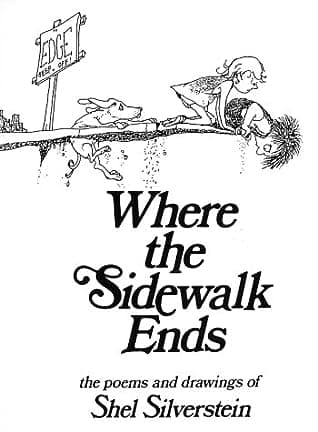
Shel Silverstein (1974)
Genre
Fantasy / Children's / Young Adult
Reading Time
90-120 min
Key Themes
See below
Sign in to track this book
Enter a whimsical world where shadows are washed, diamond gardens grow, and outlandish characters come to life through Shel Silverstein's memorable poems and quirky drawings.
The poem "Where the Sidewalk Ends" introduces the collection's imaginative world. It describes a place where the concrete sidewalk stops, and a mystical, grassy path begins, leading to a land of "white trees" and "moon-bird's song." The poem asks the reader to leave behind the "street" and its ordinary worries, urging them to enter this fantastical place where dreams and imagination rule. This opening piece sets the collection's main idea: the vast power of imagination and how it lets us escape reality.
This poem introduces Sarah Cynthia Sylvia Stout, a girl who consistently refuses to take out her garbage. The trash piles up to an amazing degree, filling her house, blocking doors, and eventually reaching the ceiling. The smell becomes too much, driving everyone away. The poem ends with Sarah, now an old woman, still surrounded by her uncollected trash, regretting her choice forever. It is a humorous yet clear lesson about responsibility and the growing problems that come from putting things off, presented with Silverstein's recognizable rhythm and rhyme.
In this short, insightful poem, a little boy meets an old man who misses his lost youth, wishing he could be young again. The boy, however, wants to be old, believing it would free him from rules and bedtime. The poem subtly explores different views on life stages, showing the innocence of a child's wishes and the sadness of an older person's thoughts. It suggests that each stage has its own unique perspective and challenges.
Though more famous as a separate book, "The Giving Tree" is sometimes included in Silverstein's collections. It tells the story of a boy and a tree, and the tree's selfless love. As the boy grows, he takes from the tree—its apples, branches, trunk—until only a stump is left. The tree gives everything it has to make the boy happy, even as the boy's requests become more demanding. The poem is a powerful story about unconditional love, sacrifice, and the often-selfish nature of human desire.
Penny diagnoses herself with a funny list of illnesses—a "sore throat," "measles," "mumps," "chicken pox," and even a "broken leg"—all to avoid school. Her mother, however, sees through the exaggerated list of symptoms. The poem takes a humorous turn when Penny declares herself perfectly fine and ready to play once her mother reminds her it is Saturday. It is a relatable and funny depiction of childhood mischief and how far children will go to avoid unwanted tasks.
This poem retells the biblical story of Noah's Ark, but with a humorous twist. As Noah gathers all the animals "two by two," he forgets to call the unicorns. The poem describes the unicorns "prancing" and "dancing" in the rain, unaware of the coming flood. As a result, they are left behind and become extinct. It is a playful retelling of a classic story, using a mythical creature to add humor and a touch of sadness to the narrative, explaining why unicorns are not in the modern world.
Jimmy Jet is obsessed with watching television, spending all his time glued to the screen. The poem vividly describes his gradual change: his skin turns gray, his eyes become square, and eventually, he literally becomes a television set. His ears become dials, his nose a channel selector, and his mouth a speaker. This satirical poem is a warning about too much screen time and the loss of identity and humanity that can result, presented with dark humor.
The poem describes a utopian-sounding "Land of Happy" where everyone is always smiling and joyful. However, the tone quickly changes as it is revealed that showing any sadness or unhappiness is strictly forbidden and leads to severe punishment. Children are forced to smile, and tears are not allowed. This piece ironically explores the darker side of forced happiness and conformity, suggesting that true joy cannot exist without the freedom to experience and express all emotions.
This poem is a playful twist on "The Little Engine That Could." Here, the little blue engine, despite its small size, successfully pulls its load up the hill. However, the poem then reveals that the engine's success is not due to its own belief, but because the tracks were actually going downhill the whole time. This humorous reversal of a well-known moral tale questions common ideas about perseverance and effort, suggesting that sometimes success can come from unexpected, even accidental, ways.
The poem explores a child's observations and interactions with their own shadow. The child notes how the shadow copies their movements, sometimes growing tall and sometimes shrinking small. The shadow is shown as a constant companion, but also a mysterious and sometimes mischievous entity that does not always act as expected. It is a simple, charming exploration of a common childhood experience, filled with wonder and a touch of human-like qualities.
The poem presents a humorous and growing list of "the worst" possible things, starting with funny exaggerations like a "purple pickle" or a "polka-dotted pig." The absurdities continue to build, creating playful exaggeration. The peak of the list, however, is a surprisingly ordinary and relatable fear for a child: having to take a bath. This poem uses exaggeration to create humor and then grounds it in a simple, universal childhood experience, making the "worst" thing approachable and funny.
This poem introduces a character who is amazingly, almost impossibly, dirty. He is covered in grime, mud, and dust, and has seemingly never washed. Despite his extreme lack of hygiene, the man appears perfectly happy with his state, even proud of it. The poem uses vivid, often grotesque, imagery to describe his filth, but does so with a playful, non-judgmental tone. It is a whimsical character study that questions common ideas of cleanliness and social rules.
This short poem describes a boy who builds a bridge over a river to reach a girl on the other side. However, once the bridge is built, the girl walks across it to the boy's side, and then the boy walks across to her side. The poem subtly suggests that sometimes building a connection can lead to an endless back-and-forth, or perhaps that true connection is in the journey rather than a fixed destination. It is a simple yet thought-provoking piece about relationships and effort.
The poem describes what is left after a huge, unseen creature's visit. There are giant footprints, broken trees, and a general sense of enormous disruption. The narrator guesses what kind of creature could have caused such chaos, from a giant to a dinosaur. The poem creates wonder and mystery, inviting the reader to imagine the magnificent size of the "something big" that has passed through, leaving its impressive marks behind.
This poem is an uplifting and encouraging message to children, urging them to ignore all the "mustn'ts" and "don'ts" they hear. It lists various negative commands—"mustn't play with the fire," "mustn't climb on the roof"—and then counters them by affirming the power of imagination and the endless potential within. It encourages readers to listen instead to the "do's" and "yes's" within themselves, encouraging adventure and self-belief. It is a strong closing statement about freedom of thought.
The Protagonist (often implied)
The narrator's 'arc' is more about the reader's journey through their perspective, discovering new ways of seeing the world.
The Minor Antagonist (to herself)
Her 'arc' is a tragicomic descent into self-imposed isolation due to her stubbornness.
The Minor Protagonist
Penny's 'arc' is a brief moment of cunning followed by a humorous reveal of her true intentions.
The Minor Antagonist (to himself)
Jimmy's arc is a literal transformation, losing his humanity to his obsession.
The Minor Protagonist
The engine's 'arc' is a humorous subversion of a typical heroic journey.
The Supporting Character (character study)
The Dirtiest Man's 'arc' is a static state of contented filth, a challenge to societal norms.
The Protagonist/Antagonist (to the tree)
The Boy's arc is a progression from innocent childhood to demanding adulthood, always seeking more.
The Supporting Character/Benevolent Figure
The Tree's arc is one of complete self-sacrifice, diminishing physically but remaining constant in its love.
Many poems in the collection celebrate and encourage imagination, showing it as a vital escape from the ordinary or restrictive parts of reality. From "Where the Sidewalk Ends" inviting readers to a fantastical land, to poems like "Listen to the Mustn'ts" urging defiance against limits, Silverstein consistently supports the inner world of dreams and creative thought. This theme suggests that imagination provides comfort, wonder, and a way to go beyond everyday life, making the impossible seem real.
“Yes, we'll walk with a walk that is measured and slow, And we'll go where the chalk-white arrows go, For the children, they mark, and the children, they know Where the sidewalk ends and the sea begins And the ghost of a smile begins to grin.”
The collection often explores the unique perspective of childhood, capturing both its wonder and its typical mischief. Poems like "Sick" perfectly show a child's clever attempts to avoid school, while "My Shadow" reflects on the simple, yet deep, curiosity of a young mind. Silverstein shows children as imaginative, sometimes rebellious, and often acting on their own logic. This theme celebrates the humor and distinct worldview of youth, often highlighting the difference between adult expectations and a child's desires.
“I cannot go to school today, Said little Peggy Ann McKay. I have the measles and the mumps, A gash, a rash and purple bumps.”
Several poems subtly, or sometimes clearly, teach lessons about the results of one's actions. "Sarah Cynthia Sylvia Stout Would Not Take the Garbage Out" is a clear example, showing the growing disaster that comes from neglected responsibility. Similarly, "Jimmy Jet and His TV Set" is a warning about the dangers of too much consumption and losing oneself to passive entertainment. This theme is often presented with humorous, exaggerated style, making the moral easy to understand and remember for young readers without being too preachy.
“And there, through the garbage and grime and decay, Poor Sarah Cynthia Sylvia Stout Is a-sittin' alone 'til this very day, For she WILL NOT TAKE THE GARBAGE OUT!”
Silverstein often celebrates characters who do not follow social norms or expectations. "The Dirtiest Man in the World" is a humorous tribute to someone who finds happiness in his unusual state, questioning the common focus on cleanliness. The collection, as a whole, encourages readers to think differently and embrace their unique perspectives, mirroring the book's own unconventional style. This theme champions the freedom to be oneself, even if it means being different from the crowd, and finds beauty in the unusual.
“If you are a dreamer, come in, If you are a dreamer, a wisher, a liar, A hope-er, a pray-er, a magic bean buyer... If you're a pretender, come sit by my fire For we have some flax-golden tales to spin. Come in! Come in!”
A common theme throughout the collection is the embrace of the absurd and the whimsical. Silverstein enjoys presenting illogical scenarios, talking objects, and fantastical creatures, often with a straightforward delivery that increases the humor. Poems about washing shadows, planting diamond gardens, or crocodiles going to the dentist show a world where normal rules are bent or broken. This theme encourages readers to find joy and wonder in the nonsensical, to question logic, and to appreciate the lighter, more playful side of life.
“And there in the night, by the light of the moon, I washed my shadow and hung it to dry. Then I slept without it till late the next noon, And I wonder, oh I wonder, just why...”
Exaggeration for humorous or emphatic effect.
Silverstein frequently employs hyperbole to create comical and memorable imagery. In 'Sarah Cynthia Sylvia Stout Would Not Take the Garbage Out,' the sheer volume of trash reaches absurd, house-filling proportions. Similarly, Penny's list of ailments in 'Sick' is an exaggerated catalog of maladies. This device amplifies the humor and impact of the poems, making the consequences or situations more vivid and entertaining, often serving to underscore a moral or highlight a character's trait with playful exaggeration.
Attributing human qualities to inanimate objects or animals.
Personification brings many of Silverstein's fantastical elements to life. In 'The Giving Tree,' the tree itself has thoughts, feelings, and the ability to communicate its love and sadness. Shadows in 'My Shadow' are described with human-like behaviors, mimicking and sometimes acting independently. This device allows for deeper emotional connection to non-human elements and opens up a world of imaginative possibilities, making the abstract relatable and the inanimate vibrant.
Consistent use of poetic sound devices to create musicality and memorability.
The consistent and often inventive use of rhyme and rhythm is a cornerstone of Silverstein's style. His poems typically follow clear, accessible rhyme schemes (like AABB) and strong, often anapestic or trochaic, rhythms. This makes the poems highly musical, engaging for read-alouds, and incredibly memorable, especially for children. The rhythmic flow helps to carry the narrative and humor, making even complex ideas feel light and enjoyable, as seen in the steady cadence of 'Where the Sidewalk Ends' or the driving beat of 'Sarah Cynthia Sylvia Stout'.
Placing contrasting elements side-by-side to highlight differences.
Silverstein often uses juxtaposition to create humor or reveal deeper truths. For instance, the whimsical, fantastical settings are often juxtaposed with very real, relatable childhood anxieties or lessons. The Land of Happy, while ostensibly joyful, is juxtaposed with the oppressive reality of forced cheer and punishment for sadness. This device creates a dynamic tension in the poems, allowing for layers of meaning and often surprising insights by contrasting the expected with the unexpected.
The use of words to convey a meaning that is the opposite of its literal meaning.
Irony, particularly situational irony, is a key element in many of the poems. 'The Little Blue Engine' is a prime example, where the engine's success is attributed to its belief, only for the twist to reveal it was going downhill. In 'The Land of Happy,' the very concept of mandatory happiness is deeply ironic, highlighting the oppressive nature of forced joy. This device adds a layer of sophistication and wit, often subverting expectations and encouraging readers to think critically about the presented situations.
“There is a place where the sidewalk ends And before the asphalt starts,”
— From the title poem, setting the scene for a magical, imaginative world beyond the ordinary.
“If you are a dreamer, come in, If you are a dreamer, a wisher, a liars, A hope-er, a pray-er, a magic bean buyer...”
— From 'Invitation,' welcoming all who believe in the extraordinary.
“Said the little boy, 'Sometimes I drop my spoon.' Said the big old man, 'I do that too.'”
— From 'The Little Boy and the Old Man,' highlighting shared human experiences across generations.
“I will not play at tug o' war. I'd rather play at hug o' war, Where everyone hugs Instead of tugs.”
— From 'Hug O' War,' a playful take on conflict resolution.
“The world is a very puzzling place If you're not a puzzle.”
— From 'The Puzzler,' reflecting on individuality and fitting in.
“Oh, if you're a bird, be an early bird And catch the worm for your breakfast plate. If you're a bird, be a early bird— But if you're a worm, sleep late.”
— From 'Early Bird,' a humorous look at perspective and self-interest.
“It's a shame that the only thing a man can do for eight hours a day is work. He can't eat for eight hours; he can't drink for eight hours; he can't make love for eight hours. The only thing a man can do for eight hours is work.”
— From 'The Eight-Hour Day,' a satirical critique of the monotony of work.
“I'm nobody! Who are you? Are you nobody, too? Then there's a pair of us - don't tell! They'd banish us, you know.”
— From 'I'm Nobody! Who Are You?' (a poem also by Emily Dickinson, but Silverstein includes his own version/interpretation), exploring themes of identity and belonging.
“If you have to dry the dishes (And I have to, every night) Then you'd better dry the dishes With a song and with a smile.”
— From 'Homework Machine,' a practical approach to mundane chores.
“I have to see a lot of things I don't wanna see And do a lot of things I don't wanna do.”
— From 'The Land of Happy,' a relatable sentiment about facing unpleasant realities.
“What if a tree falls in the forest and no one hears? Then what?”
— From 'What If,' a philosophical question about existence and perception.
“Something new to do, Something new to see, Something new to feel, Something new to be.”
— From 'Something New,' encouraging exploration and growth.
“When the light is green, you can go. When the light is red, you must stop. But what about when the light is yellow?”
— From 'The Yellow Light,' a playful reflection on rules and ambiguity.
“I'll stay here for a little while And watch the clouds go by. I'll stay here for a little while And watch the world go by.”
— From 'Sitting,' a moment of quiet contemplation and observation.
Ready to see how well you understood this book? Take our interactive quiz with 10 questions.
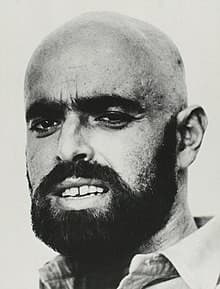
Biography coming soon.







