“It's a shame that people have to grow up and lose their dreams.”
— Narrator reflecting on childhood and aspirations.

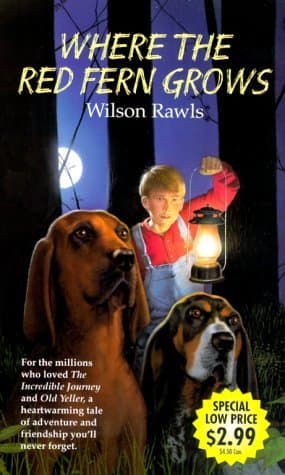
Wilson Rawls (1961)
Genre
Children's / Historical Fiction / Young Adult
Reading Time
360 min
Key Themes
See below
Sign in to track this book
A young boy's dream of owning coonhounds leads to an unforgettable journey of love, loss, and the unbreakable bond forged with his two dogs in the Ozark Mountains.
The story opens with an adult Billy Colman, now an old man, reminiscing about his youth in the Ozark Mountains of Oklahoma. He sees a scrawny, old redbone coonhound being attacked by other dogs and intervenes, taking the dog home to feed and care for it. This encounter triggers memories of his childhood desire for two coonhounds, a dream that consumed him from the age of ten. He recalls growing up in a poor family during the Great Depression, where his desire for hunting dogs seemed an impossible luxury. He constantly asked his parents, particularly his understanding mother, about getting pups.
Billy's longing for coonhounds intensifies, becoming an obsession. After seeing an advertisement for redbone coonhound pups for $25 each in a magazine, he learns that the price is actually $25 for two pups, but they are located in Kentucky, far from his home in the Ozarks. Undeterred, he devises a plan to save money. For two years, he works tirelessly, trapping raccoons, selling their furs, picking berries, and doing odd jobs for his grandfather. He endures teasing from his sisters and the quiet skepticism of his father, but his determination never wavers, fueled by the image of his future dogs.
After two long years, Billy finally saves the required $50. He confides in his grandfather, who helps him plan a secret trip to Tahlequah, the nearest town with a train station, to pick up the pups that have been shipped there. Billy, now twelve, makes the arduous journey on foot, walking through the night and enduring the fear of the wilderness. He reaches Tahlequah, a bustling town much larger than anything he's ever seen, feeling a mix of awe and trepidation. His rural innocence contrasts sharply with the town's activity.
In Tahlequah, Billy retrieves his two redbone coonhound pups from the depot. He names the larger, more robust male 'Old Dan' and the smaller, more intelligent female 'Little Ann'. His joy is immense, but it's quickly tempered by the taunts of a group of town bullies who mock his country appearance and his pups. Billy, fueled by a protective instinct for his new companions, stands up to them, even getting into a small scuffle. He spends his remaining money on gifts for his family and then begins the long walk home, carrying his precious pups.
Back home, Billy dedicates himself to training Old Dan and Little Ann. He teaches them to track and tree raccoons using a coon hide. Old Dan is strong and determined but sometimes clumsy, while Little Ann is intelligent, agile, and exceptionally keen-nosed. Their bond with Billy deepens rapidly, becoming a powerful, almost telepathic connection. Billy's first real hunts are challenging, but the dogs' natural instincts, combined with his patient guidance, quickly turn them into a formidable hunting team. They bring home their first coon, marking the beginning of their partnership.
The reputation of Billy's hounds grows throughout the Ozarks. He and his dogs become known for their ability to tree any coon, no matter how cunning. One particularly challenging hunt involves a legendary 'ghost coon' that has eluded all other hunters. After a long and difficult chase through treacherous terrain, Old Dan and Little Ann finally tree the elusive coon. This successful hunt solidifies their standing as the best coonhounds in the region, bringing pride to Billy and his family and proving the worth of his long-held dream.
Billy's grandfather encourages him to enter Old Dan and Little Ann in the annual champion coon hunt, an event that draws hunters from all over the Ozarks. Despite the family's poverty and Billy's youth, they travel to the competition. Little Ann wins the beauty contest for hounds, showcasing her exceptional looks. During the hunting phase, the trio faces harsh weather and fierce competition. After several successful nights of hunting, they reach the finals. On the final night, they manage to tree three coons, securing their victory and earning Billy the gold cup and prize money.
One night, while out hunting, Billy and his dogs are ambushed by a mountain lion. The large cat attacks Billy, but Old Dan and Little Ann bravely intervene, fighting fiercely to protect their master. In the ensuing struggle, Old Dan suffers severe, internal injuries. Billy manages to kill the mountain lion with his axe, but the damage to Old Dan is irreversible. Despite Billy's desperate attempts to save him and his father's help, Old Dan succumbs to his wounds the next morning, leaving Billy heartbroken by the loss of his beloved companion.
The death of Old Dan leaves Little Ann inconsolable. She refuses to eat, becomes lethargic, and her spirit is visibly broken. Despite Billy's efforts to comfort her, she pines for her brother and hunting partner. A few days after Old Dan's death, Little Ann climbs onto Old Dan's grave and quietly dies of a broken heart. Billy is shattered by this second loss, feeling a deep emptiness. His family, witnessing his intense grief, tries to comfort him, understanding the depth of his bond with his hounds.
Overwhelmed by grief, Billy visits his dogs' graves one last time before his family moves to the city, a decision made possible by the prize money from the coon hunt. To his astonishment, he discovers a beautiful red fern growing between Old Dan and Little Ann's graves. His father explains the legend of the red fern, stating that only an angel can plant one, and that it symbolizes a sacred spot where life has given way to something holy and eternal. This miraculous sight brings Billy a sense of peace and understanding, helping him accept the loss and realize that his dogs' purpose was fulfilled, allowing his family to pursue a better life.
The Protagonist
Billy transforms from a dreaming boy into a responsible young man, learning about love, loss, and the cycle of life and death, ultimately finding peace in understanding the purpose of his dogs' lives.
The Supporting
Old Dan's arc is defined by his unwavering loyalty and strength, culminating in his heroic sacrifice for Billy.
The Supporting
Little Ann's arc highlights her intelligence and deep emotional bonds, ending in a poignant demonstration of love and grief.
The Supporting
Billy's father remains a steadfast provider and supporter, ultimately leading his family to a new life.
The Supporting
Billy's mother provides consistent emotional support, her understanding helping to guide Billy through his experiences.
The Supporting
Billy's grandfather acts as a catalyst and mentor, helping Billy realize his dream and navigate the world beyond his immediate family.
The Antagonist
The mountain lion serves as a destructive force, directly causing the tragic turning point of the story.
Billy's journey to acquire his coonhounds is an example of determination. For two years, he works tirelessly, saving every penny, enduring physical hardship and the skepticism of others. This theme is clear in his long walk to Tahlequah, his patient training of the dogs, and the relentless pursuit of raccoons, even the legendary 'ghost coon.' His commitment to his dream never wavers, showing that persistence can overcome significant obstacles.
“It's strange indeed how a boy can love a dog and how that love can make him do things that he never thought he could do.”
The deep, almost spiritual bond between Billy, Old Dan, and Little Ann is central to the story. Their loyalty to each other is absolute, particularly shown during the mountain lion attack where Old Dan sacrifices his life to protect Billy. Little Ann's subsequent death from a broken heart further emphasizes the love and loyalty shared within the trio. This theme explores the selfless nature of love, both between humans and animals, and the sacrifices made for those held dear.
“I knew then that I had to do something, anything, to keep my dogs from getting hurt.”
The Ozark Mountains are depicted as both a place of beauty and harshness. Billy's childhood is spent exploring its rivers and forests, which provide both sustenance and adventure. However, nature also presents dangers, such as treacherous terrain, severe weather during the coon hunt, and the deadly mountain lion. This duality highlights nature's power to both nurture and destroy, shaping the characters' lives and testing their resilience.
“It was a beautiful country, full of timber and hills, and the river ran through it like a silver ribbon.”
Billy's journey from a boy with a dream to a young man who experiences loss is a central coming-of-age narrative. His experiences with his dogs teach him about responsibility, perseverance, joy, and ultimately, the pain of death. The loss of Old Dan and Little Ann forces him to confront grief and the cycle of life. This theme explores how significant emotional experiences, particularly loss, contribute to maturity and a deeper understanding of the world.
“It's funny how a little thing like that can make a big change in your life.”
Elements of faith and divine intervention weave through the story, particularly in moments of great need or significance. Billy's mother prays for his safety and the family's well-being. The appearance of the red fern on the dogs' graves, explained by Billy's father as a sign planted by an angel, provides a comforting spiritual resolution to Billy's grief. This suggests a guiding hand or greater purpose behind the events, offering solace and meaning in the face of tragedy.
“My father said that only an angel could plant the seeds of a red fern. And he said that where one grew, that spot was sacred.”
The story is framed by an adult Billy reminiscing about his childhood.
The entire novel is told through the eyes of an adult Billy Colman, triggered by his encounter with a stray coonhound. This flashback structure allows for a reflective, nostalgic tone, providing insights into the emotional impact of past events. It also foreshadows the emotional weight of the story, as the adult Billy's present-day empathy for the stray dog immediately connects to his childhood experiences with his own hounds, preparing the reader for a powerful, poignant tale.
A rare fern growing on the dogs' graves symbolizes sacredness and a fulfilled purpose.
The red fern is a powerful symbol introduced at the story's tragic climax. According to legend, only an angel can plant a red fern, marking a sacred spot. Its appearance between Old Dan and Little Ann's graves transforms Billy's overwhelming grief into a sense of peace and understanding. It symbolizes that their lives and deaths had a divine purpose, allowing Billy's family to move to a better life, and that their resting place is blessed and eternal, providing closure and a touch of the miraculous.
Old Dan and Little Ann are given distinct personalities and emotional depth.
The dogs, Old Dan and Little Ann, are portrayed with distinct personalities, motivations, and emotional lives, almost as if they were human characters. Old Dan is strong and determined, while Little Ann is intelligent and sensitive. Their loyalty, courage, and even their grief are described in human-like terms, fostering a deep emotional connection with the reader. This personification elevates them beyond mere pets, making their bond with Billy and their eventual deaths profoundly impactful.
A structured competition that provides a goal and measures the dogs' prowess.
The champion coon hunt serves as a major plot device, providing a clear goal for Billy and his dogs and allowing their exceptional hunting skills to be publicly recognized. It creates suspense and allows for intense hunting sequences, showcasing the unique talents of Old Dan and Little Ann. The victory not only brings pride and prize money but also represents the culmination of Billy's dream and validates his long years of hard work and dedication, setting up the subsequent tragic events.
“It's a shame that people have to grow up and lose their dreams.”
— Narrator reflecting on childhood and aspirations.
“A man doesn't have to be an Indian to be a good hunter.”
— Billy's grandfather reassuring him about his hunting abilities.
“It's funny how you can love something so much, and then one day it's gone.”
— Billy's reflection on the loss of his dogs.
“There are some things that a boy just has to do, and one of them is to have a good coon dog.”
— Billy's strong desire for hunting dogs.
“I had a good cry, and then I felt better.”
— Billy after a particularly emotional event.
“You can never tell what's in a dog's mind.”
— Billy observing the behavior of his dogs.
“It's a wonderful thing to have a dream, and to see it come true.”
— Billy's joy when he finally gets his coon dogs.
“I was just a little boy, but I had big dreams.”
— Billy reflecting on his younger self and aspirations.
“There are times when a man just has to stand up for what he believes in.”
— Billy's grandfather giving advice.
“I had never seen anything so beautiful.”
— Billy's awe at the beauty of nature or his dogs.
“The good Lord works in mysterious ways.”
— Billy's family reflecting on unexpected events.
“It takes a lot of patience to be a good hunter.”
— Billy learning the virtues of hunting.
“I felt like I was walking on air.”
— Billy's elation after a successful hunt or achievement.
“There's a time for everything, and a season for every activity under the heavens.”
— A biblical allusion used by Billy's family.
“I knew then that I would never forget them, not as long as I lived.”
— Billy's enduring memory of his dogs.
Ready to see how well you understood this book? Take our interactive quiz with 10 questions.
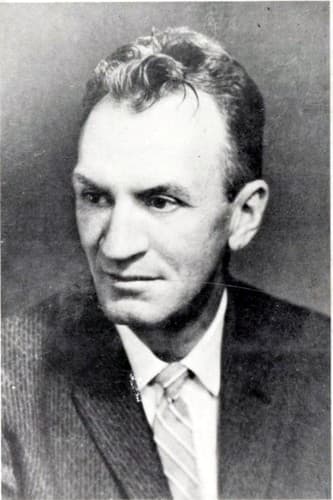
Biography coming soon.
Dan Gemeinhart
4.5
Kate O'Hearn
4.4

Jeanne Birdsall
4.4

Jen Wang
4.4
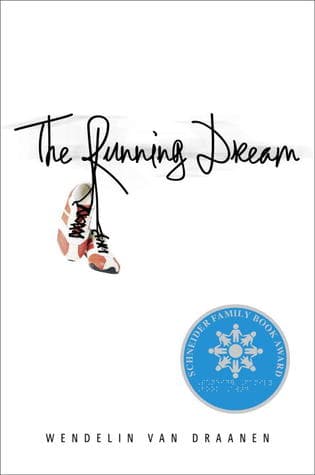
Wendelin Van Draanen
4.3

John Marsden
4.3

Chris Van Allsburg
4.3
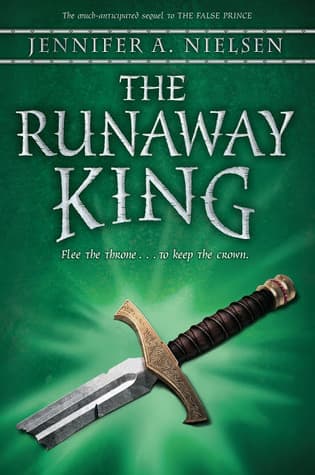
Jennifer A. Nielsen
4.2