“Christopher Robin is saying his prayers, He's finished the first, and he's started the spares.”
— From the poem 'Vespers', depicting Christopher Robin's bedtime prayers.

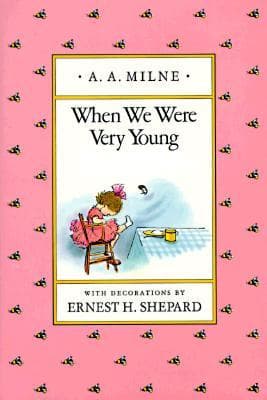
A.A. Milne (1924)
Genre
Fantasy / Children's
Reading Time
60 min
Key Themes
See below
Sign in to track this book
A bear named Pooh and his friends go on fun adventures, celebrating childhood's simple joys and imagination.
The poem begins with Christopher Robin at a street corner, watching the world. He then meets a Lion and a Unicorn, two mythical creatures shown in a friendly way. The Lion and Unicorn talk, and Christopher Robin watches. This scene creates a playful and imaginative mood, where the ordinary meets the fantastical. The brief meeting sets up the whimsical adventures and observations that follow in the book. It immediately shows that the book will explore a child's imagination, where anything is possible and the line between real and fantasy is delightfully unclear.
This short poem features a daffodil, described as a graceful and proud flower. It talks about its own beauty and how it likes the attention it gets. The daffodil's voice is light and charming, showing the simple joys and beauty of nature. The poem captures the feeling of spring and a flower's innocent pride, celebrating its color and shape. It is a moment of pure, natural beauty, seen through a child's eyes. The poem uses simple words and images to create a sense of wonder and thanks for nature, showing the small, beautiful details often missed by adults but loved by children.
Christopher Robin is at Buckingham Palace, watching the changing of the guard. He is fascinated by the soldiers and their movements, but his thoughts go to the King and Queen inside. He wonders if they are happy and if they ever come out to play. The poem captures a child's innocent view of royalty, imagining them with the same desires for play and friendship as himself. This scene contrasts the palace's formal grandeur with a child's simple thoughts, showing a gentle curiosity about the lives of powerful people. It highlights the universal human desire for connection and happiness, no matter one's status.
This poem features a teddy bear, a loved friend, who speaks its thoughts. The teddy bear thinks about its life, its purpose, and its bond with Christopher Robin. It considers the simple joys of being loved and played with, but also hints at a deeper understanding of its role in a child's life. The bear's thoughts are sweet and innocent, yet have a touch of sadness, as it thinks about time passing and childhood ending. This poem captures the emotional link between a child and their toy, giving the toy a strong sense of feeling and loyalty.
Christopher Robin sits halfway down the stairs, a common childhood situation. He is neither going up nor down, but simply in that middle space, thinking about the world around him. This simple act becomes a moment of deep thought, as he watches others in the house. The poem captures a child's imagination, turning an ordinary moment into an adventure, finding wonder in the everyday. It shows the importance of quiet observation, letting a child process their surroundings and think. The stairs become a symbol of childish daydreaming and freedom from adult rules.
This poem shows Christopher Robin's bedtime routine, specifically his evening prayers. He kneels by his bed, saying simple, heartfelt prayers, sometimes getting a little distracted or sleepy. The poem captures a child's innocence and sincerity in faith, as well as the common experience of a child trying to stay awake during prayer. It is a tender and private moment, showing the quiet routines of childhood and the comfort found in regularity. The images are gentle and warm, emphasizing the loving bond between child and parent, and the feeling of security that comes with a peaceful end to the day.
The King's Breakfast is a funny poem about a demanding king who wants butter for his bread. The Queen, the Dairymaid, and the Cow all work to meet his simple wish. The King's growing frustration and the characters' attempts to please him create a lighthearted story. This poem shows Milne's ability to create engaging stories with a touch of silliness, highlighting the sometimes-unreasonable demands of powerful people and how far others will go to fulfill them. It is a fun look at power dynamics, in a very gentle and funny way, ending with the King getting his butter.
This poem celebrates the simple joy of hopping. Christopher Robin hops with great excitement, finding pleasure in the rhythmic movement and freedom. The poem captures a child's endless energy and innocent fun in play, emphasizing the sheer joy of physical activity. It shows that joy can be found in the simplest actions, and that a child's imagination can turn ordinary movements into grand adventures. The repeated hopping and cheerful tone of the poem perfectly show the free spirit of childhood.
This poem introduces three hungry foxes, each with a different personality. They talk about their situation and their desire for food, their individual traits clear in their conversation. The poem is a charming and slightly sad picture of animal life, focusing on their basic needs and wants. It uses simple language to show empathy for the creatures and their struggles, while keeping a whimsical tone. It is a gentle look at nature, seen through a child's wonder and compassion, highlighting the universal experience of hunger and the bonds of friendship even among animals.
The poem describes a child's observations at a busy market square. The market's sights, sounds, and smells are clearly shown, from vendors calling out their goods to people doing their business. The child takes in the lively atmosphere, noticing small details and imagining stories behind the faces they see. This poem captures a child's wonder and curiosity experiencing a new and exciting place, highlighting their ability to find interest and fun in the everyday world. It celebrates sensory experience and the simple pleasures of watching human activity.
This poem follows a child who invents a game while walking on the pavement, stepping only on the lines or only on the squares. This simple act turns an ordinary walk into an imaginative adventure, where rules are made and followed seriously. The poem shows a child's imagination creating structure and play from nothing, finding joy and purpose in the most ordinary places. It reminds us how children can turn everyday environments into playgrounds, using their creativity to make their own fun and interact with the world uniquely.
This poem focuses on a child celebrating their fourth birthday. It captures the excitement and anticipation of the special day, from presents to cake. The child thinks about getting older and the new experiences that come with each year. The poem is a joyful and tender portrayal of an important milestone in a child's life, highlighting the innocence and wonder of birthdays. It brings a sense of nostalgia for the simple joys of childhood celebrations and the comfort of family traditions, emphasizing the magic of growing up and the preciousness of these early memories.
The Protagonist
Christopher Robin remains largely static, representing the consistent state of childhood wonder, though his observations mature slightly through various experiences.
The Supporting
The Teddy Bear's character remains consistent as a symbol of comfort and companionship, embodying unchanging loyalty.
The Supporting
The King's character is static, serving as a humorous archetype of authority figures.
The Supporting
The Queen's character is static, embodying patience and domestic responsibility.
The Supporting
The Dairymaid's character is static, representing the dutiful servant.
The Mentioned
The Cow's character is static, serving as a humorous plot device.
The Supporting
The Lion's character is static, serving as a whimsical symbolic figure.
The Supporting
The Unicorn's character is static, serving as a whimsical symbolic figure.
The Mentioned
The Nursery Cook's character is static, representing the domestic support system.
The collection highlights a child's boundless imagination. Everyday things and places—like a street corner ('Corner-of-the-Street') or stairs ('Halfway Down')—become settings for adventures or deep thought. Mythical creatures talk, and even a Teddy Bear gains an inner life. This theme celebrates how children see the world, turning ordinary things into magic and finding wonder everywhere. It suggests that imagination is not just escape, but a basic way to understand the world.
“Wherever I am, there's always Pooh, There's always Pooh and me.”
A main theme is childhood as a time of pure innocence, curiosity, and wonder. Christopher Robin's observations, whether of the guard change at Buckingham Palace or simply hopping ('Hoppity'), are fresh. The poems capture the joy in simple pleasures, the earnestness of a child's questions, and their unique way of understanding the world. This theme asks readers to remember their own childlike awe and see beauty in everyday life with an untainted view.
“But all the while I'm waiting for the King, the Queen, the Dairymaid, and the Cow.”
Many poems quietly show the comfort and security found in routines and a loving home. From Christopher Robin's evening prayers ('Vespers') to his Teddy Bear's familiar presence, there is a consistent sense of safety. Even the humorous 'The King's Breakfast' is about a routine morning meal. This theme shows how important a stable and caring environment is for a child, providing a setting where their imagination can grow freely without fear.
“And when I'm feeling sleepy, a little sleepy head, I just go on my knees and say my prayers in bed.”
Nature and animals are often shown with tenderness. Poems like 'Daffodowndilly' give flowers voices and pride, while 'The Three Foxes' creates empathy for hungry creatures. The natural world is presented as a source of beauty, wonder, and simple lessons. Milne encourages appreciation for environmental details, from the smallest flower to the largest animal, fostering a connection and respect for all living things. This theme reflects an ideal where nature is a gentle, ever-present companion.
“Oh, Daffodowndilly, how bright you are!”
Giving human qualities to inanimate objects or animals.
Milne frequently uses personification to bring his world to life. The Teddy Bear has thoughts and feelings, a daffodil expresses pride in its beauty, and even the Cow in 'The King's Breakfast' has a clear opinion. This device allows the reader to connect with non-human elements on an emotional level, blurring the lines between reality and fantasy. It enriches the imaginative landscape, making the world more vibrant and engaging for children, and reinforcing the idea that everything can have a voice and a story.
Consistent use of poetic structure for rhythm and musicality.
The entire collection is built upon a strong foundation of traditional rhyme schemes (AABB, ABAB) and consistent meter. This creates a musicality and rhythm that is highly appealing to young readers and listeners. The predictable structure makes the poems easy to follow, memorize, and recite, enhancing their charm and accessibility. It also contributes to the whimsical and lighthearted tone of the book, making the fantastical elements feel natural and inviting, while providing a comforting sense of order.
Narrating events and observations through the eyes of a child.
A.A. Milne masterfully employs a child's perspective throughout the poems, primarily through Christopher Robin's experiences. This device allows for a fresh, unjaded view of the world, where small details become significant and everyday occurrences are filled with wonder. It emphasizes simplicity, directness, and an innocent curiosity that adults often lose. By adopting this viewpoint, Milne not only makes the poems relatable to children but also invites adult readers to rediscover the magic and joy of seeing the world through uninhibited eyes, fostering empathy and nostalgia.
Repeating words or phrases for emphasis and rhythm.
Repetition is frequently used in the poems to create a rhythmic flow, emphasize certain ideas, and make the verses more memorable for children. For example, in 'Hoppity,' the repeated 'Hoppity, hoppity, hop' reinforces the joy of the action. This device is characteristic of children's literature, aiding in comprehension and engagement. It also contributes to the playful and comforting tone of the collection, creating a sense of familiarity and reinforcing the simple, cyclical nature of many childhood activities and observations.
“Christopher Robin is saying his prayers, He's finished the first, and he's started the spares.”
— From the poem 'Vespers', depicting Christopher Robin's bedtime prayers.
“Halfway down the stairs Is a stair Where I sit.”
— From the poem 'Halfway Down', describing a child's favorite contemplation spot.
“James James Morrison Morrison Weatherby George Dupree Took great care of his Mother, though he was only three.”
— Opening lines of the poem 'James James Morrison Morrison', introducing a very responsible young boy.
“They're changing Guard at Buckingham Palace -- Christopher Robin went down with Alice.”
— Opening lines of the poem 'Buckingham Palace', about a visit to see the Changing of the Guard.
“Little Bo-Peep Has lost her sheep And doesn't know where to find them.”
— From the poem 'Teddy Bear', where the bear is singing this nursery rhyme.
“What is the matter with Mary Jane? She's perfectly well, and she hasn't a pain, And it's only the dark that is making her fret, And Mary Jane will be all right yet.”
— From the poem 'Mary Jane', describing a child's fear of the dark.
“If I were a bear, And a big bear too, I shouldn't much care If it rained or snew.”
— From the poem 'Lines and Squares', where the speaker imagines being a bear.
“Wherever I go, there's a Pooh, There's a Pooh and a Pooh and a Pooh; And wherever I go, there's a Pooh, And a Pooh and a Pooh and a Pooh.”
— From the poem 'Teddy Bear', expressing the constant presence of the beloved toy.
“The King asked The Queen, and The Queen asked The Dairymaid: 'Could we have some butter for the Royal slice of bread?'”
— From the poem 'The King's Breakfast', detailing a humorous royal request for breakfast.
“Oh, I'm a little -- I'm a little -- I'm a little Humbug.”
— From the poem 'Hoppity', a child's playful self-description while hopping.
“If you were a bear, And I were a bear, And we both lived up a tree, I shouldn't mind if it froze or snowed -- I shouldn't mind if it snowed.”
— From the poem 'In the Fashion', a child's fantasy about living as bears.
“They told me you had been to her, And mentioned me to him: They gave me a good character, But said I was too dim.”
— From the poem 'Disobedience', detailing a child's misunderstanding of adult conversation.
“I've got a little Shadow that goes in and out with me, And what can be the use of him is more than I can see.”
— Opening lines of the poem 'My Shadow', a child's puzzled observation of their shadow.
“Every morning When the sun is up, I love to take a walk With my little pup.”
— From the poem 'Puppy and I', describing a simple morning walk with a dog.
Ready to see how well you understood this book? Take our interactive quiz with 10 questions.
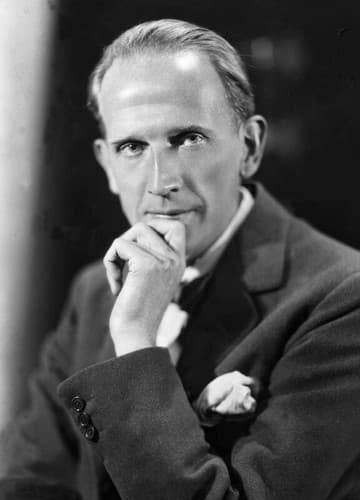
A.A. Milne was an English playwright, novelist, and poet, best known for his children's books featuring the character Winnie-the-Pooh. His collections of poems, When We Were Very Young and Now We Are Six, along with the stories Winnie-the-Pooh and The House at Pooh Corner, have become beloved classics of children's literature worldwide. Milne's work is celebrated for its gentle humor, whimsical characters, and exploration of childhood innocence.







