“I was to return to Shanghai - the city of my birth, the city from which I was kidnapped - and right the wrongs that had been done.”
— Christopher Banks, the protagonist, reflecting on his adult mission.

Kazuo Ishiguro (2000)
Genre
Literary Fiction / Historical Fiction / Mystery
Reading Time
360 min
Key Themes
See below
Sign in to track this book
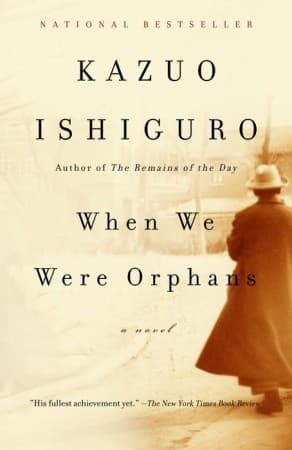
A London detective returns to war-torn Shanghai, only to find his childhood memories of his parents' disappearance are as unreliable as the city itself.
Christopher Banks, an English detective, begins his memoir by describing his early life in Shanghai during the 1920s. He lives comfortably with his English father, who works for a trading company, and his mother, who speaks out against the opium trade. Christopher remembers spending time with his Japanese friend, Akira, and his uncle, Philip, who often disagrees with his mother's activism. This calm childhood ends when his father disappears. Christopher is told his father 'went away,' but the vague explanations bother him. Soon after, his mother also vanishes, leaving Christopher an orphan at nine. He is sent to England to live with his Aunt Sarah.
In England, Christopher finds it hard to adjust to his new life and often feels like an outsider. He attends boarding school, where he becomes known for being observant and smart. These skills hint at his future job. During his teenage years and early adulthood, Christopher decides to become a detective. His reason for this is the unsolved mystery of his parents' disappearances. He believes that by becoming a skilled and famous investigator, he will eventually be able to return to Shanghai and find out what happened to his family. This goal becomes the main force in his adult life.
By the 1930s, Christopher Banks is one of London's well-known private detectives. He is part of high society, admired for his intelligence and ability to solve difficult cases. Despite his professional success and awards, Christopher feels a quiet dissatisfaction. The fame and recognition do not fill the emptiness left by his parents' absence. He often attends social gatherings, frequently with his friend and socialite, Sarah Hemmings. Christopher's public image as a brilliant detective hides his private obsession with his past, which he has not yet faced.
Christopher often sees Sarah Hemmings at social events. Sarah, a spirited and independent woman, is interested in Christopher's quiet nature and his mysterious past. They develop a close, though somewhat formal, relationship. Christopher also has a short, unsettling meeting with his childhood friend, Akira, now a diplomat in London. Akira seems to avoid talking about their shared past in Shanghai, especially about Christopher's parents. This meeting makes Christopher even more determined to return to Shanghai, sensing that Akira has information he will not share, or that the past is too painful for him.
Despite the ongoing Sino-Japanese War and warnings from friends about the dangers, Christopher decides to return to Shanghai. His reputation as a detective matters little in the war-torn city, but his personal quest is more important than practical concerns. He is sure that only by going back to where his trauma began can he find peace. He sees his return not just as a trip to a place, but as a journey into his own broken memories and the unanswered questions that have bothered him for decades. This journey represents the goal of his life's work and his deepest personal wish.
In Shanghai, Christopher finds a city destroyed by the Sino-Japanese War. The familiar streets and places from his childhood are gone or changed, making it hard for him to find his old haunts. The chaos and destruction are very different from his perfect memories, confusing him more. He struggles to find any trace of his past. The people he meets are either unhelpful, too busy surviving, or unable to understand his single mission amid the widespread suffering. This first experience is very disappointing and challenges the very basis of his search.
During his search, Christopher meets Jennifer, another Englishwoman, who works at a local orphanage. The orphanage has many children displaced by the war, and Christopher feels drawn to their situation. He starts to help Jennifer, finding a sense of purpose beyond his personal quest. He also meets a young Chinese boy whom he thinks might be his childhood friend, Akira, or even himself as a child. This connection to the orphanage and its residents gives him a touching break from the grim reality of his mission, and a glimpse into a possible future where he is not only defined by his past.
Christopher eventually finds the area where his family home once stood. To his dismay, the house is mostly destroyed and occupied by an old Chinese woman, who seems confused and speaks in riddles. She appears to recognize him or at least his connection to the house, but her broken statements offer no clear answers. Christopher tries to gather clues from the ruins and the old woman's words, but the experience is more confusing than helpful. The physical destruction of his home mirrors the broken state of his memories, making his investigative work very difficult.
Christopher finally finds his Uncle Philip, who is now a broken, opium-addicted man. In a dramatic talk, Philip tells him the truth: Christopher's parents were not kidnapped. His father, a weak man, had become involved in the opium trade, pressured by powerful warlords. His mother, horrified by his father's actions and her inability to stop the trade, chose to leave him and fight it. Both of them, in their own ways, left Christopher, rather than being kidnapped victims. Philip admits his own role in keeping the lie to protect Christopher from the painful truth.
The truth from Philip destroys Christopher's carefully built story of his past. His parents were not heroic victims but flawed people who made difficult, selfish choices. The 'case' he had spent his life trying to solve was a made-up story, a way to cope with a painful reality. Christopher realizes that his entire identity as a detective, driven by this mystery, was built on a lie. This deep disappointment forces him to face how unreliable memory is and how subjective truth can be. He begins to find a new path, focusing on the present and the children at the orphanage, instead of holding onto a romanticized, false past.
The Protagonist
Christopher's arc moves from a celebrated detective obsessed with a fabricated past to a man stripped of his illusions, forced to confront the painful truth and find new meaning in the present.
The Supporting
Philip moves from a seemingly benevolent, albeit distant, guardian figure to a broken man who finally unburdens himself of a long-held, painful secret.
The Mentioned
Her character is initially presented as a victim but is later revealed as an active agent in her own disappearance, forcing Christopher to re-evaluate his idealized image of her.
The Mentioned
His character transforms from an idealized, missing father to a flawed, morally compromised individual whose actions directly led to Christopher's orphanhood.
The Supporting
Akira remains a static figure, serving more as a touchstone for Christopher's memories and a symbol of the past's elusiveness rather than undergoing significant personal change.
The Supporting
Sarah's character remains relatively consistent, acting as a sounding board and a contrasting element to Christopher's internal world.
The Supporting
Jennifer's character is consistent, serving as a beacon of humanitarianism and a catalyst for Christopher's shift in focus towards the present.
The Mentioned
Her character is static, serving as a symbolic presence rather than undergoing development.
The Mentioned
His character is static, serving as a symbolic representation and a catalyst for Christopher's emotional shift.
This is the novel's main theme. Christopher's identity and quest are built on his childhood memories of his parents' disappearance, which he has romanticized and changed over decades. The war-torn Shanghai he returns to looks little like his memories. Uncle Philip's revelation shatters his long-held beliefs, showing how personal stories can be created to cope with trauma. The novel constantly asks what is real versus what is remembered or imagined. It shows how memory can be a misleading, self-serving creation.
“Perhaps I had become too used to thinking of my parents as 'victims' and myself as 'the orphan', to the extent that it had become almost a comfort.”
Christopher Banks' identity as a famous detective is tied to his unresolved past. His professional success is a way to an end: solving his personal mystery. However, his search for this 'truth' is a form of self-deception, as he avoids facing the painful reality of his parents' flaws and choices. The shattering of his illusions forces him to break down his carefully built identity and deal with who he is without the guiding myth of his past. His journey is about letting go of a false self to find a more real, though painful, understanding of himself.
“I had spent my entire adult life trying to solve a case that, in the end, was never a case at all.”
The Sino-Japanese War is a chaotic background to Christopher's personal quest, showing the great suffering and destruction that overshadow individual concerns. The war-torn Shanghai physically reflects Christopher's inner brokenness and the destruction of his past. The novel also addresses the legacy of Western colonialism in China, especially through the opium trade, which is the real cause of his parents' troubles. Christopher, as an Englishman, is initially unaware of the wider political and historical context that shaped his family's fate. This shows a theme of Western lack of awareness of its own impact.
“The city I had known, the city of my childhood, had been entirely erased.”
At its heart, the novel explores how childhood loss and abandonment affect a person. Christopher's orphanhood is the defining trauma of his life, leading to a lifelong search for answers and peace. The revelation that his parents were not kidnapped but chose to leave him – his father through involvement in the opium trade, his mother through her single-minded activism – strengthens this theme. It makes Christopher face the reality that his parents were imperfect people who put their own desires or circumstances before their child, leaving him with a deeper, more complex understanding of his profound sense of being 'orphaned'.
“I had been abandoned, not by some faceless villain, but by my own parents.”
The novel constantly examines the unclear line between truth and lies, especially regarding personal stories. Christopher builds his life on a comforting lie about his parents being heroic victims. Uncle Philip keeps this lie going, believing it protects Christopher. The 'truth,' when it finally appears, is messy, painful, and less dramatic than Christopher's imagined scenario. Ishiguro suggests that 'truth' is often personal, shaped by perspective, trauma, and the wish for self-preservation. Sometimes, a comforting lie can last longer than a harsh reality, until it is eventually faced.
“It was as if I had been living in a dream, and now, suddenly, I had woken up.”
Christopher Banks' first-person narration is colored by his trauma and idealized memories.
Christopher Banks serves as the unreliable first-person narrator. His account of his childhood and his parents is heavily filtered through his later trauma and his lifelong obsession. He romanticizes his parents and constructs a heroic narrative around their disappearances, actively suppressing or misinterpreting details that don't fit his preferred story. The entire novel is a journey into his subjective reality, which is ultimately exposed as flawed and self-deceptive, making the reader question the validity of his recollections from the very beginning and throughout his investigation.
Uses elements of a detective story to explore an internal, psychological mystery.
Ishiguro employs the structure and tropes of a detective novel – a protagonist with a mysterious past, a 'case' to solve, a return to the scene of the crime, and the meticulous gathering of clues. However, he subverts these conventions by making the 'mystery' an internal, psychological one rather than an external crime. The 'clues' are often fragmented memories, and the 'solution' is not a clear-cut answer but a painful reckoning with personal truth. The detective's skills, honed on external cases, prove inadequate for the labyrinthine nature of his own past and memory.
The city of Shanghai acts as a physical manifestation of Christopher's fragmented memory and trauma.
Shanghai is not merely a setting but a powerful symbol. In Christopher's memory, it represents an idyllic, lost childhood. In reality, the war-torn city he returns to is a physical manifestation of his fragmented, destroyed past. Its labyrinthine, chaotic streets mirror the convoluted and unreliable nature of his own memories. The destruction of his childhood home symbolizes the shattering of his foundational myths. The city's transformation from a colonial outpost to a war zone also reflects the broader historical forces that played a role in his family's downfall, often unacknowledged by Christopher.
Non-linear narrative structure that blends past and present through Christopher's recollections.
The narrative frequently shifts between Christopher's present-day experiences in war-torn Shanghai and his childhood memories, presented as flashbacks. These are not always linear or complete, reflecting the fragmented and selective nature of his memory. As Christopher delves deeper into his past, these memory fragments become more vivid but also more contradictory, challenging his initial interpretations. This non-linear structure emphasizes the theme of memory's unreliability and allows the reader to experience Christopher's internal struggle to piece together a coherent, albeit ultimately false, narrative.
“I was to return to Shanghai - the city of my birth, the city from which I was kidnapped - and right the wrongs that had been done.”
— Christopher Banks, the protagonist, reflecting on his adult mission.
“The past was not simply a collection of events; it was a living thing, capable of reaching out and shaping the present.”
— Christopher's contemplation on the enduring influence of his childhood.
“Perhaps I had been wrong all along, and the truth was not a single, clear thing, but a series of shifting perspectives.”
— Christopher grappling with the elusive nature of truth and memory.
“It was as if I had been living in a dream, and only now was I beginning to wake up.”
— Christopher's dawning realization about the unreliability of his own narrative.
“We were all orphans, in a sense, adrift in a world that had lost its way.”
— A broader philosophical reflection on the human condition during wartime.
“The greatest detectives, I had always believed, were those who could see beyond the obvious, who could sense the hidden currents beneath the surface.”
— Christopher's internal definition of a true detective.
“Memory, I had come to realise, was a treacherous thing, capable of both preserving and distorting the past.”
— Christopher's mature reflection on the nature of memory.
“There are some things, you see, that are better left undisturbed, some wounds that never truly heal.”
— A character offering a cautionary perspective on uncovering old truths.
“Shanghai, I discovered, was a city of ghosts, haunted by the echoes of a past that refused to die.”
— Christopher's impression of Shanghai upon his return.
“Perhaps the purpose of life was not to find answers, but to live with the questions.”
— A philosophical musing on the acceptance of ambiguity.
“The world was not a logical place, and sometimes the most profound truths were found in the most illogical corners.”
— Christopher's evolving understanding of reality.
“Every life, no matter how humble, contained its own mysteries, its own hidden narratives.”
— A reflection on the inherent complexity of individual lives.
“I had chased a phantom for so long, only to find that the real story was far more mundane, and far more tragic.”
— Christopher's disillusionment upon uncovering the truth.
“It was not the grand gestures that defined us, but the small, forgotten moments that accumulated over time.”
— A reflection on the true essence of identity and life's meaning.
Ready to see how well you understood this book? Take our interactive quiz with 10 questions.
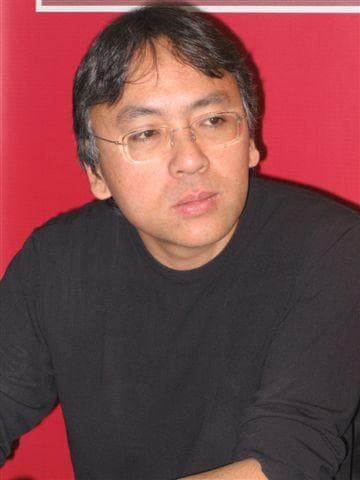
Sir Kazuo Ishiguro is a Japanese-born British novelist, screenwriter, musician, and short-story writer. He is one of the most critically acclaimed and praised contemporary fiction authors writing in English, having been awarded the 2017 Nobel Prize in Literature. In its citation, the Swedish Academy described Ishiguro as a writer "who, in novels of great emotional force, has uncovered the abyss beneath our illusory sense of connection with the world".







