“It's never wrong to want to know things. It's only wrong to use that knowledge to hurt people.”
— Tegan's philosophy about information and its ethical use.

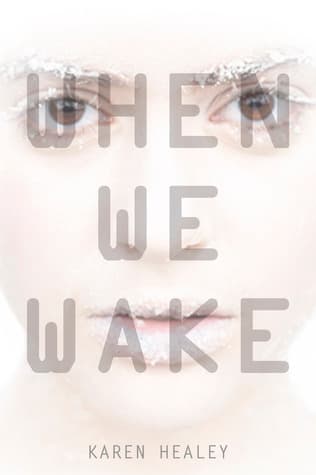
Karen Healey (2013)
Genre
Fantasy / Mystery / Science Fiction / Young Adult / Romance
Reading Time
6-8 hours
Key Themes
See below
Sign in to track this book
A guitar-playing teen activist from 2027 awakens a century later in a dystopian future, forcing her to choose between personal survival and reigniting the fight for justice she died defending.
Tegan Oglietti, sixteen in 2027 Sydney, lives a life full of music, friends, and new romance with her boyfriend, Seth. She is an activist, often protesting environmental damage and social problems. On what begins as a celebratory day—a climate change protest and a planned evening with Seth—Tegan is riding a hoverboard when a vehicle hits her. The impact kills her. Her last thought is of Seth. Her sudden death ends her life in the early 21st century and sets the stage for her awakening.
Tegan awakens a century later in 2127, in a sterile government facility. She is disoriented and remembers nothing of how she got there or what happened after her death. She learns she is part of Project Lazarus, a secret government program that has successfully revived people from the past using cryogenics. Dr. Marie Aris, the project leader, explains the process and how the world has changed. Tegan struggles to understand this new reality, the loss of her old life, and that everyone she knew is long dead. She feels like a ghost in a future she does not recognize.
As Tegan adjusts, she meets other 'reanimates' at the facility, including the quiet Abdi and the cynical Serena. They are all undergoing psychological and physical evaluations. Tegan learns about the changed world: a heavily regulated society, advanced technology, and widespread government control. She struggles with language differences, lack of privacy, and the contrast between her past and the sterile present. Despite these problems, she finds a bit of hope and connection with her fellow reanimates.
Dr. Aris eventually allows Tegan and the other reanimates a supervised outing into the outside world. Tegan is overwhelmed by the modern city, constant surveillance, and rigid social order. She notices clear class divisions and environmental recovery, which came at the cost of individual freedom. During this outing, Tegan sees a small act of rebellion, sparking her old activist instincts. She starts to question Dr. Aris's official story and wonders about the true nature of this future society, feeling increasingly uneasy.
Tegan and Abdi grow closer and begin to investigate Project Lazarus more. They use Abdi's technical skills and Tegan's intuition to access restricted files. They uncover disturbing truths: not all reanimates died naturally; some were chosen for their genetic profiles or usefulness, and their bodies were preserved without consent. They also find evidence that some reanimates are not adapting well and are being 'retired'—a word for euthanasia. This discovery confirms Tegan's distrust of Dr. Aris and the government, restarting her rebellious spirit.
As Tegan and Abdi investigate, they confide in Serena, believing her to be an ally. However, Serena reports their unauthorized investigations to Dr. Aris. This leads to increased surveillance and restrictions for Tegan and Abdi. Tegan is crushed by the betrayal, which shows the widespread control and fear within the facility. This event makes Tegan realize the high risks of their rebellion and how hard it is to find real allies in a world where everyone seems to be watching everyone else.
Driven by the desire for freedom and to expose Project Lazarus, Tegan and Abdi carefully plan their escape. They use weaknesses in the facility's security, Abdi's hacking skills, and Tegan's courage. The escape is tense and dangerous, but they manage to get past guards and avoid detection. Their successful breakout is a major turning point, moving them from passive subjects to active rebels. They are now fugitives in a world they barely understand, but they are free.
Outside, Tegan and Abdi face the harsh realities of a controlled society. Government forces pursue them, but they find refuge with an underground resistance movement of people who also distrust the government. Among them, Tegan meets Liam, a young man who helps them navigate the complexities of the future. The resistance group gives them resources, information, and a sense of belonging, allowing Tegan to use her activist energy again. They learn more about the government's oppressive policies and the struggles of ordinary citizens.
Tegan, Abdi, and their new allies plan to expose Project Lazarus's unethical practices to the public. They gather evidence, including data Tegan and Abdi retrieved from the facility, detailing the forced reanimations, the 'retirements,' and government manipulation. They aim to broadcast this information widely, hoping to spark public outrage and challenge the government's authority. Tegan uses her musical talents to help create a message that will connect with people, drawing on her past as an activist.
The climax sees Tegan confronting Dr. Aris, challenging her ethical reasons for Project Lazarus. Dr. Aris defends her actions, believing she is working for the greater good, but Tegan sees only a violation of human rights. At the same time, the resistance carries out their plan to broadcast the evidence. The truth about Project Lazarus is revealed to the world, causing widespread unrest and protests. Tegan, having found her voice again, becomes a symbol of resistance, fighting for freedom and justice in this new world.
The broadcast causes great upheaval, forcing the government to address the public outcry. While the immediate outcome of the revolution is uncertain, Tegan's actions have started a movement. She chooses to stay in this future, committed to fighting for a better world with Abdi and Liam. She has found a new purpose, a new family, and a new love, embracing her role as a leader in the fight for human rights. Tegan knows the fight is far from over, but she is ready to face it.
The Protagonist
Tegan transforms from a lost and grieving reanimate into a determined leader of a resistance movement, finding new purpose and love in a future she initially resisted.
The Supporting
Abdi evolves from a quiet, analytical observer to an active participant in the resistance, driven by his moral conviction and his bond with Tegan.
The Antagonist
Dr. Aris remains steadfast in her convictions, seeing herself as a benevolent figure despite her unethical actions, ultimately becoming the primary antagonist to Tegan's quest for freedom.
The Supporting
Serena's initial camaraderie with Tegan gives way to fear-driven betrayal, solidifying her role as an obstacle rather than an ally.
The Mentioned
Seth remains a static figure from Tegan's past, symbolizing her lost life and the emotional cost of her reanimation.
The Supporting
Liam helps Tegan and Abdi integrate into the resistance, becoming a crucial ally in their fight.
Tegan struggles deeply with her sense of self after being revived a century into the future. She is no longer the girl from 2027, but she does not fully belong in 2127 either. Her identity is broken by the loss of her past and the unfamiliarity of her present. This theme is explored as she deals with grief for her lost friends and family, her initial alienation from the future, and her eventual creation of a new identity and purpose within the resistance movement, finding belonging with Abdi and Liam. The question of 'who am I now?' is central to her journey.
“What do you do when everyone you know is dead, and everyone you meet is a stranger, and the world is not your world anymore?”
The novel examines the moral limits of scientific progress through Project Lazarus. Dr. Aris's revival of the dead, while a scientific achievement, raises serious ethical questions about consent, the right to die, and treating human life as a commodity. The project's 'retirement' policy for reanimates who do not adapt highlights the dangers of prioritizing scientific goals over individual human rights. This theme asks readers to consider when scientific ambition becomes unethical, and whether the 'greater good' justifies sacrificing individual freedom and dignity.
“We brought them back to save humanity, not to suffer.”
Tegan's identity as an activist from 2027 is rekindled in the oppressive future of 2127. Initially, she accepts her new reality, but the injustices she uncovers within Project Lazarus and the wider society ignite her rebellious spirit. The novel explores various forms of resistance, from Tegan's individual defiance and investigation with Abdi to the organized underground movement she joins. This theme emphasizes the importance of fighting injustice, speaking truth to power, and the human spirit's ability to rebel even against overwhelming odds.
“I died for a better world once. Maybe I can live for one now.”
The future world of 2127 features widespread government surveillance and control, shown through ubiquitous cameras, regulated social interactions, and strict information. Project Lazarus itself is a small example of this control, with reanimates constantly monitored and their lives dictated by the facility. This theme explores the loss of privacy and individual freedom in a society that prioritizes order and stability above all else. It highlights the psychological impact of constant observation and how far a government will go to maintain power, making the fight for freedom even more urgent.
“Every move you make, every word you speak, is recorded. For your safety, of course.”
Tegan experiences profound loss, leaving behind her first love, Seth, and her entire family and social circle. Her grief over this loss is a strong current throughout the story, shaping her initial reluctance to accept the future. However, the novel also explores new love and connection in unexpected circumstances. Her growing relationship with Abdi represents a new beginning and the possibility of finding happiness and intimacy even after immense loss. This theme shows the resilience of the human heart and its ability to form new bonds.
“Sometimes, the only way to move forward is to find something new to hold onto.”
The central scientific premise allowing Tegan to awaken in the future.
This device is the core of the novel's science fiction premise. Project Lazarus is a government-funded initiative that uses advanced cryogenic technology to reanimate individuals who died in the past. It serves as the catalyst for the entire plot, transporting Tegan from 2027 to 2127. Beyond its initial function, the ethical implications of this technology – the lack of consent, the criteria for reanimation, and the 'retirement' policy – drive much of the conflict and thematic exploration, making it a critical plot device for both world-building and moral dilemmas.
The government's control over historical and current information.
The future society in 2127 maintains tight control over information, particularly regarding history and the true nature of Project Lazarus. This 'information blackout' creates suspense and mystery, as Tegan and the other reanimates initially struggle to understand their circumstances and the wider world. It also serves as a key obstacle, forcing Tegan and Abdi to actively seek out hidden truths. The act of exposing this hidden information becomes the primary goal of the resistance, making the control and dissemination of knowledge a central conflict.
An underground group fighting against government control.
The existence of an underground resistance movement provides Tegan with allies, resources, and a framework for her activism in 2127. After her escape, the resistance becomes her new family and a vehicle for her to fight against the oppressive government and expose Project Lazarus. This device not only offers practical support for the protagonists but also reinforces the theme of rebellion against injustice, demonstrating that even in a highly controlled society, there are always those willing to fight for freedom. It gives Tegan's struggle a collective purpose.
Her ability to play guitar and compose music.
Tegan's musical talent, particularly her ability to play guitar and compose, serves as a powerful link to her past identity and a tool for expression in her new life. Initially, it's a source of comfort and nostalgia. Later, it becomes a method of communication and protest. Her music can convey emotions and messages that words alone cannot, making it a potent instrument for connecting with others and inspiring resistance. It highlights her individuality and her unique contribution to the fight for freedom.
“It's never wrong to want to know things. It's only wrong to use that knowledge to hurt people.”
— Tegan's philosophy about information and its ethical use.
“The past isn't dead. It's not even past. It's just a different kind of present.”
— Tegan reflects on the enduring impact of history and how it shapes the present.
“Sometimes you have to break a few rules to do the right thing.”
— Tegan justifying her actions when faced with difficult choices.
“Fear makes people do stupid things, but it also makes them do brave things.”
— Observation about human behavior under pressure.
“The truth is a weapon, and like all weapons, it can be used for good or ill.”
— Tegan considering the power and danger of uncovering secrets.
“Every choice you make changes the world, even if it's just your own little corner of it.”
— Reflection on the ripple effect of individual decisions.
“It's hard to fight for freedom when you don't even know what it looks like anymore.”
— Tegan struggling with the concept of freedom in her new reality.
“Memory isn't a perfect record. It's a story we tell ourselves.”
— Tegan questioning the reliability of her own memories and perceptions.
“Sometimes the most dangerous thing you can do is nothing at all.”
— Tegan's realization about the importance of action in the face of injustice.
“You can't erase the past, but you can choose how you live with it.”
— Tegan accepting the unchangeable aspects of her past while focusing on the future.
“Love isn't always easy, but it's always worth fighting for.”
— Tegan's thoughts on the complexities and value of relationships.
“The world isn't black and white. It's shades of grey, and sometimes, those shades are very dark indeed.”
— Tegan's growing understanding of moral ambiguity.
“Being strong isn't about not being afraid. It's about doing what you have to do even when you are.”
— Tegan's evolving definition of strength and courage.
“They say ignorance is bliss, but sometimes, ignorance is just another word for complicity.”
— Tegan reflecting on the dangers of willful ignorance.
Ready to see how well you understood this book? Take our interactive quiz with 10 questions.







