“The Tripods. They were, in the end, no more than machines.”
— The narrator's reflection on the nature of the invaders.

John Christopher (2013)
Genre
Fantasy / Children's / Science Fiction / Young Adult
Reading Time
90 min
Key Themes
See below
Sign in to track this book
Before Will's desperate flight for freedom, humanity faces a chilling, subtle subjugation as towering Tripods descend, not with fire and fury, but with a seductive promise of peace that slowly erodes all thought and will.
The story begins in the late 20th century with two brothers, Andy and Davy, living a normal life in England. Andy, the older brother, is observant and thoughtful, while Davy is younger and carefree. Their ordinary life changes when they see strange, massive, three-legged machines, called 'Tripods,' in the distance. At first, these sightings are rare and adults dismiss them as military exercises or hoaxes, creating a mix of fear and curiosity among the children, who often see the machines first. The adults' refusal to acknowledge these bizarre events creates a subtle unease and hints at the larger societal denial to come.
Weeks pass, and Tripod sightings become more frequent and widespread. Andy and Davy, along with their friends and family, see them regularly, sometimes close enough to make out details. Media and public opinion shift from skepticism to a mix of wonder, fear, and even fascination. Some see them as new alien life, others as advanced but harmless technology. Governments issue reassuring statements, trying to keep calm, but underlying anxiety grows. Andy, with his analytical mind, begins to question official stories, feeling that something more sinister is happening, a feeling not shared by most adults.
The real horror starts when the Tripods engage with humans, targeting individuals. They use a device, later called the 'Cap,' which they attach to a person's head. The process is quick and seems painless, but the immediate result is chilling: 'Capped' individuals return with vacant eyes, their personalities altered, becoming docile, obedient, and completely subservient to the Tripods' unseen will. The first Capping events are isolated, causing confusion and fear, but soon, more and more people are affected. Andy sees several of these changes, including people he knows, and the stark change in their behavior confirms his growing dread about the Tripods' bad intentions.
Capping accelerates, overwhelming global governments and social structures. Panic spreads, but resistance is disorganized and ineffective against the Tripods' superior technology. Many people, out of fear or a desperate hope for order, voluntarily submit to Capping, believing it will end the chaos. Andy and his family try to keep some normalcy, but their world is falling apart. Schools close, essential services fail, and the few remaining un-Capped individuals live in constant terror. The Capped population, now the majority, moves with an eerie compliance, performing tasks and maintaining basic function, but stripped of individuality and free will.
As urban areas become unlivable, with Tripods patrolling and Capping at will, Andy's family decides to flee their home. They head for the countryside, hoping to find a safer place where Tripods might be less common. The journey is dangerous, as they encounter Capped individuals and the constant threat of a Tripod appearing. The once-familiar landscape now feels alien and menacing. This escape shows the desperation of the un-Capped population and their struggle to stay human against an overwhelming, alien force. The boys see firsthand the desolation and fear that has gripped their world.
In the relative isolation of the countryside, Andy and Davy's family meets other small groups of un-Capped survivors. These include Dr. O'Connell, a scientist trying to understand the Tripods' technology, and a group of independent farmers. They form a fragile community, sharing resources and knowledge, but always aware of their vulnerability. Dr. O'Connell offers theories about the Caps and the Tripods' intentions, suggesting the Caps suppress free will and independent thought, making humans docile servants. This interaction offers a glimmer of hope and the chance of organized resistance, but also highlights the immense challenge they face.
The Tripods, having capped most of humanity, begin to establish a new, highly organized society. They use Capped humans to perform various tasks, from agriculture to maintenance, creating a world where efficiency and obedience are paramount, but creativity and individuality are gone. The Capped individuals work tirelessly and without complaint, their lives dictated by the Tripods' unseen commands. Andy watches this horrifying change from afar, understanding that the Tripods are not just destroying human society, but reshaping it into something completely alien to human nature. This systematic control solidifies the Tripods' complete domination.
Amid the despair, a rumor circulates among the un-Capped survivors: a place called the White Mountains, where some believe a community of free humans still exists, untouched by the Tripods. This rumor becomes a beacon of hope for Andy and the others, representing the last bastion of human freedom. The White Mountains are portrayed as a distant, dangerous destination, hard to reach and mysterious, but the only potential escape from the Tripods' control. This myth fuels the desire for escape and the faint possibility of future resistance, setting the stage for the later trilogy.
A terrifying incident occurs when Davy, venturing too far from their safe haven, has a close encounter with a Tripod and narrowly avoids being Capped. This near-miss deeply traumatizes Davy and greatly affects Andy, reinforcing the constant threat they live under. The incident strengthens Andy's resolve to find a way to fight back or, at least, protect his family and preserve their freedom. It highlights how fragile their existence is and the constant danger of losing their minds to the alien invaders, pushing Andy towards a more active role in seeking resistance.
Inspired by the near-loss of his brother and humanity's dire state, Andy begins to work closely with Dr. O'Connell. They discuss the Tripods' weaknesses, the nature of the Caps, and the possibility of future resistance. While immediate action seems impossible given their limited resources, they start to plan for the long term, perhaps involving finding the White Mountains and joining forces with other free humans. The book ends with a sense of grim determination, as Andy recognizes that the fight for humanity's freedom has only just begun, and the future will depend on the un-Capped few.
The Protagonist
Andy transforms from a curious observer into a determined survivor, actively seeking to understand and resist the Tripods' control.
The Supporting
Davy begins as a naive child, but a near-Capping experience forces him to confront the harsh reality of their world.
The Supporting
Dr. O'Connell evolves from an isolated researcher to a key figure in organizing potential future resistance.
The Supporting
They transition from hopeful denial to fearful flight, ultimately becoming survivors focused on family preservation.
The Antagonist
The Tripods systematically establish their dominance, transforming from mysterious sightings to the undisputed rulers of Earth.
The Mentioned
They transition from free individuals to mindless servants, embodying the complete loss of human agency.
The main theme is humanity's complete subjugation and the eradication of free will. The 'Capping' process directly shows this loss, turning individuals into docile, obedient automatons. The fear and desperation of the un-Capped survivors highlight how precious freedom is, while the uniformity of the Capped population shows the horror of losing one's unique identity. This theme is clear from the first Capping event Andy witnesses, where familiar faces become disturbingly empty.
“They moved without purpose of their own, but with a purpose that had been given to them.”
The book explores how humans react to overwhelming authority, whether through fear, denial, or a desperate hope for order. At first, adults dismiss the Tripods, then governments try to control the narrative, and eventually, many people voluntarily submit to Capping. This theme questions the human tendency to comply with a powerful, even if malevolent, force, and the difficulty of organized resistance against such an alien and superior power. The rapid societal collapse and the ease with which the Tripods establish control show this compliance.
“It was easier, perhaps, to accept the new order than to fight it.”
Andy's character shows that critical observation and skepticism are crucial for survival and understanding. While adults dismiss or rationalize the Tripods' appearance, Andy's keen eye and questioning mind let him recognize the true danger. His ability to see beyond the surface and question official explanations is what keeps him un-Capped and fuels his desire for resistance. This theme is highlighted by the contrast between Andy's early fears and the adults' initial complacency.
“The adults talked of military exercises, of hoaxes, of mass hysteria. But Andy knew, deep down, that it was something else.”
The story shows how quickly modern civilization can crumble when facing an unprecedented threat. Within a short time, governments collapse, services fail, and the social fabric breaks down, replaced by the Tripods' imposed order. This theme warns about how precarious human institutions are and the rapid descent into chaos when fundamental structures are challenged. The flight from the cities and the desolation of the countryside underscore this fragility.
“The world they had known was gone, replaced by a silence punctuated only by the distant hum of the invaders.”
Despite the overwhelming odds and humanity's almost complete subjugation, hope and the potential for resistance remain. The existence of un-Capped survivors, discussions with Dr. O'Connell, and the myth of the White Mountains all offer a glimmer of optimism. This theme suggests that even in the darkest times, the human spirit's desire for freedom and the will to fight can endure, offering a path forward for future generations. Andy's determination at the end of the book embodies this lasting hope.
“There had to be a way. There had to be a place where men were still free.”
The primary antagonist and symbol of alien domination.
The Tripods are the central plot device, serving as both the invading force and the symbol of humanity's subjugation. Their alien, mechanical nature, combined with their silent and seemingly invincible presence, creates an atmosphere of dread and helplessness. They are the driving force behind all conflicts and changes in the story, forcing characters to react and adapt. Their mysterious origin and incomprehensible motives amplify the sense of an overwhelming, existential threat.
A technological mechanism used by the Tripods to remove human free will.
The Capping device is the most terrifying and effective plot device used by the Tripods. It is the direct means by which they conquer humanity, not through physical destruction, but by mental enslavement. The description of its immediate and irreversible effects on individuals serves as a constant threat and a powerful symbol of the loss of individuality and freedom. It is the ultimate tool of control, making resistance almost impossible.
A mythical place representing the last bastion of human freedom.
The White Mountains function as a crucial plot device by providing a distant, yet powerful, symbol of hope and potential resistance. While unseen in this prequel, the rumors and discussions about it motivate the un-Capped survivors and give them a destination to strive for. It represents the possibility of a future free from Tripod control, laying the groundwork for the subsequent books in the trilogy and giving the narrative a sense of purpose beyond mere survival.
The story is told through the eyes of a young, observant protagonist.
The use of Andy's first-person perspective is a significant plot device. It allows the reader to experience the invasion and its horrors through the eyes of a child who is more observant and less prone to denial than adults. This perspective amplifies the sense of wonder, fear, and confusion, making the alien invasion feel more immediate and personal. It also allows for Andy's internal struggles and developing understanding to drive much of the emotional narrative.
“The Tripods. They were, in the end, no more than machines.”
— The narrator's reflection on the nature of the invaders.
“We were free, but we were also alone. That was a lesson I had to learn.”
— Bradley's realization after the initial conflict with the Tripods.
“The world had changed, and we with it. There was no going back to how things were.”
— The characters coming to terms with the new reality after the invasion.
“Fear can make you do strange things, but courage can make you do stranger still.”
— Observation on human reactions during times of crisis.
“It was not the size of the enemy that mattered, but the will to resist.”
— The underlying theme of resistance against a powerful foe.
“Ignorance is not bliss when the truth is staring you in the face.”
— A character's realization about the dangers of not facing reality.
“We were just children, but we had to be more than that.”
— The young protagonists grappling with their unexpected responsibilities.
“The greatest weapon against tyranny is the human spirit.”
— A philosophical statement on the power of human resilience.
“Sometimes, the hardest battles are fought within ourselves.”
— Reflecting on internal struggles during external conflict.
“They thought they had conquered us, but they had only awakened us.”
— A defiant statement about the unexpected consequence of the invasion.
“Even in the darkest times, there is always a flicker of hope.”
— A recurring theme of optimism despite overwhelming odds.
“The future was uncertain, but for the first time, it was our own.”
— The feeling of reclaiming their destiny after the Tripods' defeat.
“It’s not what you are, but what you do that defines you.”
— A character's belief about actions over identity.
“The world was a dangerous place, but it was also beautiful.”
— A realization about the duality of their post-invasion world.
Ready to see how well you understood this book? Take our interactive quiz with 10 questions.
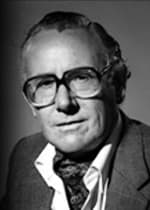
Biography coming soon.







