“When the Japanese came, it was like a plague of locusts descending on our peaceful valley.”
— Describing the initial invasion and its impact on the protagonist's home.

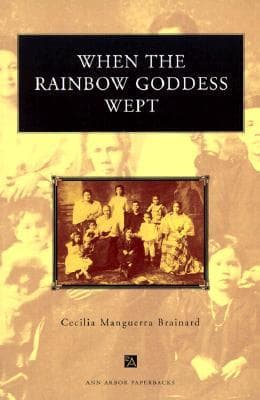
Cecilia Manguerra Brainard (1994)
Genre
Historical Fiction
Reading Time
232 min
Key Themes
See below
Sign in to track this book
During the brutal Japanese occupation of the Philippines, a young girl named Yvonne flees into the jungle, finding comfort and strength in ancient myths of warrior women and rainbow goddesses as she sees terrible suffering and works to preserve her people's stories.
In December 1941, the peaceful life of nine-year-old Yvonne Macaraig in Ubec ends with the bombing of Pearl Harbor and the Japanese invasion of the Philippines. Her father, Captain Ricardo Macaraig, a Filipino army officer, decides to move his family — Yvonne, her mother, and her younger brother, Nestor — from their comfortable home to the mountains of Mindanao. They join other families seeking safety and begin life on the run, always aware of the enemy. Yvonne, an imaginative child, starts to understand the chaos through her grandmother's stories and legends. She begins to want to record her own experiences.
The Macaraig family settles into a guerrilla camp deep in the jungle. Captain Macaraig leads the resistance, while Yvonne's mother, once a city woman, adapts to the hard conditions, caring for the wounded and managing scarce supplies. Yvonne, though young, sees the daily struggles, fear, and strength of the people around her. She watches ordinary civilians become soldiers and nurses, all united by a common goal. This time is her first direct experience with the harsh realities of war, including hunger, sickness, and the constant threat of enemy patrols.
As the war continues, the guerrilla group faces more danger. Yvonne sees the Japanese soldiers' brutality, including their torture and execution of suspected collaborators and resistance fighters. She is deeply affected by the death of her Uncle Tony, who is captured and killed by the Japanese. These traumatic events make Yvonne face how fragile life is and how much suffering war causes. She finds comfort in the stories of the Woman Warrior, Bongkatolan, and the merciful Rainbow Goddess, using these myths to understand the tragedy and her people's fight to survive.
Despite the constant danger, Yvonne's desire to write about her experiences grows. She starts a secret journal, writing down not only what she sees but also the ancient legends and myths that speak to her. She sees similarities between Bongkatolan's struggles and the current fight against the Japanese. Her storytelling becomes a form of resistance, a way to preserve her people's spirit and culture amid destruction. This act of writing gives her purpose and helps her process the overwhelming reality of war.
Because of more Japanese pressure and the need for strategic moves, Yvonne's family must separate at times. She is sometimes apart from her father, and sometimes her mother, relying on other resistance members for care. During these separations, Yvonne learns to be more self-reliant and strong. She continues to see her people's suffering — hunger, diseases, constant fear — but also their courage and kindness. These experiences deepen her understanding of humanity's capacity for both cruelty and compassion.
As the war goes on, the resistance movement contacts American soldiers who were left behind or infiltrated the islands. These allies bring new hope and supplies to the Filipino guerrillas. Yvonne watches the American and Filipino soldiers interact, noting cultural differences and their shared goal. The presence of American forces signals a possible turning point in the war, but it also brings new problems for the resistance as they coordinate efforts and navigate different strategies against the Japanese.
As the war turns against them, the Japanese forces become even more brutal toward the Filipino population. Yvonne sees massacres, bombings, and the deliberate destruction of villages. Civilian suffering reaches a terrible peak. She sees innocent people caught in the crossfire, their lives changed or ended. These intensified horrors strengthen her resolve to witness and record the truth, understanding that these stories must be remembered to honor the victims and prevent such atrocities from being forgotten.
Finally, after years of struggle and suffering, the Japanese forces surrender. The news brings relief and cautious celebration to the surviving Filipinos. Yvonne and her family, having endured the entire war in the mountains, begin the long journey back to their destroyed hometown of Ubec. The land is scarred, homes are ruined, and communities are broken. Liberation is not an immediate return to normal life but the start of a new, challenging phase of rebuilding and healing, both physically and emotionally.
Returning to Ubec, Yvonne finds her city in ruins. Her childhood home is damaged, and many familiar places are gone. The once lively community now has survivors with visible and invisible wounds. She sees the war's effects everywhere — in the rubble, in people's haunted eyes, and in the silence where laughter once was. This time involves trying to regain a normal life amid widespread destruction. Yvonne continues to process her experiences through her writing, trying to understand the trauma.
Years later, Yvonne, now an adult, thinks about her war experiences. She understands the impact it had on her and her generation, shaping their identities and how they see the world. Her childhood journal has become a record of her people's suffering, strength, and the Philippines' enduring spirit. She recognizes how important it is to preserve these stories, both historical facts and mythical interpretations, to ensure sacrifices are remembered and lessons learned. Her narrative, with the legends of Bongkatolan and the Rainbow Goddess, connects past and present, trauma and healing.
The Protagonist
From an innocent child seeking solace in stories, Yvonne evolves into a mature chronicler of her people's suffering and resilience, becoming the voice of her generation's wartime experience.
The Supporting
He transforms from a dedicated military officer into a resourceful guerrilla leader, enduring immense hardship while striving to protect his family and lead his people to freedom.
The Supporting
She evolves from a sheltered city woman into a strong, resilient, and resourceful caregiver, embodying the adaptability of Filipino women during wartime.
The Supporting
He grows up amidst the chaos of war, his childhood shaped by the harsh realities but ultimately surviving to represent the future.
The Supporting
His brief but impactful presence culminates in his tragic death, serving as a stark reminder of the war's personal toll.
The Mentioned
She serves as a foundational influence on Yvonne's worldview and coping mechanisms, even in her absence.
The Mentioned
As a mythical figure, her 'arc' is static, but her legend empowers Yvonne and the resistance throughout the narrative.
The Mentioned
As a mythical figure, her 'arc' is static, but her symbolic presence offers hope and mercy amidst the devastation of war.
The novel clearly shows the Japanese occupation's terrible impact on the Filipino people, especially through Yvonne's young eyes. It details lost innocence, violence, hunger, disease, and constant fear. However, it also shows the Filipinos' great strength — their courage in resistance, their compassion, and their spirit to survive and rebuild. Yvonne's family's adaptability and the guerrillas' determination show this theme, proving how humanity endures even during great suffering.
“We were not just people, we were a nation, and we would fight for our land, our dignity, our right to be.”
Storytelling is key to the novel. It is both a way to cope and a form of resistance. Yvonne uses her journal to record her experiences and ancient myths, creating a personal and collective history. The legends of Bongkatolan and the Rainbow Goddess give a cultural way to understand the conflict and offer hope. This theme shows the importance of preserving cultural heritage and personal stories so the past is not forgotten, and future generations can learn from their ancestors' struggles and triumphs.
“I had to write it all down, the good and the bad, the beautiful and the ugly, because if I didn't, who would remember?”
The novel is a coming-of-age story set during wartime. Yvonne starts as an innocent nine-year-old, but the horrors she sees make her grow up quickly. She deals with death, violence, and human nature's complexities, losing her childhood innocence. Her journey reflects the universal experience of growing up during a crisis, where childhood and adulthood blur, and young people face the world's harsh realities early.
“The war took away my childhood, but it gave me a voice.”
The book deeply explores Filipino cultural identity, especially by including indigenous myths and legends in Yvonne's story. These stories are not just distractions; they are vital parts of the Filipino spirit, providing historical context, moral guidance, and strength. The fight against the Japanese is not only a physical battle but also a fight to preserve a unique cultural heritage. Yvonne's role in documenting these stories highlights their importance in keeping a sense of self and community during foreign aggression.
“Our stories were our soul, our history, our very breath. They kept us alive when everything else tried to kill us.”
Through Yvonne's observations, the novel looks at extreme human behavior during wartime. It shows the cruelty of the Japanese invaders and the suffering they cause. However, it also shows great kindness, self-sacrifice, and courage among the Filipino people and their allies. Yvonne tries to understand how such evil can exist alongside such goodness. She finds comfort in the strength and compassion that appear even in the darkest times, suggesting that hope can last.
“I saw so much evil, but I also saw so much goodness, so much courage, that it made me believe in humanity, even when it was at its worst.”
Provides a unique, immediate, and emotionally resonant perspective on war.
The story is told entirely from the perspective of Yvonne, starting at age nine. This narrative choice allows for a raw, unfiltered, and deeply personal account of the war. Her limited understanding as a child contrasts with the horrific events she witnesses, making the atrocities even more poignant and emphasizing the loss of innocence. It also lends credibility to her observations and emotional responses, allowing the reader to experience the war's impact through a vulnerable yet increasingly perceptive lens. Her child's voice also makes the mythical elements feel more natural and integrated.
Ancient legends provide a framework for understanding and coping with modern conflict.
Throughout the narrative, Yvonne interweaves the ancient Filipino myths and legends she learned from her grandmother, particularly those of Bongkatolan, the Woman Warrior, and the Rainbow Goddess. These myths serve multiple functions: they provide a cultural anchor, a psychological coping mechanism for Yvonne, and a symbolic parallel to the real-world struggles of the Filipino people. They elevate the personal story to an epic scale, suggesting that the current conflict is part of a longer, heroic narrative of resilience and survival, imbuing the suffering with deeper meaning and hope.
Yvonne's act of writing creates a meta-narrative about bearing witness and preserving history.
The novel is presented as Yvonne's personal account, a journal or memoir she keeps throughout and after the war. This device emphasizes the act of bearing witness and the importance of historical documentation. It allows for a reflective tone, as Yvonne processes events through writing, and underscores the theme of memory and the responsibility to remember. The 'creation' of the book within the book highlights storytelling itself as a powerful tool for survival, healing, and cultural preservation, giving voice to the voiceless.
Represents hope, mercy, and the promise of healing after devastation.
The Rainbow Goddess, mentioned in the title, is a potent symbol throughout the book. In Filipino mythology, she often signifies mercy, peace, and the return of color and life after sorrow or destruction. For Yvonne, the Goddess represents the enduring hope for an end to suffering and the belief in eventual healing and restoration. Her presence, even as a mythical figure, offers a spiritual counterpoint to the brutal realities of war, suggesting that beauty and solace can eventually emerge from pain, and that life, like a rainbow, will return after the storm.
“When the Japanese came, it was like a plague of locusts descending on our peaceful valley.”
— Describing the initial invasion and its impact on the protagonist's home.
“The war took everything, but it could not take our stories. We kept them alive, like embers in the dark.”
— Reflecting on the resilience of cultural memory amidst wartime devastation.
“A child of war grows up too fast, seeing too much, understanding too little.”
— Yvonne's perspective on the loss of innocence during wartime.
“Our gods wept with us, their tears falling as the rain that cleansed and nourished, but also washed away the blood.”
— Connecting the natural world and spiritual beliefs to the suffering and hope during the war.
“To forget is to die twice. To remember is to live, even in the shadow of sorrow.”
— Emphasizing the importance of memory and history for survival and identity.
“Love, like a seed, can grow even in the most barren soil, watered by tears and hope.”
— Highlighting the enduring power of love and human connection during difficult times.
“The whispers of the past are never truly silent; they echo in the present, shaping who we are.”
— Exploring the lasting impact of historical events on individuals and communities.
“Sometimes, the greatest bravery is simply to endure, to keep breathing when all else crumbles.”
— A reflection on the quiet strength and perseverance of ordinary people during war.
“The forest was our sanctuary, our hiding place, a living, breathing witness to our pain and our survival.”
— Describing the role of nature as a refuge and silent observer during the conflict.
“We learned to find beauty in small things – a ripe mango, a clear sky, the laughter of a friend – because the big things were too terrible to bear.”
— Illustrating how people found solace and joy in everyday moments amidst widespread suffering.
“Even in the darkest night, the stars still shine. You just have to look up.”
— A metaphorical message of hope and perseverance, even in the bleakest circumstances.
“The stories of our ancestors are not just tales; they are maps to navigate the storms of life.”
— Emphasizing the wisdom and guidance found in ancestral narratives and traditions.
“War is a hungry beast; it devours the innocent and leaves behind only ghosts and ashes.”
— A stark commentary on the devastating and indiscriminate nature of war.
“Our tears were not just of sorrow, but also of defiance, a refusal to let our spirits be broken.”
— Highlighting the emotional complexity of grief mixed with a strong will to resist and survive.
Ready to see how well you understood this book? Take our interactive quiz with 10 questions.
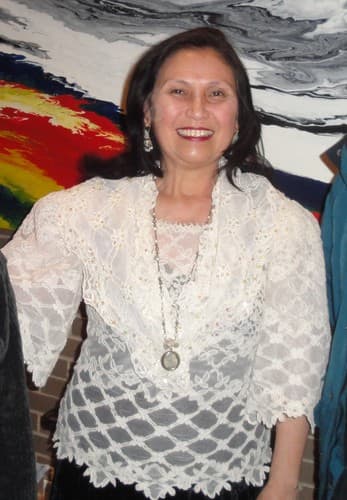
Cecilia Manguerra Brainard is a Filipino-American author celebrated for her vivid portrayals of Filipino culture and history. Her acclaimed novel, "When the Rainbow Goddess Wept," is a poignant coming-of-age story set during World War II. Brainard's work often explores themes of identity, resilience, and the female experience in the Philippines.







