“Miel was made of sunshine, and sometimes, when the light hit her just right, you could see the stars trapped in her skin.”
— Describing Miel's unique physical appearance and magical quality.

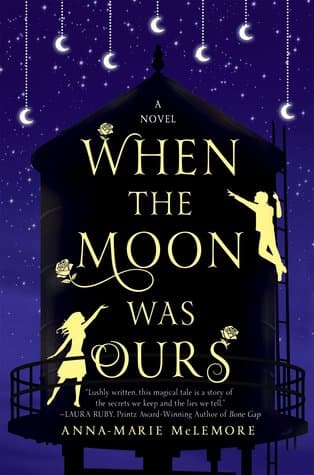
Anna-Marie McLemore (2016)
Genre
Fantasy / Young Adult / Romance
Reading Time
273 min
Key Themes
See below
Sign in to track this book
In a town where roses bloom from a girl's wrists and painted moons hang in trees, two best friends with magical secrets must protect their pasts from four sisters who crave the enchanted blossoms for a love spell.
Miel and Sam have been best friends since childhood in their small, unnamed town. Miel is known for the roses that grow from her left wrist, which she tends to and sometimes gifts to Sam. Rumors circulate about her origin, with many believing she emerged from the town's water tower at age five. Sam, an artistic and quiet boy, paints moons that he hangs in the trees, creating a personal, luminous forest. He lives with his mother, who is often absent, and the details of his past before arriving in town are a mystery. Their unusual traits and close bond set them apart from other teenagers, but they find comfort and understanding in each other's company.
The Bonner girls—Erzebet, Lenore, Rosamund, and the youngest, Agnes—are four beautiful, enigmatic sisters from a wealthy family, widely rumored to be witches. They are known for their captivating presence and their ability to charm, or perhaps curse, anyone they choose. The Bonner girls become fixated on the roses growing from Miel's wrist, believing that the flowers possess a powerful magic: their scent, they are convinced, can make anyone fall in love with the person who holds them. Their desire for Miel's roses grows into an obsession, foreshadowing a direct confrontation with Miel and Sam.
As the Bonner girls increase their efforts to get Miel's roses, they begin to uncover and use the secrets surrounding Miel's past. They reveal details about her mysterious emergence from the water tower, hinting at a connection to magic and a life before her current existence. These revelations deeply unsettle Miel, who has always known her origins were unusual but has suppressed the full truth. The Bonner girls use this leverage to manipulate Miel, threatening to expose her secrets to the entire town if she doesn't give them the roses. This puts immense pressure on Miel, forcing her to confront her identity and the magical nature of her being.
Sam has a deep secret: under the full moon, he transforms into a girl. This magical transformation is a personal and often painful experience for him, and he has kept it hidden from everyone, even Miel. His artistic obsession with painting moons and hanging them in the trees is a way for him to control and understand this part of himself, creating a safe, magical space. The moons he creates symbolize his dual identity and his longing for acceptance. This revelation explains much of Sam's reclusiveness and his deep connection to the celestial, while adding complexity to his relationship with Miel.
Miel's true origin is revealed: she is a water spirit, brought to life when a lonely boy wished upon a water tower for a companion. The roses on her wrist are a physical sign of this magical birth, growing from her very essence. This powerful act of creation explains her unique connection to nature and her mysterious appearance in the town. This truth, when fully understood, gives Miel a sense of identity and purpose, but also highlights her vulnerability to those who seek to use her magic. It solidifies her unique place in the magical fabric of the town and her deep, almost fated, connection to Sam.
The Bonner girls, having acquired Miel's roses through coercion, begin to prepare a powerful love spell. They intend to use the roses' supposed magical properties to ensnare the affections of their desired targets, particularly a group of boys they covet. Their ritual is elaborate, steeped in family lore and dark magic, reflecting their reputation as witches. They believe the roses will grant them irresistible charm, allowing them to control the objects of their desire. This scene emphasizes the Bonner girls' ambition and their willingness to use manipulative magic to achieve their goals, setting the stage for a dramatic confrontation with Miel and Sam.
Driven by his love for Miel and the increasing danger from the Bonner girls, Sam finally confesses his deepest secret: his transformation into a girl under the full moon. He reveals the vulnerability and fear he lives with, expecting rejection. However, Miel, whose own existence is founded on magic and difference, embraces Sam completely. She sees his transformations not as a flaw, but as another beautiful and intrinsic part of him. This moment solidifies their bond, deepening their love and mutual understanding, and empowers them both to face the challenges ahead. Miel's acceptance validates Sam's identity and strengthens their partnership.
Miel and Sam, now united and stronger in their understanding of each other's true selves, confront the Bonner girls at their lavish, secluded home. Their goal is to reclaim Miel's roses and prevent the Bonner sisters from completing their love spell, which they fear will have unforeseen and potentially harmful consequences. The confrontation is tense, filled with magical threats and emotional accusations. The Bonner girls, confident in their power, initially mock Miel and Sam, but the pair's unwavering resolve and their combined magical presence begin to challenge the sisters' dominance. This scene marks the climax of the conflict between the two magical factions.
During the confrontation, Miel and Sam discover that the Bonner girls' desire for the roses and their pursuit of love is rooted in their own insecurities and loneliness. Despite their outward beauty and magical prowess, the sisters long for genuine connection and fear being unloved. Their magic, it is revealed, is often a desperate attempt to control what they perceive as uncontrollable: affection and belonging. This revelation humanizes the antagonists, showing that their villainy stems from a relatable desire, though one they pursue through manipulative means. It shifts the narrative from pure good versus evil to a more nuanced understanding of their motivations.
The climax reveals the true nature of the roses growing from Miel's wrist. They are not a tool for forced love or magical manipulation, but rather a manifestation of genuine, selfless love and connection. Their scent doesn't compel affection but rather enhances existing feelings, creating a deeper, more authentic bond. Miel's roses symbolize the purity and power of true love, contrasting sharply with the Bonner girls' attempt to create artificial affection. This understanding allows Miel to use her magic not as a weapon, but as a source of healing and connection, ultimately disarming the Bonner girls' spell and their intentions.
Following the confrontation, a fragile truce is reached. Miel and Sam, now fully embracing their magical identities and their love for each other, offer a different path to the Bonner girls. They show that true love cannot be forced or stolen but must be given freely. This understanding begins to soften the Bonner sisters, particularly the youngest, Agnes, who shows signs of regret. While not an immediate friendship, there is a glimmer of mutual respect and the possibility of forgiveness, suggesting that the Bonner girls might eventually find genuine connection without resorting to manipulative magic. It marks a shift towards healing and acceptance within the magical community of the town.
With the threat of the Bonner girls diminished and their secrets fully revealed to each other, Miel and Sam fully embrace their magical identities. Miel accepts her origin as a water spirit and the roses as a part of her essence. Sam finds peace and strength in his moon-induced transformations, no longer viewing them as a curse but as a unique aspect of his being. Their love for each other deepens, now built on complete honesty and acceptance of their individual magical natures. They become stronger, more confident versions of themselves, ready to face the world as their authentic, magical selves, together.
In the aftermath of their trials, Miel and Sam look to a future where their intertwined magic can flourish. Miel's roses and Sam's moon transformations are no longer sources of fear or secrecy, but rather gifts they share and celebrate. They imagine a life where their unique abilities complement each other, creating a space of beauty and acceptance. Their love story shows the power of embracing one's true self, even when that self is magical and unconventional. The ending is hopeful, suggesting a continued journey of discovery and shared magic for the two protagonists, solidifying their bond and their place in the world.
The Protagonist
Miel transforms from a girl trying to hide her magical self to one who fully embraces her identity as a water spirit, understanding the true power of her roses and her love for Sam.
The Protagonist
Sam moves from hiding his true, gender-fluid self to openly embracing it with Miel's acceptance, finding strength and authenticity in his magical identity.
The Antagonist
Erzebet's rigid pursuit of magical control is challenged, leading to a grudging, though incomplete, recognition of true love's nature.
The Supporting/Antagonist
Lenore's loyalty to Erzebet is tested as the true nature of love and magic is revealed.
The Supporting/Antagonist
Rosamund's conviction in her sisters' magical methods slightly wavers as the true power of selfless love is demonstrated.
The Supporting/Antagonist
Agnes begins to doubt her sisters' manipulative magic, showing a nascent understanding of genuine connection and a potential for redemption.
The Supporting/Mentioned
Her character remains largely static, serving as a backdrop to Sam's journey of self-acceptance.
The novel explores identity, especially embracing one's true self, even if it is magical or unconventional. Miel's journey involves understanding and accepting her origin as a water spirit and the roses that manifest from her body. Sam grapples with his gender fluidity, hiding his transformations under the full moon. Both characters find peace and strength when they fully accept these intrinsic parts of themselves. This theme is central to their love story, as their acceptance of each other's unique identities solidifies their bond, exemplified when Miel embraces Sam's transformations without hesitation, allowing him to be his authentic self.
“You are the moon, and you are the sun. You are a boy, and you are a girl. You are everything, and you are mine.”
A core theme is the contrast between genuine, selfless love and manipulative, forced affection. The Bonner girls believe Miel's roses can compel love, using them in a ritual to ensnare their desired partners. Their actions highlight the emptiness and danger of attempting to control another's emotions. In contrast, Miel and Sam's love is organic, built on acceptance, understanding, and shared vulnerability. The roses themselves are ultimately revealed not as tools for compulsion, but as manifestations of authentic connection, reflecting the idea that true love cannot be manufactured or stolen, but must be given freely. This distinction is crucial to the story's resolution and the characters' growth.
“Love wasn't something you took. It was something you were given.”
Miel and Sam are outsiders in their town due to their magical traits and mysterious pasts. They find a sense of belonging only with each other, creating their own world of acceptance. The town's rumors and fear of the Bonner girls further emphasize the discomfort with 'otherness.' The novel suggests that true belonging isn't found by conforming, but by embracing one's unique identity and finding those who accept it. Sam's moon forest and Miel's roses are symbols of their created space of belonging, a sanctuary from a world that often misunderstands them. Their journey is about finding their place in the world, together, on their own terms.
“Maybe the secret to being a human was to make yourself into a story that someone else could tell.”
Magic in the novel is not just a plot device but an extension of the characters' inner selves and desires. Miel's roses are a physical manifestation of her origin and her capacity for pure love. Sam's moon transformations reflect his internal struggle with identity and his connection to celestial cycles. The Bonner girls' manipulative magic, though powerful, stems from their own insecurities and desperate longing for love and control. The story suggests that magic is deeply personal and reflects the wielder's true nature and intentions, making it a powerful metaphor for character and morality.
“Magic came from what you longed for, what you feared, what you were.”
Everyday settings imbued with fantastical elements.
The novel blends ordinary small-town life with extraordinary magical elements, such as roses growing from a girl's wrist, a boy who transforms under the moon, and a girl born from a water tower. These fantastical elements are presented matter-of-factly within the realistic setting, creating a sense of wonder and inviting the reader to accept the impossible as part of the characters' reality. This device allows for a deeper exploration of themes like identity and acceptance without requiring extensive world-building, grounding the magic in human experience and emotion.
The moon represents transformation, hidden selves, and cycles.
The moon is a pervasive symbol, deeply connected to Sam's character and his secret. His artistic practice of painting and hanging moons reflects his internal struggle and his connection to his transformations. The moon's cyclical nature parallels Sam's own, representing his dual identity and the ebb and flow of his being. It also symbolizes hidden aspects, mystery, and the power of celestial forces on individual lives. The moon provides a backdrop for his most vulnerable moments and signifies the magic that shapes his existence.
Roses represent love, vulnerability, and Miel's magical origin.
The roses growing from Miel's wrist are a central and multi-layered symbol. Initially, they represent her 'otherness' and vulnerability, attracting unwanted attention. As the story progresses, their true nature is revealed: they are not instruments of forced love but manifestations of genuine, selfless affection and Miel's unique, magical life force. They symbolize beauty, growth, and the delicate yet powerful nature of love. The roses become a metaphor for Miel's identity and her capacity for pure, unconditional love, contrasting with the Bonner girls' desire for manipulative magic.
A place of mysterious origin and magical birth.
The town's water tower serves as a symbolic birthplace for Miel, linking her to the element of water and the magical circumstances of her arrival. It represents the unknown, the source of life, and the idea of being 'born' outside conventional means. The rumors surrounding Miel's emergence from the water tower highlight the town's perception of her as an anomaly. It is a tangible landmark that grounds Miel's fantastical origin in the otherwise mundane setting, emphasizing the magical realism of the narrative.
“Miel was made of sunshine, and sometimes, when the light hit her just right, you could see the stars trapped in her skin.”
— Describing Miel's unique physical appearance and magical quality.
“Sometimes the people you thought were your enemies were just people who hadn't found their own kind of magic yet.”
— Exploring the theme of understanding and empathy towards others.
“It was easy to fall in love with someone who made you feel like you were allowed to be your whole self.”
— Considering the nature of true love and acceptance in relationships.
“The moon was ours, and it was a secret, and it was beautiful, and it was dangerous.”
— Reflecting on the shared magical secret between Miel and Sam.
“Some things are meant to be kept, even if you don't know why. They're just meant to be yours.”
— Miel's internal thought about the objects she collects and their significance.
“Boys like Sam were made of starlight and stories, and girls like Miel were made of sunflowers and secrets.”
— A poetic description of the two main characters' essences.
“You can't choose who you love, but you can choose how you love them.”
— A reflection on the agency within relationships and affection.
“Every secret had a weight, and some were heavier than others.”
— Exploring the burden of keeping secrets throughout the narrative.
“Sometimes the most beautiful things grew out of the darkest places.”
— A philosophical observation on finding beauty amidst hardship.
“The world was full of magic, if you only knew where to look.”
— A general statement about the pervasive nature of magic in their world.
“It wasn't a choice to be different; it was just how you were made.”
— Addressing the inherent nature of their unique identities and magic.
“Love wasn't about being perfect; it was about being perfectly imperfect together.”
— A nuanced understanding of love that embraces flaws.
“He braided flowers into her hair, and she braided stars into his.”
— A symbolic depiction of Miel and Sam's intertwined magic and affection.
“To be seen, truly seen, was a kind of magic all its own.”
— Reflecting on the profound impact of being understood and acknowledged.
Ready to see how well you understood this book? Take our interactive quiz with 10 questions.

Anna-Marie McLemore is a renowned author celebrated for their magical realism and lyrical prose, often exploring themes of identity, family, and folklore. Their notable works include the award-winning "When the Moon Was Ours" and the critically acclaimed "Dark and Deepest Red." McLemore's writing is lauded for its rich imagery and authentic representation of diverse experiences within the young adult fiction genre.







