“It was as though the mountains had taken him to themselves, had given him their strength and their wildness and their silence.”
— Describing Ute's connection to the wilderness after his parents' death.

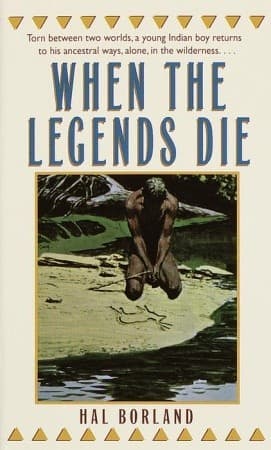
Hal Borland (1963)
Genre
Children's / Historical Fiction / Young Adult
Reading Time
300 min
Key Themes
See below
Sign in to track this book
Orphaned and adrift after tragedy strikes their wilderness refuge, a young Ute boy vows to shun the white man's world forever, clinging to the ancient ways that once defined his family.
Thomas Black Bull, a young Ute boy, experiences a sudden and traumatic shift in his life when his father, George Black Bull, kills another Ute brave in a dispute over horses. To escape the white man's law, which George fears will condemn him, the family — George, his wife Bessie, and Thomas — flees from their reservation home. They retreat deep into the desolate, snow-covered Ute wilderness, cutting all ties with modern society and trying to live as their ancestors did. George teaches Thomas the ancient ways of hunting, trapping, and survival, creating a deep connection to the land and a fierce independence in the boy, while Bessie struggles with their new, harsh life.
For several years, Thomas, George, and Bessie live a primitive existence in the wilderness, relying solely on their wits and nature's bounty. George, a skilled hunter and tracker, teaches Thomas everything he knows about trapping beaver, hunting elk, and surviving the brutal mountain winters. Thomas quickly becomes skilled at these tasks, learning to respect the land and its creatures. Bessie, however, finds the isolation and hardship increasingly difficult, often longing for the simpler, though constrained, life on the reservation. Their existence is a constant battle against the elements and food scarcity, making Thomas a resilient and self-sufficient young man.
A devastating tragedy happens to the family during a harsh winter. While checking his trap lines, George Black Bull falls through thin ice on a frozen river. Thomas, who is with him, sees the accident and cannot save his father from drowning in the frigid water. The loss of George, the family's leader and provider, is a crushing blow. Bessie, already weakened by the strenuous wilderness life and deeply grieving her husband, spirals into despair. The two are left to fend for themselves in the unforgiving mountains, with Thomas now solely responsible for their survival.
Following George's death, Bessie's health and spirit quickly decline. Overwhelmed by grief, loneliness, and the constant hardship of their life, she falls ill and becomes increasingly frail. Despite Thomas's desperate efforts to care for her, hunting for food and trying to keep her warm, Bessie eventually dies. Thomas is left utterly alone in the vast wilderness, a young orphan with no family or connection to the outside world. This profound loss strengthens his resolve to remain in the mountains, rejecting the white man's world that he believes indirectly led to his family's destruction.
Years later, an adolescent Thomas, living wild and self-sufficiently, is discovered by Red Dillon, an aging, cynical, but ultimately compassionate rodeo rider and bronc buster. Red and his partner, Meeker, find Thomas near starvation and badly injured after a fall. Recognizing the boy's strength and resilience, Red takes him in, despite Thomas's initial distrust and wild nature. Red sees potential in Thomas, a natural affinity for horses and a raw courage that reminds him of a younger self. This encounter marks Thomas's reluctant re-entry into the edges of the white man's world, though through the unconventional path of the rodeo circuit.
Red Dillon renames Thomas 'Tom Black' and introduces him to the rough world of rodeo. Under Red's guidance, Tom learns to ride bucking broncs, a skill that requires immense courage, balance, and a deep understanding of horses. He travels from town to town, experiencing the transient, often harsh, but also exhilarating life of a rodeo cowboy. Tom struggles with adapting to the social norms and expectations of white society, often clashing with others due to his wild upbringing and fierce independence. However, he gradually earns a reputation as a fearless and talented bronc rider, beginning to find his place within this new, strange world.
Tom Black's natural talent, combined with his determination and a unique connection to horses, propels him to the top of the rodeo circuit. He becomes a legendary bronc rider, known for his ability to stay on the most untamable horses. His fame grows, and he earns significant prize money, though he remains somewhat detached from the material aspects of his success. Despite his celebrity, Tom keeps a part of his wild, Ute identity, often feeling like an outsider even amidst the adulation. He continues to grapple with his past and the conflicting pull between his Ute heritage and his new life.
As Tom's career rises, Red Dillon's health declines. Years of hard living, drinking, and rodeo injuries take their toll on the old cowboy. Red, who has become a surrogate father figure to Tom, faces his own mortality with cynical acceptance. Tom cares for Red as best he can, showing the bond they've formed. Eventually, Red dies, leaving Tom to navigate the world without his gruff but guiding presence. This loss is significant for Tom, as Red was the bridge between his wild past and his rodeo present, and his death forces Tom to confront his own loneliness and identity once more.
Throughout his rodeo career, Tom is haunted by the legend of a magnificent, untamable wild stallion known as the 'Old Man.' This horse represents the ultimate challenge, a symbol of the untamed wilderness and the freedom Tom once knew. Driven by a deep, almost spiritual need, Tom becomes obsessed with finding and riding this horse. He sees it not just as another bronc to conquer, but as a connection to his past, a test of his true nature, and a way to prove his worth beyond the artificiality of the rodeo arena. This quest becomes his ultimate goal, overshadowing even his championship aspirations.
After years of searching and hearing rumors, Tom finally tracks down the Old Man, the legendary wild stallion. The encounter is a monumental event, a clash between two powerful, untamed forces. Tom engages in an epic, grueling struggle to ride the horse, not in an arena, but in the open wilderness. The ride is more than a physical challenge; it is a spiritual battle, a test of wills, and a deep connection with nature. Tom's Ute instincts and his rodeo skills merge as he attempts to master the magnificent creature, pushing himself to his absolute limits in an effort to truly understand and connect with the horse.
After an extended, almost mythic struggle, Tom Black finally manages to ride the Old Man. It is a moment of profound triumph and understanding, a culmination of his entire life's journey. However, instead of breaking the horse's spirit or bringing it into captivity, Tom recognizes the stallion's inherent wildness and the importance of its freedom. In an act of deep respect and empathy, he releases the Old Man, allowing it to return to its natural habitat. This decision shows Tom's acceptance of his own wild spirit and his realization that true mastery is not about control, but about understanding and honoring the essence of being.
Having achieved his ultimate quest, Tom Black finds a sense of peace and clarity. The experience with the Old Man helps him reconcile the conflicting parts of his identity: his Ute heritage, his wild upbringing, and his life as a rodeo champion. He realizes that he does not have to choose exclusively between the two worlds but can carry the essence of both within him. The novel concludes with Tom contemplating his future, a path that is still unfolding but now informed by a deep understanding of himself and his place in the world. He has found his own way to live, honoring the legends of his past while forging his own destiny.
The Protagonist
Thomas transforms from a solitary, untamed wilderness survivor into a renowned rodeo champion, ultimately finding peace by integrating his Ute heritage with his experiences in the white man's world.
The Supporting
George's arc is cut short by his death, but his legacy profoundly shapes Thomas's early life and values, instilling in him the strength and knowledge to survive.
The Supporting
Bessie's arc is one of decline, as she is unable to adapt to the extreme wilderness life and succumbs to grief and illness after her husband's death.
The Supporting
Red's arc sees him transition from a solitary, hard-drinking cowboy to a caring mentor, ultimately finding purpose in guiding Tom before succumbing to his own mortality.
The Supporting
Meeker remains a consistent, loyal companion to Red and a background presence for Tom throughout his early rodeo career.
The Antagonist/Symbolic
The Old Man's arc is static as a wild entity, but his role as a catalyst for Thomas's ultimate self-discovery makes him a central figure in the narrative's climax.
The Mentioned
N/A (mentioned only)
The Supporting
This collective group serves as the backdrop against which Tom's individual journey unfolds, providing context for his adaptation to a new social environment.
The novel explores the conflict between the traditional Ute way of life and the white man's world. Thomas Black Bull embodies this struggle, torn between his deep connection to his indigenous heritage and the demands of adapting to modern society. His early life in the wilderness represents a rejection of white laws, while his rodeo career forces him into direct engagement with it. This theme is clear in his internal conflict, his discomfort with 'Tom Black' as a name, and his quest for the Old Man, which symbolizes a return to his authentic, wild self, reconciling both worlds.
“He was a wild thing, a part of the mountains and the wind and the wild horses, and he knew no other way.”
This theme is central, first showing man's struggle for survival against the harsh elements of the wilderness, and later becoming a more harmonious relationship. Thomas's early life is defined by his family's battle for survival against nature's indifference. However, he also develops an almost spiritual bond with the natural world, understanding its rhythms and respecting its power. His pursuit and eventual release of the Old Man illustrate a shift from conquering nature to achieving a deep understanding and coexistence with it, recognizing the wildness within himself and in the world.
“To conquer a wild horse was not to break it, but to understand it, and in that understanding, to find a part of yourself.”
Loss is present throughout Thomas's journey, beginning with the loss of his family's settled life, followed by the tragic deaths of his father and mother. These losses force Thomas into extreme self-reliance and shape his worldview. Despite the immense grief and loneliness, Thomas shows incredible resilience, adapting to new circumstances, enduring hardship, and forging a new path. His ability to recover from adversity, learn from his experiences, and continue forward shows the strength of the human spirit.
“He had lost everything, but he still had himself, and the mountains, and the memory of the wild.”
The novel highlights the role of mentorship and 'found family' in Thomas's life. After losing his biological family, Thomas is adrift until Red Dillon takes him in. Red, despite his gruff exterior, provides Thomas with guidance, protection, and a new sense of belonging within the rodeo community. This relationship is important in Thomas's development, teaching him not only rodeo skills but also how to navigate human interaction and trust, forming an emotional bond that fills the void left by his parents.
“Red Dillon was not his father, but he was the closest thing to it, a tough old badger who taught him more than just riding.”
Freedom, both physical and spiritual, drives Thomas. His family's initial flight is for freedom from white man's law. Thomas's quest for the Old Man is a search for a deep, untamed freedom that resonates with his wild Ute spirit. Even as a rodeo champion, he feels constrained by the expectations of the white world. The decision to release the Old Man symbolizes his own embrace of authenticity, recognizing that true freedom comes from within and from honoring one's true nature, rather than from external achievements or societal acceptance.
“The wild horse was freedom, and he knew, deep in his Ute heart, that he could not cage freedom.”
The natural environment acts as a shaping force, a refuge, and a source of both challenge and spiritual connection.
The Ute wilderness is more than just a setting; it's a dynamic entity that actively shapes Thomas's character. In his early life, it is a harsh teacher, forcing the family into extreme survival, but also a protective refuge from the white man's law. It imbues Thomas with resilience, keen senses, and a deep understanding of nature. Later, the memory of the wilderness and its untamed spirit continues to call to him, influencing his decisions and ultimately leading him back to his quest for the Old Man, symbolizing his authentic self.
The legendary horse embodies untamed freedom, the wild spirit, and Thomas's ultimate quest for identity.
The Old Man serves as a powerful symbol throughout the narrative. For Thomas, this legendary wild stallion represents the ultimate challenge, the untamed spirit of the wilderness he left behind, and a tangible link to his Ute heritage. It symbolizes his own wild, unbroken spirit and his yearning for authenticity. Conquering the Old Man is not about breaking it, but about achieving a profound understanding and communion with the wild, and ultimately, with himself. The horse is the external manifestation of Thomas's internal struggle and growth.
The rodeo circuit functions as a condensed representation of the white man's world, offering both opportunity and alienation.
The rodeo circuit acts as a microcosm of the white man's world that Thomas enters. It provides him with a new identity ('Tom Black'), fame, and a means of survival, but it also presents its own set of rules, expectations, and challenges. The transient nature of rodeo life, the competition, the adulation, and the underlying sense of artificiality contrast sharply with Thomas's wilderness upbringing. It's a place where he can excel physically but often feels emotionally and spiritually alienated, highlighting the broader cultural clash within him.
The alteration of Thomas's name signifies his forced assimilation and the loss of his original identity.
The change from 'Thomas Black Bull' to 'Tom Black' is a significant plot device highlighting Thomas's forced assimilation into white society. Red Dillon gives him this simpler, more 'acceptable' name, stripping away a part of his Ute identity. While it allows him to function in the rodeo world, it also represents a loss, a severing of ties to his past. The internal struggle with this name change underscores his ongoing conflict between his heritage and his new life, and his eventual journey to reconcile these two aspects of himself.
“It was as though the mountains had taken him to themselves, had given him their strength and their wildness and their silence.”
— Describing Ute's connection to the wilderness after his parents' death.
“A boy had to learn to stand on his own feet. And the mountains were a good place to learn it.”
— Ute's internal thoughts about self-reliance in the harsh environment.
“A horse was a horse, and a man was a man, and the two together made a team.”
— Ute reflecting on the partnership between a rider and his horse.
“The past was a long trail behind you, and the future was a trail ahead. But the present was where you were, right now.”
— Ute's pragmatic view of time and living in the moment.
“He knew the ways of the wilderness, and he knew the ways of the white man, and the two were not always the same.”
— Ute grappling with his dual heritage and conflicting cultures.
“A man learns more from a good horse than from a dozen books.”
— Ute's belief in practical experience over formal education.
“You can't ride a legend, boy. You gotta ride a real horse.”
— Red Dillon advising Ute about the difference between myth and reality in rodeo.
“There's a time to be wild, and a time to be gentle. And knowing the difference is what makes a man.”
— Red Dillon's advice to Ute about temperance and control.
“The mountains taught him patience, and the river taught him persistence.”
— Ute's lessons learned from his natural surroundings.
“Some things you can't break, no matter how hard you try. Some things just bend.”
— Ute's resilience in the face of hardship and loss.
“He was a wild thing, and the wild things always fought to be free.”
— Describing Ute's untamed spirit and desire for independence.
“When the legends die, the world gets a little bit smaller.”
— A reflection on the loss of myths, traditions, and the magic they bring.
“A good horse is like a good woman; you treat her right, and she'll take care of you.”
— Red Dillon's homespun wisdom about respecting what you have.
“The wind was his brother, and the mountains were his mother, and the sky was his father.”
— Ute's deep spiritual connection to the natural world.
Ready to see how well you understood this book? Take our interactive quiz with 10 questions.
Dan Gemeinhart
4.5
Kate O'Hearn
4.4

Jeanne Birdsall
4.4

Jen Wang
4.4
Wendelin Van Draanen
4.3

John Marsden
4.3

Chris Van Allsburg
4.3
Jennifer A. Nielsen
4.2