“The Japanese, they will not be here forever. The Americans, they will not be here forever. But the land, the land will always be here.”
— Dominga's pragmatic view on the transient nature of occupiers versus the enduring land.

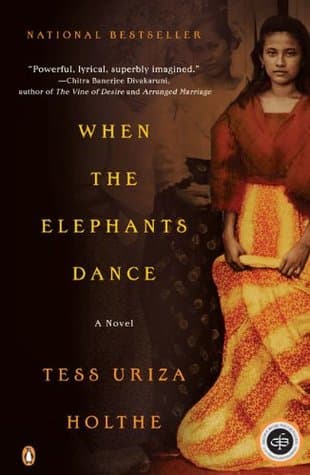
Tess Uriza Holthe (2002)
Genre
Historical Fiction
Reading Time
600 min
Key Themes
See below
Sign in to track this book
In a World War II cellar, as bombs fall, a Filipino family fights despair with ancestral stories, weaving together myth, history, and the supernatural to keep hope alive against Japanese occupation.
As World War II intensifies in the Philippines, the Karangalan family—Lola, her daughters Ligaya and P-nang, Ligaya's children Alejandro and Teresa, and P-nang's son Domingo—along with their neighbors, including the Silvanos and the Manalos, are forced into a cramped cellar beneath their house. The Japanese occupation has made life dangerous, and the threat of violence and starvation is constant. To pass the time, keep spirits up, and distract from the horrors outside, Lola starts a tradition of storytelling. These tales, blending family history, folklore, and superstition, become a lifeline for the trapped villagers, offering glimpses of a past that grounds them and a hope for a future beyond the war.
Lola begins the storytelling with the legend of the Bakunawa, a giant sea serpent from Filipino mythology said to devour the moon, causing eclipses. She ties this ancient myth to a recurring misfortune in her family: a series of tragic deaths and disappearances that seem to befall the men. The story offers entertainment and also imparts cultural heritage and a sense of shared destiny. The children, particularly Teresa, are captivated by the mix of the fantastical and the personal, finding comfort in the idea that their struggles are part of a larger, even cosmic, narrative.
Despite the constant danger, Alejandro, Teresa's older brother, occasionally leaves the cellar to scavenge for food and gather information. His trips expose him to the brutality of the Japanese soldiers, seeing their cruelty and the devastation they inflict upon their village. These experiences force him to mature quickly, understanding the true stakes of their hiding. He brings back not only meager supplies but also fragmented news of the war, which the adults try to interpret, often with a mix of fear and cautious optimism, further fueling the need for the comforting stories within the cellar.
P-nang shares a story about a 'White Lady,' a ghostly figure connected to the Spanish colonial period and the injustices suffered by Filipinos. This tale explores the family's history, revealing how their ancestors, like many Filipinos, endured oppression under Spanish rule. It highlights the clash of cultures, the imposition of Catholicism, and the resilience of the local people in maintaining their traditions. The White Lady represents both a lingering sorrow and a spectral guardian, linking the past struggles against colonizers to their current fight against the Japanese.
Unknown to most of his family, Domingo, a quiet and resourceful young man, has become involved with the local Filipino guerilla fighters. He secretly leaves the cellar, risking his life to deliver messages and assist the resistance movement. His actions are driven by a deep sense of patriotism and a desire to actively fight against the Japanese occupation. His covert activities represent the active, external struggle against the invaders, contrasting with the passive, internal struggle of those confined to the cellar. His bravery, though hidden, offers a silent hope.
News, often fragmented and unreliable, begins to filter into the cellar about the approaching American forces. These reports, brought by Alejandro and later confirmed by Domingo's guerilla contacts, spark a fragile hope among the trapped villagers. The idea of liberation, of an end to the brutal Japanese occupation, becomes a powerful motivator. The stories told in the cellar take on a new urgency, as they now directly anticipate a future where these tales can be told freely under a peaceful sky, further strengthening their collective resolve to survive.
During one of Alejandro's desperate searches for supplies, he, along with Domingo, discovers a hidden tunnel beneath the cellar. This unexpected find changes things, offering a potential escape route from their confinement and a way to evade the Japanese soldiers who frequently patrol above. The tunnel symbolizes a tangible path to freedom, a physical manifestation of the hope the stories have been trying to sustain. The family debates the risks and benefits of using it, weighing the dangers of the unknown outside against the certainty of their current peril.
The precarious peace of the cellar is shattered when Japanese soldiers launch a fierce raid on the surrounding area, coming dangerously close to their hiding place. The family must make a swift decision: remain hidden and risk discovery, or use the newly found tunnel to escape. In a tense and terrifying sequence, they use the tunnel, narrowly evading the Japanese. This harrowing escape confirms the tunnel's discovery and shows the immediate threat they face, pushing them further into the perilous landscape of war.
After escaping the cellar, the Karangalan family and their close companions are forced to live on the run, seeking refuge in various temporary shelters. The land is ravaged by war, and survival is a daily struggle. Despite the constant movement and danger, the tradition of storytelling continues. Lola and the others share tales of resilience, cunning, and the enduring spirit of the Filipino people. These stories become even more vital, providing comfort, maintaining morale, and reaffirming their cultural identity amidst the chaos and loss, connecting them to their heritage as they face an uncertain future.
As the war progresses, the Battle of Manila rages, with both American and Filipino guerilla forces clashing fiercely with the Japanese. Domingo, actively involved with the resistance, finds himself on the front lines, seeing the full horror of combat. His experiences are a stark contrast to the relative, though terrifying, safety of the cellar. He fights for the liberation of his homeland, embodying the active resistance against the oppressors. His courage and determination highlight the sacrifices made by countless Filipinos during this brutal period, fighting for their freedom.
The war brings loss to the Karangalan family and their community. Loved ones are killed or go missing, and the emotional toll is immense. However, amidst the grief, the family's resolve hardens. The stories they have shared, the memories of their ancestors, and the collective hope for a liberated Philippines become a source of strength. They lean on each other, finding solace in their shared suffering and renewed purpose in their determination to survive and rebuild. Their endurance shows the power of family and community in the face of unimaginable tragedy.
Finally, the war ends, and the Philippines is liberated. The Karangalan family emerges from their ordeal, changed by their experiences but alive. The liberation is bittersweet, marked by immense loss and devastation, but also by the joy of freedom. They begin the arduous task of rebuilding their lives and their community. The stories they told in the cellar, once a means of survival, now become a vital part of remembering their past, honoring the fallen, and shaping their future, ensuring that the sacrifices and resilience of their generation are never forgotten.
The Matriarch/Protagonist
Lola remains a steadfast and unwavering source of strength, her arc defined by her consistent role as the keeper of history and hope.
The Protagonist
Teresa matures from a sheltered child to a young woman with a deep understanding of her heritage and the cost of war, shaped by the stories she hears.
The Supporting/Protagonist
Alejandro transforms from a responsible older brother into a courageous and resourceful young man, directly engaging with the dangers of the war.
The Supporting/Protagonist
Domingo evolves from a seemingly ordinary young man into a brave and dedicated guerilla fighter, actively participating in the war for liberation.
The Supporting
Ligaya's arc is one of enduring maternal fear and finding strength through the collective resilience of her family.
The Supporting
P-nang remains a steadfast and supportive family member, her arc highlighting the silent anxieties of a mother whose son is in danger.
The Supporting
The Silvanos endure the war alongside the Karangalans, their arc reflecting the collective struggle and resilience of the community.
The Supporting
The Manalos, like the Silvanos, embody the collective endurance of the community facing wartime atrocities.
The Antagonists
The Japanese soldiers remain a constant, oppressive force throughout the narrative, their presence defined by their role as antagonists.
At its core, the novel shows how stories become a vital means of survival, solace, and cultural preservation during extreme adversity. Confined in the cellar, the Karangalan family and their neighbors use storytelling to pass time, maintain morale, and transmit their heritage. Lola's tales of the Bakunawa, the White Lady, and family ancestors connect the present suffering to a rich, enduring past, providing context and meaning. These narratives offer an escape from the harsh reality outside, nurturing hope and identity when everything else is being destroyed. They are a powerful act of resistance against despair and cultural erasure.
““Stories are not just stories. They are the seeds of our past, the fruits of our present, and the roots of our future.””
The novel shows the human spirit and the resilience of the Filipino people in the face of horrors. Despite starvation, constant threat of violence, and the loss of loved ones, the characters find ways to endure. Their ability to find joy in small moments, maintain a sense of community, and continue to tell stories, highlights their unwavering will to survive. The journey of Alejandro and Domingo, venturing out into danger, and the family's eventual escape from the cellar, all underscore a deep determination to live and fight for their freedom and future.
““We are like the bamboo, my children. We bend, but we do not break.””
The book portrays the impact of World War II on the Philippines and its people, exploring themes of trauma, loss, and the legacy of conflict. The constant fear, starvation, and witnessed atrocities leave a mark on the characters, particularly on young Teresa and Alejandro. The war doesn't just destroy physical structures; it scars individuals and communities. Even after liberation, the characters must contend with emotional wounds and the challenge of rebuilding. The stories also reflect past traumas from Spanish colonization, suggesting that historical suffering shapes national identity and resilience.
““The war took so much, but it could not take our stories, our memories, our spirit.””
A central theme is the importance of cultural identity and the preservation of heritage, particularly through oral traditions. The stories shared in the cellar are a mix of Filipino folklore, pre-colonial myths, and personal family histories, blending indigenous beliefs with elements of Catholicism introduced by Spanish colonizers. These narratives reinforce the characters' connection to their roots, reminding them of who they are beyond the immediate suffering of war. This cultural mix provides a sense of belonging and continuity, asserting the enduring spirit of the Filipino identity against external forces of oppression and cultural erosion.
““Our history is not just in books, my dears. It is in our blood, in our songs, in the way we tell our tales.””
The novel illustrates the strength of family and community bonds as a crucial element of survival. Trapped together in a confined space, the Karangalan family and their neighbors rely entirely on each other for physical and emotional support. The shared act of storytelling strengthens these bonds, creating a collective identity and purpose. Each character contributes to the group's welfare, whether through scavenging, sharing stories, or offering comfort. This communal spirit highlights how solidarity and mutual dependence enable individuals to withstand hardships that would be insurmountable alone, emphasizing the Filipino value of 'bayanihan' or communal unity.
““In our darkest hour, we found our light in each other.””
The main narrative of the family in the cellar frames numerous embedded stories.
The primary plot device is the use of a frame story, where the overarching narrative of the Karangalan family hiding in the cellar during WWII serves as the framework for numerous embedded stories. These inner stories, told by Lola and other characters, delve into Filipino folklore, family history, and personal anecdotes, often blending magical realism with historical events. This structure allows the author to explore multiple timelines, cultural traditions, and character backstories without disrupting the main plot, while also highlighting the function of storytelling as a survival mechanism within the narrative itself.
Supernatural elements blend seamlessly with the stark reality of war.
Magical realism is a prominent plot device, integrating fantastical and mythical elements into the realistic, historical setting of wartime Philippines. Legends like the Bakunawa, ghostly figures, and premonitions are presented as part of the characters' lived reality and belief system, not as mere fantasy. This blending of the magical with the mundane serves multiple purposes: it reflects the rich cultural and spiritual beliefs of the Philippines, provides a sense of wonder and escape from the harshness of war, and subtly influences the characters' decisions and interpretations of events, blurring the lines between what is real and what is imagined.
The cellar represents both confinement and a sanctuary of cultural preservation.
The cellar functions as a powerful symbol throughout the novel. On one hand, it represents extreme confinement, fear, and the oppressive weight of the war, trapping the characters underground and limiting their freedom. On the other hand, it also serves as a sanctuary—a physical and emotional refuge where the family can find safety from the Japanese soldiers and preserve their cultural identity through storytelling. It becomes a womb-like space where hope is nurtured, and traditions are kept alive, symbolizing the resilience of the Filipino spirit in protecting its heritage even in the direst circumstances.
Ancient myths and family legends subtly hint at future events or character fates.
The folklore and family legends shared by Lola often serve as a subtle form of foreshadowing. For example, the recurring motif of the Bakunawa and the family 'curse' might hint at impending dangers or the cyclical nature of suffering and resilience. These stories, while seemingly ancient, often resonate with the characters' present circumstances or suggest future challenges they might face. This device not only enriches the narrative with cultural depth but also creates a sense of suspense and destiny, where the past seems to echo in the present and future events.
“The Japanese, they will not be here forever. The Americans, they will not be here forever. But the land, the land will always be here.”
— Dominga's pragmatic view on the transient nature of occupiers versus the enduring land.
“Sometimes, the only way to survive is to pretend you are already dead.”
— Dominga reflecting on the psychological toll of wartime survival and resilience.
“In war, there are no heroes, only survivors.”
— A bitter observation about the reality of war, stripping away romantic notions.
“Stories are like seeds. You plant them, and they grow into something more than just words.”
— A reflection on the power of storytelling and its lasting impact.
“Even in the darkest night, there is always a star, if you only look up.”
— A hopeful sentiment offered during a time of immense hardship and despair.
“We are like the bamboo. We bend, but we do not break.”
— A metaphor for the resilience of the Filipino people under occupation.
“Memory is a tricky thing. It can be a comfort, or it can be a cage.”
— Dominga pondering the dual nature of memory, especially in the context of trauma.
“The past is never really past. It lives inside us, always.”
— An acknowledgment of how historical events and personal experiences shape the present.
“To forget is to die a little.”
— Emphasizing the importance of remembering, especially one's heritage and struggles.
“Sometimes, a small act of kindness can be a revolution.”
— Highlighting the power of humanity and compassion amidst brutality.
“We dance with the elephants, whether we want to or not.”
— The central metaphor of the book, referring to the Philippines caught between warring superpowers.
“Fear is a heavy blanket, but hope is a tiny spark that can burn through it.”
— Illustrating the contrast between pervasive fear and the enduring power of hope.
“The deepest scars are not always visible.”
— A poignant observation about the hidden wounds of war and suffering.
“Love, even in wartime, is a form of defiance.”
— Suggesting that maintaining human connection and affection is an act of resistance.
Ready to see how well you understood this book? Take our interactive quiz with 10 questions.







