“There was a girl, a strange girl, with hair the colour of corn, who lived in a big house over the marsh.”
— Anna's initial thoughts about the girl she sees at the Marsh House.

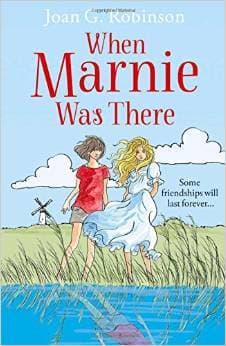
Joan G. Robinson (2002)
Genre
Fantasy / Children's / Mystery / Young Adult
Reading Time
286 min
Key Themes
See below
Sign in to track this book
In a secluded Norfolk village, a lonely foster child's summer turns fantastical when she befriends a mysterious girl named Marnie, only to uncover a secret that links their pasts.
Anna, a quiet and artistic orphan, lives with her foster parents, the Prestons, in a city. She struggles with asthma and deep loneliness, often feeling like an outsider. Concerned about her health, Mrs. Preston arranges for Anna to spend the summer with an elderly couple, the Peggs, in a remote Norfolk village by the sea. The change of scenery is hoped to lift her spirits. Upon arrival, Anna is struck by the peaceful, yet isolated, atmosphere of the village and the vast, marshy landscape. She feels a familiar sense of detachment but is also curious about her new surroundings.
While exploring the village, Anna often visits the nearby marsh. Across the water, she sees a large, dilapidated house, known as 'Marsh House' or 'The Willows', which appears deserted. The house draws her imagination, bringing her back to it repeatedly. One day, she finds an old, blue rowing boat tied to a tree near the house. Despite its age, the boat seems usable. Compelled by curiosity, Anna takes the boat and rows across the creek to the Marsh House, feeling an inexplicable pull. This act is a significant step outside her usual withdrawn behavior.
During one of her solitary trips to the Marsh House, Anna meets a girl with long, blonde hair named Marnie. Marnie is beautiful, lively, and seemingly the same age as Anna, but there is a sense of mystery about her. She appears to be living in the Marsh House, despite its apparent abandonment. Marnie is initially guarded but gradually warms to Anna. Their meeting is strange and almost dreamlike, with Marnie inviting Anna to keep their friendship a secret. Anna is both thrilled and bewildered by this sudden, intense connection, as she has never had a close friend before.
Anna and Marnie begin to meet regularly at the Marsh House, often after dark or during the day when no one else is around. They share stories and secrets, and Marnie takes Anna on various adventures, including a forbidden trip to a windmill and a midnight picnic. Marnie's adventurous spirit and personality draw Anna out of her shell, making her feel truly alive and accepted for the first time. Anna is completely captivated by Marnie, feeling an intense, almost magical connection to her new friend. Their bond deepens with each shared experience, making Anna question the reality of their encounters.
One night, Marnie persuades Anna to go on a midnight picnic on the sand dunes. They have a wonderful time, but as they return, a sudden, violent storm breaks out. In the chaos of the wind and rain, Marnie suddenly disappears, leaving Anna alone and terrified. Anna struggles to make her way back to the Peggs' house, shaken and confused by Marnie's vanishing act. The incident leaves Anna deeply distressed, questioning whether Marnie was ever truly there or if she was a figment of her imagination, a product of her loneliness.
After the storm, Anna returns to the Marsh House, hoping to find Marnie, but the house is again empty and silent. She learns from the villagers that the Marsh House has been rented for the summer by a family, the Lynns, and that their daughter, Marnie, was gravely ill and has been sent away for treatment. This news devastates Anna, confirming her fear that Marnie was real but is now gone. The house, once filled with their secret adventures, now feels desolate and empty, mirroring the void in Anna's heart.
Later in the summer, a new family, the Lindsays, moves into the Marsh House. Anna is initially wary of them, feeling possessive over her memories of Marnie and the house. However, she eventually befriends the youngest daughter, Sarah Lindsay. Sarah is an adventurous and curious girl, similar in spirit to Marnie. While exploring the house, Sarah discovers an old diary hidden in a drawer. The diary belongs to Marnie and details her life and experiences in the house, including her loneliness and her friendship with a girl named Anna.
Anna begins to read Marnie's diary, and through its entries, she gains a deeper understanding of Marnie's life. She learns about Marnie's struggles with loneliness, her strict upbringing, her secret friendship with a local boy named Kazuo, and her eventual marriage. The diary also reveals that Marnie had a daughter, and that this daughter was Anna's mother. The diary entries about 'Anna' refer to Anna's mother as a child, creating a profound connection for Anna. This discovery begins to unravel the mystery of Marnie's identity and her connection to Anna.
As Anna continues to read Marnie's diary and piece together the clues, she has a profound realization. The 'Anna' in the diary is not her, but her mother as a child. Marnie was her grandmother. The encounters she had with Marnie were not real-time events but rather vivid experiences of her grandmother's past, perhaps brought to life by Anna's deep loneliness and her psychic connection to her family history. This revelation explains the dreamlike quality of their meetings and Marnie's sudden disappearances. It brings both sorrow and a strange sense of comfort to Anna.
With the truth about Marnie revealed, Anna experiences a profound shift. The mystery that had overshadowed her summer is solved, and with it, her feelings of isolation begin to dissipate. She understands that she is not alone, but part of a continuous family line, connected to Marnie through blood and shared experiences of loneliness. The Marsh House, the blue boat, and the Norfolk landscape now hold a new, deeply personal significance. Anna feels a sense of belonging she has never known before, realizing that her past is woven into the fabric of the place and the people she encountered, even if some of them were echoes of the past. Her asthma also improves, reflecting her newfound emotional well-being.
The Protagonist
Anna transforms from a solitary and insecure girl into someone who understands her past and feels connected to her family and the world.
The Supporting/Mysterious Figure
Marnie's character is revealed retrospectively through her diary, showing her life from a lonely child to a young woman, and ultimately as Anna's grandmother, providing a historical context for Anna's own life.
The Supporting
Remains largely static, serving as the catalyst for Anna's journey by arranging her summer in Norfolk.
The Supporting
Provide a steady, grounding presence for Anna, offering a sense of stability during her transformative summer.
The Supporting
Facilitates Anna's discovery of the truth about Marnie, becoming a new, real friend for Anna.
The Mentioned
His story within Marnie's diary reveals a significant part of Marnie's lonely childhood.
Both Anna and Marnie experience deep loneliness, which drives much of their stories. Anna's initial isolation comes from being an orphan and a foster child, making her feel like an outsider. Her 'friendship' with Marnie is a direct result of her desperate need for connection. Marnie's diary reveals her own deep loneliness due to strict parents and lack of friends, making her seek out secret companionship. The shared experience of isolation links the two girls across generations, highlighting the universal human need for belonging and connection.
“She was an outsider, and she knew it. She had always been an outsider.”
The novel explores how imagination and memory can blur the lines between reality and illusion. Anna's vivid encounters with Marnie are initially seen as real, but are later revealed to be a psychic connection to her grandmother's past, fueled by her own longing and the atmosphere of the Marsh House. The diary acts as a physical link for these memories, allowing Anna to access and understand a history that was otherwise lost. This theme suggests that the past is not truly gone but can be accessed and experienced through deeply personal and emotional means.
“It was as if some part of her was waiting for a story to be told.”
Anna's journey is about discovering her identity and finding a sense of belonging. As an orphan, she lacks a clear understanding of her heritage, contributing to her feelings of detachment. Her connection to Marnie, and the discovery that Marnie is her grandmother, gives Anna a direct link to her past and a sense of lineage. This revelation helps her understand who she is and where she comes from, easing her previous feelings of being unrooted. By understanding her family history, Anna finally feels a sense of belonging, not just to a place, but to a family and a story.
“She was not just Anna, the foster child; she was Anna, Marnie's granddaughter.”
A main theme is the idea that past and present generations are deeply connected, often in ways not immediately apparent. Anna's experiences with Marnie are not merely imaginary but are a manifestation of a familial bond across time. The similarities in their personalities, their shared loneliness, and their connection to the Marsh House emphasize how personal histories can echo through generations. The discovery of Marnie's diary explicitly bridges this gap, showing how the lives of ancestors can profoundly impact and shape the present, offering both understanding and a sense of continuity.
“It was as if Marnie had known she would come, and had left her story for her.”
A dilapidated, mysterious house that serves as the central meeting place and repository of memories.
The Marsh House is a pivotal setting, initially appearing abandoned but later becoming the site of Anna's encounters with Marnie. Its isolated location across the marsh enhances its mysterious aura. It acts as a physical link between past and present, a place where memories are strong enough to manifest. The house is where Marnie lived and where her diary is found, making it a container of family history and a catalyst for Anna's discoveries. It symbolizes the forgotten past waiting to be uncovered.
A hidden diary that serves as the key to unlocking the mystery of Marnie's identity and Anna's past.
Marnie's diary is the most crucial plot device. Discovered by Sarah Lindsay, it provides a direct, first-person account of Marnie's life, her loneliness, her friendships, and her eventual marriage and motherhood. The diary allows Anna to piece together the fragmented clues about Marnie and ultimately reveals their familial connection. It transforms Marnie from a mysterious, possibly imaginary friend into a real historical figure, and more importantly, Anna's grandmother, providing the definitive explanation for Anna's experiences.
A small rowing boat that provides Anna with access to the Marsh House and symbolizes her journey of discovery.
The old blue boat found near the Marsh House is Anna's primary means of transport to her secret meetings with Marnie. It symbolizes Anna's agency and her willingness to venture beyond her comfort zone. The act of rowing across the creek represents her journey into the unknown and into her own past. The boat is a tangible link to the mysterious world of Marnie, allowing Anna to bridge the physical and metaphorical distance to the Marsh House and its secrets.
A physical manifestation of Anna's emotional distress and a measure of her psychological well-being.
Anna's chronic asthma is more than just a physical ailment; it serves as a psychosomatic symptom of her deep-seated loneliness, anxiety, and feelings of being an outsider. Her improvement in health while in Norfolk, particularly after resolving the mystery of Marnie and finding a sense of belonging, highlights the connection between her physical and emotional states. It acts as a barometer for her psychological healing, showing that as her emotional burdens lift, her physical symptoms also alleviate.
“There was a girl, a strange girl, with hair the colour of corn, who lived in a big house over the marsh.”
— Anna's initial thoughts about the girl she sees at the Marsh House.
“But it was not a dream, because she was still there, the blonde girl, waiting for her.”
— Anna's realization that Marnie is real, not just a figment of her imagination.
“We'll have secrets, you and I. Wonderful, terrible secrets.”
— Marnie's playful and slightly mysterious invitation to Anna.
“It was as though the place had been waiting for her, and now it had come to life.”
— Anna's feeling of belonging and connection to the Marsh House.
“I often think about you, and wonder where you are, and what you are doing.”
— Marnie's letter to Anna, expressing her thoughts.
“But she knew that it was not quite real, and that it would not last.”
— Anna's underlying awareness of the fleeting nature of her experiences with Marnie.
“You're a very good secret keeper, aren't you?”
— Marnie's observation about Anna's quiet nature.
“There's something about this house, something about the marsh, that makes me feel different.”
— Anna reflecting on the transformative effect of her summer surroundings.
“And it was then that she understood. It was Marnie. It had always been Marnie.”
— Anna's profound realization about Marnie's true identity and connection to her.
“You were my friend, and I loved you.”
— Anna's emotional acknowledgment of her bond with Marnie.
“Sometimes, when you're little, it's hard to tell what's real and what isn't.”
— A conversation hinting at the blurred lines between reality and imagination in childhood.
“She had found a friend, and she had lost a friend, but the friendship itself was still there, like the house, like the marsh, like the wind that blew over them.”
— Anna's understanding of the enduring nature of connection, even after separation.
“The wind was always there, whispering secrets from the past.”
— A poetic description of the atmosphere of the marsh and its connection to history.
“It was a strange summer, a summer of shadows and light, of discovery and loss.”
— Anna's summary of her transformative experiences during the summer.
Ready to see how well you understood this book? Take our interactive quiz with 10 questions.







