“The thing about being in love with a writer, I'd learned, was that you were always in a story.”
— Elly reflects on her relationship with her husband, Joe.

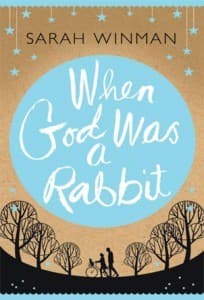
Sarah Winman (2011)
Genre
Literary Fiction / Young Adult
Reading Time
6-7 hours
Key Themes
See below
Sign in to track this book
This is a tale of a brother and sister's unbreakable bond through four decades of quirky family life, growing up, loss, and love.
The story begins in 1968, introducing the Hurricutt family in Cornwall. Arthur and Nancy Hurricutt are parents to Joe, a sensitive and imaginative boy. When his sister, Elly, is born, Joe is immediately captivated. He gives her a white toy rabbit, which he names 'God.' This act establishes the deep bond between the siblings. Elly, from a young age, shows an unconventional spirit, often interacting with the world in a way that suggests a unique perception, influenced by Joe's imaginative storytelling and the close-knit, if eccentric, family environment. The rabbit is her constant companion and a silent witness to their early childhood adventures.
The story shifts to the Hurricutt children's childhood summers. They spend time with their grandparents, especially their grandmother, who is a strong presence. Their Aunt Sissy, a flamboyant and free-spirited woman, also appears often, bringing glamour and unpredictability to their lives. These summers are filled with games, stories, and deep connections with their eccentric relatives. Joe, always the protector and storyteller, creates a world of magic and wonder for Elly, shielding her from harsh realities and encouraging her imagination. Their bond deepens through shared secrets and adventures.
The Hurricutt family moves from the quiet Cornish countryside to London. This marks a significant change for Elly and Joe. While they adapt to their new surroundings, the move introduces them to a more diverse and sometimes challenging environment. Elly, with her unique perspective, finds London both exciting and overwhelming. Joe continues to be her anchor, guiding her through city life. They meet new friends and have new experiences, but their unbreakable sibling relationship remains central to their world, tested by the new pressures and opportunities that London brings.
A tragedy strikes the Hurricutt family when their Aunt Sissy dies. Her death is a shock, especially for Elly, who adored her aunt's spirit. The family deals with grief, each member reacting in their own way. This loss is Elly's first real encounter with death and the fragility of life, shattering some of her childhood innocence. Joe, though also grieving, tries to remain strong for Elly, offering comfort. The event highlights the family's resilience but also exposes their vulnerabilities, forcing them to confront the impermanence of their happy, eccentric world.
As Elly and Joe enter their teenage years, their relationship changes. While their bond remains strong, they also begin to develop individual interests and friendships. Elly, still with her unique outlook, experiences the typical trials of adolescence, including first crushes and the desire for independence. Joe, always protective, struggles with the idea of Elly growing up and possibly drifting away. Their parents, Arthur and Nancy, also face their own challenges, adding to the complexities of the household. These years include both typical teenage angst and the lingering echoes of past events, shaping their identities.
A horrific incident occurs when Joe is brutally attacked, leaving him with severe head injuries and in a coma. This event is devastating for the Hurricutt family, particularly Elly. She is filled with fear and grief, spending hours at Joe's bedside, hoping for his recovery. The attack changes their lives, casting a long shadow over Elly's world. She feels helpless and angry, struggling to understand the violence that has happened to her brother. This trauma becomes a turning point, shaping Elly's future and her understanding of resilience.
Joe eventually comes out of his coma, but his recovery is slow and difficult, marked by memory loss and personality changes. The once imaginative Joe is now different, a shadow of his former self. Elly, relieved he is alive, struggles with the shift in their dynamic. She carries a heavy burden of guilt, believing herself responsible for the attack due to a perceived lapse in her vigilance. This guilt fuels her determination to care for Joe, sacrificing her own desires to ensure his well-being. The incident changes their relationship, putting Elly in the role of protector.
Years pass, and Elly moves into adulthood, but the trauma of Joe's attack continues to define her. She struggles to form lasting relationships, her focus always returning to Joe and her perceived responsibility for him. Her unique worldview, once a source of wonder, now sometimes makes it hard to connect with others normally. She works in a bookstore, finding comfort in stories, but her personal life remains largely unfulfilled. The presence of Joe, now a man with a damaged memory and a quiet demeanor, is a constant reminder of the past and the sacrifices she has made.
Elly eventually returns to Cornwall, the place of her childhood, seeking peace and a way to reconcile with her past. This return brings her face-to-face with people and memories she had tried to suppress. She begins to uncover the full truth behind Joe's attack, realizing that her guilt was misplaced and that the circumstances were more complex than she had understood. This confrontation with the past is painful but necessary for her healing. It allows her to re-evaluate her life and choices, opening the door for personal growth and forgiveness.
By confronting the truth, Elly begins to forgive herself for her misplaced guilt and to forgive others involved in the tragedy. She realizes that her life has been shaped by the incident but does not have to be defined by it. The bond with Joe, though altered, remains central to her existence, but she learns to separate her identity from her role as his caretaker. This clarity allows her to imagine a future where she can pursue her own happiness while still cherishing her brother. The story ends with Elly embracing hope and the possibility of a fulfilling life.
The Protagonist
Elly transforms from an innocent, imaginative child into a guilt-ridden adult, eventually finding forgiveness and a path to self-acceptance and independent happiness.
The Supporting/Catalyst
Joe's arc is one of tragic transformation, from a vibrant, imaginative boy to a man with impaired memory and a changed personality, yet he remains a constant, loving presence for Elly.
The Supporting
Arthur remains a constant, if sometimes distant, paternal figure, learning to cope with family tragedies in his own quiet way.
The Supporting
Nancy is a resilient maternal figure who continuously works to keep her family together through various adversities.
The Supporting
Sissy's arc is tragically cut short, serving as a symbol of lost innocence and the fragility of life for Elly.
The Supporting
The grandparents remain a consistent source of love and stability throughout the children's lives.
The Supporting
Jenny remains a loyal friend, offering a consistent point of reference for Elly as they both navigate growth and change.
The Mentioned
The rabbit remains a static, symbolic object, its significance evolving with Elly's understanding of her past and her relationship with Joe.
The core of 'When God Was a Rabbit' is the deep and unbreakable bond between Elly and Joe. Their relationship begins at Elly's birth, with Joe's gift of the rabbit 'God' symbolizing his protective love. This bond anchors Elly throughout her life, surviving childhood, family tragedies, and Joe's injury. Elly's adult life is shaped by her devotion to Joe and her perceived responsibility for him, showing how far sibling love can go. Even when Joe is changed by his trauma, their connection remains the most important relationship in Elly's life.
“Joe gave me a rabbit. He said, 'This is God.'”
The novel tracks Elly's journey from a whimsical, imaginative child to a young woman dealing with trauma. Her childhood in Cornwall is slowly lost through a series of losses, starting with Aunt Sissy's death. However, the biggest blow to her innocence is Joe's brutal attack. This event shatters her world, introduces her to the realities of violence, and burdens her with deep guilt. The story explores how this trauma affects Elly's development, her relationships, and her ability to move forward, highlighting the lasting psychological effects of such experiences.
“I was twelve, and I had already learned that life was a series of goodbyes.”
Memory, both accurate and inaccurate, is important in the novel. Elly's memories of her childhood are colored by nostalgia and the lingering effects of trauma. She often revisits past events, trying to understand them and dealing with her guilt over Joe's attack. Joe's memory loss after his injury further complicates the family's understanding of their shared past, forcing Elly to reconstruct events and confront difficult truths. The novel explores how the past, whether remembered accurately or not, shapes identity and dictates present actions, emphasizing the journey towards reconciling with one's personal history.
“Memory is a funny thing. It can play tricks on you, make you believe things that never happened, or forget things that did.”
The Hurricutt family, with its eccentric and loving members, is central to Elly's world. The novel explores the complexities of family relationships, showing both their strengths and their flaws. Despite their unconventionality and the tragedies they face, there is a deep love and a strong sense of belonging within the family. From the supportive grandparents to the flamboyant Aunt Sissy, each member contributes to Elly's understanding of home and identity. The story suggests that even when family members are flawed or distant, their ties can be incredibly resilient, offering comfort and a sense of rootedness.
“Family was a complicated thing, but it was also the only thing.”
The Hurricutt family is known for its eccentricity, with each member having a distinct personality. From Elly's unique way of seeing the world to Aunt Sissy's flamboyant lifestyle, the novel celebrates individuality. Rather than conforming, the characters often embrace their quirks, creating a memorable family dynamic. This theme suggests that true belonging comes not from fitting in, but from being accepted for who you are. Elly's journey, in particular, involves accepting her own unconventional nature and finding strength in her unique perspective, rather than trying to suppress it.
“We were not normal, not by a long shot, and I loved us for it.”
A symbolic object representing love, innocence, and a tangible link to the past.
The white toy rabbit, gifted by Joe to Elly, is a powerful recurring symbol throughout the novel. Initially, it represents Joe's pure, protective love for his sister and Elly's childhood innocence and imagination. As Elly grows up and experiences trauma, the rabbit becomes a tangible link to her past, a reminder of a time before tragedy. It symbolizes the enduring, though altered, bond between the siblings and serves as a silent witness to their lives. Its presence underscores the themes of memory, loss, and the attempt to hold onto cherished aspects of the past.
The story jumps between different time periods, reflecting memory and the lasting impact of events.
The novel employs a non-linear narrative structure, moving back and forth between Elly's childhood, teenage years, and adulthood. This device mirrors the way memory functions, often jumping to significant events or emotions regardless of chronological order. It allows the author to gradually reveal details of Joe's attack and its aftermath, building suspense and emphasizing the lasting impact of past events on Elly's present. The fragmented timeline highlights how Elly's adult struggles are deeply rooted in her childhood experiences and the trauma she endured, making her journey of healing a process of piecing together her own history.
The story is told entirely from Elly's unique and often introspective point of view.
The entire novel is narrated from Elly's first-person perspective, providing an intimate and deeply personal insight into her thoughts, feelings, and unique way of perceiving the world. This narrative choice allows the reader to fully immerse themselves in Elly's internal struggles, her profound love for Joe, and her grappling with trauma and guilt. Her distinctive voice, often poetic and observational, shapes the reader's understanding of events and characters, emphasizing her journey of self-discovery and her struggle to articulate her complex inner life. It underscores the theme of individual perception and the subjective nature of experience.
The contrasting settings of Cornwall and London mirror Elly's internal journey.
The novel uses its settings to reflect Elly's emotional and psychological states. Cornwall, with its natural beauty and sense of rootedness, represents Elly's idyllic, innocent childhood and a place of comfort and family tradition. London, in contrast, symbolizes the complexities, challenges, and sometimes harsh realities of adulthood and urban life. The family's move to London marks a shift towards more difficult experiences, while Elly's eventual return to Cornwall signifies a journey towards healing, confronting the past, and finding a sense of peace and belonging. The settings are not merely backdrops but active participants in Elly's emotional arc.
“The thing about being in love with a writer, I'd learned, was that you were always in a story.”
— Elly reflects on her relationship with her husband, Joe.
“The past is a foreign country; they do things differently there.”
— A direct quote from L.P. Hartley's 'The Go-Between', referenced by Elly.
“It was impossible to feel sad when you were in a library. It was a place of hope.”
— Elly finds solace and escape in a library after a difficult experience.
“Sometimes the things that hurt you the most are the things that make you stronger.”
— Grandpa Joe offers wisdom to Elly after she has been hurt.
“The world was full of stories, and some of them were true.”
— Elly contemplates the nature of truth and fiction in her life.
“People always say that love is blind, but I don't think that's true. I think love sees everything, and loves it anyway.”
— Elly's reflection on the depth and acceptance of love.
“There are some things in life you can't explain, only feel.”
— Elly tries to articulate complex emotions and experiences.
“Grief is a funny thing. It comes in waves, and sometimes you drown, and sometimes you learn to swim.”
— Elly copes with loss and the process of grieving.
“Childhood is not a race to see how quickly you can grow up.”
— Elly reflects on the innocence and pressures of youth.
“You can't choose your family, but you can choose how you love them.”
— Elly considers the complexities of family relationships.
“The greatest adventures are not always in faraway places, but in the hearts of the people you meet.”
— Elly realizes the importance of human connection and relationships.
“Silence can be a very loud sound.”
— Elly experiences the weight and meaning of unspoken things.
“Sometimes you have to break a few rules to find your way home.”
— Elly makes unconventional choices in her journey of self-discovery.
“Hope is a good thing, maybe the best of things, and no good thing ever dies.”
— A hopeful sentiment expressed amidst difficult circumstances, echoing 'The Shawshank Redemption'.
Ready to see how well you understood this book? Take our interactive quiz with 10 questions.
Biography coming soon.







