“The hardest part of getting away with something isn't the deed itself. It's the having to live with it, the knowing.”
— Kate reflects on the aftermath of a secret.

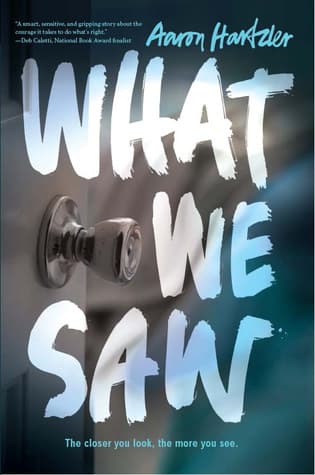
Aaron Hartzler (2015)
Genre
Thriller / Mystery / Young Adult / Romance
Reading Time
240 min
Key Themes
See below
Sign in to track this book
After a party, a small town's social media explodes with accusations, forcing Kate to face difficult truths about her friends, complicity, and the boy she thought she knew.
Kate Weston wakes up after a party at John Doone's house with a vague memory of drinking with her best friend, Stacey Stallard. She recalls being driven home by Ben Cody, her long-time friend and potential love interest. Her morning is disrupted by a text from Stacey, containing a shocking photo: Stacey herself, passed out, draped over Deacon Mills's shoulder, with other boys in the background. The photo quickly goes viral, spreading through their small town of Meadow Creek. Kate feels uneasy, realizing her memory of the night is incomplete and something significant happened after Ben took her home. This image immediately sets a tense, suspicious tone for the unfolding events.
After the photo's rapid circulation, Stacey Stallard comes forward with an accusation: she alleges that she was sexually assaulted at John Doone's party by four members of the school's star football team: Deacon Mills, Mark Doone (John's brother), Noah Riley, and Kevin Vance. The news sends shockwaves through Meadow Creek, a town deeply invested in its football team's success. The community immediately splits into two camps: those who support Stacey and demand justice, and those who fiercely defend the football players, dismissing Stacey's claims as an attempt to ruin their futures. Kate finds herself caught in the middle, torn between loyalty to her friend and her own complicated feelings about the accused.
Kate Weston is conflicted. While she wants to support Stacey, she has known the accused boys, particularly Deacon Mills and Mark Doone, since childhood. They are popular, well-liked, and seem like good guys. The idea that they could commit such an act is difficult for her to accept. Her internal struggle grows due to the town's intense polarization, with friends and family taking sides. Kate begins to question her own memories of the party, wondering what she might have missed. This internal conflict highlights the difficulty of discerning truth when personal connections are involved, and the pressure to conform to one side or the other.
The Meadow Creek police department officially begins an investigation into Stacey's allegations. Detectives interview partygoers, including Kate, who is asked to recount her version of events. The formal investigation adds another layer of pressure to the already tense situation. Students are advised to cooperate, but many are reluctant to speak out, fearing social or legal repercussions. The presence of law enforcement further divides the community, with some seeing it as a necessary step towards justice, and others viewing it as an overreach threatening the town's harmony and the boys' reputations. Kate feels the weight of her testimony, knowing it could impact everyone involved.
As the investigation progresses, Kate notices Ben Cody's strange and evasive behavior. He avoids discussing the party, deflects her questions, and seems unusually withdrawn. Given that Ben drove her home early and was one of the last people she saw before Stacey was left alone, Kate expects him to be a key witness, but he offers little information. His silence and discomfort make Kate suspicious, leading her to wonder if he knows more than he is saying, or if his involvement is more complicated than she initially thought. This growing doubt about Ben, her long-time friend and crush, creates significant emotional turmoil for Kate.
Social media platforms become a battleground for public opinion, with hashtags, comments, and shared posts fueling the controversy. The initial photo of Stacey goes viral, followed by a flood of opinions, accusations, and defenses. Anonymous accounts and local residents alike weigh in, creating a toxic environment where facts are often secondary to emotional appeals and personal attacks. Public perception, heavily influenced by online discourse, begins to solidify, making it harder for objective truth to emerge. Kate sees firsthand how social media can both expose injustice and spread misinformation, making the search for truth even more arduous and emotionally draining for everyone involved.
Frustrated by the lack of clear answers and Ben's continued quietness, Kate decides to conduct her own informal investigation. She talks to other partygoers, pieces together fragmented memories, and examines the timeline of the night. Her inquiries lead to uncomfortable discoveries, revealing inconsistencies in various accounts and highlighting how many people chose to look away or were too intoxicated to recall details. She learns more about the boys' reputations and past behaviors, which complicates her previous perceptions. Each new piece of information brings her closer to the truth but also further alienates her from some of her friends, as she challenges their narratives and loyalties.
Through her persistent questioning and the accumulation of evidence, Kate finally confronts Ben Cody. Under pressure, Ben confesses his true involvement. He admits that he saw what was happening to Stacey and, in a moment of fear and peer pressure, chose to leave without intervening or reporting it. He reveals his struggle with guilt and his reasons for silence, which stemmed from a desire to protect his own future and avoid social ostracization. This confession shatters Kate's perception of Ben and forces her to face the painful reality of complicity and the devastating impact of inaction, fundamentally altering their relationship and her understanding of moral courage.
The legal process ends with a grand jury hearing, where evidence and testimonies are presented to determine if there is enough probable cause to indict the four football players. Kate testifies, sharing her fragmented memories and the information she gathered. Stacey also bravely recounts her experience. Despite the emotional testimonies and the mounting public pressure, the grand jury ultimately decides not to indict Deacon Mills, Mark Doone, Noah Riley, and Kevin Vance. This outcome devastates Stacey and her supporters, reinforcing the perceived injustice and highlighting the challenges in prosecuting sexual assault cases, especially in close-knit communities where powerful individuals are involved.
After the grand jury's decision, Meadow Creek remains fractured. Stacey faces continued scrutiny and victim-blaming, while the boys return to school, largely unpunished by the legal system. Kate, deeply affected by the injustice and Ben's confession, grapples with her own complicity and the silence of others. Driven by a renewed sense of moral responsibility, she decides she can no longer stay silent. She chooses to speak out, not just about what happened to Stacey, but about the culture of silence and complicity that allowed it to occur. This decision marks a significant turning point for Kate, solidifying her commitment to truth and justice, regardless of the personal cost.
The Protagonist
Kate transforms from a conflicted bystander into a courageous truth-seeker, finding her voice and taking a stand against injustice and silence.
The Supporting
Stacey endures a traumatic experience and the subsequent public ordeal, demonstrating resilience in the face of widespread skepticism and injustice.
The Supporting
Ben's character exposes the painful reality of complicity, as he grapples with the consequences of his inaction and ultimately confesses to Kate.
The Antagonist
Deacon remains largely static, maintaining his innocence and benefiting from the town's protective stance, illustrating how privilege can shield individuals from accountability.
The Antagonist
Mark's character, like Deacon's, remains largely unchanged, symbolizing the entrenched privilege and lack of accountability faced by certain individuals in the community.
The Supporting
John grapples with the fallout of the party he hosted, showing a degree of discomfort with the events but ultimately not taking a decisive stand for justice.
The Antagonist
Noah's character remains consistent in his denial and benefits from the grand jury's decision, illustrating the pervasive nature of unaccountability.
The Antagonist
Kevin, like the other accused, experiences no significant character arc, serving to demonstrate the societal structures that protect certain individuals from justice.
The Supporting
Coach Miller's character remains steadfast in his defense of his players, illustrating the entrenched loyalty and priorities within the town's football culture.
The novel examines how silence, whether from fear, loyalty, or indifference, becomes a form of complicity in injustice. Ben Cody's inaction after witnessing the assault is a central example, as his silence allows the perpetrators to avoid immediate accountability and deepens Kate's moral struggle. The broader community's reluctance to speak out, fueled by loyalty to the football team or fear of social ostracization, enables the injustice against Stacey. This theme is powerfully shown in the grand jury's decision, which many interpret as a failure of the collective to break its silence.
“Silence is the loudest sound in this town.”
The book portrays the personal and social costs of speaking truth to power, especially in a close-knit community. Stacey Stallard faces intense victim-blaming, public shaming, and social isolation for coming forward with her allegations. Kate Weston, in her pursuit of the truth, risks alienating her friends, her potential romantic interest (Ben), and becoming an outcast in her town. The fear of these repercussions is a major deterrent for other witnesses, showing how difficult it is to challenge established norms and powerful individuals, even when injustice is clear.
“It's easier to look away, to pretend you didn't see, than to face the storm that comes with telling the truth.”
A core conflict in the novel is the tension between personal loyalty and the pursuit of justice. Kate is torn between her long-standing friendships with the accused boys and Ben, and her growing conviction that justice must be served for Stacey. The town itself is split between loyalty to its football heroes and the demand for accountability. This theme explores how personal connections and community identity can blind people to wrongdoing or compel them to protect those they know, even at the expense of fairness and truth. The grand jury's decision, influenced by community loyalty, underscores this painful dilemma.
“How do you choose between the people you love and the truth?”
The narrative challenges simple ideas of guilt and innocence, particularly in cases of sexual assault and complicity. While the four accused boys are central to Stacey's allegations, the book also explores the 'innocence' of those who were present but did not intervene, like Ben Cody, or those who allowed a culture of silence. The grand jury's decision not to indict further blurs these lines, as the legal system deems them 'not guilty' despite the deep conviction of Stacey and her supporters. This theme forces readers to consider the various degrees of responsibility and the impact of inaction.
“It wasn't just about what they did. It was about what everyone else didn't do.”
Social media acts as a powerful, double-edged sword throughout the narrative. It rapidly spreads the initial photo of Stacey, bringing the incident to public attention and fueling immediate outrage. However, it also becomes a platform for misinformation, victim-blaming, and character assassination, creating a toxic environment that complicates the search for truth and justice. The constant online commentary shapes public opinion, intensifies pressure on all parties, and shows how digital spaces can both expose and obscure reality, making it harder for objective truth to emerge from the noise.
“Every opinion, every accusation, every defense, played out in real-time, 140 characters at a time.”
Kate's fragmented memory of the party drives the initial mystery.
Kate Weston's initial blurry and incomplete memory of John Doone's party serves as a primary plot device. Her inability to fully recall the events of the night, particularly after Ben Cody takes her home, creates immediate suspense and propels her personal investigation. This device highlights the subjective nature of memory, especially under the influence of alcohol, and forces both Kate and the reader to question what actually happened and what might have been missed or deliberately obscured. Her journey to piece together the truth is a central narrative arc.
A single photo on social media ignites the central conflict.
The photo of Stacey Stallard passed out over Deacon Mills's shoulder, quickly going viral, acts as the catalyst for the entire plot. It's the inciting incident that reveals the gravity of the situation and forces the community to confront the uncomfortable truth of what happened at the party. This device immediately establishes the role of social media in contemporary conflicts and creates an undeniable public record, even if its interpretation is heavily debated. It serves as a constant visual reminder of the alleged crime.
A close-knit community amplifies the pressure and complicity.
The setting of Meadow Creek, a small, insular town, is crucial to the plot. In such a community, everyone knows everyone, and reputations, especially those of the beloved football team, are fiercely protected. This closeness amplifies the themes of loyalty and complicity, making it incredibly difficult for Stacey to be believed and for Kate to speak out. The fear of social ostracization is heightened because there's no anonymity. The small town's collective identity and values directly impact the legal process and the public's perception of justice.
The legal outcome serves as a major turning point and source of injustice.
The grand jury's decision not to indict the four accused football players is a pivotal plot device. It represents the legal system's failure to deliver justice for Stacey and acts as a major turning point for Kate, solidifying her resolve to speak out. This outcome underscores the novel's exploration of systemic issues in prosecuting sexual assault, particularly when powerful figures are involved, and highlights the difference between legal 'innocence' and moral accountability. It leaves a lasting sense of injustice that fuels the story's resolution.
“The hardest part of getting away with something isn't the deed itself. It's the having to live with it, the knowing.”
— Kate reflects on the aftermath of a secret.
“Sometimes you have to break a few rules to find out what you're really made of.”
— Kate considers taking a risk to uncover the truth.
“The past isn't a place you can visit. It's a story you tell yourself, and sometimes that story changes.”
— Characters grapple with conflicting memories and narratives.
“There's a difference between seeing and understanding. You can look right at something and still miss everything.”
— Kate realizes the complexity of observing events.
“Love isn't always pretty. Sometimes it's messy and complicated and makes you do stupid things.”
— Reflecting on the complicated relationships in the story.
“We all carry secrets, some heavier than others. It's what we do with them that defines us.”
— The characters' struggles with their hidden truths.
“Fear has a way of making you see things that aren't there, and not see the things that are.”
— Kate's heightened state of anxiety as she investigates.
“You can't outrun your past, no matter how fast you go or how far you travel.”
— A character tries to escape their history.
“Sometimes the most dangerous lies are the ones we tell ourselves.”
— A character's self-deception comes to light.
“The truth is rarely simple. It's usually a tangled mess of intentions and accidents and half-truths.”
— Kate's realization about the complexity of the mystery.
“There's a fine line between loyalty and complicity.”
— Kate struggles with protecting someone versus revealing the truth.
“Grief changes you. It leaves a mark, and sometimes that mark is invisible to everyone but you.”
— A character dealing with personal loss.
“Everyone has a breaking point. The trick is not to let anyone else find yours.”
— A character's internal struggle under pressure.
“We're all just trying to make sense of the chaos, to find a story that fits.”
— Reflecting on human attempts to create order from disorder.
Ready to see how well you understood this book? Take our interactive quiz with 10 questions.







