“I was the girl who disappeared. I was the girl who came back.”
— Main character's reflection on her past and present identity.

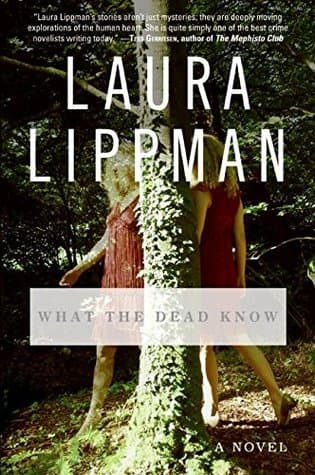
Laura Lippman (2007)
Genre
Thriller / Mystery
Reading Time
450 min
Key Themes
See below
Sign in to track this book
Thirty years after two sisters disappear from a mall, a woman claiming to be the younger sibling resurfaces. Her story unravels a perfect family's facade, leaving a skeptical detective to untangle her web of secrets before the truth disappears again.
In present-day Baltimore, a woman is in a hit-and-run accident during rush hour. Disoriented, she is taken to the hospital. While recovering, she tells Detective Kevin Infante she is Heather Bethany, the younger of two sisters who vanished from the Crossgates Mall thirty years ago. Her older sister, Belinda, was also abducted that day. The disappearance of the Bethany sisters is one of Baltimore's most notorious cold cases. The woman's sudden appearance reopens old wounds and restarts the investigation, questioning the long-held belief that both girls were dead. Her reluctance to give immediate details makes investigators suspicious.
The woman, who says she is Heather, struggles to recall specific details about her past or her abductor, frustrating Detective Infante. Her story is fragmented and often contradictory, making it hard for police to confirm her identity or find leads. Jim Fitzhugh, a veteran reporter who covered the original disappearance, is skeptical. He remembers the original investigation and finds many inconsistencies in the woman's account. His doubts grow due to a lack of physical evidence for her claim and her evasiveness about Belinda's fate. The police, while cautiously following the lead, also have strong reservations about her truthfulness.
The story flashes back to 1975, introducing the Bethany family: parents Arthur and Eleanor, and their daughters Belinda (15) and Heather (11). They appear to be the perfect suburban family, living in a beautiful home in Lutherville. However, beneath the surface, tensions and secrets exist. Arthur is a prominent lawyer, and Eleanor is a homemaker. Belinda is a popular and seemingly carefree teenager, while Heather is more observant. The story shows the subtle cracks in their seemingly perfect life, hinting at problems that will worsen with the tragedy.
On Saturday, July 12, 1975, Belinda and Heather go to Crossgates Mall. Belinda is meeting friends, while Heather is tagging along, hoping to buy a gift. The day seems ordinary, filled with typical teenage activities and sisterly arguments. The story reconstructs their movements in the mall, their interactions with friends and strangers, and the moments before their disappearance. The details emphasize the public nature of the mall, making their vanishing without a trace even more confusing. This section sets up the mystery, highlighting the initial confusion and panic after they did not return.
After the girls disappear, a large search begins. The police, led by Detective Jesse Winston, investigate every lead, from runaway theories to stranger abduction. Suspects include a mall security guard and a local handyman, but no concrete evidence appears. The Bethany family is thrust into the public eye, their private lives examined. The parents, Arthur and Eleanor, react differently to the crisis, their coping mechanisms straining their marriage. The initial investigation is hindered by a lack of witnesses and physical evidence, causing the case to go cold and public interest to turn to despair.
The 'new' Heather's memories begin to surface, but they are disjointed and often contradictory. She mentions a 'red house,' a 'man with a mustache,' and a vague sense of being held captive. Each lead she provides, however, turns out to be a dead end: a house she describes has been destroyed, a man she identifies is either dead or untraceable, and a supposed grave site yields no remains. Her inability to provide consistent or verifiable details makes Detective Infante and reporter Fitzhugh increasingly cautious. The police struggle to tell the difference between genuine recovered memories and made-up stories, complicating the investigation into her identity and the original crime.
The original abduction shattered the Bethany family. Arthur and Eleanor's marriage falls apart under the strain of grief, guilt, and unanswered questions. Arthur becomes withdrawn and alcoholic, while Eleanor seeks answers through psychics. Their once-perfect image crumbles, revealing deep resentments and unaddressed issues. The story shows how the tragedy not only took their daughters but also destroyed their individual lives and their relationship, leaving them isolated and consumed by their private sorrows, unable to move past the unresolved mystery.
As the 'new' Heather's memories become clearer, she points to a shocking suspect: Jesse Winston, the lead detective on the original Bethany case, now a respected and recently deceased Baltimore police legend. This accusation shocks the police department and the public. Winston was admired for his dedication and integrity, making Heather's claim seem impossible. Detective Infante faces pressure to investigate a fallen hero, knowing the implications if the accusation is true or false. The truthfulness of Heather's memories becomes crucial, as the reputation of the entire force is at stake.
Driven by his skepticism and long history with the case, Jim Fitzhugh conducts his own investigation. He revisits old files, re-interviews original witnesses, and digs into Jesse Winston's past, looking for inconsistencies or hidden truths. Fitzhugh's pursuit of the truth often puts him at odds with the police, especially as he uncovers details that challenge the official story or the 'new' Heather's account. His investigation is fueled by a desire for journalistic integrity and a personal investment in solving a case that has haunted him for decades, making him the primary challenger to Heather's claims.
Through Fitzhugh's reporting, Infante's police work, and the 'new' Heather's fragmented memories, the full truth emerges. It is revealed that the 'new' Heather is not Heather Bethany. She is an impostor named Sarah. The real Heather Bethany died shortly after the abduction. The abductor was not Jesse Winston, but a man named Raymond, known to the family, who was coerced by Eleanor Bethany's sister, Alice. Alice, resentful of Eleanor's seemingly perfect life, orchestrated the abduction to hurt her. Belinda was murdered by Raymond, and Heather died accidentally during their captivity.
Sarah, the impostor, is revealed to have been a runaway who, after a chance encounter with one of the original suspects, learned details about the Bethany case. She saw an opportunity to escape her own past and create a new identity, driven by a deep need for connection and a desire to be loved. Her 'amnesia' and fragmented memories were a planned performance, though she herself became increasingly involved in the persona she created. Her ultimate goal was to find a family and a sense of belonging, using the Bethany tragedy as her way.
Sarah is confronted with the evidence and confesses to her deception. The true abductor, Raymond, is found, and the full extent of Alice's involvement in orchestrating the crime is revealed. Eleanor Bethany, finally understanding her sister's cruelty and the true fate of her daughters, is devastated but also finds a sense of closure. Arthur Bethany, too, grapples with the decades of lies. The case is officially closed, and while the pain remains, the community and the surviving Bethany family members finally know what happened to Belinda and Heather, allowing for a form of peace.
The Protagonist/Antagonist
From a seemingly amnesiac victim seeking her identity, she is exposed as an impostor, ultimately revealing her true, vulnerable self and the desperate reasons behind her deception.
The Supporting/Antagonist
Initially a cynical reporter, his skepticism about 'Heather' leads him to finally uncover the truth of the original disappearance, bringing closure to a career-defining case.
The Supporting
He begins as a detached investigator but becomes personally invested in uncovering the truth behind the Bethany disappearance, meticulously piecing together the puzzle.
The Supporting
From a woman clinging to false hope and consumed by grief, she eventually confronts the painful truth of her daughters' fates and the betrayal of her own sister, finding a bitter form of closure.
The Supporting
Initially a successful but emotionally distant father, he descends into alcoholism and despair after his daughters' disappearance, eventually facing the full, painful truth and the role of his wife's family.
The Mentioned
Her story is largely static, representing the tragic, unresolved past that drives the entire narrative.
The Mentioned
Her story is revealed retrospectively, showing her tragic, premature death shortly after the abduction.
The Supporting/Mentioned
His posthumous reputation is challenged by the impostor's claims, but ultimately cleared as the true abductors are revealed.
The Antagonist
Her hidden resentment and involvement in the abduction are slowly revealed, culminating in her exposure as the true mastermind behind the tragedy.
The novel questions what is real and what is remembered, especially through Sarah's fragmented 'memories.' It shows how memory can be unreliable, shaped by trauma, desire, or even deliberate fabrication. Jim Fitzhugh's skepticism and Detective Infante's struggle to find facts highlight the difficulty in telling truth from invention, especially with a decades-old crime and a seemingly amnesiac witness. The story ultimately reveals that the 'truth' of the Bethany disappearance was hidden by lies, manipulation, and time, requiring great effort to uncover.
“What the dead know is that it's not the truth that sets you free. It's the knowing.”
Beneath the Bethany family's perfect image lay unspoken truths, resentments, and problems that led to their downfall. Eleanor and Arthur's strained marriage, Eleanor's sister Alice's jealousy, and the hidden motives behind the abduction all stem from secrets. The novel shows how these suppressed emotions can grow over decades, leading to catastrophic results and family destruction. The 'perfect' suburban life is shown to be a fragile shell, easily broken by unaddressed issues.
“Everyone had secrets. That was the one thing he knew for sure. And secrets, like rust, ate away at things, weakening the structure until it collapsed.”
Sarah's character arc centers on her search for identity and belonging. As an impostor, she tries to shed her troubled past and adopt the identity of a lost girl, hoping to find the family and love she never had. This theme explores the human need for connection and how far people will go to create a meaningful existence, even if it means living a lie. The novel questions what truly defines a person—their past, their name, or their relationships—and highlights the impact of a fractured sense of self.
“She had wanted to be Heather so badly, to have a past, a family, a name that meant something.”
The disappearance of the Bethany sisters casts a long shadow over everyone involved, even decades later. Eleanor and Arthur Bethany are consumed by grief and unanswered questions, their lives changed and their marriage destroyed. Jim Fitzhugh is haunted by the cold case, needing closure. The novel shows how people cope with loss—from withdrawal and alcoholism to desperate hope and obsession. It underscores how trauma can freeze individuals in time, preventing them from moving forward until the truth is confronted.
“Thirty years. But sometimes it felt like yesterday, sometimes it felt like forever.”
The primary 'witness' provides information that is deliberately misleading.
While the novel isn't strictly first-person from Sarah's perspective, her 'recovered memories' and claims serve as an unreliable narrative source for the present-day investigation. Her amnesia and fragmented recollections are revealed to be a calculated performance. This device forces both the characters within the story (Infante, Fitzhugh) and the reader to constantly question the veracity of the information presented, creating suspense and driving the investigative plot. It highlights the theme of truth's elusiveness and the challenge of discerning facts from fiction, especially when emotional stakes are high.
The story alternates between the present-day investigation and flashbacks to the past.
The novel skillfully employs a dual timeline, shifting between the present-day investigation into 'Heather Bethany's' identity and the original events leading up to and immediately following the 1975 disappearance. This structure allows the reader to gradually piece together the past alongside the characters, revealing crucial context for the present mystery. The juxtaposition of the 'perfect' Bethany family in 1975 with their shattered existence in the present emphasizes the profound impact of the tragedy and slowly unveils the underlying cracks that existed even before the abduction, building suspense and understanding simultaneously.
Misleading clues and suspects designed to divert the reader's attention.
The novel utilizes several red herrings to deepen the mystery and maintain suspense. The primary red herring is the accusation against Jesse Winston, the original detective, which seems plausible given the 'new' Heather's 'memories.' Other false leads, such as the 'red house' and various untraceable figures, also serve to distract the investigators and the reader from the true culprits. These diversions effectively complicate the plot, forcing characters like Fitzhugh and Infante to pursue dead ends before finally uncovering the real chain of events and the actual perpetrators.
A long-dormant investigation is reignited by new, unexpected information.
The central premise of the novel relies on the reopening of a cold case—the thirty-year-old disappearance of the Bethany sisters. The 'new' Heather's emergence provides the catalyst for this, breathing new life into a mystery that had long been considered unsolvable. This device generates immediate intrigue, as it promises to finally deliver answers to a haunting question. It also allows the narrative to explore the lasting impact of unresolved trauma on individuals and a community, demonstrating how a past event can continue to exert influence decades later, highlighting the enduring power of historical mysteries.
“I was the girl who disappeared. I was the girl who came back.”
— Main character's reflection on her past and present identity.
“The past isn't dead. It isn't even past.”
— A character's observation about how past events continue to influence the present.
“Sometimes you have to go back to where it started to understand where it ended.”
— The protagonist's realization about the necessity of revisiting her origins.
“Everyone has secrets. Some are just better at keeping them.”
— A general observation about human nature and the prevalence of hidden truths.
“Fear makes you do things you never thought you'd do.”
— Reflecting on the motivations behind certain actions taken under duress.
“The truth is rarely simple, and never what you expect.”
— A character's cynical view on the elusive nature of truth.
“How much of what we remember is real, and how much is what we wish had happened?”
— Questioning the reliability of memory and personal narrative.
“Even the dead have their stories, if you know how to listen.”
— A metaphorical statement about uncovering hidden histories and voices.
“Grief doesn't make you noble. It just makes you tired.”
— A realistic portrayal of the exhausting and often unglamorous nature of grief.
“Some lies are told to protect, and some are told to destroy.”
— Distinguishing between different motivations for deceit.
“The world doesn't care if you're fair. It just cares if you're strong enough to survive.”
— A cynical view on the harsh realities of survival and justice.
“You can never truly escape your past, no matter how far you run.”
— Emphasizing the inescapable nature of one's history.
“Sometimes the greatest mysteries are the ones we tell ourselves.”
— Highlighting self-deception and internal narratives as significant puzzles.
Ready to see how well you understood this book? Take our interactive quiz with 10 questions.

Biography coming soon.







