BookBrief
What Is the What cover
Archivist's Choice

What Is the What

Dave Eggers (2007)

Genre

Historical Fiction

Reading Time

10-12 hours

Key Themes

See below

Track Your Reading

Sign in to track this book

Orphaned by civil war, Valentino Achak Deng journeys across Sudan and Ethiopia, facing loss and finding strength as he navigates conflict.

Synopsis

Valentino Achak Deng, a Dinka boy from Marial Bai, Sudan, tells his story as one of the 'Lost Boys of Sudan.' The book begins with Valentino's apartment in America being invaded, which sets up his retelling of past events. He describes his peaceful childhood in Marial Bai before the Second Sudanese Civil War shatters it. When his village is attacked, Valentino is separated from his family and flees with thousands of other displaced children, starting a difficult trek across Sudan and Ethiopia. They face starvation, dehydration, disease, and attacks, all while looking for safety and food. After finding temporary refuge in the Pinyudo and Kakuma refugee camps, Valentino gets the chance to resettle in the United States. He struggles to adapt to American culture, dealing with bureaucracy, racism, and a very different society. Throughout his story, Valentino deals with losing his family and culture, the trauma of war, and his search for meaning. He eventually confronts his attackers in America and finds a way to share his story, not just as a victim, but as a survivor with a voice.
Reading time
10-12 hours
Difficulty
Medium
Pacing
Moderate
Mood
Heartbreaking, Resilient, Reflective, Hopeful
✓ Read this if...
You want an immersive, deeply human account of the Sudanese Civil War and the refugee experience, told through the eyes of a resilient protagonist.
✗ Skip this if...
You prefer lighthearted reads or struggle with graphic depictions of war, displacement, and the challenges of cultural assimilation.

Plot Summary

The Home Invasion and the Beginning of the Story

The story begins with Valentino Achak Deng's apartment in Atlanta, Georgia, being invaded by three young men: Michael, Julian, and Matt. They tie him up, ransack his home, and steal his belongings. This event prompts Valentino to tell his full life story, which is woven with the unfolding home invasion. He thinks about the irony of seeking safety in America only to be attacked in his own home, drawing comparisons to the violence he experienced in Sudan. The robbers' actions and dialogue show their own struggles and ignorance, setting a complex tone for Valentino's recollections of his past.

Life in Marial Bai and the First Attack

Valentino recounts his early childhood in the peaceful Dinka village of Marial Bai, Sudan. He describes his family, communal life, and traditional Dinka culture, including his father's cattle and his mother's care. This period is a time of innocence and relative security, despite the tensions of the Second Sudanese Civil War. The peace ends when Arab militia attack Marial Bai. Valentino is separated from his family in the chaos, seeing violence and the destruction of his home. This event starts his journey as a 'Lost Boy' of Sudan.

The Journey to Pinyudo Refugee Camp

After the attack on Marial Bai, Valentino, now separated from his family, joins a group of boys, all orphans or separated from their parents, who are fleeing the violence. They begin a long and dangerous walk eastward, seeking refuge in Ethiopia. This journey is marked by extreme hardship: starvation, thirst, disease, attacks by wild animals, and the constant threat of more violence from soldiers or militias. Valentino learns to survive by relying on his wits, the kindness of strangers, and the friendship of his fellow Lost Boys, including his friend William K. This section shows the suffering and strength of the children as they cross vast, unforgiving lands.

Life in Pinyudo Refugee Camp

Valentino and the other Lost Boys eventually reach Pinyudo Refugee Camp in Ethiopia, set up by the UNHCR. Here, they find some stability and community. Valentino attends school, learns English, and forms close bonds with other boys. He describes the daily routines of camp life, the challenges of getting food and resources, and the efforts made by the boys and aid workers to create a sense of normalcy. Despite improvements, life in Pinyudo is still difficult, marked by resource scarcity, health issues, and the psychological scars of their past experiences. He also meets Moses, a respected elder who offers guidance.

The Fall of Mengistu and the Exodus from Ethiopia

The peace in Pinyudo ends with political upheaval in Ethiopia. The Mengistu regime collapses, leading to renewed conflict and the forced expulsion of Sudanese refugees. Valentino and thousands of other boys are again forced to flee, this time back towards Sudan, crossing the Gilo River under fire. Many die during this chaotic and terrifying exodus. This experience is more traumatic than the initial flight, as the boys face deliberate attacks and mass drownings. Valentino's survival is due to his determination and a series of fortunate escapes.

Kakuma Refugee Camp, Kenya

After the difficult escape from Ethiopia, Valentino makes his way to Kakuma Refugee Camp in Kenya. Kakuma is a harsh and overcrowded camp in a desolate desert. Valentino spends many years here, enduring extreme heat, dust storms, hunger, and tribal tensions among the refugees. Despite these challenges, he continues his education, improving his English skills and gaining a deeper understanding of the world. He also deals with the loss of his family and the uncertainty of his future, holding onto the hope of resettlement and a better life. He becomes a leader among his peers, often mediating disputes.

Resettlement to America

After years in Kakuma, Valentino is among the thousands of Lost Boys chosen for resettlement to the United States. He undergoes interviews and medical examinations, a process filled with both hope and apprehension. His journey to America is a turning point, offering a chance for safety, education, and a future free from war. He arrives in Fargo, North Dakota, a stark contrast to the African landscapes he has known. This new beginning is full of culture shock, loneliness, and the challenges of adapting to a completely different society while still carrying the weight of his past experiences.

Adjusting to American Life and the Search for Family

In America, Valentino faces the complexities of integration. He works various jobs, from grocery stores to hotels, to support himself and send money back to his family in Sudan, whom he eventually reconnects with. He moves from Fargo to Pittsburgh and then to Atlanta, seeking better opportunities and a more familiar climate. He experiences both kindness and prejudice, marveling at American abundance while struggling with its materialism and superficiality. A significant part of his American life is dedicated to the difficult process of trying to bring his sister and other family members to the United States, facing bureaucratic hurdles and financial strain.

The Resolution of the Home Invasion

Back in the present, the home invasion in Atlanta concludes. After taking what they want, the three robbers, Michael, Julian, and Matt, eventually leave Valentino's apartment. During their time there, Valentino tries to connect with them, even offering them food and trying to understand their motives. He sees glimpses of humanity and desperation in their actions, refusing to demonize them completely. As they depart, Valentino is left alone, reflecting on the experience and how it mirrors the cycles of violence and displacement he has seen throughout his life. He begins the slow process of cleaning up and rebuilding, both physically and emotionally.

The Aftermath and the Purpose of Storytelling

In the aftermath of the robbery, Valentino deals with the lingering trauma and the practicalities of reporting the crime and dealing with insurance. He continues to reflect on the robbers, particularly Michael, and the societal factors that might have led them to such acts. This final section reinforces the novel's overarching theme of shared humanity and the power of storytelling. Valentino, though affected, remains committed to sharing his narrative, not just as a personal memoir but as a look at the experiences of all Lost Boys and a plea for greater understanding and compassion in a world with conflict and inequality. His story becomes a bridge between cultures.


Principal Figures

Valentino Achak Deng

The Protagonist

Valentino transforms from an innocent boy into a seasoned survivor and ultimately into a powerful storyteller, using his personal trauma to illuminate broader human truths and advocate for others.

William K

The Supporting

William K's arc is less individually detailed but mirrors the collective journey of the Lost Boys, showcasing resilience and the importance of camaraderie in survival.

Michael

The Antagonist/Supporting

Michael's arc is static within the present-day narrative, but he serves as a catalyst for Valentino's introspection and storytelling, forcing a confrontation with different forms of suffering.

Moses

The Supporting

Moses's arc is limited to his role as a steady, guiding presence, offering a moral compass amidst chaos.

Julian

The Supporting

Julian remains largely unchanged, serving as a foil to Michael's more dominant personality and highlighting the different motivations within the group of robbers.

Matt

The Supporting

Matt's character is static, embodying pure aggression and serving as a direct threat to Valentino.

Norah

The Supporting

Norah's arc is defined by Valentino's efforts to rescue and reunite with her, symbolizing the eventual hope for family reconstruction.

Themes & Insights

The Enduring Power of Storytelling

Valentino's decision to tell his story, prompted by the home invasion, is central to the novel. He believes that sharing his experiences is essential for understanding, remembrance, and healing. His narrative is about the human need to make sense of trauma and to communicate it to others, bridging cultural divides. By recounting the horrors he faced and the lessons he learned, he gives voice not only to himself but to all the 'Lost Boys' and victims of war, ensuring their experiences are not forgotten. The book's structure, moving between present and past, emphasizes the act of narration.

I will tell you what happened. I will tell you everything. But I will tell you in my own time, in my own way. I will tell you the story of my life. This is what I want to do. This is what I must do.

Valentino Achak Deng

Loss of Innocence and the Search for Home

The novel shows Valentino's abrupt loss of innocence when his village is attacked. He is forced to grow up quickly, facing death, starvation, and violence at a very young age. This theme is linked to his constant search for 'home' – first a safe place, then a place of belonging, and finally a sense of internal peace. From Marial Bai to Pinyudo, Kakuma, and eventually America, Valentino is always looking for a place where he can feel secure and truly belong, a place that can replace the home he lost. This search is not just physical but also spiritual and emotional.

What is the what? It is the thing that makes us go. It is the thing that takes us from one place to another. It is the thing that makes us leave home, and then makes us want to find it again.

Valentino Achak Deng

Shared Humanity and the Cycles of Violence

A theme is Valentino's ability to see shared humanity even in his oppressors, both in Sudan and in America. He reflects on the desperation of the Arab militia and the lostness of the young men who rob him in Atlanta, refusing to paint them as purely evil. This perspective challenges simple ideas of good versus evil, suggesting that violence often comes from cycles of poverty, ignorance, and historical injustice. By drawing parallels between the violence in Sudan and the crime in America, the novel highlights the universal nature of suffering and the need for compassion across all divides.

They were young men, and they were lost. Just like I had been lost, so many years ago. But their lostness was different. Their lostness was a choice, in some ways.

Valentino Achak Deng

Resilience and the Will to Survive

Valentino's entire journey shows the strength of the human spirit. Despite enduring war, starvation, disease, forced marches, and displacement, he consistently finds the will to survive. This strength comes from internal resilience, the bonds of friendship, and hope for a better future. The narrative shows not just individual endurance but also the collective strength of the 'Lost Boys' who supported each other through dire circumstances, demonstrating humanity's capacity to persist against overwhelming odds.

We were not just surviving, we were living. We were learning. We were becoming. We were the Lost Boys, and we were found.

Valentino Achak Deng

The Promise and Disillusionment of America

For Valentino and many Lost Boys, America represents the promise of safety, opportunity, and freedom. The novel explores both the fulfillment of this promise and the subsequent disillusionment. While America offers refuge and a chance for education, Valentino also encounters cultural misunderstandings, materialism, loneliness, and crime (the home invasion). He deals with adapting to a new society while reconciling it with the trauma of his past. The American dream is presented as real but also nuanced, challenging, and not without its own struggles.

America was a land of wonders, a land of plenty. But it was also a land of loneliness, a land of confusion. It was a land that promised everything, and sometimes gave nothing.

Valentino Achak Deng

Plot Devices & Literary Techniques

Framing Device: The Home Invasion

Valentino's present-day robbery in Atlanta frames and punctuates his past narrative.

The home invasion serves as a powerful framing device, interweaving the present-day narrative with Valentino's extensive flashbacks. It grounds the epic historical journey in a contemporary, personal crisis. The immediate threat in his Atlanta apartment provides both a dramatic impetus for his storytelling and a poignant contrast to the earlier, larger-scale violence he experienced. This device allows the author to explore the lingering effects of trauma, the complexities of different forms of violence, and Valentino's reflective process as he recounts his life under duress, highlighting that even in safety, the past can intrude.

First-Person Narrative (with authorial intervention)

Valentino recounts his own story, but the author's presence is acknowledged.

The novel is primarily told from Valentino Achak Deng's first-person perspective, giving an intimate and authentic voice to his experiences. This narrative choice allows readers to deeply connect with his emotional journey, thoughts, and reflections. However, the author, Dave Eggers, occasionally breaks the fourth wall, acknowledging his role in transcribing and shaping Valentino's story. This meta-narrative element adds a layer of authenticity and self-awareness, reminding the reader that this is a true story, meticulously documented, and emphasizes the collaborative nature of its creation. It reinforces the idea of the 'story' itself as a powerful entity.

Juxtaposition

Contrasting scenes and experiences to highlight thematic connections.

Juxtaposition is used throughout the novel to draw stark comparisons between Valentino's experiences. The idyllic life in Marial Bai is juxtaposed with the brutal attack that follows. The relative safety of Pinyudo is juxtaposed with the forced exodus across the Gilo River. Most notably, the violence and hardship of Sudan are juxtaposed with the challenges and different forms of 'lostness' Valentino encounters in modern America, particularly during the home invasion. This device emphasizes the universality of certain human experiences—suffering, resilience, and the search for belonging—across vastly different cultural and geographical contexts.

Symbolism of the 'What'

The ambiguous 'what' represents the unknowable future, fate, or underlying truth.

The title itself, 'What Is the What,' refers to an abstract concept that Valentino grapples with throughout his life. The 'what' symbolizes the elusive meaning behind his suffering, the unknown path of the future, the ultimate purpose of his survival, or perhaps the fundamental truth of human existence. It represents the questions that cannot be fully answered, the forces beyond individual control, and the constant search for understanding in a world often devoid of clear logic. It encourages readers to ponder the deeper philosophical implications of Valentino's journey.

Critical analysis

Notable Quotes

We are the lucky ones. We are the ones who get to choose. We are the ones who get to decide what we do with our lives. We are the ones who get to make a difference.

Valentino reflects on the agency he now has in America, contrasting it with his past.

When you are a refugee, you learn to live with the idea that you are always in transit. You are always moving, always looking for a place to stop, but you never really stop.

Valentino describes the perpetual state of displacement experienced by refugees.

The world is not fair, and it never will be. But that doesn’t mean we shouldn’t try to make it better.

A pragmatic view of the world's injustices, but with a call to action.

We were not looking for trouble, but trouble found us. It always does.

Valentino recounts the constant threat and violence that plagued his life in Sudan.

To be a Lost Boy is to be a ghost, to be an absence. You are there, but you are not. You are seen, but you are not recognized.

Valentino describes the dehumanizing experience of being a 'Lost Boy' refugee.

Home is not a place, it’s a feeling. And sometimes, you can find that feeling in the most unexpected places.

Valentino's evolving understanding of 'home' as he adapts to new environments.

The greatest gift you can give someone is your time. Because when you give your time, you are giving a portion of your life that you will never get back.

Valentino reflects on the value of human connection and generosity.

Memory is a tricky thing. It can be a comfort, or it can be a curse. Sometimes, it’s both.

Valentino grapples with the traumatic memories of his past.

Survival is not enough. We must live. We must find joy. We must find purpose.

Valentino's realization that merely existing is not fulfilling; true living is essential.

The only thing worse than being alone is being alone in a crowd.

Valentino experiences feelings of isolation even amidst many people in America.

When you have nothing, you have nothing to lose. And that can be a very powerful thing.

Valentino reflects on the strange freedom that comes with extreme deprivation.

We are all connected, whether we know it or not. Our lives are intertwined, and our actions have consequences far beyond what we can imagine.

A broader philosophical statement on human interconnectedness.

Sometimes, the hardest thing to do is to forgive. Not for them, but for yourself.

Valentino's internal struggle with forgiveness for past wrongs.

Hope is a dangerous thing. It can keep you alive, but it can also break your heart.

A nuanced view of hope, acknowledging its dual nature in difficult circumstances.

Quiz

Test Your Knowledge

Ready to see how well you understood this book? Take our interactive quiz with 10 questions.

10
Questions
~5
Minutes
?
Best Score

Key Questions (FAQ)

The novel follows the extraordinary life of Valentino Achak Deng, a 'Lost Boy' of Sudan, from his childhood in a Sudanese village, through his arduous journey across Africa fleeing civil war, to his eventual resettlement and struggles in modern-day Atlanta, Georgia. It explores themes of displacement, survival, and the search for belonging against a backdrop of immense tragedy.

About the author

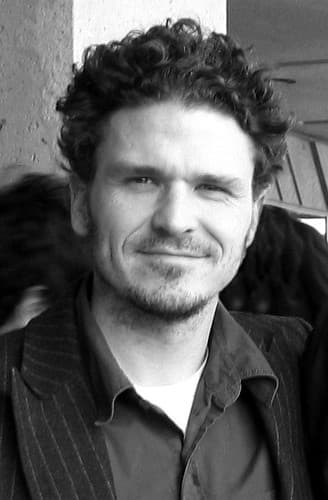
Dave Eggers

Dave Eggers is an American writer, editor, and publisher. He wrote the 2000 best-selling memoir A Heartbreaking Work of Staggering Genius. Eggers is also the founder of Timothy McSweeney's Quarterly Concern, a literary journal; a co-founder of the literacy project 826 Valencia and the human rights nonprofit Voice of Witness; and the founder of ScholarMatch, a program that matches donors with students needing funds for college tuition. His writing has appeared in several magazines.