“The world was a great machine, and we were all just cogs in it, and sometimes the cogs jammed.”
— Reflecting on the nature of life and fate.

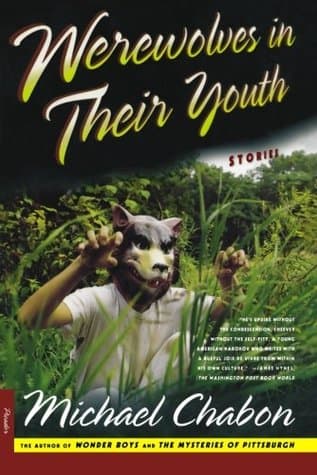
Michael Chabon (1999)
Genre
Literary Fiction
Reading Time
240 min
Key Themes
See below
Sign in to track this book
Chabon's characters face difficult choices that reveal their deepest fears and define who they are, showing how ordinary life can suddenly become extraordinary.
Paul, a young boy in a suburban neighborhood, often visits his neighbor, Mrs. McGrew, who he sees as a kind older woman. One day, playing in her house, he finds a hidden room. There, he sees Mrs. McGrew with another man. This encounter deeply disturbs Paul. Later, he hears his mother talking about Mrs. McGrew's 'disappearance' and rumors of her involvement in a cult that practices human sacrifice. Paul struggles with what he saw and the truth about his neighbor's secret life. He feels a loss of innocence and begins to understand the hidden darkness beneath suburban life.
Arthur, a successful but unhappy architect, is having a midlife crisis and his marriage is ending. He finds comfort in a strange hobby: building detailed miniature cities in his basement. One day, he reads a newspaper article about an old man who built an entire miniature world in his backyard, with tiny inhabitants and a complex, self-sustaining ecosystem. Curious, Arthur finds the man and gets to see this fantastic creation. He becomes more and more involved in the miniature world, finding a sense of control and purpose missing from his own life. The story explores escaping reality, finding meaning, and the appeal of creating one's own world.
David and Sarah, a young couple, begin the stressful process of house hunting. As they look at homes, their individual desires and worries start to show, revealing problems in their relationship. David is practical and thinks about money, while Sarah is more emotional, looking for a dream home that means a new start. During one house viewing, they feel a strange presence, and Sarah becomes sure the house is haunted. The experience makes them face their fears and worries, leading to a deeper understanding of their love and the compromises they will make.
Jamie, a curious boy, is fascinated by urban legends and local stories, especially about a creature called 'Spikes' said to live in the sewers. He spends his days exploring his neighborhood, looking for clues about the creature. His older brother, a cynical teenager, dismisses Jamie's beliefs as childish. However, strange events and disappearances in town begin to blur the line between myth and reality. Jamie's search for the truth leads him to a scary encounter that challenges his understanding of the world and its hidden dangers.
Daniel, a young man in New York City, gets a mysterious letter from his estranged father, Harris Fetko. Harris was a magician and con artist who disappeared years ago. The letter hints at a secret and tells Daniel to find an old friend of his father's. Daniel tries to piece together his father's past, traveling to different places and meeting various people who knew Harris. He uncovers a complex web of lies, tricks, and betrayal, learning about his father's true nature and why he disappeared. The journey makes Daniel confront his own identity and accept his family's complicated legacy.
Dr. Alistair Finch, a brilliant but unusual scientist, works on a secret government project about talking to aliens. One night, he gets a strange, coded message that seems to be from Mars. He deciphers it; it describes a Martian agent disguised as a human, living among them. Alistair becomes obsessed with finding this agent, believing their arrival means a big change in how humanity understands the universe. His search leads him into paranoia and delusion, blurring the lines between what is real and what is not. He eventually confronts a mysterious woman he thinks is the Martian agent, leading to a surprising revelation about existence and the limits of human understanding.
Danny, a young boy, lives with his single mother and rarely sees his father, who is rumored to be troubled. Danny's mother tries to protect him from the truth about his father's past. However, strange events and whispers hint at a dark family secret: his father is a werewolf. As Danny gets older, he shows signs of the same condition, struggling with uncontrollable urges and transformations during the full moon. He fears becoming like his father and the burden of a cursed family line. The story explores inherited trauma, the struggle for identity, and the desperate search for acceptance and control over one's life.
In a remote town, a charismatic leader starts a cult called 'The God of Dark Laughter.' He promises enlightenment through unusual and often disturbing rituals. Michael, a young man trapped in the cult, wants freedom from its control. He sees the cult's increasingly strange and dangerous practices, including animal sacrifices and mind games. As the cult grows and its leader's demands become more extreme, Michael realizes he must escape. His desperate attempt to flee is dangerous, forcing him to face the dark forces that hold him and the town.
Leo, a talented but ambitious young magician, dreams of becoming famous in the world of illusion. He hears rumors of 'The Hand of the Trickster,' a mythical object said to give its owner unmatched magical abilities. Obsessed with this power, Leo begins a dangerous journey, following clues and facing challenges. He meets other magicians, good and bad, who also seek the object. As he gets closer to his goal, Leo starts to understand the true cost of such power and the moral compromises he might have to make. The story explores the appeal of power, ambition, and the line between illusion and reality.
Elias Thorne, a reclusive inventor, dedicates his life to creating a thinking robot, a mechanical man able to feel. After years of work, he succeeds, bringing 'Adam' to life. Adam quickly develops a unique personality, showing curiosity, humor, and a desire for connection. Elias, at first happy, soon deals with the ethical issues of his creation and the deep loneliness he feels despite Adam's presence. Adam, in turn, struggles with being a machine, questioning his purpose and place in a human world. The story looks at artificial intelligence, companionship, consciousness, and the human need for connection.
Mark, a divorced father, takes his quiet teenage son, Ethan, on a road trip to a remote, coastal town known for its coffee farms. Mark hopes the trip will help them reconnect, but Ethan stays distant. As they travel along the scenic 'Coffee Coast,' they meet unusual locals and customs. The journey makes them confront their unspoken resentments and the pain of their family's past. A mysterious event at one of the coffee farms further complicates their trip, leading to a moment of unexpected openness and a fragile understanding between father and son.
This story is set in an alternate historical period. It retells a legendary military campaign between a brilliant general and a cruel emperor. General Kael, a clever strategist, leads his outnumbered forces against Emperor Valerius's large army. Valerius has a mysterious, almost magical power. The battles use not only swords and spears but also ancient, forgotten technologies and strange, elemental forces. Kael finds the source of the Emperor's power and plans to use its weaknesses. The story explores leadership, sacrifice, the nature of power, and the blurred lines between history and myth. It ends with a big fight that decides the fate of empires.
The Protagonist
Paul's arc is one of lost innocence, as he transitions from childhood simplicity to a dawning, disturbing awareness of adult complexities and secrets.
The Protagonist
Arthur's arc involves a search for meaning and control, finding a temporary, albeit artificial, sense of purpose in his miniature creations.
The Protagonist
David's arc is about learning to balance his pragmatism with emotional understanding, recognizing the deeper needs in his relationship.
The Protagonist
Sarah's arc involves confronting her fears and anxieties, leading to a more realistic understanding of her desires and her relationship.
The Protagonist
Jamie's arc sees him grappling with the blurred lines between myth and reality, forcing him to reconcile his imagination with unsettling truths.
The Protagonist
Daniel's arc is a journey of self-discovery, where understanding his father's past helps him come to terms with his own identity and legacy.
The Protagonist
Alistair's arc is a descent into delusion, as his pursuit of truth leads him to question the very fabric of reality.
The Protagonist
Danny's arc is about accepting and trying to control his inherited condition, battling the fear of becoming like his father.
The Protagonist
Michael's arc is a fight for liberation, as he attempts to break free from the psychological and physical confines of the cult.
The Protagonist
Leo's arc explores the allure and corrupting nature of power, as he learns the true cost of his ambition.
The Protagonist
Elias's arc is about confronting the ethical and emotional complexities of artificial life, and the persistent nature of human loneliness.
The Protagonist
Mark's arc is about bridging the emotional distance with his son, learning to communicate and find common ground.
This theme appears through young characters who see or experience things that end their innocence. In 'Werewolves in Their Youth,' Paul's discovery of Mrs. McGrew's secret life makes him face the hidden darkness in his seemingly normal world. Similarly, Jamie in 'Spikes' deals with the reality behind urban legends, blurring the line between childhood fantasy and dangerous truths. These stories show the difficult but unavoidable move from not knowing to a more complex, often troubling, understanding of the world.
“He understood then, with a cold, sinking certainty, that the world was not as simple as it seemed, and that some secrets were meant to stay hidden.”
Many characters seek safety or control by creating their own worlds, either real or imagined. Arthur in 'A Model World' finds comfort from his failing marriage by building miniature cities, where he has complete control. Dr. Alistair Finch in 'The Martian Agent' enters a self-made reality of alien encounters, blurring the lines of sanity. This theme highlights the human desire to escape unpleasant realities and the appeal of building a personal universe where one has ultimate power, often leading to isolation.
“In his miniature city, every building stood exactly where he placed it, every tiny inhabitant lived precisely the life he designed. It was a world he could understand, a world he could master.”
This theme explores how characters are shaped by their family's past, through genes or unspoken secrets. In 'Son of the Wolfman,' Danny deals with the terrifying chance of inheriting his father's lycanthropy, a curse passed down. Daniel in 'The Harris Fetko Story' tries to understand his estranged father's life as a magician and con artist, realizing how his father's choices shaped his own identity. The stories look at the weight of family history and the struggle to make one's own way despite the past.
“The past, he realized, was not just a story you told; it was a weight you carried, a shadow that stretched over your own future.”
Characters in these stories often deal with complex human relationships and deep loneliness. Elias Thorne in 'The Last Mechanical Man' creates a thinking being to fight his isolation, only to find new emotional distance. Mark and Ethan in 'Along the Coffee Coast' try to close the emotional gap in their father-son relationship. This theme shows the human need for connection, the difficulties in achieving it, and the ongoing presence of isolation even when with others.
“He had built something that could think, feel, and even love, yet the silence in his workshop remained unbroken, a testament to the distance between creator and creation.”
Many main characters try to understand themselves and their place in the world. Arthur's midlife crisis leads him to a strange hobby in 'A Model World' as he searches for purpose. Daniel's journey to uncover his father's past in 'The Harris Fetko Story' is about understanding his own roots and identity. These stories show the human drive to define oneself, often by facing challenges or solving personal mysteries, which leads to self-discovery, however unsettling the revelations may be.
“Who was he, if not a reflection of the man who made him? The answer, he knew, lay not in his father's secrets, but in the choices he would make for himself.”
A character's skewed perception distorts the reader's understanding of events.
This device is used to create ambiguity and tension, particularly in stories where characters are grappling with subjective experiences or mental instability. In 'The Martian Agent,' Dr. Alistair Finch's increasingly paranoid perspective makes it difficult for the reader to discern what is real and what is delusion. This technique forces the reader to question the reality presented, immersing them in the character's psychological state and highlighting themes of perception versus reality.
Myths and rumors hint at future events or hidden truths.
Chabon frequently employs local legends or whispered stories to subtly foreshadow darker events or reveal underlying anxieties within a community. In 'Spikes,' Jamie's obsession with the creature 'Spikes' and the accompanying disappearances hint at a tangible threat rather than just a child's fantasy. This device builds suspense and connects the fantastical elements to the more grounded realities of the characters' lives, suggesting that sometimes, the myths hold a kernel of truth.
A plot device that drives the narrative forward without intrinsic importance.
This device often serves as a catalyst for a character's journey or quest. In 'The Hand of the Trickster,' 'The Hand of the Trickster' itself is a mythical artifact that Leo seeks, driving his perilous journey and interactions. While its specific powers are important to Leo, its primary function for the narrative is to motivate his actions and propel the plot, leading him to discover deeper truths about ambition and power rather than just the object itself.
A remote or self-contained location that amplifies themes of introspection or danger.
Chabon uses isolated settings to create a sense of detachment, introspection, or heightened peril. The remote coastal town in 'Along the Coffee Coast' provides a backdrop for a father and son to confront their strained relationship away from external distractions. Similarly, the secluded town in 'The God of Dark Laughter' emphasizes the cult's oppressive control and the difficulty of escape. This device effectively amplifies the internal or interpersonal conflicts of the characters.
“The world was a great machine, and we were all just cogs in it, and sometimes the cogs jammed.”
— Reflecting on the nature of life and fate.
“There was a kind of beauty in the brokenness, a truth that wholeness could never possess.”
— Observing something damaged yet profound.
“Memory was a tricky thing, a phantom limb that ached for what was no longer there.”
— Meditating on the nature of memory and loss.
“He understood then that sometimes the greatest acts of courage were the quietest ones.”
— Realizing the understated bravery of someone.
“The past was a country you could never truly leave, only visit in your dreams.”
— Considering the enduring influence of the past.
“Every secret carried its own weight, a silent burden on the soul.”
— Pondering the impact of hidden truths.
“Love, he thought, was a kind of magic, a spell cast upon two unsuspecting hearts.”
— Reflecting on the mysterious power of love.
“Childhood was a landscape you wandered through, full of wonders and terrors.”
— Describing the experience of growing up.
“The future was an unwritten page, waiting for the ink of choice and chance.”
— Considering the uncertainty and potential of the future.
“Sometimes the things you searched for were already within you, just waiting to be found.”
— A moment of self-discovery or realization.
“The air was thick with unspoken words, with desires held captive behind polite smiles.”
— Observing social tension or hidden emotions.
“Grief was a river that carved new channels in the landscape of the heart.”
— Metaphorically describing the transformative nature of grief.
“He carried the weight of his youth like a heavy coat, too warm for the season.”
— Feeling burdened by past experiences or lingering immaturity.
“The world was full of small, ordinary miracles, if only you knew where to look.”
— Appreciating the overlooked wonders of everyday life.
Ready to see how well you understood this book? Take our interactive quiz with 10 questions.
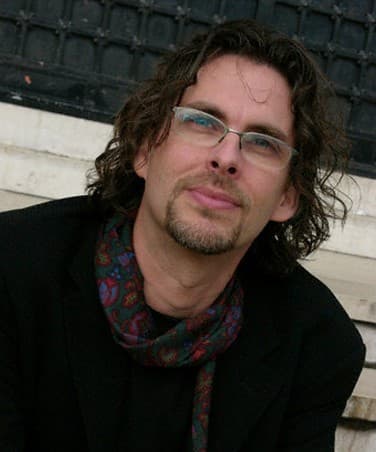
Michael Chabon is an American novelist, screenwriter, columnist, and short story writer. Born in Washington, D.C., he spent a year studying at Carnegie Mellon University before transferring to the University of Pittsburgh, graduating in 1984. He subsequently received a Master of Fine Arts in creative writing from the University of California, Irvine.







