“The world has been crazy from the start. It’s always been like this. It’s always been messed up. It’s always been beautiful.”
— Hodaka reflecting on the state of the world and the continuous rain.

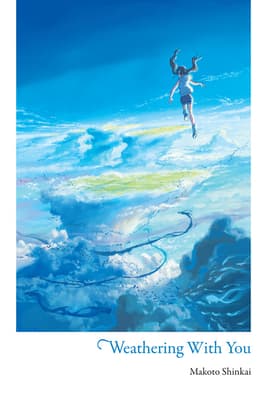
Makoto Shinkai (2020)
Genre
Fantasy / Young Adult / Romance
Reading Time
180 min
Key Themes
See below
Sign in to track this book
In a Tokyo always raining, a runaway boy and an orphan girl who controls the weather must choose between a sunny paradise and the irreversible cost of her power.
Sixteen-year-old Hodaka Morishima runs away from his home on Kozushima, a small island, after an unspecified incident and family problems. He takes a ferry to Tokyo, arriving during an endless rainy season. Broke and alone, he struggles to find work and shelter, living on the streets and eating instant noodles. He meets Keisuke Suga, a somewhat shady but kind man who gave him a ride on the ferry, and later finds him again. Hodaka eventually gets a live-in job at Suga's small, struggling occult magazine company, K&A Planning. This company investigates urban legends, especially those about unusual weather. He works with Natsumi, Suga's niece, a lively young woman.
While working for K&A Planning, investigating an urban legend about a 'sunshine girl,' Hodaka sees Hina Amano working at a fast-food restaurant. He sees her being harassed by two men trying to force her into a suspicious job. Hodaka steps in, which leads to a brief chase and a moment where Hina seems to calm the situation. Later, Hodaka follows Hina to an old shrine on a building. There, Hina prays, and to Hodaka's surprise, the heavy rain stops, and a patch of blue sky and sunlight appears directly above them. This confirms the urban legend and shows Hina's ability to control the weather.
Hodaka sees Hina's unique ability and suggests they start a business: Hina will be a 'Sunshine Girl,' bringing good weather to specific events for a fee. With help from Hina's younger brother, Nagi, they create a website and begin taking requests. Their services quickly become popular. They clear skies for outdoor weddings, flea markets, children's birthday parties, and even provide sun for an elderly woman to visit her deceased husband's grave. Their small business brings joy to many and gives them needed income, forming a strong bond among the three.
As Hina uses her power, her body becomes more transparent and ghost-like, a subtle but worrying change. She also gets very tired. Meanwhile, Hodaka's past catches up to him. The police have been looking for him since he ran away, and a missing persons report has been filed. His picture is circulated, and he avoids being identified several times. Authorities also begin to investigate the unusual weather patterns and the 'Sunshine Girl' phenomenon, linking it to various disappearances and strange events, though they do not immediately connect it to Hina.
The police finally catch Hodaka. While he, Hina, and Nagi are staying at a love hotel, their location is found. The police raid the room, trying to arrest Hodaka. In the confusion, Hina uses her power to create a local storm, letting Hodaka escape for a moment. However, Hina and Nagi are taken into protective custody. Hodaka, desperate to reunite with them, feels great guilt and responsibility for their situation. He sees the growing danger around Hina's power and his fugitive status, making their future together seem impossible.
After their separation, the rain finally stops, but Hina's transparency gets worse. She realizes she is the 'weather maiden' whose sacrifice is needed to restore the world's weather balance. She sadly decides to go to the sky, becoming part of the atmosphere. This act immediately ends the constant rain over Tokyo, and the sun returns. Hodaka, heartbroken and determined to find her, is devastated by her disappearance. He learns from Suga and others about the old legends of weather maidens and their tragic fates, confirming Hina's sacrifice.
Hodaka refuses to accept Hina's sacrifice. He escapes police custody with help from Natsumi and Suga, who, despite his first doubts, is moved by Hodaka's strong devotion. Hodaka wants to find Hina and bring her back, believing her happiness is more important than the world's convenience. He goes back to the old shrine, the place where Hina first showed her powers. He climbs to the rooftop, sure that this is the portal to where Hina has gone, despite the dangers and the overwhelming odds.
At the shrine, Hodaka finds a spiritual portal leading into the sky. He jumps through, entering a mystical place above the clouds where Hina exists as a spirit, connected to the weather. He faces the forces that hold her, asking her to return with him, to choose her own happiness over the world's demand for sacrifice. He finds Hina in a calm, dream-like state, but she recognizes him. His strong love and determination reach her, and she begins to reconsider her fate. He grabs her hand, pulling her back toward their world.
Hodaka successfully brings Hina back to Earth. His act of defiance has immediate and severe consequences. The moment Hina returns, the rain over Tokyo starts again, heavier and more constant than ever. The city begins to flood, and life changes dramatically as people adapt to a permanently waterlogged environment. Hodaka is eventually arrested by the police. He accepts his punishment, knowing he chose to save Hina, and is sent back to his island home, separated from Hina and Nagi, but knowing Hina is alive and safe.
Three years pass. Tokyo has become a city always covered in water, with many areas flooded and people living on higher ground or in adapted buildings. Hodaka, having finished his probation and high school, returns to Tokyo. He visits Suga and Natsumi, who have also adjusted to the new normal. He searches for Hina and finds her praying at a shrine, still caring for Nagi. They reunite in a bittersweet moment, acknowledging the world they changed for their love. Hodaka realizes that despite the constant rain, the world is still beautiful, and their happiness was worth the cost.
The Protagonist
Hodaka transforms from a lost, aimless runaway into a determined young man willing to defy the world for the one he loves, ultimately accepting the consequences of his actions.
The Protagonist
Hina evolves from a selfless figure willing to be a sacrifice to someone who chooses her own life and happiness, empowered by love.
The Supporting
Suga gradually sheds his jaded exterior, reconnecting with his empathy and acting on his conscience, ultimately supporting Hodaka's defiant actions.
The Supporting
Natsumi remains a steadfast and supportive friend, growing in her commitment to helping Hodaka even when it means defying authority.
The Supporting
Nagi maintains his supportive and protective role towards his sister and Hodaka, adapting to their changing circumstances with resilience.
The Supporting
They remain consistent in their roles as agents of the law, highlighting the societal consequences of Hodaka's actions.
This is the main conflict. The story asks if individual happiness and love between two people are more important than the well-being of the wider world. Hodaka's decision to bring Hina back, knowing it will cause endless rain, challenges the idea of sacrificing one for many. The film does not give an easy answer but suggests that individual love and happiness are important, even if they have a big cost to society. This shows in Hodaka's strong pursuit of Hina, even knowing the 'price' the world would pay.
““I don't care if we don't see the sun again. I want you more than any blue sky.””
Hina's power as the 'Sunshine Girl' comes with a high cost: her own life. The story looks at old legends of weather maidens who sacrifice themselves to restore balance. This theme explores the burden of special abilities and the expectation of self-sacrifice for the greater good. Hina first accepts this fate, becoming more transparent as she uses her power. The story questions if such a sacrifice is truly needed or if there is another way, suggesting that no one should be forced to give up their life for others.
““There are things that can only be found if you search for them, and things that can only be found if you don't.””
Both Hodaka and Hina feel lost and alone. Hodaka runs away looking for a place to belong, escaping an unfulfilling life. Hina, an orphan with a unique power, struggles to find her place in society while raising her brother. Their bond gives them a sense of belonging and purpose. The constant rain in Tokyo can represent their own inner struggles and the bleakness of their early lives, which they navigate together to create their own 'sunshine.'
““The world has been crazy from the start.””
The film shows a Tokyo undergoing extreme and lasting climate change. The constant rain and flooding force the city and its people to adapt to a new normal. This theme highlights humanity's ability to adjust to big environmental changes, even if they come from supernatural forces. It also subtly suggests that nature has its own will, separate from human desires, and that people must learn to live with it, rather than trying to control it.
““The sky is a living thing. It has its own will.””
An ancient myth about girls who sacrifice themselves to control the weather.
This urban legend serves as a crucial expositional and foreshadowing device. It explains the supernatural phenomenon surrounding Hina and the potential consequences of her power. It establishes the 'rules' of the world's weather balance and the tragic fate awaiting 'Sunshine Girls.' The legend creates a sense of impending doom and raises the stakes, framing Hina's abilities not just as a gift but as a heavy burden with a predetermined, sacrificial outcome. Hodaka's defiance of this legend drives the latter half of the story.
A dilapidated shrine that acts as a portal to the sky realm.
The shrine on the roof of the abandoned building is more than just a setting; it's a mystical nexus. It's where Hina first demonstrates her power, and later, it becomes the literal gateway for Hodaka to enter the sky realm to retrieve her. This device symbolizes the connection between the mundane world and the supernatural, acting as a focal point for the weather maiden's power and the point of contact between humanity and the will of the sky. Its neglected state reflects how modern society has forgotten ancient connections to nature.
Hodaka's fugitive status adds tension and isolates him from official support.
Hodaka's decision to run away from home isn't fully explained, but it immediately places him in a vulnerable and precarious position. This device ensures he cannot rely on official channels for help and makes him an easy target for police pursuit. It isolates him with Hina and Nagi, forcing them to rely solely on each other. This isolation amplifies their bond and makes their struggle against societal norms and legal authority more intense, pushing them to make desperate choices without external support.
The relentless rain acts as a pervasive environmental and symbolic element.
The incessant rain in Tokyo is not merely a setting detail; it's a character in itself, shaping the mood, atmosphere, and plot. It reflects Hodaka's initial despair and the world's imbalance. It underscores Hina's unique ability and the joy her sunshine brings. After Hina's return, the rain becomes a permanent fixture, symbolizing the irreversible consequences of Hodaka's choice. It forces humanity to adapt, showing the enduring impact of their actions on the entire environment.
“The world has been crazy from the start. It’s always been like this. It’s always been messed up. It’s always been beautiful.”
— Hodaka reflecting on the state of the world and the continuous rain.
“Hey, isn’t it amazing? The sky cleared up!”
— Hina after successfully clearing the sky for a short period.
“I wanted to see you again. I wanted to talk to you. I wanted to touch you. I wanted to feel you.”
— Hodaka's desperate thoughts while searching for Hina.
“This is my prayer. I want to see you again.”
— Hodaka's internal monologue, echoing his deep desire for Hina.
“The sky is connected to us. The sky is connected to everyone.”
— Hina explaining her ability as a 'sunshine girl'.
“I’m not giving up. I’m going to go to her.”
— Hodaka's resolve to find Hina despite obstacles.
“Even if it means the world will be messed up, I want to meet her again.”
— Hodaka's ultimate choice, prioritizing Hina over the weather.
“The rain... it doesn't stop, does it?”
— A casual observation by a character, highlighting the constant rain.
“There are some things you can only understand by running away.”
— Hodaka's justification for leaving home and coming to Tokyo.
“The world is full of mysteries. Things that can't be explained.”
— Keisuke reflecting on the supernatural events.
“It’s okay. We’ll be alright. We’ll just keep living.”
— Hina comforting Hodaka, accepting their fate after her sacrifice.
“What do you want to wish for?”
— Hina asking a client what they desire from the clear sky.
“This is our world. This is our story.”
— A sense of ownership and personal narrative in their journey.
“Just for a moment, I wanted to see the sunshine.”
— A simple desire expressed by someone in the constantly rainy Tokyo.
Ready to see how well you understood this book? Take our interactive quiz with 10 questions.

Biography coming soon.







