“When you are a child, you think you are immortal. When you are a Jew in 1939, you learn otherwise.”
— Narrator reflecting on the start of the war and the vulnerability of their family.

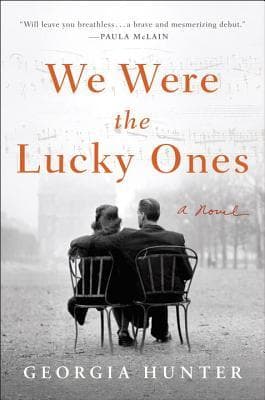
Georgia Hunter (2017)
Genre
Historical Fiction
Reading Time
9-10 hours
Key Themes
See below
Sign in to track this book
Separated by the Nazi invasion, the Kurc family, flung across continents, clings to an unbreakable thread of hope, each member fighting for survival and the slim chance of reunion amidst the 20th century's darkest hour.
In the spring of 1939, the Kurc family—Sol and Nechuma, their five children Genek, Jakob, Mila, Addy, and Halina, along with spouses and grandchildren—gather in Radom, Poland, for their annual Passover Seder. The atmosphere is festive, with talk of new babies and romances, especially Addy's return from Paris and his music career. However, the threat of war with Germany creates a subtle tension, with news of increasing antisemitism. Despite worries, they try to maintain normalcy, holding onto family bonds and traditions. Addy, a musician, is encouraged by his family to stay in Paris, where he has found success, rather than return to Poland. This decision proves wise as the political situation quickly worsens.
Germany invades Poland in September 1939, and the Kurc family's world shatters. Radom falls quickly, and the family immediately faces Nazi decrees. Addy, already in France, tries to keep contact. Genek and his pregnant wife, Herta, are deported to a Soviet labor camp in Siberia after trying to flee east. Jakob and his wife, Bella, face harsh conditions in Radom, as do Mila and her husband, Selim, and their young daughter, Felicia. Halina, the youngest, shows courage and resourcefulness, looking for ways to protect her loved ones. The family's initial efforts to stay together or find safe places are overwhelmed by the invasion and occupation, forcing them onto separate, dangerous paths.
Genek and Herta's journey takes them deep into Soviet territory after their attempt to reach the Romanian border fails. They are arrested and sent to a harsh labor camp in Siberia. There, they face extreme cold, starvation, and grueling physical labor in logging camps. Herta gives birth to their son, Zbyszek, in terrible conditions. Despite the suffering, Genek's endurance and Herta's maternal instinct keep them alive. They navigate the brutal realities of the gulag, fighting against hunger, disease, and despair, all while trying to protect their newborn son.
Back in Radom, Jakob, Bella, Mila, Selim, and Felicia are confined to the shrinking, overcrowded ghetto. Life is a daily struggle for food, warmth, and dignity under the constant threat of German violence and deportations. Jakob, an optometrist, tries to use his skills to gain favor, while Selim, an engineer, works in German factories. Mila focuses on protecting Felicia, often making impossible choices. They see terrible things and live in constant fear. Halina, though not always confined to the ghetto, risks her life repeatedly to bring them supplies and information, showing great bravery and resourcefulness in trying to ease their suffering and find escape routes.
Addy, having stayed in France, becomes a refugee as the war spreads. He starts a desperate journey, seeking passage out of Europe. His path takes him through Vichy France, North Africa, and eventually to Brazil. He faces bureaucratic challenges, antisemitism, and the constant threat of capture. He uses his musical talents and charm to survive, often performing for passage or favors. His journey involves close calls and the help of strangers, but also the deep loneliness of being separated from his family and the constant uncertainty of his future. He eventually gets passage to Brazil, a distant hope for safety, but remains worried about his family's fate.
Halina becomes a central figure of resistance and resourcefulness. She works outside the ghetto in a German factory, using her access to gather information and supplies. She works to get false papers for her family members, collaborating with underground networks. She risks her life many times, smuggling food into the ghetto, delivering messages, and eventually arranging the escape of Mila, Selim, and Felicia. Her determination comes from her love for her family and a strong will to survive and protect them. She shows incredible bravery and quick thinking, navigating occupied Poland with skill and selflessness.
With Halina's help, Mila, Selim, and Felicia escape the Radom ghetto. They get false identities, posing as Polish Catholics, and begin a dangerous existence moving from place to place. They experience constant fear of discovery, betrayal, and the harsh realities of living as 'Aryan' Poles. Felicia, still very young, struggles to understand why she can no longer use her real name or speak about her past. They rely on the kindness of strangers and their own wits to survive, always keeping their fabricated identities to avoid detection by the Nazis or their collaborators. This period is marked by extreme psychological stress and hiding their true selves.
As the war ends in 1945, the surviving Kurc family members are scattered globally. Genek and Herta, with Zbyszek, slowly leave Soviet territory, facing continued hardship. Addy, in Brazil, begins the difficult process of trying to find his family. Mila, Selim, and Felicia, having survived in hiding, are free but deeply scarred. Sol and Nechuma, having survived in Radom through various hiding places and help from others, emerge from their ordeal. The immediate aftermath of the war is not a sudden joyous reunion, but a slow, painful process of sending letters, making inquiries, and traveling vast distances to find out who is still alive and where they are.
Over the next few years, through determination and the help of international organizations, the Kurc family slowly begins to reunite. Genek, Herta, and Zbyszek are among the first to return to Europe, eventually settling in Germany temporarily. Addy receives news and travels to Europe to find his family. Sol and Nechuma, having lost many extended relatives, hold onto their surviving children. Mila, Selim, and Felicia eventually reunite with the rest. The reunions are bittersweet, marked by profound relief but also the unspoken trauma of their experiences and the loss of so many loved ones. They begin the hard task of rebuilding their lives and their family, forever changed but strong in spirit.
Most of the surviving Kurc family members eventually immigrate to the United States, mainly to New York City. Addy, Genek, Halina, and their families start new lives there, pursuing careers and raising their children. Sol and Nechuma live out their remaining years surrounded by their children and grandchildren, finding comfort in their renewed family bonds. Mila, Selim, and Felicia also find new homes, trying to heal from the deep scars of their wartime experiences. Though they carry the indelible marks of their past, they embrace their new lives, finding joy in simple moments and honoring the memory of those they lost, embodying strength and the lasting power of family.
The Protagonist
From a carefree artist, Addy transforms into a resourceful survivor, driven by the desire to reunite with his family.
The Protagonist
Halina transforms from a spirited young woman into a courageous and strategic leader, becoming a lifeline for her family.
The Protagonist
Genek's journey is one of extreme endurance, transforming him into a hardened survivor dedicated to his family's survival.
The Protagonist
Mila's character arc is defined by her transformation into a fierce, resourceful mother, sacrificing everything for her daughter.
The Supporting
Jakob's arc shows his struggle to maintain dignity and hope while facing the daily horrors of the ghetto, relying on his practical skills.
The Supporting
Sol's arc is one of enduring immense loss while maintaining hope for his surviving children and the future of his family line.
The Supporting
Nechuma's arc is one of profound resilience, holding onto hope and her family's traditions through unimaginable suffering.
The Supporting
Herta's journey is one of survival and fierce motherhood, transforming her into an incredibly strong woman dedicated to her child's future.
The Supporting
Felicia grows up amidst chaos and hidden identities, representing the stolen childhoods of the war and the hope for a new beginning.
The main theme of the novel is the strong bond of the Kurc family. Even though they are separated and endure terrible things, their love for each other and the desire for reunion drive their survival efforts. Letters, rumors, and the knowledge that others might be alive provide hope. The opening Seder scene shows their close dynamic, which then contrasts with their forced separation, making their eventual, though incomplete, reunification more moving. This family devotion is the main source of hope and strength throughout the story.
““The only thing that mattered was that they were alive. And they would find each other. They had to.””
Each Kurc family member shows great strength in the face of genocide, starvation, forced labor, and displacement. Genek and Herta survive the Siberian gulag, Mila and Selim protect Felicia in hiding, Addy manages a global escape, and Halina arranges daring rescues. Their will to live comes from hope, cleverness, and a strong determination not to give up. This theme explores the different ways survival appears—from physical endurance to mental strength, and the constant adaptation needed to navigate an unpredictable and brutal world. It shows the human spirit's ability to endure the darkest times.
““Survival was a feat of ingenuity, of grit, and of luck.””
The theme of identity is explored, especially through family members who must hide their Jewish heritage to survive. Mila, Selim, and Felicia adopt false Catholic identities, always fearing exposure and having to suppress their true selves. This act of 'passing' shows the psychological cost of denying one's basic identity and the loss of cultural and religious expression. Felicia's young age makes this particularly sad as she is forced to forget her real name and history. The war forces a new definition of identity, from shared heritage to individual survival tactics.
““To survive, they had to become someone else, erase who they were, every trace.””
The title, 'We Were the Lucky Ones,' addresses the theme of luck and chance. Throughout the novel, the Kurcs' survival often depends on fortunate coincidences, the help of strangers, or quick decisions that save them from death. While their cleverness and resilience are clear, the story also acknowledges the random nature of survival during the Holocaust—millions died, and the Kurcs recognize their improbable fortune. This theme emphasizes that in such extreme circumstances, even the most courageous efforts could be undone by bad luck, making their survival remarkable and humbling.
““We were the lucky ones. We knew it, every single day.””
The novel shows the widespread impact of World War II and the Holocaust, not just in Poland but across continents. The Kurc family's movement to Siberia (Soviet Union), France, North Africa, Brazil, and eventually the United States shows the global reach of the conflict and the massive displacement of people. Addy's journey, in particular, highlights the complex bureaucratic challenges and dangers faced by refugees seeking safety across borders. This theme shows that the war was not confined to battlefields but fundamentally changed lives and geographies worldwide, creating a vast diaspora.
““The war had not just shattered their lives; it had scattered them to the far corners of the earth.””
Narrative shifts between different family members' experiences to show the war's global impact.
The novel employs alternating chapters, each focusing on a different Kurc family member or small group (e.g., Addy, Genek/Herta, Mila/Selim/Felicia, Jakob/Bella, Halina, Sol/Nechuma). This allows the author to depict the simultaneous and diverse horrors of the Holocaust and World War II across various geographical locations and forms of persecution. It creates a panoramic view of the family's struggle, highlighting their individual challenges while underscoring their shared lineage and collective trauma. This device builds suspense as readers follow multiple, interwoven survival narratives.
Letters serve as a lifeline and source of hope, connecting separated family members.
Letters play a crucial role as a plot device, particularly in the later stages of the war and immediately post-war. They are the primary, often delayed, means of communication between the scattered Kurc family members. The arrival of a letter brings immense hope, confirming survival or providing clues to whereabouts. The painstaking efforts to send and receive mail across wartime borders and through various refugee agencies underscore the desperate need for connection and information. These letters symbolize the enduring family bond and the relentless pursuit of reunion.
A recurring symbol representing family, tradition, and the memory of oppression and liberation.
The Passover Seder, appearing at the beginning and referenced throughout, serves as a powerful symbol. It establishes the Kurc family's strong Jewish identity and their deep-rooted traditions before the war shatters their world. The Seder, which commemorates the Jewish liberation from slavery, ironically foreshadows their impending persecution and desperate fight for freedom. Its memory becomes a touchstone for the family, representing what they lost and what they hope to reclaim. The Seder is a symbol of endurance, faith, and the cyclical nature of oppression and hope.
Brief, factual historical notes provide context for the family's personal struggles.
The novel integrates brief, factual historical notes at the beginning of some chapters or sections. These interludes provide critical context for the family's personal experiences, detailing major events like the invasion of Poland, the establishment of ghettos, specific Nazi decrees, or the conditions in Soviet labor camps. This device grounds the intensely personal narrative in historical reality, reminding the reader of the broader political and social forces at play and reinforcing the authenticity of the Kurcs' ordeal. It seamlessly blends fiction with documented history.
“When you are a child, you think you are immortal. When you are a Jew in 1939, you learn otherwise.”
— Narrator reflecting on the start of the war and the vulnerability of their family.
“The world was shrinking, and we were in it, caught like flies in a spider's web.”
— Describing the increasing restrictions and dangers for Jews in Radom.
“Hope is a dangerous thing. It can keep you alive, or it can kill you.”
— A character grappling with the emotional toll of holding onto hope amidst despair.
“We carried our past with us, not as a burden, but as a map.”
— Reflecting on how their shared history and memories guided them.
“To be forgotten is a second death.”
— The importance of remembering those who were lost during the Holocaust.
“Love, in its purest form, is an act of defiance.”
— A character finding solace and strength in their relationships despite the surrounding horrors.
“Every day was a negotiation with death, a whispered plea for another sunrise.”
— Describing the constant threat and struggle for survival.
“The smallest kindness could feel like a miracle.”
— Highlighting the impact of human compassion in dire circumstances.
“We were the lucky ones, not because we were spared, but because we remembered.”
— Reflecting on the title of the book and the responsibility of survivors.
“Family was not just blood; it was the people who chose to stay, who fought for you when you couldn’t fight for yourself.”
— Emphasizing the chosen family and communal support during the war.
“The silence after the bombs was often more terrifying than the bombs themselves.”
— Describing the psychological impact of air raids and their aftermath.
“Even in the darkest times, there were moments of ordinary life, small pockets of normalcy we clung to.”
— Characters attempting to maintain some semblance of routine or joy amidst chaos.
“We learned to live with ghosts, the ones we carried inside and the ones who walked beside us.”
— The lasting impact of loss and trauma on the survivors.
“The past is never really past. It lives in us, in our stories, in our scars.”
— A character reflecting on the enduring legacy of their wartime experiences.
Ready to see how well you understood this book? Take our interactive quiz with 10 questions.







