“Welcome to the beautiful Sinclair family. No one is a criminal. No one is an addict. No one is a failure.”
— An introduction to the carefully curated image of the Sinclair family.

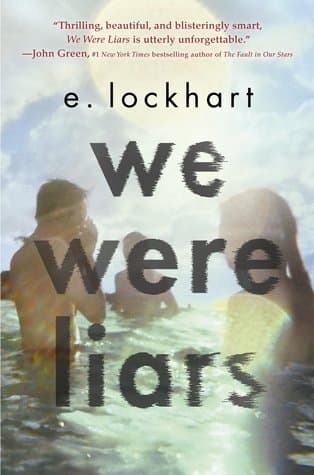
E. Lockhart (2014)
Genre
Thriller / Mystery / Young Adult / Romance
Reading Time
3-4 hours
Key Themes
See below
Sign in to track this book
On a private island of privilege and deceit, a summer of forbidden love and a tragic accident unravels a web of lies that shatters a seemingly perfect family forever.
Cadence Sinclair Eastman introduces her privileged, old-money family, the Sinclairs, who own a private island called Beechwood off Massachusetts. Each summer, the extended family gathers on the island, staying in three large houses: Windemere, Cuddledown, and Clairmont. Cadence describes her early childhood summers as idyllic, filled with the unspoken Sinclair rules – never showing weakness, always being perfect. Her grandfather, Harris Sinclair, is the patriarch, and her mother, Penny, is one of his three daughters. Cadence, with her cousins Johnny and Mirren, and Gat Patil – the nephew of her aunt Carrie's boyfriend – form a close group called 'The Liars'. Their bond is immediate and strong, built on shared summers and a rebellious spirit against their family's polished image.
During Summer Fifteen, the summer Cadence turns fifteen, she has an accident. On Beechwood Island, she gets a severe head injury that causes amnesia about what happened before it. She remembers waking up on the beach, confused and in pain, with no clear memory of the incident. Her family avoids the topic and refuses to discuss it, further isolating Cadence. She suffers from migraines and chronic pain, needing strong medication. Her mother, Penny, takes her on a long trip to Europe, supposedly for recovery, but also to keep her away from Beechwood and The Liars for two years. This time away from the island and her cousins deepens Cadence's sense of loss and confusion.
After two years, Cadence returns to Beechwood for Summer Seventeen, against her mother's wishes. She wants to reunite with Johnny, Mirren, and Gat, hoping their presence will help her recall the missing memories of Summer Fifteen. However, she finds that things have changed. The Liars are distant and somewhat ethereal, treating her with a strange mix of affection and sadness. Grandfather Harris is more frail and authoritarian, and family dynamics are strained, marked by constant arguments over inheritance and property. Cadence feels uneasy and urgently needs to piece together her fragmented memories, believing The Liars hold the key.
As Cadence spends more time on the island, she notices unsettling details. Clairmont, the house where she, Johnny, Mirren, and Gat often stayed, is now a burnt-out shell. Her family avoids discussing its destruction, simply saying it was an accident. The Liars themselves seem to appear and disappear without explanation, often wearing the same clothes, and their conversations are full of cryptic remarks about guilt, consequences, and secrets. Cadence experiences vivid dreams and memory flashes that feel real but are disjointed, leading her to believe the truth of Summer Fifteen is tied to Clairmont and The Liars' shared past. She feels the island is haunted, not by literal ghosts, but by the weight of unaddressed trauma.
Cadence's interactions with Johnny, Mirren, and Gat show their deep resentment towards the Sinclair family's materialism, snobbery, and constant arguments over inheritance. They often express disgust at their mothers' (Penny, Carrie, and Bess) petty squabbles over heirlooms or how Grandfather Harris will divide his wealth. The Liars bond over their shared desire to challenge this superficiality and to shake the family out of its self-absorbed existence. They talk about making a statement, about forcing the family to confront their flaws, and about the unfairness Gat faces as an outsider, despite being a part of their group. This shared anger fuels their secret plans during Summer Fifteen.
Cadence and Gat's romantic relationship is central to their bond and a source of tension within the conservative Sinclair family. Gat, being Indian and not from the same social standing, faces subtle disapproval from Cadence's grandfather and some aunts. Despite this, their love deepens each summer, leading to a passionate connection during Summer Fifteen. Their romance symbolizes a rejection of the Sinclair family's superficial values, as Gat represents a world beyond their privileged bubble – a world of social justice, art, and intellectual curiosity. Their connection during Summer Seventeen becomes a poignant reminder of their past and helps Cadence recover her memory.
As Cadence keeps pressing The Liars for answers, her memories slowly surface in painful, fragmented flashes. She remembers a series of increasingly reckless and destructive acts by the group during Summer Fifteen, fueled by their anger and a misguided sense of rebellion. They stole items from their aunts' houses, vandalized property, and engaged in escalating acts of defiance against the family's rules. These recollections are unsettling, showing a group spiraling out of control, driven by a desire to disrupt the 'perfect' Sinclair image and make a statement about their unhappiness with the family's materialism and selfishness. Each recovered memory brings her closer to the truth.
The crucial memory Cadence uncovers is the night Clairmont burned. During Summer Fifteen, The Liars, in a drunken and reckless act of protest against their families' greed and Grandfather Harris's favoritism, decided to set fire to Clairmont. Their goal was to destroy a symbol of the family's material wealth and force them to confront their destructive tendencies. They believed the house was empty. However, Cadence recalls seeing her dogs inside, and she ran back into the burning building to save them. This act led to her severe head injury and amnesia. The fire was meant to be a controlled act of rebellion, but it turned into a catastrophic tragedy.
As Cadence fully recovers her memories, the truth becomes clear. Clairmont burned down, and Johnny, Mirren, and Gat were inside when the fire spread. They did not get out. Her head injury happened while trying to save the dogs, after the fire had already engulfed the house with her cousins and Gat still inside. The shock of this realization is immense. The 'ghosts' she had been seeing, the ethereal nature of The Liars during Summer Seventeen, their cryptic remarks, and their unchanging clothes were all signs of her grief and denial. They were not distant; they were dead. Her family's silence and avoidance were not about her accident, but about the devastating loss of three children and the unspoken guilt surrounding the circumstances that led to the fire.
With the full truth revealed, Cadence is overwhelmed by sorrow and guilt. She understands why her family kept the secret – to protect her from the pain of remembering her role in the tragedy and the loss of her friends. In a heartbreaking scene, Cadence revisits the burnt ruins of Clairmont. She confronts the spirits of Johnny, Mirren, and Gat, acknowledging their presence and the love they shared. She apologizes for her part in their reckless plan and expresses her grief. Through this farewell, Cadence begins the painful process of accepting their deaths and moving towards healing, carrying their memory and the weight of their shared secret.
The Protagonist
Cadence transforms from a confused, pain-ridden girl into one who confronts a devastating truth, accepting loss and beginning to heal.
The Love Interest / Supporting
Gat is presented as a stable, loving presence in Cadence's life, whose influence sparks her rebellion and ultimately becomes a tragic memory.
The Supporting
Johnny is a consistent force of rebellious energy, whose desire to challenge the family leads to tragic consequences.
The Supporting
Mirren is a loving and empathetic presence, whose loyalty to her friends ultimately binds her to their shared fate.
The Antagonist / Supporting
Harris remains a figure of unwavering control and materialism, his actions indirectly leading to the tragedy.
The Supporting
Penny, driven by love and fear, attempts to protect Cadence from a painful truth, only to prolong her suffering.
The novel shows how extreme wealth and the entitlement it creates can corrupt a family. The Sinclair family's constant arguments over inheritance, their superficiality, and their subtle prejudices (especially against Gat) are central to the story. The Liars' rebellion, ending in the burning of Clairmont, is a direct response to this moral decay. The tragedy of Summer Fifteen is a devastating result of the family's toxic dynamics, showing how their pursuit of material wealth leads to profound loss, as seen in the destructive fire caused by the Liars' protest against this greed.
“''We are Sinclairs. We are liars. We are beautiful and privileged. We are shattered.''”
Cadence's amnesia is the central plot device, driving the mystery and exploring the relationship between memory, truth, and denial. The fragmented nature of her recollections, her migraines, and her family's evasiveness highlight the difficulty of facing painful realities. The story shows how memory can be suppressed as a coping mechanism, both individually (Cadence) and collectively (the Sinclair family). Cadence's slow, agonizing process of putting together the truth shows that sometimes the truth is too devastating to bear, and denial offers a temporary, though ultimately harmful, shield.
“''I remember everything. I remember nothing.''”
The deep love between The Liars – Cadence, Johnny, Mirren, and Gat – forms the emotional core of the novel. Their bond goes beyond typical family affection, rooted in shared experiences and a mutual understanding of their family's flaws. Cadence's love for Gat is particularly important, representing a connection that challenges the Sinclairs' narrow worldview. The tragic climax, where The Liars' shared love and misguided sacrifice lead to their deaths, highlights the destructive potential of intense loyalty when combined with reckless rebellion. Cadence's final acceptance of their sacrifice shows the enduring power of their love.
“''He was contemplation and logic, art and engineering. I was just a girl who loved him.''”
The Sinclair family projects an image of perfect, affluent happiness, but underneath, they are deeply dysfunctional. The novel critiques this facade, showing how the pressure to maintain an outward appearance of flawlessness leads to suppressed emotions, internal conflict, and tragedy. The 'perfect' summers on Beechwood hide generations of unspoken resentments, greed, and a lack of real connection. The Liars' rebellion is an attempt to shatter this illusion, to force the family to see their imperfections, but it results in the destruction of that 'perfect' image and the loss of life. The burnt Clairmont house symbolizes this shattered illusion.
“''Always be a perfect Sinclair. Never admit weakness. Never show pain.''”
Cadence's amnesia makes her an unreliable narrator, obscuring the truth until the end.
Cadence's amnesia and her fragmented memories are the primary mechanism through which the story is told, making her an unreliable narrator. The reader experiences the story through her distorted perception, sharing her confusion and gradual realization. This device allows Lockhart to withhold crucial information, building suspense and surprise. The ethereal descriptions of The Liars and Cadence's own internal struggles are interpreted differently by the reader before the final reveal, creating a powerful sense of shock and re-evaluation once the truth is known. It forces the reader to question what is real and what is a product of Cadence's trauma and denial.
Repeated imagery and subtle hints throughout the narrative foreshadow the tragic ending.
The novel employs extensive foreshadowing and symbolism, particularly through repeated imagery and Cadence's internal monologues. References to 'blood on the sand,' the decaying state of the island houses (Clairmont's eventual destruction), and Cadence's constant pain and migraines all hint at the underlying trauma. The 'Liars' themselves are a symbolic name, representing both their shared secret and the broader deception within the Sinclair family. The fairytale-like structure and Cadence's poetic descriptions often carry a melancholic undertone, subtly preparing the reader for a tragic rather than a happy ending. The 'story' of the summer is constantly being rewritten and re-evaluated by Cadence and the reader.
Beechwood Island serves as a contained world reflecting the family's internal dynamics.
Beechwood Island functions as a microcosm, a self-contained world that amplifies the Sinclair family's internal dynamics and flaws. Its isolation from the mainland highlights the family's insularity and their belief in their own superiority. The island's inherent beauty, contrasted with the decay of some of its structures (especially Clairmont), mirrors the family's outward perfection masking internal rot. The limited setting also concentrates the narrative focus on the relationships and tensions within the family, making the tragic events of Summer Fifteen feel both inevitable and devastating within this confined, privileged space. It becomes a character in itself, holding secrets and memories.
“Welcome to the beautiful Sinclair family. No one is a criminal. No one is an addict. No one is a failure.”
— An introduction to the carefully curated image of the Sinclair family.
“Do you want to know a secret? I killed him.”
— Cadence's recurring thought, hinting at her repressed memories and guilt.
“My full name is Cadence Sinclair Eastman. I am the oldest of the grandchildren. I am an heiress.”
— Cadence's self-introduction, emphasizing her identity within the wealthy Sinclair family.
“He was my first love, and I was his first love. And we were liars.”
— Cadence reflecting on her relationship with Gat and the nature of their bond.
“Mirren, Johnny, Gat, and I. We were the Liars.”
— Cadence identifying the core group of cousins and Gat who share a deep bond and secrets.
“My mother says I am too emotional. She says I must be strong. She says I must be a Sinclair.”
— Cadence feeling the pressure to conform to her family's expectations of strength and stoicism.
“Be a little more kind than you have to.”
— A recurring piece of advice from Cadence's grandfather, a rare moment of genuine wisdom.
“I am a golden girl. I am a beautiful girl. I am a rich girl.”
— Cadence's internal monologue, highlighting the superficial aspects of her identity.
“Accidents happen. We were all very young.”
— A phrase used to rationalize past events, hinting at a hidden tragedy.
“There is no such thing as a perfect family.”
— A realization that shatters the illusion of the flawless Sinclair family.
“We are Sinclairs. We are elegant. We are beautiful. We are perfect.”
— The family mantra, reflecting their obsession with maintaining a flawless facade.
“He was not a Sinclair, but he was one of us.”
— Cadence describing Gat's unique position within the family, both an outsider and an insider.
“And then I remembered.”
— The pivotal moment where Cadence's repressed memories finally return, revealing the truth.
“Run away with me, Gat. I want to be free.”
— Cadence's desperate plea to Gat, reflecting her desire to escape the confines of her family and past.
Ready to see how well you understood this book? Take our interactive quiz with 10 questions.

E. Lockhart is the author of the bestselling novel "We Were Liars," a New York Times Notable Book and a Michael L. Printz Honor book. She also penned the acclaimed "Genuine Fraud." Lockhart is known for her compelling young adult fiction, often exploring themes of memory, identity, and suspense with a distinctive narrative voice.







